

For structural steel erection in Columbus, 2026 budgeting for mobile crane equipment hire typically falls into two tracks: (1) bare rough-terrain (RT) crane hire used on longer-duration sites with your own operator, and (2) operated-and-maintained (O&M) mobile crane hire (truck crane or all-terrain) that is billed hourly with minimums and travel time. As a practical 2026 planning range, expect bare RT crane hire in the ~50–100 ton class to budget around $1,200–$2,400/day, $3,000–$6,000/week, and $7,500–$15,500/28-day month depending on capacity and availability, with published Columbus-area rate sheets showing 50-ton RT around $1,200/day and 100-ton RT around $2,250/day (2025 baseline). For O&M steel picks (common on downtown or multi-employer sites), Columbus buyers frequently carry $200–$450/hr as a working range for 60–160 ton class mobile cranes plus crew, with larger all-terrain units and heavy lifts quoted higher and often including separate mobilization. Common Columbus options include national rental fleets and regional crane houses (for example, United Rentals, Sunbelt Rentals, Maxim Crane Works, and ALL Crane) but actual pricing will depend on the lift plan, travel, and jobsite constraints.
| Vendor | Daily Rate | Weekly Rate | Review Score | Website |
|---|---|---|---|---|
| ALL Crane Rental Corp. (ALL Family of Companies) — Columbus Branch | $3 200 | $12 500 | 7 | Visit |
| Maxim Crane Works — Columbus Branch | $3 350 | $13 000 | 8 | Visit |
| Barnhart Crane & Rigging — Columbus, OH Facility | $3 600 | $14 000 | 9 | Visit |
| General Crane Rental, LLC (serving Columbus metro from NE Ohio) | $3 000 | $11 500 | 8 | Visit |
| Tradesmen Crane & Equipment LLC (Tradesmen Crane) — Columbus | $2 850 | $10 900 | 10 | Visit |
Steel erection crane hire cost in Columbus is rarely driven by “crane size” alone. The biggest cost swing is usually capacity at radius (what the crane can actually pick at your working distance), followed closely by number of moves (setups) and site access time. A 100-ton mobile crane that can sit inside the footprint on a prepared pad is a different cost outcome than a 160-ton all-terrain that must remain on a public roadway, use heavier mats, and work under a tighter traffic-control window.
For estimating, separate your budget into four buckets: (1) base rent (day/week/month or hourly O&M), (2) mobilization/demobilization (trucking, permits, counterweight), (3) crew and rigging (operator, oiler, rigger/signal, spreader bars, slings), and (4) jobsite-driven adders (standby, OT, weekend billing, weather delays, cleaning, fuel/refuel).
If your steel erection scope supports keeping a crane on rent (and you can staff an operator under your own program), bare RT crane hire can be the lowest unit-cost path, but it shifts risk to your schedule discipline and return conditions. A Columbus-area published rental rate sheet (2025 baseline) lists RT crane daily/weekly/monthly pricing at: 50-ton RT $1,200/day, $3,000/week, $7,500/month; 65-ton RT $1,375/day, $3,400/week, $8,500/month; 85-ton RT $2,000/day, $5,000/week, $12,500/month; and 100-ton RT $2,250/day, $5,600/week, $14,000/month. For 2026 planning, many contractors carry a modest escalation and availability factor (for example +3% to +10%) rather than assuming the prior-year sheet holds.
Also note the “rental math” and utilization limits that affect true cost per pick. One published set of general notes uses a 28-day month with a 160-hour/month cap, and states that weekly is 40% of monthly and daily is 40% of weekly with an 8-hour/day and 40-hour/week maximum. If your steel erection schedule runs double-shift, you can blow through the cap and trigger overage billing (often calculated as monthly ÷ 160 times excess hours), so the “cheap monthly” crane can become expensive if you don’t control utilization.
For structural steel erection, O&M is common because it packages the certified operator (and often oiler/rigger options), maintenance, and compliance under one provider. National 2025–2026 guidance commonly cited in the market places RT cranes (30–100 ton) around $150–$425/hr and all-terrain cranes (40–200 ton) around $215–$1,000/hr, with daily operated rates for 100–160 ton class around $1,500–$3,500/day for certain project profiles. For additional benchmarking, a State of Ohio term schedule line item (public procurement reference) shows crane & operator at $147.95/hr (less than 80 feet tall) and $293.00/hr (less than 150 feet tall), and a day line item for “crane less than 80 feet tall” at $860/day. In private steel erection work, you should expect O&M quotes to be highly sensitive to minimum hours, travel rules, and lift complexity rather than simply matching these benchmarks.
Minimums and billing units (budget impact): in Columbus, plan for a 4-hour minimum on small boom trucks/short calls and an 8-hour minimum on larger truck cranes/all-terrains; many providers bill in 0.5-hour increments after the minimum. Add an overtime rule in your estimate (commonly 1.5× after 8 hours/day and 2× on Sundays/holidays) and confirm whether “portal-to-portal” (from yard to yard) applies or whether travel is a separate line item.
Mobilization is often the swing factor on short-duration steel work (one-day or two-day picks). When a crane needs trucking, counterweight, or multiple support vehicles, your mobilization can exceed the first day of crane time. For budgeting, carry: $350–$1,200 each way for a local move of a smaller unit; $1,500–$4,000 each way for heavier all-terrain setups; plus permits/escorts as required. For distance-based budgeting, industry guidance for certain projects notes heavy crane transport can run about $4–$6 per mile (round trip) as a planning range. In the Columbus metro, also consider I-270/I-70 access constraints and downtown delivery windows that can force after-hours mobilization at premium labor rates.
Steel erection is a rigging-intensive scope. If the crane company provides rigging, expect separate hire lines such as: spreader bar $75–$175/day, chain slings $10–$25/day each, wire rope chokers $15–$35/day each, shackles $5–$15/day each, and taglines $5–$10/day. For ground bearing and slab protection, carry outrigger mat packages $150–$450/day (more if engineered matting is required) plus potential delivery. Industry guidance also flags mats as a material cost that can add “hundreds of dollars per day” on soft-ground work.
When steel deliveries slip, crane time becomes standby time. Include a standby allowance (commonly billed at the base hourly rate) and a weather plan: a conservative budget line is 2–6 standby hours per week of erection, especially in winter/shoulder seasons. If your site has wind restrictions for long, light picks (deck bundles, joists), you may need a contingency day; some lift plans pause at sustained winds around 20–25 mph depending on load profile and site rules.
Downtown and campus logistics: In the Arena District, Short North, and near OSU, street occupancy, pedestrian control, and staging limitations can force tighter pick windows (for example, 6:00 am–2:00 pm only) and can increase the number of crane moves. More moves = more setup time, more mat handling, and more billed hours.
Summer heat and winter freeze-thaw: Hot days can reduce hydraulic performance and increase break requirements on long shifts; winter conditions increase time spent on outrigger cribbing, de-icing, and access prep. If you are planning a January–March erection sequence, add a 5%–10% schedule contingency to your crane hours and build a realistic off-rent strategy so you are not paying full days during weather stand-downs.
Delivery radius norms: Many Columbus crane providers price “local” within a defined radius; if your project is outside the outerbelt (I-270) or requires frequent mobilizations between multiple campuses/industrial parks, add a travel time line (often 1–3 hours/day for repositioning) or consolidate picks to reduce portal-to-portal exposure.
Mobile crane equipment hire costs can inflate quickly when common ancillary fees are not carried in the estimate. Use the following as 2026 budgeting placeholders and confirm in writing on the quote/PO:
Scenario: You are erecting a small steel package (columns, beams, and bar joists) on a tight site inside I-270 with limited laydown. You choose an O&M 100–160 ton class mobile crane for three consecutive weekdays, with one midweek move on site.
Planning total (illustrative): about $10,185 before tax/fees and before any overtime, standby, or weekend premiums. This example is intentionally “numbers-forward” because steel erection budgets fail when they carry only the hourly crane rate and ignore mobilization, rigging, and schedule friction.
Estimator note: If your steel deliveries are uncertain, you may be better off packaging all picks into fewer days (even if those days run into OT) rather than paying multiple minimum days and multiple mobilizations.
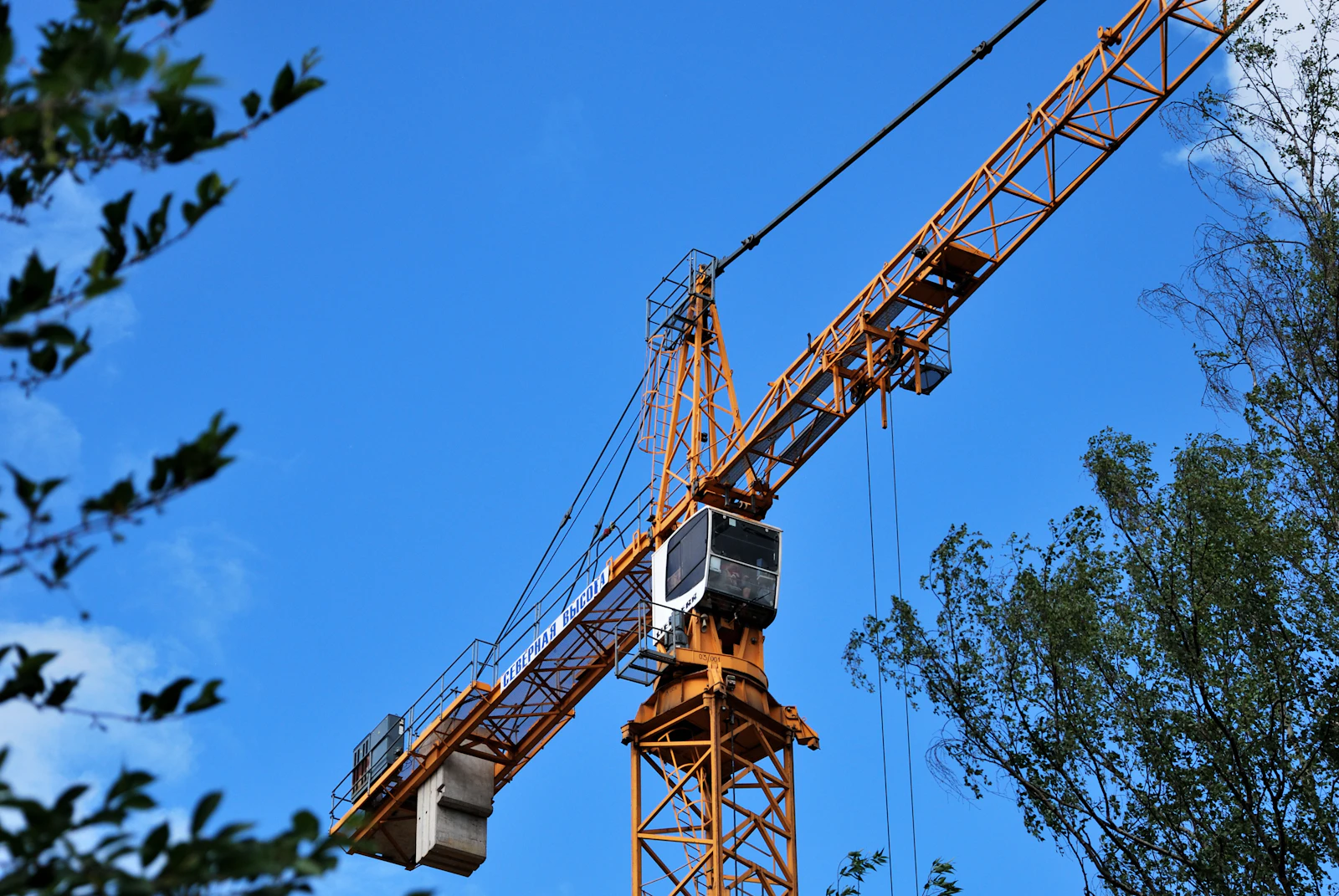
Cost control on mobile crane hire for structural steel erection is mostly operational discipline. The biggest wins typically come from (1) bundling picks to reduce minimums, (2) minimizing crane moves, and (3) aligning steel delivery/bolt-up manpower so the crane is always “hook busy.” If you expect bolt-up delays, plan a defined “crane release” point in the sequence (for example, set all primary steel and joists first, then release the crane before deck bundles and misc steel) instead of keeping the crane on standby.
Use this field-ready worksheet to build a Columbus mobile crane equipment hire budget for structural steel erection (no tables; line items as allowances):
Before issuing the PO for mobile crane equipment hire in Columbus (steel erection), confirm these items to prevent avoidable charges:
Month/week/day conversions and caps: If you are considering bare RT crane hire for a multi-week steel package, confirm the month definition and hour caps. One published approach uses a 28-day month with a 160-hour cap and calculates overages as (monthly ÷ 160) × excess hours; it also states weekly is 40% of monthly and daily is 40% of weekly with 8-hour/day and 40-hour/week limits. These rules materially change your all-in cost if you run extended shifts or weekend work.
Attachments and compatibility: If you are budgeting a bare crane with attachments (hook blocks, jibs, etc.), confirm whether attachments must be rented with the carrier unit and whether any items trigger minimum rental periods.
Damage and wear: Ensure the PO mirrors the quote language on “normal wear and tear” and requires written approval before repair authorizations. A tight return inspection process prevents end-of-job surprises.
If your steel erection plan includes many light picks with long booms (joists, decking bundles) plus occasional heavy picks (stair, mechanical dunnage), consider splitting into two strategies: a smaller mobile crane (or boom truck) for production picks and a larger all-terrain only for the heavy/long-radius set. Even if the big crane costs more per hour, reducing it to one mobilization and one day minimum can reduce total equipment hire cost versus keeping a large crane on site for an entire week.
Finally, treat crane hire as a “schedule-dependent” cost. The best crane rate in Columbus will still lose money if the jobsite cannot feed the hook. Align steel delivery sequencing, bolt-up crews, and decking crews so the crane is either picking or released—rarely waiting.
