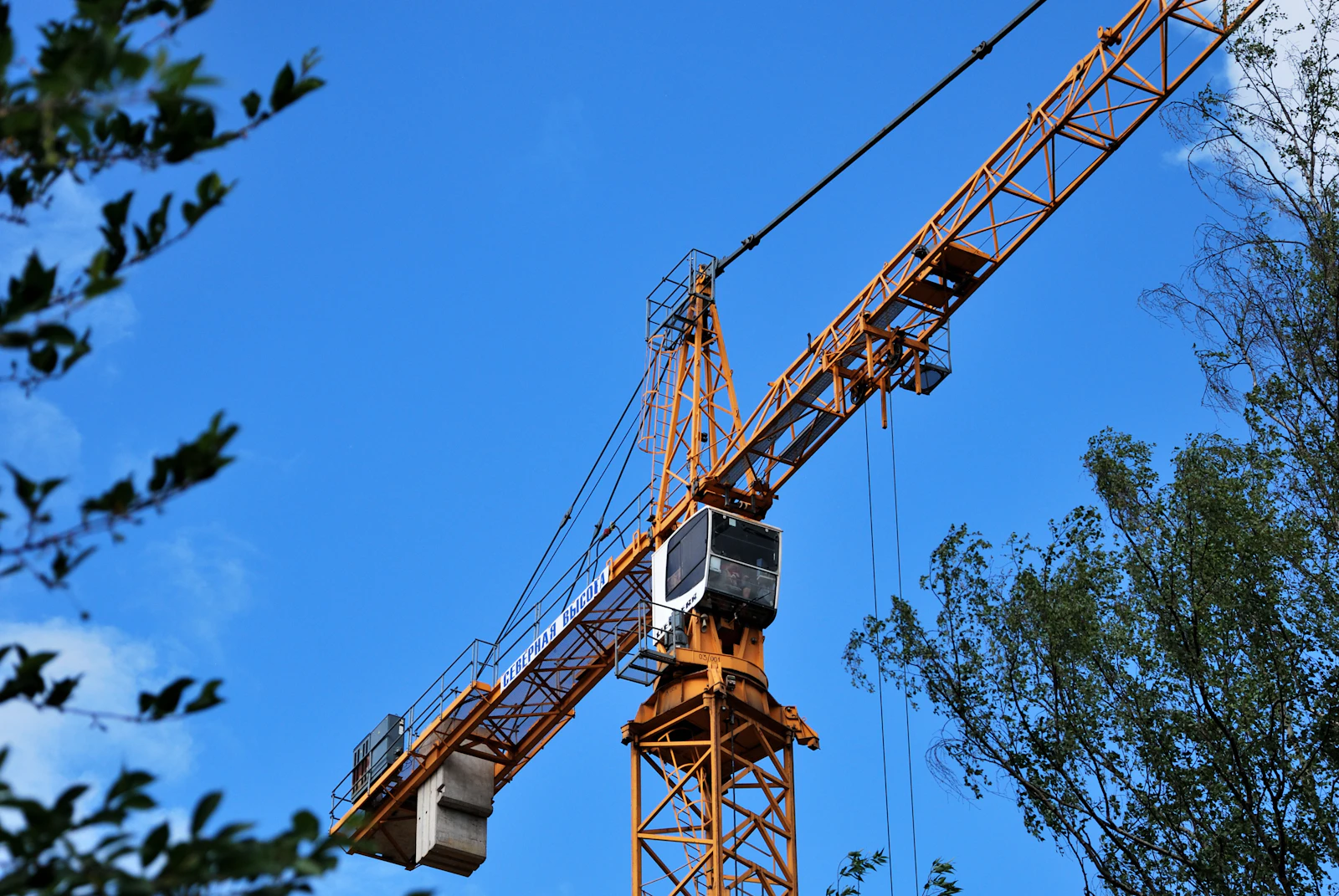
Mobile Crane Rental Rates in Los Angeles (Daily/Weekly) — 2026 Costs
Construction Cost Hub – Los Angeles
Price source: Costs shown are derived from our proprietary U.S. construction cost database (updated continuously from contractor/bid/pricing inputs and normalization rules).
Eva Steinmetzer-Shaw
Head of Marketing
Mobile Crane Rental Rates Los Angeles 2026
For structural steel erection in Los Angeles, 2026 planning budgets for mobile crane equipment hire typically land in these working ranges: $2,000–$6,500/day, $8,500–$26,000/week, and $24,000–$85,000/month for common 40–140 ton hydraulic truck/all-terrain configurations (higher for heavy picks and long radius work). These ranges assume an operated-and-maintained crane (operator included), a normal 8–10 hour shift, and a within-metro mobilization; they exclude permits, traffic control, engineered lift plans, and heavy-haul for large counterweight packages. In LA, fleets commonly used for steel include regional and national providers (e.g., Maxim, Bigge, and other SoCal hoisting contractors), but actual invoice totals are driven more by minimum hours, travel/portal billing, and support equipment than the “crane-only” headline rate.
What You Are Really Buying When You Hire A Mobile Crane For Steel Erection
For steel erection, the crane selection is usually dictated by radius and chart more than the piece weight. A “light” 8,000 lb beam can still require a larger class crane if you’re setting at a 90–120 ft radius, working over a property line, or needing extra boom/jib to clear existing structures. For budgeting, split your estimate into (1) crane and operator, (2) travel/mobilization and support vehicles, (3) permitting/traffic control, and (4) rigging/erection support (rigging hardware, signal, and any specialty gear).
2026 Planning Ranges By Common Mobile Crane Class (Los Angeles Metro)
Use the tiers below as planning allowances for Los Angeles steel erection. These are not “menu prices”; most crane providers quote by the hour with minimums, then convert to daily/weekly/monthly commitments for multi-day steel sequences.
- 40–60 ton hydraulic truck crane / boom-truck style (tight urban access, smaller members, misc steel, stair towers): typically $1,600–$3,200/day, $6,500–$12,000/week, $18,000–$32,000/month depending on travel, minimums, and support. Hourly references in SoCal often show 4-hour minimums and mid-$200/hr class rates for 50–60 ton units.
- 70–110 ton hydraulic truck / all-terrain (typical LA mid-rise steel days, longer radius picks): typically $2,800–$5,500/day, $11,500–$22,000/week, $34,000–$70,000/month. Hourly references for ~90–110 ton class in the region commonly appear around the $340–$365/hr range with a 4-hour minimum.
- 140–210 ton all-terrain (heavier steel, long radius, limited setup locations): typically $5,000–$9,500/day, $20,000–$38,000/week, $65,000–$120,000/month. A published SoCal example shows a 210 ton unit around $480/hr with a 4-hour minimum, before support adders.
- 225–350+ ton all-terrain (transfer trusses, heavy rooftop dunnage, very long radius): plan $8,500–$15,000+/day, $35,000–$60,000+/week, $110,000–$190,000+/month, and assume more heavy-haul, escort, and permitting exposure.
Minimums, Portal Billing, And Overtime: The Biggest Cost Drivers In LA
In Los Angeles, steel erection lifts rarely bill as “one clean shift” unless the site is staged for it. Budget and negotiate around these items:
- Minimum hours: 4-hour crane minimums are common in published regional examples.
- Shift minimums for labor: even if the crane is on a 4-hour minimum, additional labor (oiler, rigger) may carry longer callouts depending on local practice and project labor agreement terms. (Treat as a job-specific risk item and confirm before award.)
- Portal-to-portal / travel time billed: LA traffic and time-of-day restrictions can make travel time non-trivial. If the crane is dispatched from a yard in the Basin, a “short” mileage move can still create 1.0–2.5 billable hours each way during peaks.
- Overtime structure: many invoices flip to OT after 8 hours and may go to premium/double time after extended shifts; even when the rate card isn’t public, you should assume 1.5× after 8 and 2.0× after 12 as a conservative budgeting convention unless your vendor confirms otherwise. One published SoCal listing also shows an explicit overtime adder of $88/hour on certain packages.
- Standby vs work: confirm whether standby bills at 50%–75% of the hourly rate, or at full rate, and whether it counts toward daily minimums.
Support Equipment And Accessory Adders (Often Bigger Than Expected)
Structural steel erection requires more than “crane and hook.” For LA budgeting, carry explicit allowances (then true-up once the lift plan and erection sequence are finalized):
- Counterweight / support truck: published regional examples show counterweight haul/support billed separately (for example, $450 for the first 8 hours for a flatbed counterweight truck on certain configurations, then overtime).
- Additional support vehicle: budget $125–$225/hour with a 4-hour minimum if required (rigging truck, lube/service truck, or boom/jib transport).
- Jib / swing-away: budget $350–$900/day depending on class and whether it triggers a transport load.
- Man basket (certified): budget $175–$450/day (and confirm if your jurisdiction and site safety plan allow personnel hoisting). The Port of Los Angeles bid format also treats man baskets as a distinct daily-rate line item in crane service procurements. (g
- Crane mats / timber matting: budget $20–$45/mat/day or $250–$600/mat/month depending on size and rental duration; steel erection sites in LA with utility corridors or weak paving often need more matting than initially assumed.
- Rigging hardware rental: plan $150–$400/day for a basic rigging package (slings, shackles, spreader as needed), and $40–$120/day for specialty grabs/clamps if the fabricator’s pick points require it.
Permits, Escorts, And Street Use: LA-Specific Cost Exposure
Los Angeles steel erection frequently interfaces with public right-of-way, lane closures, and heavy-haul routing. City/county requirements change by route and load. Build your estimate so that permits and traffic control reimbursements are tracked as their own cost codes, because many crane service formats reimburse these on a cost-plus basis (rather than embedding them in the hourly rate). (g
- County transportation permits: published LA County guidance shows single-trip permits at $16 and notes pilot car requirements beyond certain dimensions (for example, kingpin length thresholds).
- Traffic control vendor: budget $900–$2,500/day for a lane closure package in denser corridors, and confirm LADOT cutoffs for setup and pull times.
- Police officers: if required for traffic control, budget $120–$180/hour per officer with a 4-hour minimum per officer, plus admin fees (verify with the awarding authority or your traffic-control subcontractor).
- Downtown and Westside constraints: tighter curb-to-curb streets can force smaller cranes (more days) or night work (higher labor multipliers). Also plan for staging constraints that increase standby.
Hidden-Fee Breakdown For Mobile Crane Equipment Hire (Steel Erection)
These are the line items that most often convert a “reasonable hourly rate” into a high final invoice on LA steel:
- Mobilization / demobilization: budget $350–$1,200 for a local same-day move for smaller units, and $1,500–$6,000+ when the crane requires multiple loads, escorts, or night routing windows.
- Fuel surcharge / environmental fees: budget 6%–12% of the crane and support invoice subtotal, or a flat $35–$95/day admin/environmental charge (confirm how your supplier structures it).
- Insurance paperwork costs: waiver-of-subrogation and project-specific endorsements are often billed as a separate fee; public bid formats in the LA region explicitly call out an additional waiver-of-subrogation fee. (g
- Engineering / lift plan: budget $750–$2,500 for a stamped lift plan when the pick is critical (heavy, long radius, or over sensitive assets). A port bid format also treats load-and-lift plans as a separately billable service item. (g
- Cancellation / dry run: budget 2–4 hours at the hourly rate if weather, steel delivery, or site access causes a same-day cancel after dispatch.
- Late return / off-rent rules: clarify whether off-rent is accepted only during business hours, and whether weekends/holidays continue billing (common on monthly hire).
- Cleaning and removal of concrete slurry/dust: LA sites that require dust control (silica plans, water use limitations, or indoor work) can create cleaning charges; budget $150–$350 for basic cleaning and $250–$600 for pressure wash/detailing if needed.
Example: Los Angeles Mid-Rise Steel Erection Day With Real Constraints
Scenario: 6-story steel frame, Downtown LA, limited staging, erection window 7:00 a.m.–3:30 p.m., one lane closure allowed 9:00 a.m.–2:30 p.m. You need a 110 ton class mobile crane due to radius and tail-swing constraints.
- Crane & operator: plan 10 hours billed including travel and setup at $365/hour (published example rate level) = $3,650.
- Minimums/inefficiency allowance: add 1.5 hours for inevitable steel truck sequencing delays = $548.
- Counterweight/support flatbed: $450 for the first 8 hours (published example) + 2 hours overtime at $88/hour = $626.
- Traffic control: $1,600/day allowance for cones, signs, TMA if required, and crew.
- Permits: carry $150 allowance to start, then reconcile actuals (county single-trip permits can be low-cost, but routing and city requirements can add admin and traffic review costs).
- Total planning cost for the day: approximately $6,574 before rigging labor, ironworker impacts, and any premium-time labor.
Operational note: the lane closure window (9:00–2:30) creates a predictable “standby band” if steel trucks miss their slot. If standby is billed at full rate, one missed delivery can add $365–$730 quickly.
Budget Worksheet (No Tables)
- Crane hire (operated) allowance: $2,800–$5,500/day (70–110 ton class) or as quoted.
- Minimum hours exposure: 4-hour minimum per dispatch (confirm) and add 10% schedule float for traffic/setup.
- Mobilization/demobilization: $350–$1,200 local; $1,500–$6,000+ for multi-load moves.
- Support vehicle(s): $500–$1,800/day combined (counterweight truck, rigging truck, service truck as required).
- Rigging gear rental: $150–$400/day base package; $40–$120/day specialty items.
- Matting / ground protection: $200–$900/day depending on quantity and surface conditions.
- Traffic control: $900–$2,500/day (LA lane control and devices).
- Permits/escorts: start with $150–$1,500 allowance; add escort vehicles if routing triggers it.
- Engineering (lift plan): $750–$2,500 when required.
- Cleaning/return condition: $150–$600.
- Premium time: 1.5× after 8 and 2.0× after 12 (unless vendor rate sheet states otherwise).
- Contingency: 10%–20% for urban access, standby risk, and steel delivery variability.
Rental Order Checklist (Steel Erection Mobilization)
- PO specifies crane class/tonnage, boom/jib configuration, and whether rates are portal-to-portal or “on-site only.”
- Confirm minimum hours, start/stop clock rules, and standby billing percentage.
- Delivery window: confirm latest legal arrival time; in LA, many sites need pre-7:00 a.m. staging to avoid blocking commuter lanes.
- Permits: identify whether supplier or GC pulls street use/heavy haul permits; define reimbursement method (cost-plus vs included). (g
- Traffic control: lane closure plan, cones/signage quantities, and callout times matched to LADOT windows.
- Ground bearing: geotech/contact pressure limits; confirm number and size of mats and outrigger pads.
- Rigging: who provides slings/shackles/spreader; require inspection tags and weight ratings.
- Return/off-rent: define off-rent notification process, cutoff time (e.g., 12:00 p.m. day prior), and weekend billing rules.
- Return condition documentation: require photos of mats, outriggers, hook block, and any street plates at demob.
- Insurance: certificates, additional insured wording, and whether waiver-of-subrogation adds a fee. (g
How To Tighten Mobile Crane Equipment Hire Costs For LA Structural Steel Erection
Once you have a realistic 2026 planning range, the biggest savings usually come from reducing billable idle time and minimizing support moves, not from chasing a slightly lower hourly rate. Two suppliers can quote similar crane rates, yet one invoice lands 20%–35% higher because the job forces extra travel billing, counterweight shuttles, or repeated partial demobs due to street access restrictions.
Sequence Planning That Actually Moves The Needle On Crane Hire Cost
- Bundle picks to beat minimums: if your vendor minimum is 4 hours (common in published examples), schedule steel deliveries so you get at least 3.5 hours of productive hook time inside the minimum window.
- Pre-stage connection hardware: each “hold” while bolts, drift pins, or a spreader bar is located can burn 0.25–0.75 hours at $300–$500/hr class rates.
- Confirm erection-day access: in LA, a blocked alley, film parking, or ride-share queue can force the crane to set up 20–40 ft off the intended spot. That can trigger a larger crane class (and a major hire step change) due to chart at radius.
- Lock traffic control early: if traffic control can’t meet the window, the crane can sit on standby. Carry a standby risk allowance of $500–$1,500/day on constrained corridors.
Monthly Hire Versus Weekly Hire For Steel Frames
For steel erection campaigns that run longer than 3–4 weeks, monthly hire can look attractive, but only if you understand off-rent and weekend billing rules. In Los Angeles, weekend billing often stays “on” during monthly commitments if the crane remains on site and available, even if no picks occur.
- Weekly hire: more flexible off-rent, but you may pay higher effective daily cost if work gets weathered or delayed.
- Monthly hire: lower unit cost, but budget a demob/remob if the site cannot store the crane safely (theft/vandalism risk, street cleaning windows, limited laydown).
- Security and storage: if you need a fenced laydown or spotter, budget $250–$600/day for site security support tied to equipment storage expectations.
Insurance, Damage Waivers, And Who Owns The Risk
Mobile crane equipment hire for steel erection sits in a high-liability zone (overhead loads, public interfaces, property lines). Many crane providers are operated-and-maintained; your job is to make sure contract language matches the field reality.
- Damage waiver / rental protection: if offered, budget 10%–15% of the applicable equipment charges unless your corporate insurance program disallows it.
- Certificates and endorsements: carry $75–$250 allowance for administrative insurance processing and project-specific endorsements; waiver-of-subrogation can be billed as a distinct fee on some public formats. (g
Heavy-Haul And Escort Cost Allowances (When The “Mobile” Crane Isn’t Really Mobile)
For 175 ton and up, and for many all-terrain configurations with large counterweight packages, the crane move often behaves like a heavy-haul project. LA routing can require escorts and time windows.
- Escort vehicle(s): budget $95–$165/hour per escort with a 4-hour minimum, plus dispatch fees.
- Pilot car triggers: county guidance indicates pilot cars are required beyond certain dimensions (a reminder to treat routing as a scope item, not an afterthought).
- Heavy-haul tractor and trailer: budget $175–$350/hour with 6–8 hour minimums for multi-load moves, depending on time-of-day restrictions.
Local Los Angeles Considerations That Change Your Final Crane Hire Cost
Even within “Los Angeles,” the cost behavior changes by submarket. Incorporate these into your equipment hire cost forecast:
- Downtown LA (DTLA): tighter setup pads and limited laydown can increase matting quantities and standby risk; also consider night work if lane closures are restricted to off-peak. Budget a 10%–25% premium-time exposure on critical pick days.
- Westside (Santa Monica/West LA/Century City): congestion and limited curb space can increase portal billing. Carry 1.0–2.0 hours/day for travel/setup friction if the site has no dedicated crane staging.
- San Fernando Valley heat: higher ambient temperatures can impact hydraulic performance and encourage earlier start times; if you shift earlier, confirm whether the vendor bills premium time before standard start (carry $500–$1,500/day premium-time risk on tight schedules).
Cross-Checking Rates Using Published Benchmarks (Use With Caution)
If you need a sanity check, you can compare your vendor quote to published references. For example, a SoCal hoisting contractor publishes hourly rates and minimums by crane class (50–210 ton, 4-hour minimum). Other industry sources also publish broad hourly rate bands for truck, rough-terrain, and all-terrain cranes, but these are generalized and may not reflect LA labor terms, portal billing, or support equipment.
Closeout Controls: Avoid Cost Leakage At Off-Rent
- Off-rent notice: submit off-rent by the vendor’s cutoff time (often mid-day the prior business day) to avoid an extra billed day.
- Photos at demob: document hook block condition, outrigger pads, mats, and any street plates to reduce disputes.
- Fuel/fluids expectations: confirm whether the supplier expects “return full” diesel/DEF levels; if not met, budget $75–$225 refuel service plus fuel cost.
- Cleaning: if the crane worked near grout, concrete, or heavy dust control water, pre-authorize a $150–$350 cleaning allowance to close tickets faster.
When A Smaller Crane Costs More (The Steel Erection Trap)
A common estimating error is selecting the smallest tonnage crane that can lift the heaviest piece at a best-case radius. On steel erection, radius changes constantly. If the smaller crane forces you to “walk” the crane multiple times, or to erect in shorter sequences, you can lose a full day to repositioning and matting. A one-day saving of $800–$1,200 in rate can turn into a two-day overrun of $6,000–$12,000 once traffic control, standby, and support vehicles are included.
Final Estimator Notes (2026)
For Los Angeles structural steel erection, treat mobile crane equipment hire as a packaged operational scope: crane + operator + support vehicles + permits/traffic + rigging. Use the daily/weekly/monthly ranges in this guide for early budgeting, then tighten the number with a site walk, a preliminary lift plan, and a delivery/erection sequence that explicitly reduces standby and remobilizations. Where possible, negotiate clock rules (portal vs on-site), minimums, and who carries permit/traffic procurement responsibility before the first steel truck arrives.