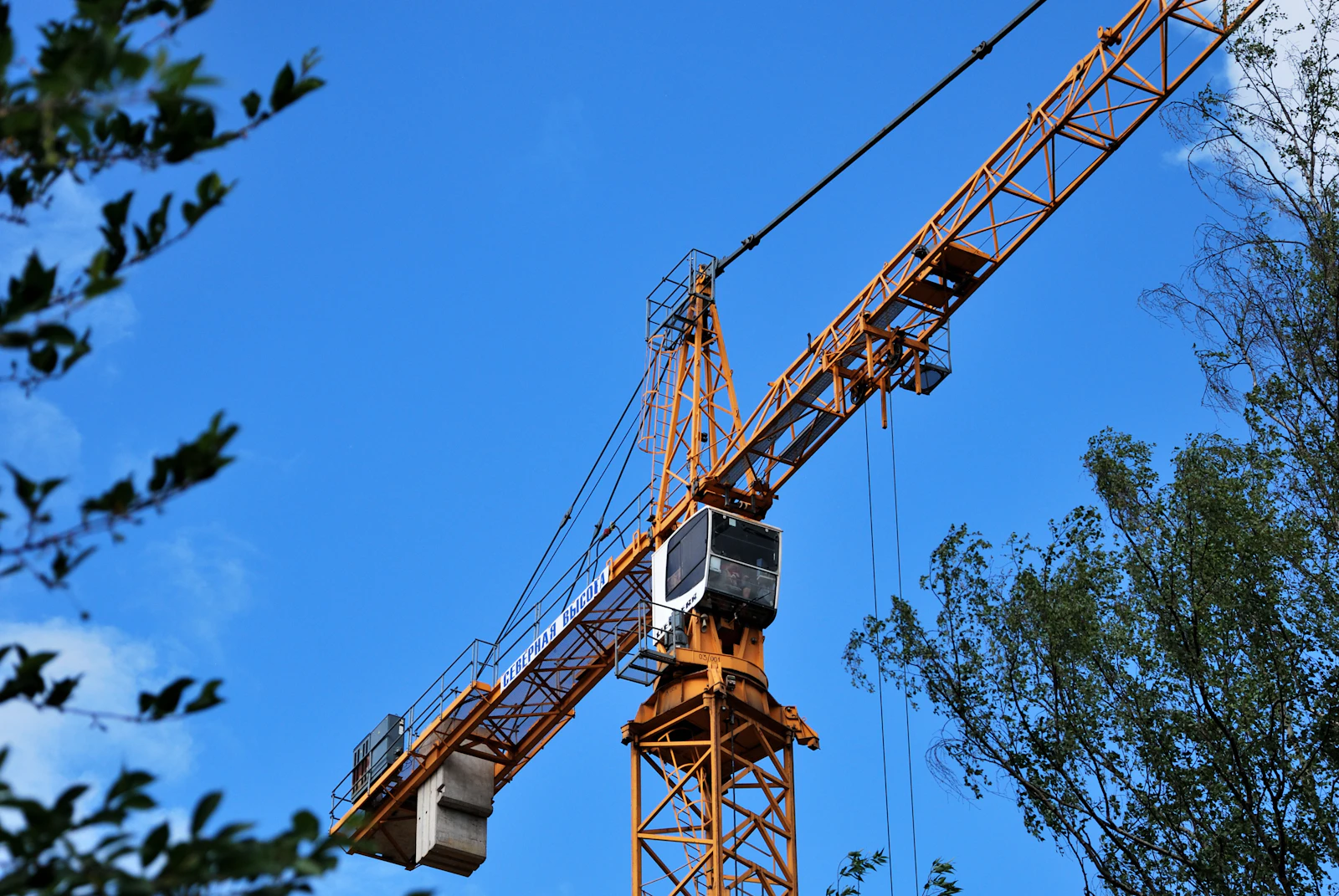
For 2026 planning in New York (NYC metro), mobile crane equipment hire commonly prices as an operated package (crane + operator) with shift minimums and separate mobilization. Budgetary ranges for an 8-hour straight-time day (one shift, operator included, basic hook block, excluding permits/traffic control) are typically: 30–40 ton $2,200–$4,200/day, $8,500–$16,000/week, $28,000–$55,000/month; 50–70 ton $3,500–$6,800/day, $14,000–$26,000/week, $48,000–$95,000/month; 90–160 ton $5,800–$11,500/day, $24,000–$45,000/week, $85,000–$165,000/month; 200–350 ton $9,500–$22,000/day, $40,000–$85,000/week, $140,000–$300,000/month. National references frequently cite operated crane hourly pricing in the mid-hundreds per hour as a broad baseline, but NYC routinely trends higher once street logistics, permits, and union labor rules are applied. (g In practice, New York buyers often source from national crane houses (e.g., United Rentals’ crane offerings and large lift providers such as Maxim Crane Works) alongside regional NYC specialists, with final pricing driven more by configuration and street plan than by nameplate tonnage alone.
| Vendor |
Daily Rate |
Weekly Rate |
Review Score |
Website |
| Bay Crane Service of New York |
$1 800 |
$9 750 |
9 |
Visit |
| U.S. Crane and Rigging, LLC |
$1 800 |
$9 750 |
9 |
Visit |
| United Crane & Rigging Services Inc. |
$1 800 |
$9 750 |
10 |
Visit |
| R&R Cranes |
$1 800 |
$9 750 |
10 |
Visit |
| United Rentals |
$1 350 |
$7 250 |
9 |
Visit |
Mobile Crane Rental
In New York, “mobile crane rental” is usually quoted as operated equipment hire, not bare equipment, and it often follows an hourly structure with minimums that are then rolled up into day/week/month budgets. To keep budgets consistent across bidders, align on these assumptions before you compare numbers:
- Shift basis: 8-hour straight-time (ST) is common; some contractors price a 10-hour minimum for congested NYC work windows.
- Minimum hire: expect a 4-hour minimum for smaller boom trucks and a 8-hour minimum for many hydraulic mobile cranes; tight Manhattan logistics frequently pushes vendors toward full-shift minimums even for “2 picks.”
- Overtime tiers: plan 1.5× after 8 hours and 2.0× for Sundays/holidays or per CBA/jobsite rules (confirm in writing on the quote and your PO).
- Portal-to-portal vs on-hook time: in NYC, travel time can be billable if the crane must stage offsite or move during restricted DOT windows.
Estimator note: If a vendor quotes strictly hourly, convert to day/week/month for internal budgeting using a consistent utilization assumption (e.g., 8 billable hours/day, 5 days/week, 20 days/month) and then add the NYC “non-hook” cost stack (permits, traffic control, matting, escorts, counterweight trucking).
How NYC Mobile Crane Equipment Hire Is Actually Built Up
Mobile crane hire cost in New York is rarely “just a crane.” Your all-in number is typically the sum of (1) the operated crane shift, (2) mobilization/demobilization and trucking, (3) site/streets compliance (DOB/DOT), and (4) rigging/traffic control/accessory packages. Common 2026 allowances to carry (budgetary):
- Mobilization/demobilization (mob/demob): $900–$3,500 per move for small-to-mid cranes inside the metro area; $4,000–$12,000+ for larger all-terrain cranes that require multiple tractor-trailers and escort planning.
- Counterweight trucking: $350–$650 per truckload (often multiple loads on 130-ton+ classes).
- Boom/jib truck (if shipped separate): $450–$900 per load.
- City access/escort premium: $250–$900 per day when escorts, restricted routes (tunnels/bridges), or night delivery windows are required.
- Crane mats / steel plates: $250–$650/day for a small mat package; $900–$2,500/day for heavy matting/plate spreads needed to meet bearing pressures on sidewalks/streets.
- Standby/waiting: $150–$350/hour when the crane is on site but cannot work due to site readiness, street holds, or a delayed delivery.
These line items are where NYC projects often overrun: a crane can be competitively priced per hour, but the job’s street plan and building management constraints can add a second “shadow invoice” of traffic control, flaggers, and re-mobilizations if off-rent rules are missed.
Permits, Compliance, And Why New York Changes The Hire Cost
New York City adds permit and documentation steps that directly impact equipment hire duration and billable hours. At a high level, crane operations may require NYC Department of Buildings (DOB) approvals/permits and may also require NYC DOT permits for occupying or working in the street/sidewalk. In addition, NYC requires proper certificates/authorizations for crane operations, with rules tied to equipment type and use.
Cost-relevant NYC items to plan for (not legal advice; confirm project specifics with your filing/hoisting team):
- DOB crane work permits: DOB issues crane-related permits (e.g., Certificate of Operation / On-site Certificate types). Many jobs require that the permit set is issued before the crane can legally be set and worked—late issuance often becomes billed standby.
- DOB fee planning: DOB’s published crane-related fee schedule includes items such as $80 per day (weekday/weekend per-day fee shown on DOB’s permit page) and prototype-related fees (e.g., mobile crane hydraulic boom prototype fee shown as $4,000). Use these as budgeting references where applicable to your filing pathway.
- NYC DOT street/sidewalk permits: Construction activity in the street generally requires DOT permitting, and DOT notes that certain construction activity permits may be required for building operations and construction activity in the street. The Street Works Manual’s permit appendix shows examples such as a “Crane or shovel on street” permit with a fee of $150 for the first week and $50 per week thereafter (within a stated duration window). (c
- Hoisting/operation licensing: NYC requires a Hoisting Machine Operator (HMO) license to use a crane or other hoisting machine in the city. This affects who can operate and supervise, which affects your labor mix and OT exposure.
- Submittal effort that becomes billable time: DOB’s crane notice checklist highlights site drawings, location plans, swing radius, maximum radius/pick loads, dunnage, flagmen, and proximity to adjacent infrastructure (e.g., subway) as part of what is documented. That documentation effort isn’t “free” in the market—vendors often recover it via engineering/admin line items or higher minimums.
NYC-specific operational constraint #1 (street timing): Many Manhattan sites require night/early-morning crane arrival to avoid day congestion and to meet DOT occupancy windows. Budget $250–$600 as an after-hours dispatch premium plus higher OT risk if the site is not ready when the crane arrives.
NYC-specific operational constraint #2 (building management rules): Midtown and Downtown properties often require pre-approved delivery windows, elevator shutdown coordination, and documented protection (masonite, sidewalk protection) that can delay “on-hook” time. That delay is typically charged as standby at the hourly rate or a fixed standby charge.
NYC-specific operational constraint #3 (ground bearing on sidewalks/vaults): NYC sidewalks can conceal vaults and utilities; matting/plate spreads and engineering checks frequently add real dollars. Budget matting and a contingency for additional plates if the engineer calls for a larger spread after a site walk.
Hidden-Fee Breakdown For Mobile Crane Hire In New York
For equipment managers and rental coordinators, the following “hidden” costs are the most common drivers of variance between the estimate and the final invoice:
- Delivery / pick-up charges: $900–$3,500 per mob/demob inside the NYC metro (higher for large cranes). Re-mobilization due to permit date changes can repeat this entire cost.
- Minimum charge / show-up: 4-hour, 8-hour, or 10-hour minimums (confirm which applies to travel + setup + work + breakdown).
- Overtime and premium time: 1.5× after 8 hours; 2.0× Sundays/holidays (confirm local agreement and owner rules). A “normal” 9.5-hour day can become an expensive day.
- Weekend surcharge: Many NYC jobs schedule weekend picks to reduce public exposure; budget an added $500–$2,000 premium even before OT multipliers depending on crew and dispatch timing.
- Fuel / environmental surcharges: budget 3%–8% of the crane charge or a flat $25–$75/day environmental line item (varies by vendor and contract).
- Damage waiver: budget 10%–15% of the base rental (or decline and provide your own insurance; coordinate with risk).
- Cleaning fees: $150–$400 if returned with concrete slurry, asphalt tar, excessive mud, or adhesive residue on mats/plates.
- Dry run / missed pickup: $125–$350 if the driver can’t access due to locked gates, uncompensated street holds, or blocked loading zones.
- Rigging adders: spreader bar $150–$450/day; lifting beam $250–$750/day; synthetic slings $20–$60 each/day (or replacement if damaged).
- Traffic control / flaggers: $75–$125/hour per flagger; NYC street plans frequently require 2–4 flaggers depending on pedestrian/vehicle interface and DOB/DOT requirements.
If you need knuckle boom cranes, mini cranes, or rotating telehandlers for constrained interiors, note that NYC has specific DOB/DOT considerations for those devices as well, and exemptions in one area do not necessarily exempt DOT/MTA requirements—this can still affect your total equipment hire cost and schedule float.
Cost Drivers That Move The Mobile Crane Hire Number
When two quotes differ materially in New York, it’s usually one (or more) of the drivers below rather than “markup.” Build your scope sheet to force apples-to-apples pricing:
- Capacity at radius (not tonnage): a 90-ton crane at a long radius may be the wrong tool; upsizing to a 130-ton can reduce time on hook and reduce OT exposure.
- Configuration: fixed jib, luffer, or specialty boom sections can add trucking and setup time.
- Setup footprint: street closure needs, sidewalk occupancy, and whether counterweights can be staged legally (often a DOT cost driver).
- Pick count and sequencing: 12 light picks over 6 hours is different from 2 heavy picks that require multiple reconfigurations and tailing.
- Union staffing: operator + oiler + riggers may be required by contract; the labor cost in NYC can be material. For public work benchmarking, NYSDOL prevailing wage schedules illustrate that equipment operator wage classes can be meaningful per hour before fringes.
- Site readiness: late trucks, incomplete laydown, missing cribbing, or last-minute RFI responses create standby charges.
Budget Worksheet (No Tables)
Use this as a practical estimator worksheet for mobile crane equipment hire cost in New York. Replace allowances with your vendor’s quote once issued.
- Operated mobile crane (base hire): $____/day × ____ days (assume 8 ST hours/day)
- Minimum hours premium (if partial day): ____ hours minimum minus planned on-hook hours
- OT allowance: 1.5× after 8 hours; carry ____ OT hours/day × ____ days
- Sunday/holiday premium allowance: 2.0× for ____ hours (if applicable)
- Mobilization/demobilization: $900–$3,500 × ____ moves
- Counterweight trucking: $350–$650 × ____ loads
- Boom/jib trucking: $450–$900 × ____ loads
- Matting/plates package: $250–$2,500/day × ____ days
- Traffic control / flaggers: 2–4 flaggers × $75–$125/hr × ____ hours
- Engineering / lift plan: $750–$2,500 allowance
- DOB/DOT permit fees: allowance based on filing pathway (e.g., DOT first-week permit $150 + $50/week thereafter where applicable; DOB daily fees where applicable)
- Damage waiver: 10%–15% of base hire (or $0 if covered by your insurance program)
- Fuel/environmental surcharge: 3%–8% of base hire (or $25–$75/day)
- Cleaning / return condition contingency: $150–$400
- Schedule risk contingency (NYC street windows): 5%–12% of total crane package
Example: Midtown Manhattan Rooftop HVAC Set (90-Ton Class, Weekend Window)
Scenario: A GC needs to set a 6,500 lb rooftop HVAC unit and remove an old unit on a Midtown block with constrained curb lane access. Building management requires work to be performed Saturday 6:00 a.m.–2:00 p.m., with a hard cutoff to reopen the lane. The crane must arrive before dawn to stage and mat without blocking bus traffic.
- Crane hire (operated, 8-hour minimum): plan $6,500–$9,500 for the day (90–160 ton planning band, NYC premium included in the range above).
- Weekend premium / OT risk: carry $800–$2,000 premium plus 1.5× after 8 hours if the unit delivery slips.
- Mob/demob: $1,800–$3,000 (tight Midtown access and staging).
- Matting/plates: $900–$1,800 (sidewalk/street bearing protection).
- Traffic control: 3 flaggers × $95/hr × 8 hours = ~$2,280 allowance (final staffing per plan).
- Engineering lift plan: $1,250 allowance.
- Permits: carry DOT permit fees (e.g., $150 first week + $50/week thereafter where applicable) plus DOB pathway fees as required by the filing. (c
Operational constraint: If the HVAC delivery truck misses the window and the crane sits loaded but idle for 2 hours, standby at $200–$350/hr can add $400–$700 quickly—often more expensive than paying for an earlier, dedicated delivery slot.
Rental Order Checklist (PO, Delivery, Return Requirements)
- PO scope clarity: specify crane class, boom length, jib, counterweight, mats/plates, hook block, headache ball, and whether rigging is included or T&M.
- Billing basis: minimum hours (4/8/10), ST/OT/DT definitions, portal-to-portal rules, and standby/waiting rate.
- Permits responsibility: who pulls DOB filings and DOT occupancy permits; include permit numbers once issued.
- Site drawings and constraints: attach lift plan, crane location plan, swing radius limits, subway/utility proximity notes, and matting requirements.
- Delivery window: confirm NYC delivery cutoff times; include a “no-access” protocol and dry-run charges ($125–$350) if blocked.
- On-site contacts: lift director, superintendent, traffic control lead, and building management contact.
- Return/off-rent rule: written off-rent time, weekend/holiday billing rules, and whether off-rent requires vendor pickup confirmation.
- Return condition documentation: photos of mats/plates, rigging count, and any street protection before demob to prevent back-charges.
2026 Market Planning: What To Expect When Budgeting Mobile Crane Equipment Hire In New York
For 2026 budgeting cycles, the biggest planning mistake in New York mobile crane equipment hire is treating the crane as a single line item instead of a controlled package. If your project is street-constrained, the “rate” matters less than (1) whether the crane can be delivered and set within permitted windows, (2) how many support loads are required (counterweight/boom/mats), and (3) how reliably the site can avoid standby and re-mobilization. Nationally, operated crane pricing is often described in the mid-hundreds per hour as a broad reference point, but NYC’s permit, traffic, and labor environment is what typically shifts the effective hourly cost upward. (g
Ways Experienced NYC Teams Reduce Crane Hire Cost Without Cutting Safety
- Lock the pick sequence: reduce reconfigurations. Even one unplanned re-boom or reposition can turn an 8-hour day into a 10.5-hour day (triggering OT and sometimes a second shift minimum).
- Pre-stage rigging and protection: having mats/plates and dunnage onsite before the crane arrives avoids billed standby. If the vendor supplies matting, clarify whether it’s billed per day ($250–$2,500/day) or per piece and whether missing/returned-damaged items are charged at replacement cost.
- Reduce counterweight loads: verify the engineered lift at actual radius; if you can reduce counterweight, you may eliminate 1–2 truckloads at $350–$650/load plus the handling time.
- Use the right class of crane for tight access: in certain NYC interiors or courtyards, a smaller specialized unit can reduce street impacts (but may require different permits/filings—validate early).
- Align permits and off-rent: avoid paying a full extra day because a DOT/DOB date shifts after the crane is reserved or staged. DOT permitting is a real schedule driver for street work.
Common Billing Clauses That Change The Final Invoice
Before issuing a PO, check these clauses—this is where equipment hire cost escalations happen in NYC:
- Cancellation terms: many providers apply a $500–$2,500 cancellation charge inside a 24-hour window, plus pass-through for already-dispatched trucking.
- Weather and wind holds: if a lift is paused for weather, you may still be billed portal-to-portal or for standby; confirm whether weather holds convert to standby at $150–$350/hr or remain on the clock at full rate.
- Street holds / police details: if the street closure is not in place at arrival, that time becomes standby. Carry a contingency if your site has a history of late barricade installs.
- Damage waiver scope: damage waiver (often 10%–15%) may exclude rigging, glass handling, or consequential damage. Confirm deductibles and excluded items.
- Fuel/recharge/refuel expectations: for diesel units, clarify if the vendor includes fuel; if not, budget a fuel service at $150–$350 plus cost of fuel, or a percentage surcharge (3%–8%).
- Cleaning / decon: if the crane is exposed to concrete grinding dust or interior silica controls, vendors may charge extra cleaning ($150–$400) and may require documented dust-control measures (negative air, plasticing) to protect equipment.
Documentation Controls That Protect Your Equipment Hire Budget
NYC crane projects move fast, and the paperwork is what prevents back-charges:
- Start/stop time stamps: record arrival, setup start, first pick, last pick, breakdown start, and departure. Compare to vendor ticket daily.
- Photo log: photograph street protection, matting layout, and pre/post conditions (sidewalk/curb). This is critical where vault covers and utility plates exist.
- Rigging inventory: count slings/shackles/spreader bars at delivery and again at demob to avoid replacement charges (often billed at full replacement values, not rental).
- Permit references on tickets: ensure operator tickets reference the correct DOB/DOT permit identifiers when applicable; this helps reconcile billed standby to permit windows and any street holds.
When Weekly/Monthly Hire Makes Sense In New York
Weekly and monthly mobile crane equipment hire is most effective in New York when the crane can remain on or near the site (reducing repeated mob/demob) and your workface can feed the crane consistently. If you are doing intermittent picks (e.g., a few hours every other day), hourly minimums plus repeated mobilization can make “monthly” pricing look attractive on paper but expensive in practice. If you pursue a weekly/monthly structure, negotiate:
- Mob/demob included moves: e.g., 1 included mob + 1 included demob; additional moves billed at $900–$3,500 (or higher) each.
- Included hours per week: e.g., 40 ST hours/week; OT billed at 1.5× beyond.
- Off-rent flexibility: define whether weather/permit holds pause billing or remain billable.
- Accessory bundle: mats/plates, spreader bars, lifting beams included vs per-day adders ($150–$750/day depending on gear).
Quick Compliance Reminder That Impacts Scheduling Cost
NYC crane operations interact with DOB and DOT processes; DOB issues crane permits and DOT addresses street occupancy for construction activity. Also, NYC requires appropriate licensing for hoisting operations, which impacts who can legally operate/supervise and therefore your labor and scheduling plan. From a cost standpoint, the key is to avoid paying for a reserved crane while paperwork is still pending—treat permit issuance as a schedule predecessor for dispatch.
Procurement Notes For Mobile Crane Equipment Hire (NYC)
- Bid package completeness: include load chart requirements (capacity at radius), pick weights, pick radii, obstructions, and whether the crane must tail, walk, or swing over public ways.
- Define who supplies traffic control: if the crane vendor supplies, budget $75–$125/hr per flagger; if the GC supplies, ensure staffing meets the plan so the crane isn’t forced into standby.
- Confirm street delivery constraints: include delivery cutoff times, staging address, and whether a second truck can queue legally.
- Insurance/COIs: obtain COIs early to avoid day-of holds; decide on damage waiver vs owner-provided coverage.
If you want, share your expected crane class (tonnage), neighborhood (e.g., Midtown, Downtown, Queens industrial), whether the setup is on street vs private property, and your target shift (weekday vs weekend). I can refine the 2026 equipment hire budget range into a tighter, scope-matched estimate and highlight which adders are most likely on your specific job.