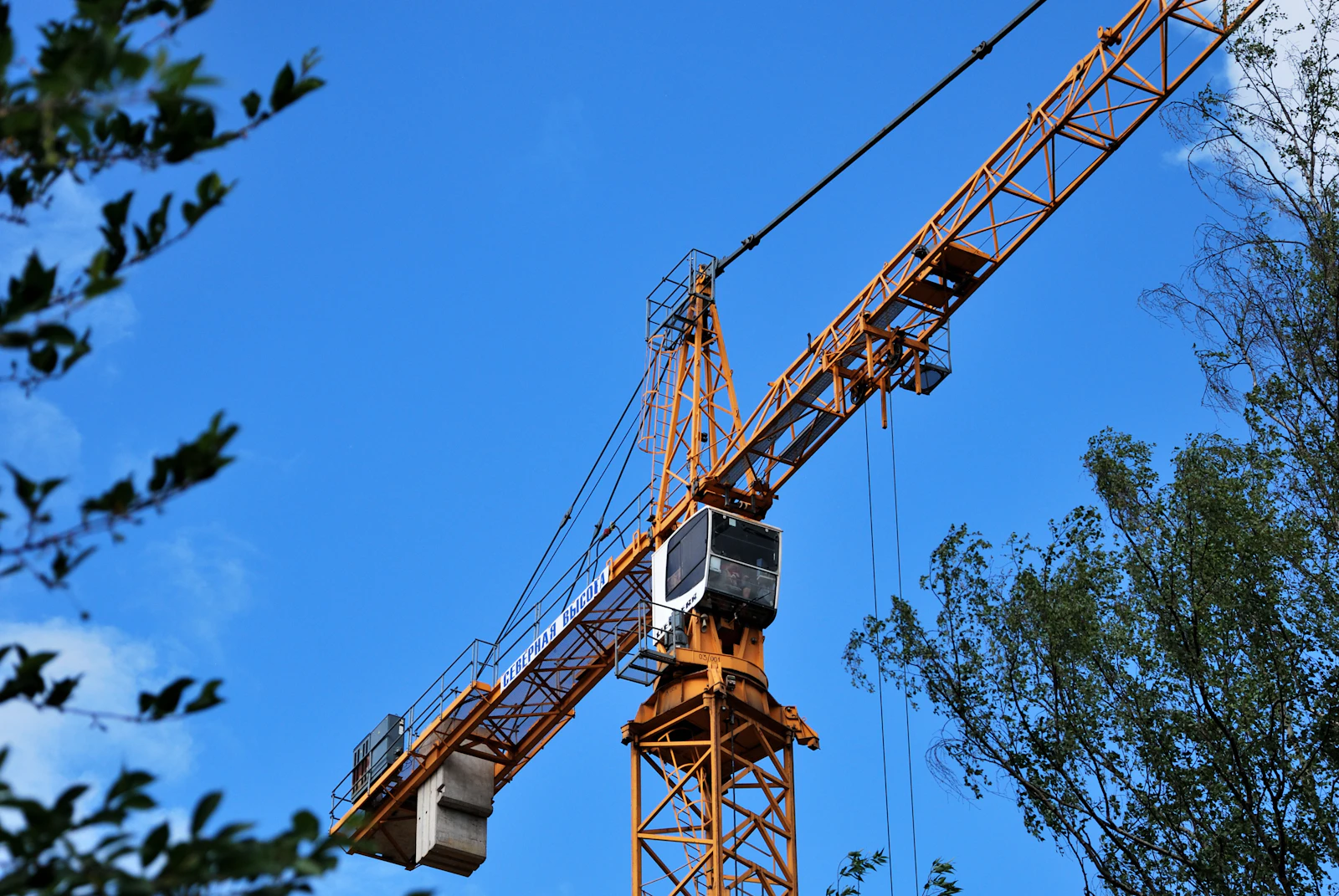
2026 planning ranges (Raleigh, NC) for operated mobile crane equipment hire on generator installation work: Boom truck/knuckle boom crane (approx. 20–30 ton class) typically budgets at $1,600–$3,200/day, $5,500–$11,000/week, and $13,500–$24,000/4-week month; a 40-ton hydraulic truck crane commonly budgets at $2,800–$5,500/day, $9,500–$19,500/week, and $26,000–$48,000/4-week month; and 60–100 ton rough-terrain/all-terrain coverage is commonly $3,200–$11,000/day, $13,000–$38,000/week, and $32,000–$98,000/4-week month depending on configuration, radius, and availability. These ranges assume an operated rental (crane + certified operator), an 8-hour shift, and a 40-hour week; they exclude mobilization, mats, lift engineering, rigging labor, traffic control, and permits.
| Vendor |
Daily Rate |
Weekly Rate |
Review Score |
Website |
| Morlando Crane |
$1 850 |
$7 400 |
10 |
Visit |
| ALL Carolina Crane & Equipment, LLC (ALL Crane Family) |
$1 900 |
$7 600 |
10 |
Visit |
| Tilton's Crane Service |
$1 750 |
$7 000 |
10 |
Visit |
| Guy M. Turner, Inc. (Raleigh-Durham) |
$2 050 |
$8 200 |
9 |
Visit |
For generator installation in Raleigh, mobile crane hire costs are usually driven less by “tons on the nameplate” and more by lift radius, site access, and the rigging/traffic-control package needed to execute the pick inside a narrow shutdown window. In the Triangle market, rental coordinators typically source worked-and-operated cranes through national rental channels (e.g., United Rentals and Sunbelt Rentals) or regional crane providers (often including Maxim Crane Works), while local crane outfits can be competitive for single-day picks when mobilization is short. Your fastest way to tighten the budget is to confirm (1) generator weight including rigging, (2) maximum working radius to set point, (3) required hook height over obstructions, and (4) ground-bearing capacity for outriggers and mats—then ask for a lift plan with an all-in “turnkey” crane + rigging quote that matches your planned shift and off-rent rules.
Mobile Crane Rental Rates Raleigh 2026
How Raleigh crane equipment hire is actually billed: Even when you ask for “daily” pricing, many suppliers price by the hour with a minimum, then convert to an 8-hour day for estimating consistency. For example, a Raleigh-area provider advertises a $300/hour rate with a 6-hour minimum for a 75-ton stick boom crane and $275/hour with a 4-hour minimum for a knuckle boom unit (shown as grapple saw capable) (useful as a local pricing reference point, even though your generator pick configuration may differ). Another local provider shows 6-hour minimums and notes overtime as an extra hourly amount after an 8-hour day.
Practical 2026 estimating ranges for generator-setting work in Raleigh (operated):
- Boom truck / knuckle boom (often used for smaller packaged generators, radiators, day tanks): $200–$325/hour with a 4-hour minimum, or $1,600–$3,200/day.
- 40-ton hydraulic truck crane (common for mid-size gensets and tighter sites): $250–$450/hour with a 4–6 hour minimum, or $2,800–$5,500/day.
- 60–80 ton (rough-terrain or all-terrain depending on access): $325–$575/hour with a 6-hour minimum typical on short calls, or $3,200–$6,500/day.
- 90–100 ton and up (when radius/height or tandem rigging pushes capacity): $450–$900/hour with a 6–8 hour minimum, or $5,500–$11,000/day.
Assumptions behind the weekly/monthly numbers: A “week” is often treated as up to 40 straight-time hours inside 7 calendar days, and a “4-week month” as ~160 straight-time hours. If your generator installation runs nights/weekends or has long standby time, the weekly/monthly looks attractive on paper but can get eroded by overtime multipliers, standby billing, and site constraints (laydown, access escorting, and powerline coordination).
What Drives Mobile Crane Equipment Hire Costs for Generator Installation in Raleigh?
Generator installation picks tend to be “short duration, high consequence” lifts: one missed shutdown window can create standby, remobilization, or even a second mobilization if the crane is released and has to come back. In Raleigh, cost drivers commonly stack up in these buckets:
- Load weight plus rigging weight: plan to add 150–600 lb for basic rigging (slings, shackles, spreader/beam as needed), and more if you’re using a lifting frame or custom skid.
- Radius and obstructions: a generator set behind a building line can push radius from 25 ft to 55 ft, which can force a jump in crane class even if the load is unchanged.
- Site access and travel path: downtown Raleigh or tight industrial parks can force an all-terrain unit or require a smaller crane plus more rigging time.
- Ground conditions: Raleigh’s clay soils and wet periods can require mats and engineered outrigger loads; if the setup area isn’t level, you pay for rework and repositioning.
- Traffic control and right-of-way impacts: if any portion of the crane setup or swing radius affects public right-of-way, you’re into permits, plans, and potentially flagged traffic or closures.
Minimum Hours, Overtime, And Standby: The Rules That Move Your Total
On short generator installs, your total is dominated by minimums and “time-on-site definitions,” not the lift itself. Raleigh-area crane providers commonly advertise 4-hour and 6-hour minimums depending on crane type and callout (a real-world anchor when you’re building an estimate). Build your internal estimate using these rule-of-thumb contract assumptions (then confirm on the quote):
- Minimum charge: 4–6 hours straight time is common even if the pick takes 45 minutes.
- Shift definition: “day” often equals 8 hours on site; time typically starts at arrival or at scheduled start (varies by provider).
- Overtime: frequently 1.5x after 8 hours or after a defined window; one local provider notes +$50/hour after 8 hours (treat as a local example and confirm per crane).
- Standby billing: commonly 50%–75% of the operating rate if the crane is held due to site delays (concrete cure, late truck, electrical disconnect not complete).
- Weekend/holiday premium: often 10%–25% uplift, or a higher minimum (e.g., 6–8 hours regardless of duration).
Off-rent rule to watch: many operated crane quotes are “time and material” and do not behave like scissor-lift off-rent. If you release the crane and later need it back, you may pay a second mobilization plus a new minimum—so schedule readiness is a direct cost control lever.
Hidden-Fee Breakdown for Crane Hire (Delivery, Waivers, Cleaning, And Penalties)
Crane equipment hire totals can surprise stakeholders because the quote often separates “crane time” from everything that makes the lift executable. For 2026 planning in Raleigh, carry explicit allowances for these common adders:
- Mobilization/demobilization: budget $650–$2,500 for typical truck-crane mobilization in-region; confirm whether it’s flat-rate, zone-based, or mileage-based.
- Fuel/environmental surcharge: commonly $25–$95/day depending on supplier policy and run time.
- Damage waiver / rental protection: often 8%–15% of the crane time line (or required proof of equivalent coverage).
- Cancellation: if cancelled inside 24 hours, many suppliers charge 50%–100% of the minimum (especially if the crane was held/allocated).
- Weather day standby: if sustained winds stop operations, standby may still bill at 50%–75% (confirm wind policy and who declares stoppage).
- Late start / crew not ready: if the generator is not staged, roof hatch not opened, or electrical lockout not released, you may pay full operating time from scheduled start.
- Return condition documentation (rigging/gear): missing shackles or damaged slings typically bill replacement cost; require photo sign-off at demob.
Rigging, Mats, And Personnel Adders (Where Generator Installs Usually Spend Money)
Generator installation often requires more than “crane + operator.” In many organizations, these adders come from different cost codes (rigging subcontract vs. crane subcontract), but the job doesn’t care—your total installed cost does. Common adders to include in your Raleigh equipment-hire budget are:
- Riggers: budget $85–$135/hour per rigger with a 4-hour minimum; critical picks often want 2 riggers plus the operator.
- Signal person: budget $75–$115/hour (often required when the operator’s view is obstructed, which is typical on generator drops behind parapets or inside fenced yards).
- Lift planning/engineering: budget $250–$1,250 depending on whether you need stamped engineering or a documented critical lift plan package.
- Crane mats / outrigger pads: budget $35–$85 per mat per day (typical generator jobs use 8–16 mats depending on outrigger spread and soil).
- Spreader beam / lifting beam: budget $150–$450/day depending on length and capacity; add $75–$200/day for shackles/synthetic slings if not included.
- Site access escort / spotters: budget $60–$95/hour if the facility requires escorted movement, badge-in/out, or controlled swing zones.
Raleigh-specific operational note: data centers, hospitals, and lab facilities around Raleigh/RTP frequently require dust control and floor protection even for outdoor setup zones. If you’re craning over sensitive intakes or near clean areas, budget $150–$400 for temporary intake protection/filters and an additional 1–2 hours of prep/teardown labor to keep the facility satisfied.
Permits And Right-of-Way Occupancy Costs in Raleigh
If your crane needs to occupy a lane, sidewalk, or any public right-of-way (ROW) area for setup, swing radius, or a delivery path, Raleigh requires ROW permitting through its Permit and Development Portal. The City also flags that contractors working in the public ROW must provide insurance and a minimum $5,000 performance bond during the application process. Treat this as a real schedule-and-admin cost driver: even if the permit fee is minor, the documentation, traffic control plan, and coordination time are not.
Budget allowances to carry when ROW impacts are possible:
- Traffic control plan preparation: $300–$900 (more if engineered or if multiple phases are needed).
- Flagging / traffic control subcontract: $650–$1,800 per day depending on lane count, timing, and MOT complexity.
- Permit admin and inspections allowance: $150–$500 internal time/cost (submittals, revisions, portal steps, and site posting).
Also note that Raleigh’s guidance routes temporary street/sidewalk closures for construction purposes through Right-of-Way Services. If you’re planning a weekend generator swap with a temporary closure, align the permit lead time with your crane booking lead time so you don’t pay standby for a permit delay.
Budget Worksheet (Mobile Crane Equipment Hire Allowances)
- Operated crane time: ___ hours at $___/hour (assume 4–6 hour minimum; include any day-rate conversion)
- Mobilization/demobilization: $650–$2,500 allowance (confirm zone/mileage)
- Overtime premium: allow 2 hours at 1.5x (or +$50/hour after 8 hours if quoted similarly)
- Standby contingency: 2 hours at 50%–75% of operating rate
- Riggers: 2 riggers, 6 hours each, $85–$135/hour
- Signal person: 6 hours, $75–$115/hour
- Mats/pads: 12 mats at $35–$85 each per day
- Spreader beam / rigging gear: $150–$450/day + $75–$200/day for small gear
- Lift plan / documentation: $250–$1,250
- Traffic control (if ROW impacted): $650–$1,800/day + plan $300–$900
- Damage waiver / rental protection: 8%–15% of crane time line
- Cancellation risk allowance: up to 50% of minimum if inside 24 hours
Example: One-Day Generator Installation Pick in Raleigh (Numbers You Can Sanity-Check)
Scenario: Replace an 18,000 lb diesel generator at a medical facility near downtown Raleigh. The set point is inside a screened yard; max radius is 42 ft due to setbacks; work is limited to a 9:00 PM–3:00 AM window to avoid daytime disruptions. Crane must be on site by 8:00 PM for setup and safety briefing.
- Crane selection (planning): 60–80 ton class to protect capacity at radius and allow controlled pick/land.
- Crane time: 6-hour minimum at $375–$575/hour = $2,250–$3,450.
- Night premium / OT: add 10%–25% or assume 2 hours at 1.5x if the supplier bills OT after a base day.
- Mobilization: $900–$1,800 (metro callout, depends on yard location and crane type).
- Mats: 12 mats at $45–$80 = $540–$960.
- Rigging gear: spreader beam $200–$350 + small gear $100–$175 = $300–$525.
- Rigging labor: 2 riggers, 6 hours each at $95–$125/hour = $1,140–$1,500.
- Signal person: 6 hours at $85–$110/hour = $510–$660.
- Lift plan/documentation: $400–$900.
- Damage waiver: 10% of crane time line (example) = $225–$345.
Resulting order-of-magnitude total (planning): roughly $6,765–$11,640 for a well-managed one-night pick when ROW impacts are avoided. If ROW permits/flagging are required, add $950–$2,700 for traffic control and admin allowances. The operational constraint that most often breaks the budget is lack of readiness (generator not staged, anchor bolts not set, demo not complete) which converts your minimum into paid standby.
Rental Order Checklist (What to Lock Before the Crane Shows Up)
- PO scope: specify “operated mobile crane equipment hire for generator installation,” include minimum hours, start/stop times, and whether travel time is billable.
- Lift inputs provided: verified load weight (incl. rigging), max radius, hook height, pick path, landing orientation, and any tandem/critical lift criteria.
- Site constraints: gate widths, overhead utilities, soil/underground vaults, and exact crane setup coordinates.
- Personnel: confirm who supplies riggers and signal person; confirm certification expectations and site orientation requirements.
- Delivery window: confirm arrival cutoff time; define what happens if the facility delays access.
- Permits/ROW: identify lane/sidewalk impacts early and assign responsibility for ROW permit submittal and traffic control plan.
- Insurance: COI requirements, waiver vs. your own coverage, and any additional insured language.
- Off-rent/release: define when the crane is considered released and whether demob is included.
- Return condition: require photo documentation of supplied rigging/gear and site condition at demob.
How to Control Crane Equipment Hire Cost Without Creating Schedule Risk
On generator installation work, the lowest crane rate rarely produces the lowest installed cost. In Raleigh, the biggest cost wins typically come from compressing “paid non-lift time” and avoiding remobilization:
- Pre-stage the generator and rigging: If the unit arrives late or cannot be uncrated/staged inside the crane’s reach, you burn your minimum and may trigger standby at 50%–75% of the operating rate.
- Mark the crane setup and outrigger locations: A 30-minute reposition can become 1–2 billable hours when you include re-matting, re-leveling, and re-briefing the crew.
- Confirm ground-bearing capacity: Spending $540–$960 on mats is usually cheaper than losing a shift to unsuitable ground conditions or an unsafe setup.
- Book to the real window: If the facility’s outage is 9:00 PM–3:00 AM, don’t book an 8-hour “day rate” unless you’re confident you can use it; otherwise accept the minimum-based quote and focus on readiness.
- Keep ROW impacts out of the plan when possible: Avoiding flagged traffic and ROW permits can remove $950–$2,700 of soft costs on a one-day pick (traffic control plan + flagging + admin). Raleigh requires permitting to occupy the public ROW and highlights insurance and a $5,000 bond expectation for contractors working there.
Commercial Terms That Commonly Add 10%–30% to Mobile Crane Hire
These are the quote terms that routinely swing Raleigh crane equipment hire totals on generator work. If you can’t change them, carry them explicitly in your estimate:
- After-hours differential: budget 10%–25% premium for nights/weekends, or assume overtime at 1.5x after 8 hours.
- Overtime structure: some suppliers use a flat adder after 8 hours (example: +$50/hour after 8 hours shown by one local provider), while others use multiplier OT—clarify before you commit to a long night window.
- Travel time billing: confirm whether travel is included in mobilization or billed as time.
- Demurrage/standby: budget 2 hours standby at 50%–75% whenever multiple trades must align (electrical disconnect, structural curb verification, and anchor bolt fit-up).
- Damage waiver vs. insurance: if the supplier’s waiver is required, carry 8%–15% of the crane time line; if your policy is used, allow admin time for COI review and endorsements.
- Cancellation / weather language: carry a contingency equal to 50% of the minimum if your outage window is at risk of being pulled inside 24 hours.
Raleigh Market and Site Conditions That Affect Crane Pricing in 2026
Raleigh’s pricing and feasibility are often shaped by a few local realities:
- Metro mobilization patterns: Many cranes serving Raleigh are staged across Wake County and nearby towns (short mobilization when you can book the right unit; higher mobilization when availability forces a longer reposition). When the crane is coming from outside your immediate service radius, expect zone fees or mileage-based charges layered on top of the hourly minimum.
- Downtown access and timing: Tight streets, parking restrictions, and restricted delivery windows often push work to nights/weekends, bringing the 10%–25% premium and increasing the chance you’ll hit overtime.
- Heat/humidity impacts: Summer night work can increase crew fatigue and slow rigging operations; build a 1–2 hour buffer rather than assuming perfect production, especially if you have to rotate spotters or follow strict facility escorts.
Closeout and Documentation: Preventing Back-Charges After Demob
Back-charges on crane equipment hire are usually avoidable if you treat closeout like a controlled return, even on operated rentals:
- Time verification: get start/stop times signed by the superintendent or site rep; note any standby causes (e.g., “awaiting generator delivery”).
- Gear accountability: photograph returned rigging (spreader beam, shackles, slings) to avoid replacement charges.
- Site condition sign-off: document mat locations and any surface protection used; if the facility requires cleanup, budget $150–$400 and capture it as planned scope rather than a surprise invoice.
- ROW restoration: if you impacted the right-of-way, ensure you close the permit requirements and restore traffic control devices per plan to avoid penalties and re-inspection costs.
Quick Reference: When to Upsize the Crane for Generator Installation
For budgeting, plan an upsized crane (and higher hire costs) when any of the following applies:
- Radius exceeds 40–45 ft and the generator weight is above 12,000–20,000 lb (common threshold where chart capacity falls quickly).
- Pick requires booming over a parapet or clearing overhead obstructions, forcing longer boom and reducing chart.
- Ground is marginal and you need heavier matting or a different setup position.
- Facility restricts setup locations (security perimeter, sensitive underground utilities), limiting your ability to reduce radius.
If you want, share your generator weight, radius, and hook height, and I can turn the above into a tighter Raleigh equipment hire allowance (still vendor-neutral) with a recommended crane class and a line-item contingency structure.