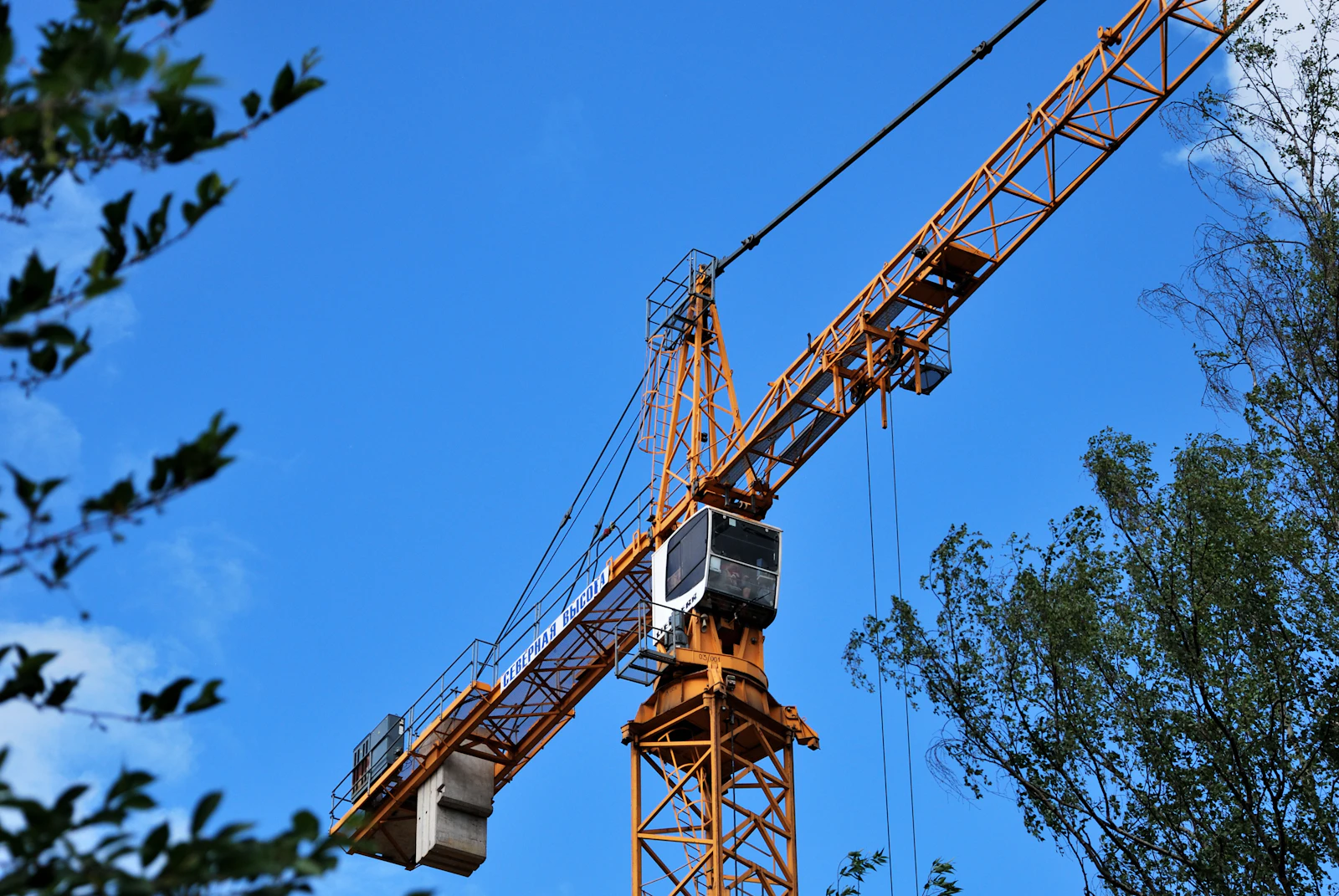
Mobile Crane Rental Rates Raleigh 2026
For Raleigh, NC 2026 planning, budget operated mobile crane rental (crane + operator) in these working ranges: $1,800–$3,400/day for common 40–80 ton-class work, $7,500–$14,500/week (based on ~40 billed hours), and $25,000–$48,000/month (based on ~160 billed hours). Heavier 120–175 ton-class lifts typically plan $3,200–$6,200/day, $13,500–$27,000/week, and $45,000–$90,000/month. These are budget ranges, not guaranteed price sheets: they assume weekday daylight operations, standard hook/ball, normal setup, no engineered lift plan, and a typical local service radius in the Raleigh–Durham market. You’ll still see real quotes anchored by local advertised hourly minimums (e.g., a Raleigh operator listing $300/hr with a 6-hour minimum for a 75-ton mobile crane) and broader NC municipal historical bid tabs (e.g., 40-, 60-, 175-, and 500-ton hourly line items) that help calibrate expectations.
| Vendor |
Daily Rate |
Weekly Rate |
Review Score |
Website |
| United Rentals |
$2 750 |
$8 250 |
8 |
Visit |
| Maxim Crane Works |
$3 200 |
$9 600 |
8 |
Visit |
| ALL Crane Rental & Rigging |
$3 000 |
$9 000 |
8 |
Visit |
| Barnhart Crane & Rigging |
$3 100 |
$9 300 |
9 |
Visit |
| Carolina Crane & Rigging |
$2 400 |
$7 200 |
9 |
Visit |
Mobile Crane Rental
In Raleigh procurement language, “mobile crane rental” can mean anything from a small boom truck (often 20–30 ton) to an all-terrain hydraulic crane that arrives with separate counterweight hauling. Your mobile crane equipment hire cost is therefore driven less by “days on rent” (like a scissor lift) and more by hourly billing + minimums + mobilization + rigging support. When stakeholders ask for “a day rate,” it’s usually shorthand for an 8-hour shift equivalent—but the invoice may still be governed by (1) a 4–6 hour minimum, (2) travel billed portal-to-portal, and (3) standby/overtime rules.
What Drives Mobile Crane Equipment Hire Costs in Raleigh?
To get a realistic 2026 budget in Raleigh, collect the variables that change crane selection and billing hours. The same “60-ton crane” can price like two different machines if the lift requires a jib, long radius, restricted setup, or extra counterweight hauling.
- Crane class and configuration: boom truck vs hydraulic truck crane vs all-terrain. All-terrain units commonly trigger higher mobilization, additional trucking, and longer setup.
- Lift geometry: max pick weight at your working radius, required boom length, tail swing limits, and whether you need a luffing jib or fixed jib.
- Access and setup constraints: curb load limits, underground vaults, and tight downtown Raleigh staging often force partial lane occupancy and narrower outrigger spreads (which can change required tonnage).
- Ground bearing and matting: Raleigh’s clay subgrades and landscaped campuses frequently require mat plans; mat rental and handling time can be material.
- Permitting and escorts: if any move pushes oversize/overweight thresholds, NCDOT permitting and escort requirements can add both time and subcontract cost. NCDOT notes permits are generally required above 8'6" width, 14' height, or certain lengths/weights.
- Traffic control and right-of-way impacts: occupying lanes/sidewalks can require a traffic control and pedestrian plan plus City of Raleigh right-of-way controls; the City notes a minimum $5,000 bond during application for public right-of-way work.
- Shift timing: night work, weekend work, holiday work, and “short notice” starts typically push overtime/double-time for labor and traffic control support.
Typical 2026 Operated Rate Ranges by Mobile Crane Class (Raleigh)
Use these as equipment hire budgeting bands for Raleigh in 2026. They intentionally overlap because actual rates depend on vendor capacity, seasonality, and how “clean” the lift is (access, matting, permits, and rigging needs).
- 25–30 ton boom truck / small hydraulic: $160–$240/hr; typical minimums 4–5 hours. 8-hour shift equivalent: $1,280–$1,920. 40-hour week equivalent: $6,400–$9,600. 160-hour month equivalent: $25,600–$38,400.
- 40–60 ton hydraulic truck crane: $200–$320/hr; typical minimums 4–6 hours. 8-hour shift equivalent: $1,600–$2,560. 40-hour week equivalent: $8,000–$12,800. 160-hour month equivalent: $32,000–$51,200.
- 70–90 ton mobile / smaller all-terrain: $260–$420/hr; typical minimums 6–8 hours (more common when counterweight handling is needed). 8-hour shift equivalent: $2,080–$3,360. 40-hour week equivalent: $10,400–$16,800. 160-hour month equivalent: $41,600–$67,200.
- 120–175 ton all-terrain: $350–$575/hr; minimums commonly 8 hours plus mobilization/counterweight logistics. 8-hour shift equivalent: $2,800–$4,600. 40-hour week equivalent: $14,000–$23,000. 160-hour month equivalent: $56,000–$92,000.
- 300–500 ton class (specialty lifts): $650–$1,200/hr plus significant trucking, assembly, and engineered lift planning allowances.
Reality check (local advertised anchors): A Raleigh provider publicly lists a 75-ton mobile crane at $300/hr with a 6-hour minimum (a $1,800 minimum before adders).
Reality check (NC municipal bid history): A North Carolina municipal bid tabulation (High Point) shows historical hourly line items such as $145/hr (40-ton), $180/hr (60-ton), $420/hr (175-ton), and $650/hr (500-ton), plus separate mobilization line items—useful for benchmarking even though it’s not a 2026 retail quote.
Mobilization, Minimum Hours, and Portal-to-Portal Billing
Most crane invoices in the Raleigh market are won or lost on mobilization and minimums—not the posted hourly rate.
- Minimum hours: plan 4 hours for small boom trucks, 5–6 hours for mid-size hydraulic trucks, and 8 hours where counterweight handling or difficult setup is expected. (Example: the Raleigh 75-ton listing uses a 6-hour minimum.)
- Mobilization/demobilization as a line item: budget $250–$600 (small), $450–$1,200 (40–80 ton), $1,500–$3,500 (120–175 ton), and $4,000–$12,000+ (300+ ton with multiple trucks and assembly). Municipal bid structures commonly separate mobilization from hourly crane time.
- Travel time billed: many operated-crane firms bill travel at the same hourly crane rate; treat “job is 45 minutes away” as 1.5–2.0 billable hours round trip, not free delivery.
- Start/stop clock definition: clarify whether billing starts at “arrival on site,” “setup begins,” or “dispatch.” (Some municipal specs define time starting when crane and personnel arrive onsite and ending when the crane leaves.)
- Off-rent cutoff: for multi-day work, confirm whether you are charged after the crane is parked overnight (common) or only when operating.
Hidden-Fee Breakdown
These are the most common cost adders that turn an apparently simple mobile crane hire into a materially higher invoice. Put them into your estimate as explicit allowances so they don’t land as “unplanned T&M.”
- Standby time: $125–$225/hr is a common standby planning range if the crane is held for your crew, inspections, or late deliveries (some firms treat “machine running” as full rate).
- Overtime premium: budget 1.5× after 8 hours/day or after scheduled shift; plan 2.0× for certain night/weekend/short-notice conditions.
- Weekend/holiday billing: if you require weekend picks to avoid downtime, budget an all-in premium of 20%–60% depending on labor rules and dispatch notice.
- Cancellation / dispatch minimum: treat a late cancellation as 4–8 hours billable time, often equating to $800–$3,000+ depending on crane class and whether trucking was staged.
- Rigging gear rental: shackles/slings/spreader beams can add $75–$350/day (or more for specialty beams) plus a rigging truck charge of $250–$650/day.
- Additional labor: rigger/signalperson planning bands of $65–$110/hr per person with common minimums of 4–8 hours each, especially on commercial sites with strict lift protocols.
- Matting and cribbing: $75–$175 per mat/day; many jobs require 8–20 mats plus loading/unloading time. If mats must be hand-carried (landscaped campuses), add 1–3 labor-hours of handling time.
- Jib adders: plan $250–$750/day if a jib is required (and confirm if it changes minimum hours).
- Counterweight handling (all-terrain): plan $800–$1,800/day per support truck (plus operator) when counterweight must be hauled separately.
- Clean-down / site contamination: if you’re on red clay, mud, or concrete slurry, plan a cleaning allowance of $150–$450 to avoid “return condition” charges.
Traffic control as a hidden adder: If you need a lane closure, budget both equipment and rules-driven minimums. One NC traffic control rate sheet shows 6-hour minimums and overtime/double-time triggers tied to night/weekend/short-notice starts; even if you use a different provider, the structure (minimum hours + OT multipliers) is common.
Permits, Right-of-Way, and Traffic Control Costs in Raleigh
Raleigh mobile crane rental costs can jump quickly when the lift footprint or the delivery move touches public infrastructure.
- City of Raleigh public right-of-way requirements: For work in the public right-of-way (including lane occupancy), the City indicates contractors must provide liability insurance and a bond with a minimum of $5,000 during the application process. Treat this as a real procurement gate—if your crane vendor can’t meet it, you may end up sourcing a different operator or adding administrative time and cost.
- NCDOT oversize/overweight permit triggers: NCDOT notes permits are generally required if width exceeds 8'6" or height exceeds 14' (among other thresholds). This matters for certain cranes, counterweight trucks, and specialty rigging/haul configurations.
- Permitting process timing: NCDOT states that starting August 1, 2025, faxed permit applications are no longer accepted and customers need online preparations (PIMS). For 2026 planning, that means last-minute permit scrambles are more likely to become schedule delays (which then become standby hours).
- Escort vehicles: If escorts are required, the state’s escort operator program and certification details (including certification validity of 4 years) are outlined by NCDOT’s handbook—useful when validating whether a subcontract escort provider is compliant for the move.
Example: Downtown Raleigh RTU Swap Using a 75-Ton Mobile Crane
Scenario: A facilities team schedules a rooftop unit (RTU) replacement on a mid-rise in downtown Raleigh. The lift window is constrained to 7:00 a.m.–1:00 p.m. to reopen a loading zone, and the GC needs the crane positioned with partial curb-lane impact. The selected unit is a 75-ton mobile crane at a publicly listed $300/hr with a 6-hour minimum.
- Crane minimum (6 hours): 6 × $300 = $1,800
- Mobilization allowance (metro): $650
- Two riggers (8-hour minimum each at $90/hr): 2 × 8 × $90 = $1,440
- Signalperson (6 hours at $85/hr): 6 × $85 = $510
- Matting (12 mats at $120/mat/day): 12 × $120 = $1,440
- Jib allowance (if required for radius): $450
- Traffic control minimums (if lane occupancy is required): allowance $1,200 (minimum hours + equipment)
- Documentation/closeout allowance: $150 (photos, lift plan distribution, onsite time capture)
Budget outcome: Even before any overtime, the “simple crane day” budgets around $7,640. The main cost drivers are minimum hours, matting, and support labor, not the crane rate alone. In Raleigh, the operational constraint that most often triggers additional cost is schedule compression: if the RTU delivery misses the morning window, you can convert a 6-hour minimum into standby at $125–$225/hr or overtime at 1.5×—and you may also be forced into the next available street/ROW permit window.
Budget Worksheet
Use this bullet worksheet as a no-table estimator artifact for Raleigh mobile crane equipment hire budgeting.
- Operated mobile crane (base time): ____ hrs @ $____/hr (minimum ____ hrs)
- Mobilization/demobilization: $____ (assume $450–$1,200 for 40–80 ton; $1,500–$3,500 for 120–175 ton)
- Travel time billed: ____ hrs @ $____/hr (round-trip)
- Rigging labor: ____ riggers @ $____/hr × ____ hrs (minimums: 4–8 hrs each)
- Signalperson: ____ @ $____/hr × ____ hrs
- Rigging gear allowance: $____ (typ. $75–$350/day)
- Matting/cribbing: ____ mats × $____/mat/day (typ. $75–$175 each)
- Jib / specialty boom: $____ (typ. $250–$750/day)
- Counterweight/support trucking (if all-terrain): ____ trucks × $____/day (typ. $800–$1,800/day each)
- Permits (NCDOT/City): $____ allowance (plus admin time)
- Traffic control: $____ allowance (expect minimum hours + OT multipliers for off-hours work)
- Standby contingency: ____ hrs × $____/hr (plan $125–$225/hr)
- Weather contingency (storm season): ____% (typ. 5%–10% on short-duration critical picks)
How to Reduce Mobile Crane Equipment Hire Cost (Without Reducing Safety)
Cost control on mobile crane rental in Raleigh is mostly a planning discipline: you’re buying a scarce operated asset with minimum dispatch terms, so schedule and site readiness matter as much as rate negotiation.
- Lock the lift geometry early: provide the crane company with pick weights, radius, set location, and obstructions. Avoid “we’ll figure it out onsite,” which tends to create additional standby and sometimes forces a larger crane class.
- Pre-stage rigging and verify weights: unknown COG and missing lift points are a common cause of 1–2 hours of lost time that still bills at full rate.
- Control the delivery window: if the load arrives late, expect either (a) standby at $125–$225/hr or (b) overtime at 1.5×. When the lift is in a constrained ROW window, late deliveries can cascade into a full reschedule (and new minimums).
- Right-size matting: do a quick ground bearing check and decide whether you need 8 mats or 20 mats. Over-ordering mats is real money; under-ordering creates safety and schedule risk.
- Bundle picks: if you can combine multiple small picks into one dispatch, you amortize mobilization and minimum hours. Even a $650 mobilization spread over three picks can outperform three separate minimum calls.
Long-Term and Monthly Mobile Crane Hire: What “Monthly” Really Means
Unlike aerial work platforms, a mobile crane rarely sits “on rent” month after month unless the project is a high-frequency pick environment (steel erection support, modular setting, or industrial maintenance). If you do need a longer term, align commercial terms to the actual operating pattern:
- Option A: Hourly operated with weekly caps (best when workload is uncertain). Use the $25,000–$48,000/month (40–80 ton) or $45,000–$90,000/month (120–175 ton) planning ranges only if you expect near-daily billed hours.
- Option B: “Dedicated crane” day-rate blocks (best when you need guaranteed availability). Clarify whether “day” means 8 hours, whether travel is included, and what triggers overtime.
- Option C: Standby retainer (best when picks are intermittent). Negotiate a lower standby rate (often 50%–70% of run rate) plus a rapid-response mobilization clause—this can be cheaper than paying full minimums repeatedly.
Commercial Terms That Commonly Change the Final Invoice
These clauses are where Raleigh crane hire costs often drift from estimate to actual. Put them in the PO notes so dispatch, superintendent, and AP all align.
- Billing increments: confirm whether time is billed in 15-minute, 30-minute, or 1-hour increments after the minimum.
- Weather and “no-fault” delays: decide ahead of time whether wind/lightning holds will be billed as full rate, standby, or no-charge (many crane providers bill standby at least).
- Short-notice dispatch: when a job converts to night/weekend/emergency, multipliers are common. One NC services rate sheet (traffic control) explicitly classifies night/weekend/holiday/emergency as overtime and describes double-time triggers for short-notice starts—useful as a proxy for how quickly labor-driven support costs can escalate.
- Permit readiness: if the move requires NCDOT oversize/overweight permits, note NCDOT’s online-account expectation (PIMS) and plan lead time; last-minute permitting failures often become paid standby.
- Right-of-way compliance: for lane/sidewalk impacts, confirm who furnishes the City-required bond and insurance. The City of Raleigh indicates a minimum $5,000 bond for public right-of-way work—treat this as a hard requirement, not a preference.
Rental Order Checklist
Use this checklist to reduce change orders and reconcile the crane ticket to the PO (no-table format for coordinators).
- PO scope: specify crane class/tonnage, configuration (jib yes/no), and included rigging gear.
- Minimums and billing: minimum hours, billing increment, portal-to-portal vs onsite-only clock, and travel billing.
- Site logistics: exact setup location, access route, outrigger spread limits, and ground bearing/mat plan responsibility.
- Schedule controls: on-site start time, latest allowed arrival time, and cut-off time to avoid overtime (write the clock time).
- Permits/ROW: confirm whether City ROW permits/encroachments are required and who owns the application; confirm bond/COI needs (include the $5,000 bond requirement when applicable).
- NCDOT move requirements: if oversize/overweight thresholds are possible, confirm permit status and whether escorts are required.
- Delivery window: delivery address, gate/after-hours access, and site contact with phone number.
- Fuel/clean return expectations: document mud/clay conditions; agree on cleaning responsibility to avoid $150–$450 clean-down charges.
- Ticket sign-off: name the authorized person who signs daily tickets and requires start/stop times, delay coding, and notes for any standby.
- Return / demobilization: define when the crane is released, how mats are counted on load-out, and photo documentation required.
Closeout Documentation That Protects Your Budget
For high-value mobile crane hire, disputes are usually about time (minimums, travel, standby) and “who caused the delay.” Protect your 2026 budget with tight closeout discipline:
- Photo log: setup complete time, load arrival time, pick complete time, and demob departure time.
- Delay codes: delivery late, site not ready, permit hold, weather hold, safety meeting, rigging change.
- Mat count verification: count mats at drop and pickup; missing mats become chargebacks quickly.
- Lift plan distribution: store the lift plan and any engineered notes with the job file to justify crane sizing decisions if challenged.
2026 Raleigh Planning Notes for Mobile Crane Hire Budgets
Raleigh demand patterns are increasingly shaped by institutional work, healthcare expansions, and dense urban infill that restricts staging. That mix tends to (1) increase the percentage of lifts that require traffic control, and (2) increase the frequency of matting and constrained setup. For 2026, plan your internal budgets with a simple rule: the “all-in day” for a mid-size crane is often 2× the crane minimum once you include mobilization, mats, and support labor. If your work touches public ROW, treat compliance items (bond, COI, permit lead time) as schedule-critical cost drivers—not administrative afterthoughts.