

Mobile Crane Rental Rates in Sacramento (Daily/Weekly) — 2026 Costs

Price source: Costs shown are derived from our proprietary U.S. construction cost database (updated continuously from contractor/bid/pricing inputs and normalization rules).
Profile image of author
Eva Steinmetzer-Shaw
Head of Marketing

Mobile Crane Rental

For 2026 planning in Sacramento, mobile crane equipment hire is typically budgeted in three layers: (1) the base crane rate (quoted hourly and rolled into daily/weekly/monthly equivalents), (2) mobilization/travel and setup time, and (3) job-specific adders like mats, rigging, traffic control, and engineered lift planning. As a practical planning range for an operated mobile crane rental in the Sacramento metro, expect $1,800–$3,200/day, $7,200–$12,500/week, and $22,000–$38,000/4-week for common 40–50 ton hydraulic truck cranes; $2,400–$4,500/day, $10,000–$18,000/week, and $32,000–$60,000/4-week for 70–90 ton classes; and $3,800–$7,500/day, $16,000–$32,000/week, and $55,000–$115,000/4-week for 100–160 ton all-terrain configurations. These assume a standard billing shift (often treated as 8 hours/day, 40 hours/week, and 160 hours per 4 weeks), weekday daylight work, and normal site access—consistent with how many rental programs structure time-based billing. In Sacramento you’ll see these services delivered by a mix of national fleets and regional crane-and-rigging contractors; however, final pricing is strongly lift-plan and logistics dependent.

Vendor Daily Rate Weekly Rate Review Score Website
Bigge Crane & Rigging Co. (Sacramento / West Sacramento) $5 500 $27 500 8 Visit
Maxim Crane Works (Sacramento branch) $5 300 $26 500 4 Visit
Coastline Equipment – Crane Division (Sacramento) $2 200 $8 800 8 Visit
Dependable Crane (Sacramento) $4 200 $21 000 10 Visit
AAA Crane Services (Sacramento) $5 800 $29 000 10 Visit

Sacramento 2026 Mobile Crane Hire Cost Ranges By Capacity (Planning)

Use the ranges below to build a first-pass estimate, then normalize quotes by making sure everyone is pricing the same: crane size, boom/jib configuration, operator/oiler/riggers, mats, travel time, and any city/state traffic control requirements.

12–25 ton boom truck / small hydraulic: Budget $1,200–$2,400/day, $4,800–$8,400/week, $14,000–$24,000/4-week for light picks, HVAC curbs, small generators, and setting roof packages where reach is limited. Many buyers still get this quoted hourly with a minimum. (A California public-agency bid tab shows smaller crane categories priced hourly with a 4-hour minimum structure, which is common for short-duration work.)

40–50 ton hydraulic truck crane (common “daily crane” class): A Bay Area/Sacramento-region proxy from a public agency bid tab shows 40 ton pricing around $190–$205/hr with a 4-hour minimum, and 50 ton around $197–$207/hr with similar minimums. Converting to planning “day” cost depends on billable hours and travel, but for Sacramento budgeting, it’s reasonable to carry $1,800–$3,200/day inclusive of a typical 8-hour shift before adders like traffic control and mats.

70 ton hydraulic (truck or RT/AT depending on access): A public bid tab example shows 70 ton hourly rates around $247–$262/hr with a 4-hour minimum. Sacramento planning budgets commonly land in the $2,200–$4,000/day range once you include setup, travel, and typical jobsite friction.

90 ton class (often all-terrain for reach/setup flexibility): Public bid data shows 90 ton around $267–$282/hr (minimums can vary; one option year shows an 8-hour minimum on a 90-ton line item). For Sacramento 2026 planning, carry $2,800–$4,500/day depending on configuration and whether counterweight moves are needed.

Specialty municipal/emergency crane work: For context on after-hours/emergency crane services pricing inside Sacramento city limits, a City of Sacramento contract exhibit includes a $450/hour line item for “crane services during emergencies and after regular work hours.” (g This is not a universal benchmark for construction, but it’s a helpful indicator of the premium that can show up when schedule control and response time drive the buy.

What Actually Drives Mobile Crane Equipment Hire Costs In Sacramento?

Mobile crane hire costs in Sacramento rarely hinge on “tonnage” alone. In practice, your total rental cost is the sum of time and risk controls required to complete the pick safely and within site constraints.

1) Radius, not just load weight

A 10,000 lb pick at a 25 ft radius can price like a routine day with a smaller crane; the same load at a 80–100 ft radius can jump into a larger class with different mobilization, counterweight, and mat needs. If your quote request only lists “load weight,” expect contingency pricing.

2) Site access, setup space, and Sacramento-specific right-of-way friction

Downtown Sacramento, Midtown grid streets, and work near major corridors (I-5/US-50/Business 80 approaches) can force narrower delivery windows and additional traffic control. The cost impact typically shows up as: (a) higher setup/tear-down time, (b) standby billing while lanes are closed/opened, and (c) added third-party flagging/signage costs.

3) Ground-bearing and matting allowances (river-adjacent soils)

Projects near the Sacramento River/American River corridors, levees, and saturated landscape zones often require more conservative outrigger pad and matting plans. Even if the crane rate itself doesn’t change, you can add cost via mat rentals, longer setup, and a slower pick cycle.

4) Seasonal heat and wind constraints

In peak summer, Sacramento heat can push crews toward earlier start times to protect productivity and manage site safety, especially for rooftop work or long booms. If your site only allows late starts (e.g., tenant restrictions), budget a higher probability of overtime and/or rescheduled picks.

Mobilization, Delivery Windows, And Minimum Charges

For most mobile crane rentals, the “hidden” driver is how much time becomes billable besides hook time.

  • Minimum hours: A 4-hour minimum appears on multiple crane sizes in public bid schedules (e.g., 40T, 50T, 70T, 90T). In practice, many Sacramento crane providers will quote 4-hour minimums for straightforward daytime work, with longer minimums for larger AT configurations or constrained sites.
  • Travel time charges: One public-agency bid schedule shows $143 charged for travel time (each way) in certain cases. Your Sacramento quote may present this as “portal-to-portal,” “port-to-port,” or a separate mobilization line—confirm which.
  • Fuel surcharge structure: Some crane service rate sheets apply fuel as a per-mile plus per-hour adder, with a minimum charge (example: $50 minimum, plus $1.00/mile and $6.00/hr for cranes up to 70T; and $1.50/mile and $9.00/hr for larger classes). Even if your Sacramento supplier uses a different method, you should budget fuel as a distinct cost driver.
  • Fuel surcharge percent-of-invoice: A public bid tab shows fuel surcharges expressed as 3% to 5% of invoice value.

Estimator note: California DOT’s equipment ownership assumptions include a published diesel price assumption (e.g., $4.85/gal in the Caltrans book effective April 1, 2026 through March 31, 2027), which can be a useful sanity check when vendors adjust fuel.

Rigging, Accessories, And Site Support Adders

Crane quotes can look “comparable” until you normalize what’s included. For Sacramento mobile crane equipment hire, confirm these items explicitly:

  • Rigging package: Budget $75–$250/day for a basic slings/shackles/tag lines allowance if not included. Specialty rigging (spreader bars, below-the-hook devices) can add $150–$600/day plus delivery.
  • Riggers (labor): Carry $75–$125/hr per rigger (often 4-hour minimum) depending on site rules and shift.
  • Oiler (when required): Budget $70–$120/hr or packaged into the larger crane day rate; many larger cranes and certain owners will require an oiler by policy.
  • Mats/cribbing: A practical Sacramento allowance is $250–$600/day for a mat set on medium cranes, and $600–$1,500/day for larger configurations or soft ground planning (plus additional delivery handling).
  • Counterweight handling: Some crane service listings separate counterweight handling as a cost driver. One published crane service page shows a counterweight-related line item priced at $450 (noted alongside hourly/OT structure). Treat this as an example of the kind of adder that can appear when configuration drives logistics.

Hidden-Fee Breakdown

To keep your mobile crane hire budget from drifting, plan for the following “non-hook” items that regularly show up on Sacramento invoices:

  • Damage waiver / rental protection: If offered, carry 10%–15% of the base equipment portion unless your contract shifts liability differently. (Some suppliers use “waiver” language; others require you to insure the full replacement value.)
  • Permits and permit admin: A public bid schedule shows permit costs as low as $30–$90 in that specific context. Real-world Sacramento right-of-way and lane impacts can be materially higher when traffic control plans and postings are required—carry a separate allowance for signage/flaggers.
  • Traffic control: Budget $800–$2,500/day for a basic subcontract traffic-control package when lane closures are required, plus flaggers at $60–$95/hr each (minimums often apply).
  • Overtime / after-hours premium: Public bid sheets show explicit OT rate lines (example: $185–$197 listed as an OT rate in certain schedules). Separately, some crane service providers publish OT as an incremental hourly (example: $88/hr shown as overtime in one published service listing). Confirm whether OT is 1.5x, a flat adder, or a separate schedule.
  • Weekend/holiday billing: Some bid schedules note exclusions such as “rates do not include double time Sundays, Holidays.” If your Sacramento pick must occur on a Sunday/holiday, carry a 10%–25% premium at minimum, and validate minimum hours.
  • Cancellation/short-notice dispatch: Budget $300–$1,000 if you cancel inside 24 hours or fail to provide a clear “ready-to-work” site condition when the crane arrives.
  • Cleaning/inspection fees: Carry $150–$400 if the crane departs with concrete slurry, mud, or excessive debris on outriggers/mats, or if additional inspection documentation is required for closeout.

Industry guidance commonly recommends carrying 25%–40% above the headline day rate to cover these lift-dependent extras on complex sites.

Example: One-Day Rooftop HVAC Replacement Near Downtown Sacramento

Scenario: Replace one 9,500 lb rooftop unit on a mid-rise near the grid. Crane set on street with partial lane closure. Building requires work between 6:30 a.m. and 2:30 p.m. to avoid peak tenant impacts and heat. Pick radius 85 ft with an over-sail plan across a setback roof edge.

Budget build (planning numbers):

  • 90-ton operated mobile crane day allowance: $3,200 (mid-range of planning day rates).
  • Mobilization/travel: $143 each way (carry $286) as a proxy for portal-to-portal travel time charges shown in public bid schedules.
  • Fuel surcharge: carry 5% of crane invoice (example structure shown in public bid tabs) = $175.
  • Traffic control and postings: $1,600 (basic closure package allowance) + 2 flaggers at $75/hr for 6 hours = $900.
  • Rigging allowance: $225 (slings/shackles/tag lines/spreader contingencies).
  • Mats/cribbing: $500 (street protection + outrigger support allowance).
  • Standby contingency: 1.0 hour at $314/hr (proxy from a 90T hourly line item) = $314 if the RTU is not ready when the crane arrives.

Example planning total: approximately $7,200 for the day before any engineered lift plan/stamp requirements. This example is meant to show how non-crane line items can equal or exceed the base crane day rate in downtown-adjacent work.

Budget Worksheet

Use this checklist-style worksheet to build a Sacramento mobile crane rental budget without a table (line items + allowances):

  • Base crane equipment hire (operated): $________ (carry $2,000–$4,500/day for 40–90T planning depending on radius and configuration).
  • Minimum hours exposure: 4 hours minimum (or 8 hours on some larger line items) = $________.
  • Mobilization / travel (portal-to-portal or line item): carry $286–$400 (example bid schedule shows $143 each way).
  • Fuel surcharge: carry 3%–5% of invoice or per-mile/per-hour fuel adders (minimums may apply, e.g., $50 minimum).
  • Traffic control subcontract: $800–$2,500/day.
  • Flaggers: $60–$95/hr each; quantity ____; hours ____.
  • Permits/encroachment admin: $250–$1,500 allowance (job dependent); plus any agency pass-through fees.
  • Rigging gear: $75–$250/day basic; specialty below-the-hook $150–$600/day.
  • Mats/cribbing: $250–$1,500/day depending on ground/street protection.
  • Riggers: $75–$125/hr per person (minimums likely).
  • Overtime / premium time: carry 10%–25% for weekend/holiday or an OT schedule (public bid sheets list OT lines such as $185–$197 in some cases).
  • Cancellation / dry-run exposure: $300–$1,000 allowance if your schedule is not firm.
  • Closeout documentation: $0–$250 (photos, off-rent confirmations, return condition sign-off).

Rental Order Checklist

Use this to prevent scope gaps that turn into change orders on mobile crane equipment hire:
  • PO scope: crane size/class, boom/jib configuration, counterweight plan, operator included (yes/no), oiler required (yes/no), number of riggers, mats included (yes/no).
  • Schedule controls: start time, on-site time window, expected hook time, earliest setup allowed, latest teardown allowed, and whether the supplier bills portal-to-portal.
  • Delivery and access: exact address + gate codes, staging location, street occupancy constraints, turning radius/overhead clearance confirmation, and designated spotter requirements.
  • Permits/traffic: who pulls encroachment permits, who provides TCP/signage, who pays for police/fire details if required, and required notice periods.
  • Safety documentation: lift plan requirements, critical-lift threshold, crane certs, operator certs, daily inspection logs, and any site-specific orientations.
  • Off-rent and return: off-rent cutoff time, cancellation window, refuel expectations (diesel/DEF), and photo documentation of street/curb condition at departure.

Our AI app can generate costed estimates in seconds.

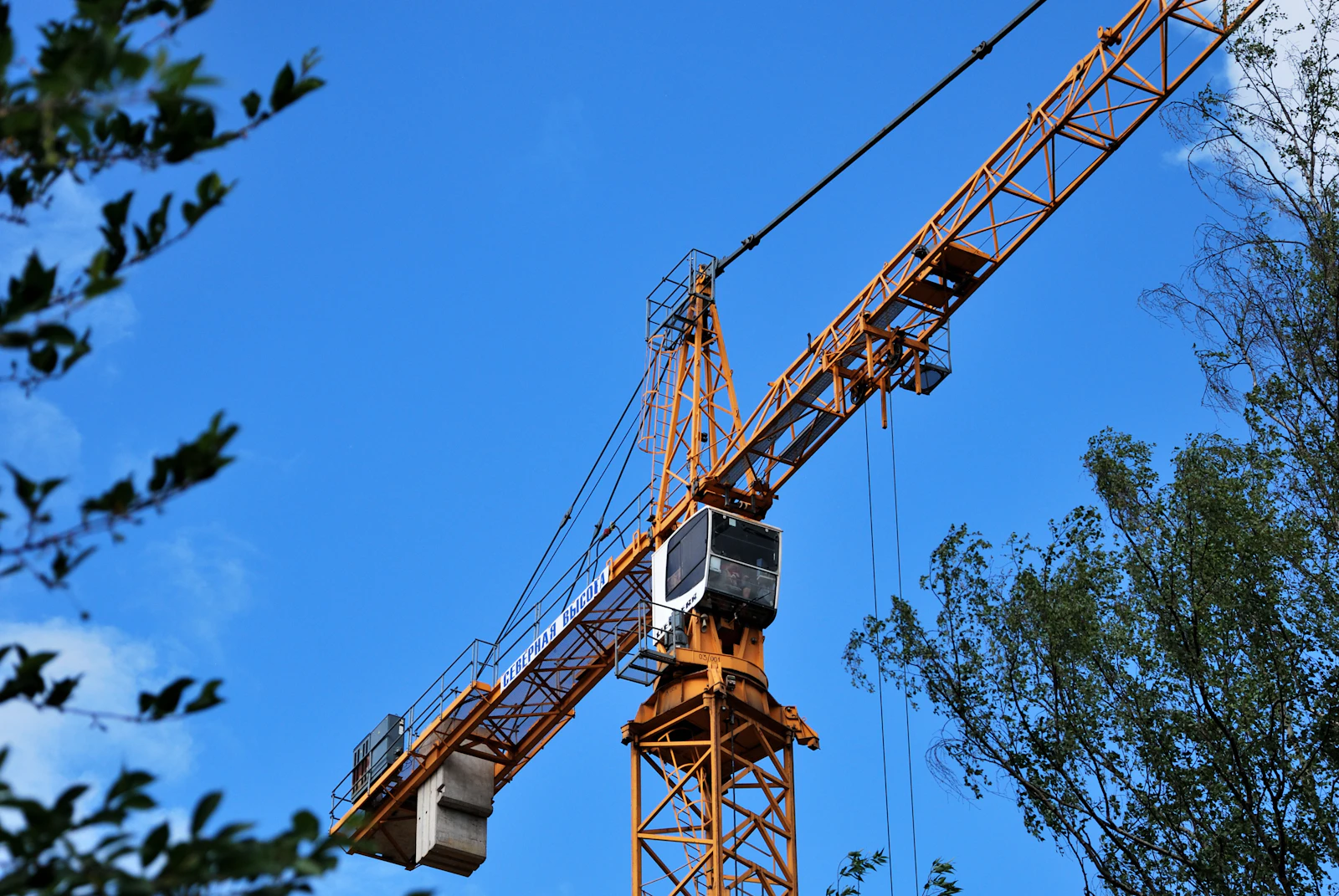
mobile and crane in construction work

Terms That Change Total Mobile Crane Hire Cost (Read Before You Sign)

For Sacramento mobile crane equipment hire, two quotes with the same hourly rate can land thousands apart once terms are applied. Before you release a PO, validate these cost-sensitive clauses.

Off-rent rules and cutoffs

Confirm how “off-rent” is triggered: written notice, a portal timestamp, or physical departure. If your project is uncertain (tenant delays, late delivery of the load), negotiate a clear off-rent cutoff time to avoid paying an extra day/shift.

Standby versus productive time

Many crane providers bill the same hourly rate during standby because the asset and crew are committed. In your internal estimate, carry at least 0.5–1.5 hours of standby risk on complex sites. If you have predictable delays (e.g., roof hatch access, set-down area not cleared), budget 2+ hours standby.

Overtime, after-hours, and emergency callouts

Public bid schedules commonly separate “base” rates from premiums (for example, schedules that note they do not include double time Sundays/holidays, and also list an OT line item value). Within Sacramento city limits, municipal contracts can show materially higher after-hours crane services pricing (example: $450/hr for emergency/after-hours crane services in one City of Sacramento exhibit). (g If your work window is outside normal hours, treat it as a different procurement: different minimums, different dispatch priorities, and higher crew premiums.

Insurance, Damage Waiver, And Risk Allocation

Crane hire cost is also a function of how risk is allocated. For operated crane rentals in California, many providers prefer to carry the operator and control the lift; your contract then focuses on property damage, load responsibility, and third-party claims.

  • Damage waiver (if available): Budget 10%–15% of the base equipment portion unless you confirm it’s included or waived.
  • Certificates and additional insured: Expect administrative lead time; in a tight schedule, it can translate into a real cost if a crane is dispatched but cannot start due to missing COIs.
  • High-value loads: If you’re setting switchgear, generators, or prefabricated mechanical skids, consider whether your builder’s risk or cargo policy is primary during the pick—and price that into your project risk budget.

Permitting And Compliance Cost Notes For Sacramento

Permitting and compliance aren’t always “crane rental line items,” but in Sacramento they frequently drive the total lift cost:

  • Street occupancy and lane impacts: If you need a lane closure, you’ll typically be paying for traffic control services and potentially additional notification/posting lead times. Treat this as a parallel workstream with its own schedule risk.
  • State-route proximity: If you touch Caltrans right-of-way, costs can escalate via stricter closure windows and additional controls. Even if your crane vendor doesn’t bill for this directly, you still pay through third-party traffic control and delayed picks.
  • Utility proximity: If you’re near overhead distribution, budget for coordination time; delays often become standby hours.

Bare Mobile Crane Rental Versus Operated Crane Hire

Mobile crane rentals are often quoted as “operated” (operator included) rather than bare equipment-only pricing, especially for higher-capacity classes. Bare mobile crane hire can appear cheaper on the equipment line, but you may add back:

  • Certified operator labor: often $95–$165/hr depending on shift rules and site requirements.
  • Oiler/riggers: as required by policy or lift complexity.
  • Insurance and indemnity: higher documentation burden and potentially higher premiums if you take operational control.

Operationally, the main reason managers still choose operated crane hire in Sacramento is schedule certainty and reduced interface risk (the provider controls the crane operations end-to-end).

How Weekly And Monthly Crane Hire Pricing Typically Scales

To convert quotes into comparable durations, remember that “weekly” and “monthly” crane pricing is rarely linear. Industry guidance often reflects that weekly pricing is typically 3–4× the daily rate (not 7×), and that you should budget a meaningful uplift above the base day rate to capture adders and friction. For internal Sacramento budgeting, a practical approach is:

  • Weekly (40 hours): carry 3.5× to 5× the daily rate depending on mobilization efficiency and whether the crane can remain on site.
  • 4-week (160 hours): carry 12× to 18× the daily rate for operated cranes when the asset is effectively dedicated, then add mobilization and any support equipment as separate lines. (The 160-hour/4-week structure is also consistent with common rental billing conventions.)

Cross-check (published examples from other markets): A DOT special rental sheet shows a 40-ton crane monthly rate example of $16,500 with $1,100 delivery/return freight. Separately, a county bid tab example for crane rental up to 100-ton capacity shows $6,250 per day (10 hours) and $23,000 per week. Use these as structural references (not Sacramento pricing) to sanity-check how quotes scale with duration.

Small On-Site Crane Alternatives (When A Mobile Crane Is Overkill)

If your Sacramento scope is indoor, tight access, or pick-and-carry, consider whether a carry deck crane or compact crane can reduce total cost by eliminating traffic control and heavy setup. As one published example, a carry deck crane rental listing shows $834 daily, $2,168 weekly, and $5,693 for 4 weeks. The lesson for estimators is not that Sacramento will match these figures, but that right-sizing equipment can remove entire cost categories (lane closures, escorts, large mat sets).

Closeout: Documentation That Prevents Disputes

Closeout discipline directly protects your equipment hire budget. Require the following in your Sacramento crane closeout package:

  • Off-rent confirmation: date/time, who authorized, and whether it is portal-to-portal billing.
  • Condition photos: outriggers, mats, street surface/curb, and any protection measures removed.
  • Timecards/logs: operator hours, riggers/oiler hours, standby time notes, and the reason code for delays.
  • Fuel documentation: confirm whether fuel is included, percent-of-invoice, or per-mile/per-hour with minimums (examples of both structures exist in published schedules).

When you control these basics, Sacramento mobile crane equipment hire becomes a repeatable estimating exercise rather than a post-job reconciliation fight.
