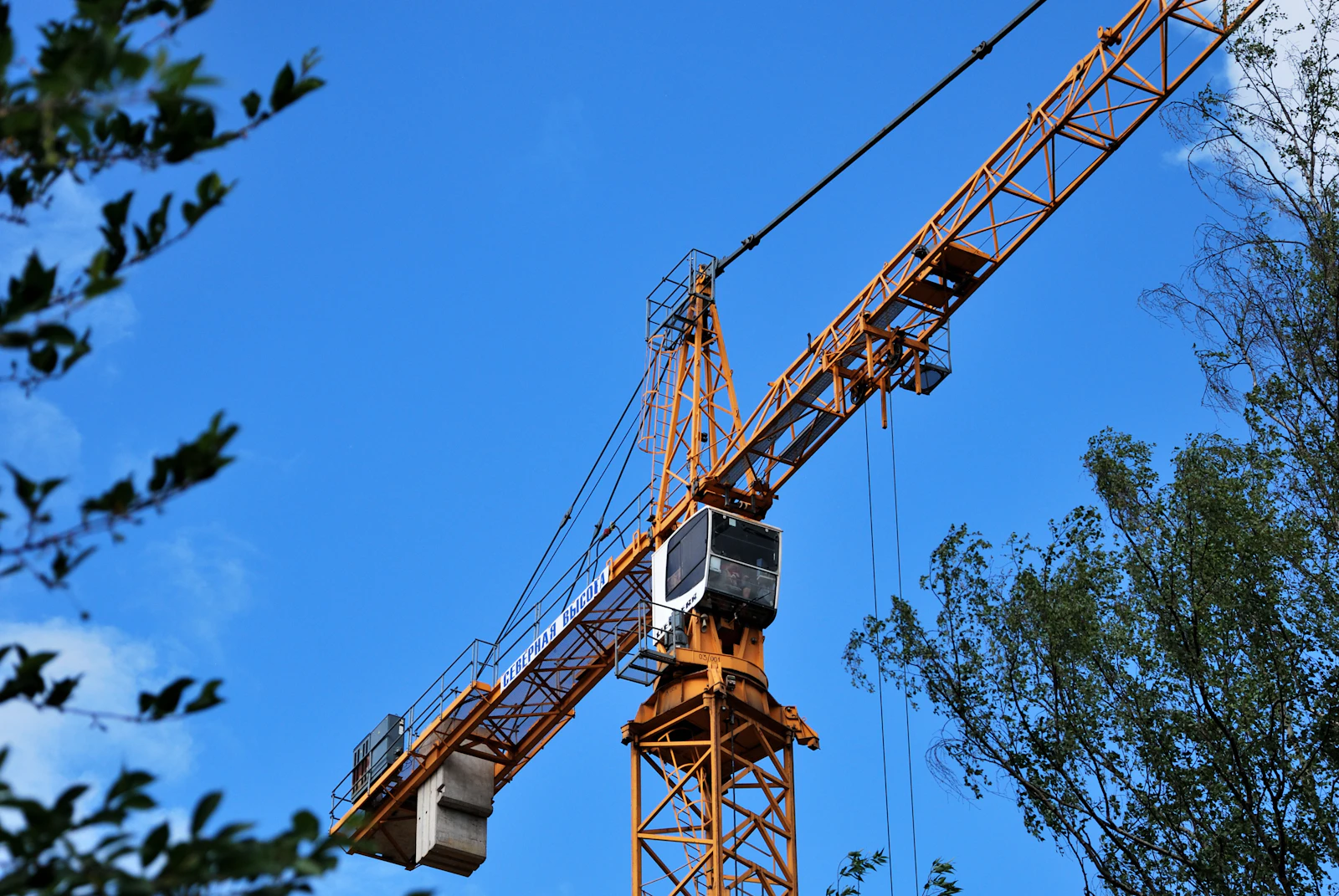
For structural steel erection in Sacramento, 2026 planning budgets for mobile crane equipment hire (operated-and-maintained, straight time) typically land in three bands: $2,200–$3,600/day, $10,500–$16,500/week, and $40,000–$62,000 per 4-week period for the common 60–90 ton class used for columns, beams, joists, and deck bundles. Smaller 35–40 ton truck cranes often plan at $1,700–$2,700/day and larger 110–130 ton classes at $3,400–$5,400/day once you factor minimums, portal-to-portal billing, and Sacramento access constraints. In the Sacramento market you’ll commonly see capacity available through national fleets and regional heavy lift operators (for example, Maxim, Bigge, United Rentals’ crane offering, and established Northern California crane service providers), but your actual hire price will hinge on radius, configuration, and how efficiently your steel erection sequence uses the crane clock. These ranges assume an 8-hour shift-equivalent day and normal weekday operations.
| Vendor |
Daily Rate |
Weekly Rate |
Review Score |
Website |
| Bigge Crane & Rigging Co. |
$4 250 |
$21 250 |
5 |
Visit |
| Maxim Crane Works |
$4 100 |
$20 500 |
4 |
Visit |
| Coastline Equipment Crane Division |
$3 600 |
$18 000 |
8 |
Visit |
| Dependable Crane, Inc. |
$2 800 |
$14 000 |
10 |
Visit |
Mobile Crane Rental Rates Sacramento 2026
The most defensible way to budget mobile crane hire costs for steel erection is to build from an hourly crane class rate, then convert it to day/week/4-week using the rental period definitions your suppliers apply. Many rental programs define: one day = one 8-hour shift, one week = five 8-hour shifts over seven days, and one month = twenty 8-hour shifts over 28 days.
Below are Sacramento 2026 planning ranges for operated mobile crane equipment hire (hydraulic truck crane or all-terrain where noted). These are not guaranteed prices; they are estimating ranges intended for bid-level budgeting and rental coordinators’ early procurement.
35–40 Ton Hydraulic Truck Crane (Tight Urban Steel, Small Picks)
- Hourly planning range: $225–$325/hr (often with a minimum billed block). Published California truck-crane rate sheets show examples around $245/hr (35 ton) and $255/hr (40 ton) before adders.
- Daily (8 hours): $1,700–$2,700/day (plus mobilization/demob and any counterweight/rigging adders).
- Weekly (5x8 hours): $8,500–$13,500/week.
- 4-week (20x8 hours): $32,000–$52,000 per 4-week period.
60–75 Ton Hydraulic Truck Crane (Most Common for Mid-Rise Steel Erection)
- Hourly planning range: $300–$475/hr. A published California rate sheet example lists $320/hr for 60 ton and $370/hr for 70 ton (before surcharges/adders).
- Daily (8 hours): $2,400–$3,800/day.
- Weekly (5x8 hours): $11,500–$18,500/week.
- 4-week (20x8 hours): $44,000–$70,000 per 4-week period.
90–110 Ton Hydraulic Truck Crane (Longer Radius, Heavier Beam/Truss Picks)
- Hourly planning range: $420–$650/hr. Published examples show $460/hr (90 ton) and $475/hr (110 ton) in California rate sheets prior to adders.
- Daily (8 hours): $3,400–$5,200/day.
- Weekly (5x8 hours): $16,500–$25,500/week.
- 4-week (20x8 hours): $62,000–$96,000 per 4-week period.
130–200 Ton All-Terrain (When You Need Chart at Reach or Complex Setups)
- Hourly planning range: $575–$1,050/hr depending on configuration, site congestion, and how many support loads (counterweight, boom inserts, mats) are required.
- Daily (8 hours): $4,600–$8,400/day.
- Weekly (5x8 hours): $22,000–$41,000/week.
- 4-week (20x8 hours): $84,000–$155,000 per 4-week period.
Reality check for Sacramento budgeting: even if your “lift time” is short, many crane providers bill portal-to-portal and enforce 2–4 hour minimums depending on the time-of-day and day-of-week, which can make a “quick set” price like a half-day.
What Drives Mobile Crane Equipment Hire Cost for Structural Steel Erection?
Steel erection is rarely priced like a simple HVAC pick. Your mobile crane hire cost in Sacramento is driven by how close your lift plan runs to the load chart and how much unproductive time you expose the crane to (waiting on bolt-up, deck bundles not staged, missing pick points, etc.). Key cost drivers to model early:
- Capacity at radius (not “tons”): The same “90 ton” crane can price very differently if you need a luffing jib, more counterweight, or a longer boom for reach over a setback. Industry pricing guidance commonly ties higher rates to more demanding chart requirements and configuration complexity.
- Minimum hours and billing method: Common minimums are 3–8 hours depending on provider and job type, and many providers count from yard departure to yard return.
- Crew package requirements: Depending on scope, you may need the crane provider to supply an oiler, rigger, or signalperson (or your steel sub provides them). Some published California rate sheets show specific adders such as $160/hr for a rigger and overtime manpower premiums (e.g., $74 for one additional man in certain overtime windows).
- Site congestion and setup moves: Each move (re-crib, re-mat, reposition outriggers) is paid time. Downtown Sacramento grid constraints, limited laydown, and protected pedestrian routes can convert what looks like “two picks” into a full day.
- Ground bearing and matting: If you’re on improved slab, utilities, vaults, or landscaped podium, you’re likely buying crane mats, supplemental dunnage, or engineered outrigger reactions. Budget mat rentals at $25–$60 per mat per day plus delivery handling.
- Permits, escorts, and access control: Oversize/overweight routing, street occupancy, and lane closures can add both hard costs and schedule risk. Even when a permit fee is modest, the window (delivery curfew and police/flagger availability) is what drives paid standby.
Typical Add-Ons and Line-Item Charges (Sacramento)
Most variance between crane quotes is not the base hourly—it’s the adders. When you’re comparing mobile crane equipment hire pricing, ask for these items to be explicitly stated (either included or excluded) so your steel erection budget doesn’t absorb surprises:
- Mobilization / demobilization: Plan $450–$1,200 for smaller truck cranes and $1,200–$3,500 for larger units needing support loads.
- Counterweight support truck: Some providers bill a flat amount or separate hourly. Example published rate details include a counterweight flatbed charge such as $450 for the first 8 hours on certain configurations.
- Travel / access permits: Published examples include a $95 travel permit cost (plus pass-through permit charges).
- Jobsite distance adders: Some published 2026 price lists show +$25/hr beyond 50 miles and portal-to-portal billing.
- Fuel / environmental / insurance surcharge: A published California rate sheet example applies 10% on the total invoice for fuel/environmental/insurance.
- OCIP / certified payroll administration: If your project requires certified payroll processing or OCIP compliance, published examples show a $285 one-time fee.
- Rigging package: Budget $85–$225/day for basic spreader bars / shackles, or $250–$650/week for a fuller “steel erection” rigging kit depending on what your ironworkers already carry.
- Lift plan / engineered pick (when required): Budget $350–$1,200 for a formal lift plan package; critical lifts with stamped engineering can run $1,500–$3,500 depending on complexity and turnaround.
- Standby / waiting time: If your contract differentiates standby, budget $150–$300/hr (and confirm whether it’s discounted from working rate or billed at full rate).
- Cancellation / dry run: Plan a minimum charge such as a 4-hour minimum if you cancel late or the crane can’t access the site (gate locked, steel not staged, inadequate pad). Minimum-block policies are common in published schedules.
Hidden-Fee Breakdown
When forecasting mobile crane hire cost in Sacramento, include these “hidden” cost mechanics in your estimate narrative and your subcontract exhibits:
- Overtime windows: Some published rate sheets define overtime triggers as work beyond 8 hours/day and/or before 6:00 AM or after 5:00 PM and Saturday work.
- Overtime premiums: A published 2026 price list shows an overtime add of $60/hour to the crane rate.
- Additional manpower premiums: Example adders shown on published rate sheets include $74 (one man), $144 (two man), and $160 (rigger) in overtime contexts.
- Emergency / after-hours rates: City procurement schedules in Sacramento show that “crane services during emergencies and after regular work hours” can price materially higher (example: $450/hour in an all-inclusive schedule). (g
- Credit card fees: Some providers publish a 3% credit card fee; decide in advance whether you will pay by ACH/check to avoid cost creep.
- Delivery windows and missed pickups: If your supplier uses third-party hauling, you may be quoted a “local” delivery assumption and then get hit with redelivery or extended standby if the crane arrives outside the workable erection window. Delivery-time uncertainty and additional charges for specific delivery times are explicitly called out in some rental programs.
- Extensions and off-rent notice: If you keep the crane beyond the confirmed term, many rental programs require advance notice (example guidance: call at least 4 hours before the end of the period) or you risk an extra billed day.
- Cleaning and return-condition documentation: Budget $150–$400 for pressure washing or cleanup when the crane works in mud, slurry, or heavy dust; require time-stamped photos at mobilization and demob to avoid damage disputes.
Sacramento-Specific Planning Notes for Steel Erection
- Downtown grid logistics: Midtown/Downtown Sacramento steel erection frequently means constrained setup footprints, limited laydown, and strict pedestrian protection. Even without a huge permit fee, the practical cost impact shows up as extra hours (paid minimums) and sometimes a larger crane class to keep radius short.
- Summer heat and wildfire smoke: In peak summer, hydration breaks and smoke events can slow ironwork production. If your crane is on a hard day rate, productivity hits translate directly to paid standby or a second day you did not plan. Build a 5%–10% time contingency into the crane line when your schedule is weather-sensitive.
- Delta breeze / gust management: Afternoon gusts can pause long-radius picks of joists or decking bundles. If wind hold is likely, confirm whether your contract has a discounted standby rate or if you pay full working rate.
- Local delivery radius assumptions: “Local delivery” commonly assumes a delivery radius that can vary by market (example guidance shows 25–50 miles). If your crane is dispatched from a Bay Area yard due to Sacramento availability constraints, expect meaningful mobilization and/or mileage impacts.
Example: 3-Day Mobile Crane Hire for Mid-Rise Structural Steel Erection in Sacramento
Scenario: 6-story medical office shell near the urban core. Erection scope includes setting W-shape columns and beams with joists and deck bundles. Job runs Tue–Thu, 7:00 AM–3:30 PM, with one late day due to a delayed steel delivery.
Assumptions (estimator view): 90–110 ton truck crane class, portal-to-portal billing, 8-hour day, one certified operator included, and a dedicated rigger billed from the crane provider for consistency of signals and rigging control.
- Crane time: 24 hours at $475/hr = $11,400 (rate example published for a 110 ton class).
- Rigger from crane provider: 24 hours at $160/hr = $3,840 (published adder example).
- Mobilization/demobilization allowance: $1,100
- Travel/permit allowance: $95 (published example).
- OCIP/certified payroll admin (if required): $285 one-time (published example).
- Crane mats: 8 mats at $45/mat/day for 3 days = $1,080
- Rigging package allowance: $450
- Standby allowance: 1 hour at $300/hr = $300
- Late day premium: 2 hours of overtime premium at $60/hr = $120 (published example of OT add).
- Fuel/environmental/insurance surcharge: 10% of subtotal = about $1,867 (published example).
Resulting crane hire budget: approximately $20,500 for the 3-day set (rounded). This does not include your separate GC costs for lane closures, traffic control labor, or steel staging forklifts—those can easily add $1,500–$4,000/day depending on the street occupancy and flagging plan.
Budget Worksheet
Use this bullet worksheet to build a bid-level mobile crane equipment hire cost line item for Sacramento structural steel erection (no tables, estimator-ready):
- Base crane hire (operated): ___ hours at $___/hr (use class range; include minimum-hours rule)
- Mobilization/demobilization: $450–$1,200 (truck crane) or $1,200–$3,500 (larger / support loads)
- Counterweight/support truck: $450/shift (where applicable) or $___/hr (confirm billing method).
- Rigging gear allowance: $85–$225/day (basic) or $250–$650/week (steel kit)
- Rigger/signalperson (if supplied by crane vendor): $120–$160/hr (confirm class and minimum).
- Lift plan/engineering allowance: $350–$1,200 (standard) or $1,500–$3,500 (critical lift)
- Mats/dunnage allowance: $25–$60 per mat per day + handling
- Permits/escorts allowance: $250–$1,500 (varies by route and closures) + a $95 travel/permit processing placeholder where applicable.
- OT / premium time allowance: $60/hr add or 1.5x after 8 hours (confirm contract).
- Fuel/environmental/insurance surcharge allowance: 6%–12% (example published: 10%).
- OCIP/certified payroll allowance: $0–$285 one-time depending on requirements.
- Contingency for schedule variability: 5%–10% of crane time for steel delivery or wind holds
Rental Order Checklist
Use this checklist to keep your mobile crane hire PO clean and your closeout fast on Sacramento steel erection packages:
- PO scope clarity: crane class/capacity, boom/jib configuration, counterweight, hook blocks, and any specialty rigging included/excluded
- Billing rules: portal-to-portal vs on-site clock, minimum hours (2/3/4/8), and how travel time is counted.
- Shift definition: confirm 8-hour day and 5-day week assumptions; confirm weekend/holiday premiums.
- Delivery window: required onsite time, gate access, and cutoffs; confirm whether a guaranteed time triggers extra charges.
- Site readiness: crane pad/matting plan, underground utility clearance, swing radius barricades, and dedicated assembly area if needed
- Lift execution: pick list, maximum pick weights, radii, tandem lift flags, and wind limits for the steel package
- Personnel: who supplies operator, oiler, rigger, signalperson; certify credentials required by the project
- Insurance documentation: COIs, additional insured wording, waiver of subrogation, and any OCIP enrollment steps (if applicable)
- Off-rent process: required notice, who authorizes extra time, and how extensions are requested (some programs require notice hours before end-of-term).
- Return condition documentation: demob photos, damage walkaround signoff, and final time tickets approved daily
How to Reduce Mobile Crane Hire Cost Without Cutting Lift Safety
For structural steel erection, you typically reduce mobile crane equipment hire cost in Sacramento by eliminating paid “dead time,” not by forcing a smaller crane. Tactics that consistently lower total crane hours while maintaining safe margins:
- Sequence the steel to minimize repositions: If one crane move costs 45–90 minutes of paid time (breakdown, travel within site, re-mat, re-level, re-rig), reducing even two moves can offset a higher hourly crane class.
- Pre-stage picks to match the day’s radius: Stage bundles and members so the crane stays within a tight radius band; large radius variability forces configuration compromises and can increase hours due to slower handling.
- Standardize rigging and pick points: Repeated, consistent picks (same choke lengths, same spreader, same connection strategy) reduce cycle time—especially on joists and deck bundles.
- Use a dedicated lift director plan for the week: A clear pick list (member mark, weight, radius, set location) reduces “decision time” that otherwise becomes paid standby. Some rental guidance emphasizes that there is no simple one-rate answer because unique lift requirements drive cost.
Scheduling and Off-Rent Rules That Change Your Invoice
Crane quotes frequently look similar until you apply the supplier’s period definitions and cutoff rules. For 2026 planning, align your internal schedule to common rental period constructs:
- Day/week/4-week definitions: Many rental programs define 1 day = 1 shift (8 hours), 1 week = five 8-hour shifts, and 1 month = twenty 8-hour shifts over 28 days. If you plan a “week” as seven working days, you’ll unintentionally create overtime exposure or additional minimum days.
- Minimums and premium windows: Published schedules show that after-hours and weekend work can trigger four-hour minimums and special billing windows (for example, reduced minimums in the daytime and higher minimums nights/weekends).
- Emergency rates: Sacramento-area public schedules show after-hours/emergency crane services priced much higher (example: $450/hr in an all-inclusive schedule), so treat “unplanned Saturday steel” as a risk item, not a minor adjustment. (g
- Extension notice and end-of-rental mechanics: Some rental programs require you to request extensions before the end of the rental period (example guidance: 4 hours notice). If your steel delivery slips, that administrative detail can turn into an extra day billed.
Operator, Rigger, and Certified Payroll Impacts in California
In California, labor compliance can materially impact your all-in crane and operator hire cost on public work and many large private projects that mirror public reporting. For planning purposes:
- Certified payroll/OCIP admin: Some crane providers publish a dedicated one-time compliance fee (example: $285).
- Labor surcharge and “equipment-only” rate concepts: Caltrans’ 2026–2027 equipment ownership rate book explicitly notes that operator cost is not included in the equipment rate and that labor surcharge percentages vary by type of work (including a distinct classification for Mobil Crane & Hoist Service). This matters when you’re reconciling T&M tickets, change orders, or force-account language against market crane hire pricing.
- Separate manning premiums: Published California crane rate sheets show line-item manpower adders (for example $160 for a rigger and overtime manpower premiums such as $74 and $144 in certain windows). Use these as placeholders if you expect the crane provider to furnish supplemental field labor.
Insurance, Damage Waiver, and Contract Terms to Watch
Mobile crane hire contracts are risk-forward. To keep your Sacramento steel erection crane cost controlled, align these terms before the crane rolls:
- Surcharges: Published examples include a 10% fuel/environmental/insurance surcharge. Confirm whether it applies to the entire invoice (including rigging and labor) or just the crane time.
- Credit card fees: Some providers publish a 3% credit card fee. If you’re paying retention late in the month, this can be a meaningful delta on a $50k crane package.
- Distance adders: If your project is outside the assumed local radius, published examples show adders like +$25/hr beyond 50 miles. In the Sacramento region, this becomes relevant when local availability pushes dispatch from outside the metro.
- OT definitions: Published schedules may price OT as an explicit hourly add (example: $60/hr added to crane rate) or as separate manpower charges. Make sure your erection schedule does not accidentally push picks into premium windows.
2026 Market Outlook for Sacramento Mobile Crane Hire
For 2026, Sacramento-area crane availability tends to tighten when multiple public works packages and large commercial projects overlap (especially spring through early fall). While broad industry guidance places mobile crane hourly pricing in wide ranges (for example, mobile crane averages often cited around $300–$700/hr with larger classes moving higher), the practical procurement risk is less about the midpoint rate and more about lead time, configuration availability, and support-load logistics.
For structural steel erection, plan procurement with these realities in mind:
- Book early for the “right” crane class: If the 60–90 ton class is committed, you may be offered a larger unit at a higher hourly even when your picks don’t need it. The cost of the larger unit can still be rational if it reduces cycle time and avoids re-rigging.
- Confirm support equipment: Counterweight trucks, mats, and rigging often determine whether a crane can actually show up on the promised date.
- Build a premium-time contingency: If you have any chance of Saturday catching up, include a premium allowance rather than hoping OT will not happen—published schedules show Saturday and after-hours triggers for OT adders and minimums.
Closeout and Return Documentation That Protects Your Budget
Unlike many general equipment rentals, crane hire costs are heavily ticket-driven. To avoid end-of-job disputes and post-completion cost growth:
- Daily ticket signoff: Require your superintendent or steel foreman to sign daily time tickets (start/stop, standby vs working, travel clock, breaks).
- Photos at arrival and demob: Time-stamped photos of mats, outrigger locations, and any existing site damage reduce back-charges and confusion about responsibility.
- Document delays: If the crane is waiting on steel trucks, missing pick points, or incomplete access control, write it down the same day; those hours are still billable, and you may be able to shift cost internally (or to another sub) with proper documentation.
- Confirm off-rent communication: If your rental program requires extension notice (example guidance: 4 hours), assign one person to manage that communication so you don’t buy an extra day unintentionally.
If you want, share your expected largest pick weight (lbs), max radius (ft), hook height (ft), and number of crane moves; I can turn the ranges above into a tighter Sacramento-specific budget band for your steel erection schedule.