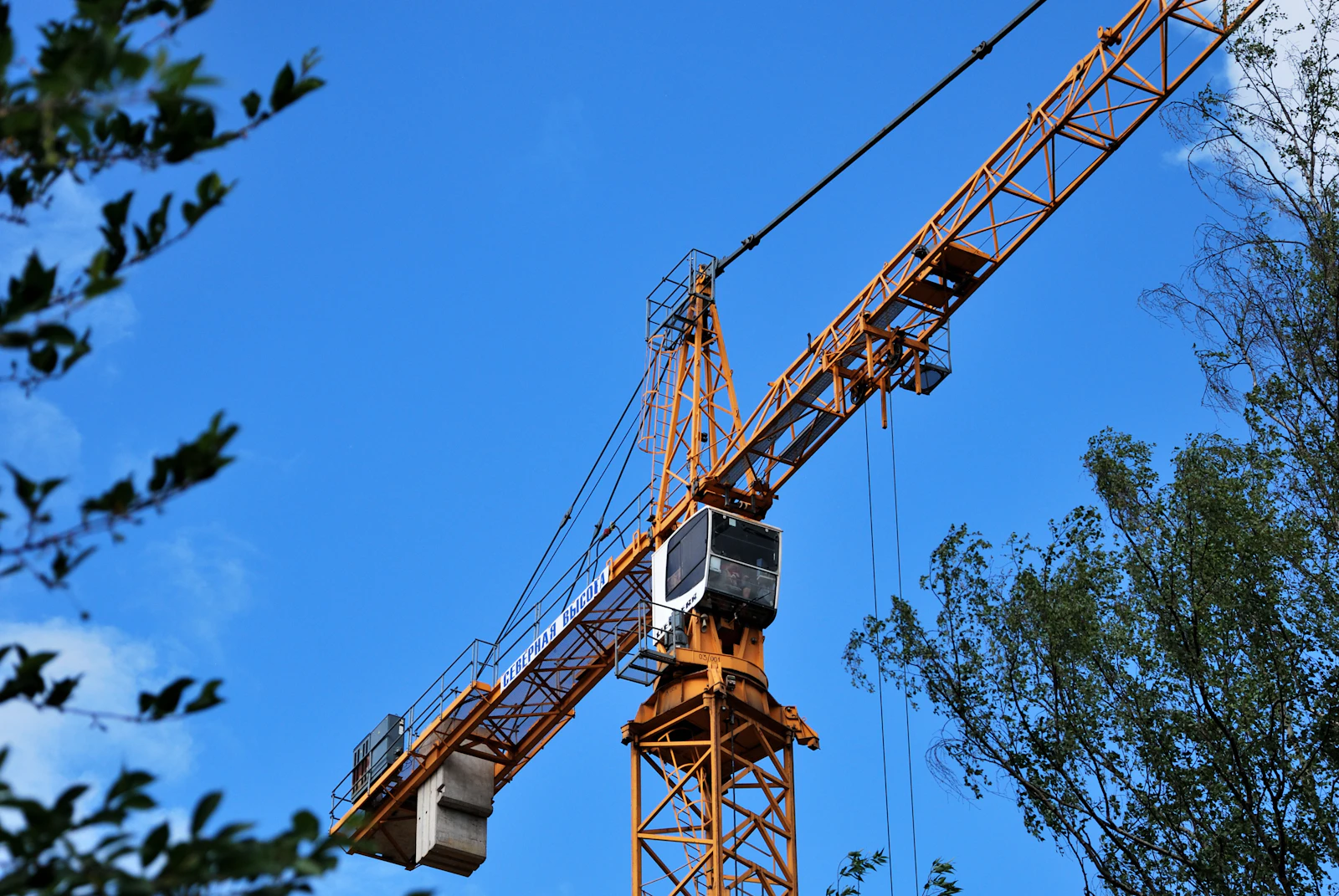
For mobile crane equipment hire in San Antonio supporting a generator installation, 2026 budgeting typically lands in these planning ranges (operator included unless noted): $250–$600/hour for common taxi-crane configurations, $2,200–$7,000 per 8-hour day, $8,500–$22,000 per 5-day week, and $18,000–$45,000 per 20-shift month depending on crane class, boom length, counterweight, travel, and lift-plan complexity. On most installs, the crane line item is only part of the total: mobilization, rigging crew minimums, matting, traffic control, and after-hours work frequently add 25%–80% to the base crane time. In San Antonio, rental coordinators typically quote through national providers (e.g., Sunbelt/United procurement channels) and local crane and rigging houses for best-available fleet and response windows.
| Vendor |
Daily Rate |
Weekly Rate |
Review Score |
Website |
| Alamo Crane Service, Inc. |
$2 300 |
$9 200 |
6 |
Visit |
| Howell Crane & Rigging, Inc. |
$2 250 |
$9 000 |
9 |
Visit |
| Texas Crane Services |
$2 200 |
$8 800 |
7 |
Visit |
| Scott-Macon Equipment (San Antonio) |
$1 900 |
$7 600 |
10 |
Visit |
| United Rentals |
$1 650 |
$6 600 |
9 |
Visit |
Mobile Crane Rental Rates San Antonio 2026
Assumptions for the ranges below (2026 planning): 1 day = 8-hour shift; 1 week = 5 shifts; 1 month = 20 shifts. Many crane providers bill portal-to-portal (yard-to-yard) with a 4-hour minimum (sometimes 8 hours for specialty work or union crew minimums). Generator installation pricing also assumes normal business hours, clear set-up area, and no engineered lift plan unless stated.
Typical San Antonio mobile crane hire rate ranges by crane class (operator-in)
- 15–25 ton (carry deck / small RT for tight MEP yards): $200–$325/hour; $1,100–$2,100/day; $4,500–$7,500/week; $12,000–$18,000/month.
- 35–50 ton hydraulic truck/RT (common for pad-mounted gensets, short radii): $250–$450/hour; $2,200–$4,800/day; $8,500–$16,000/week; $18,000–$30,000/month.
- 60–90 ton hydraulic truck/RT (common when radius/height drives chart): $325–$600/hour; $3,000–$7,000/day; $11,000–$22,000/week; $25,000–$45,000/month.
- 100–140 ton class (roof sets, long boom, heavier picks, restricted swing): $450–$850/hour; $4,500–$9,500/day; $17,000–$32,000/week; $35,000–$65,000/month.
Reality check from published rate sheets (Texas benchmark): some crane companies publish hourly pricing for specific truck cranes (for example, a Grove TMS800E listed around $246–$259/hour and a Grove TMS9000-2 around $325/hour, with a stated fuel surcharge of 10 gallons per hour at market rate and an additional counterweight transport adder around $159–$175/hour). Treat these as benchmarks, not guaranteed San Antonio pricing, because dispatch distance, job conditions, and market demand will move the final quote.
Public-sector pricing references (useful for caps/validation): (1) A GSA schedule example shows a 50-ton crane rental per-day line item in the low $4,200–$4,377/day range (pricing varies by period and schedule terms). (2) GSA short-term rental “ceiling rates” can be substantially higher than commercial market quotes; for example, it lists a ceiling for a 45–50 ton industrial crane at $16,666.98 for max daily/weekly/monthly in that ceiling table (use this as an administrative ceiling reference, not a market expectation).
Longer-term bare equipment hire (crane only) vs taxi-crane service: if you are sourcing bare crane equipment hire (no operator; more common in industrial turnarounds and specialty contracts), Texas county procurement packets show monthly bare rentals such as $8,500/month (50 ton), $9,750/month (60 ton), $12,500/month (75 ton), and scaling up to $22,250/month (200 ton)—not including insurance, taxes, operator, rigging, or mobilization.
What Drives Mobile Crane Equipment Hire Costs for Generator Installation?
Generator installation is a classic “chart-driven” lift. Even when the genset weight looks manageable, the radius (setback from building, vault, or pad) and hook height (parapet/roof edge, screen wall) typically drive the crane selection, counterweight package, and whether you need a luffing jib or longer main boom. Cost drivers that show up immediately in crane equipment hire quotes include:
- Load weight plus rigging weight: a 12,000 lb generator with 800–1,500 lb of rigging and lifting beam can push you into the next crane class when radius increases.
- Radius management: pushing the crane 10–15 ft farther away to protect landscaping, stay off suspended slabs, or avoid underground utilities often costs more than the entire rigging package because it changes the crane and counterweight requirement.
- Number of picks and “hook time” variability: a simple 1-pick set vs. 6–10 picks (equipment, day tank, mufflers, louvers, sound attenuators) can turn a 4-hour minimum into a full billed day.
- Site preparation: matting on caliche/utility backfill, outrigger cribbing, and exclusion-zone control add time and support-vehicle charges.
- Access and travel time: portal-to-portal billing and weekday congestion affects San Antonio total billable hours (especially cross-town routes that hit I-35/I-10/I-410 traffic peaks).
San Antonio-Specific Cost Considerations for Mobile Crane Hire
San Antonio generator installs have a few local realities that can shift total crane equipment hire cost even when the crane class stays the same:
- Heat and early-start premiums: summer heat frequently pushes lift windows to early morning for safety and equipment performance; if your contract defines overtime as work between 6 PM and 7 AM or after 8 hours, you can trigger premium hours even on “short” installs. (Many rate sheets explicitly flag these overtime windows.)
- Base access (JBSA and federal sites): expect gate queues, escort rules, badge checks, and stricter documentation. If the crane is billed portal-to-portal, a 45–90 minute gate delay can be real money at $350–$600/hour.
- Downtown and hospital campuses: tighter streets, patient-safety requirements, and limited staging can require a second truck for counterweights, a larger crane to reduce swing over public areas, or scheduled deliveries inside a 30–60 minute window.
Hidden-Fee Breakdown: What Commonly Gets Added to the Crane Line
When you review a mobile crane hire quote for generator installation in San Antonio, budget for these common adders so the total cost does not surprise the PM team:
- Mobilization/demobilization: $450–$1,200 for small cranes; $900–$3,500 for 60–140 ton class, depending on distance and whether a support truck is required.
- Mileage or travel: $6–$12 per loaded mile beyond an included radius (common when the crane must come from Austin/Houston/South Texas yards during peak demand).
- Minimum hours: 4-hour minimum is common for the crane; rigging crews may carry 8-hour minimums depending on labor model.
- Counterweight truck (when required): often quoted as a separate hourly line; published examples show about $159–$175/hour with transport truck/driver included.
- Fuel surcharge: can be a percentage (often 5%–12%) or a defined consumption basis; some published sheets state “10 gallons per hour at market rate.”
- Rigging labor: signal person/lead rigger $75–$125/hour; additional rigger $65–$110/hour.
- Rigging gear rental: spreader bar or lifting beam $150–$600/day; synthetic slings $25–$60/each/day; shackles $8–$20/each/day; taglines $15–$35/day.
- Ground protection and matting: timber/composite mats $75–$150 per mat per day; cribbing blocks $40–$120/day; plus delivery/pickup $150–$400.
- Traffic control / lane closures: $90–$140/hour per tech with a 4-hour minimum; cones/signage trailer $150–$350/day; permit/coordination $75–$250 (project dependent).
- Lift planning: basic lift plan $350–$1,500; engineered/sealed plan $1,500–$4,000 (typical when you are near powerlines, over occupied structures, or using multiple cranes).
- Standby and weather: standby frequently billed at 50%–100% of hourly rate if delays are not crane-caused (confirm contract language).
- Cleaning and return condition: $150–$500 if the crane/rigging returns with concrete slurry, mud, or heavy grease contamination.
- Cancellation/dry run: late cancel (often less than 24 business hours) commonly triggers $250–$1,000+ depending on dispatch and travel already incurred.
Example: Mobile Crane Hire Budget for a Generator Installation in San Antonio
Scenario: You are setting one emergency generator (approx. 18,000 lb) onto a hospital yard pad. Crane set-up is tight, and the lift requires additional counterweight. The crane arrives from a local yard with portal-to-portal billing; work is scheduled 6:30 AM to reduce campus traffic.
- Crane + operator: assume 8 billed hours at $325/hour = $2,600 (benchmark example from published rate sheets).
- Counterweight truck package: 8 hours at $175/hour = $1,400 (benchmark example).
- Fuel surcharge allowance: 10 gal/hour × 8 hours × $3.75/gal (example market rate) = $300.
- Mobilization/demobilization: allowance $850 (city-area dispatch).
- One signal person (8-hour minimum): 8 hours at $85/hour = $680.
- Rigging gear: spreader beam $250/day + slings/shackles $120/day = $370.
- Matting: 8 mats at $95/day = $760, plus mat delivery/pickup $250.
Estimated crane-related total (planning): $2,600 + $1,400 + $300 + $850 + $680 + $370 + $760 + $250 = $7,210, then add a 10% coordination contingency ($721) for gate delays, escort time, or a second pick attempt due to alignment constraints. Budgetary total: ~$7,900. Key operational constraint: if your contract defines overtime between 6 PM and 7 AM, your 6:30 AM start may carry premium time—confirm before issuing the PO.
How Weekly and Monthly “Crane Hire” Is Commonly Counted (Avoid Billing Confusion)
Weekly and monthly equipment hire periods are not always calendar-based; many rental programs define time as shifts (important when comparing quotes). One common definition used in equipment procurement is: 1 day = one 8-hour shift, 1 week = five 8-hour shifts, and 1 month = twenty 8-hour shifts over a 28-day period. Align your internal schedule-of-values to the provider’s definition so you do not under-budget the crane on multi-day generator installations.
Practical Ways to Reduce Mobile Crane Equipment Hire Cost (Without Taking Lift Risk)
- Force the radius down: pay for temporary fencing moves, minor demo, or a short-duration laydown area to move the crane closer; saving one crane class can be worth $150–$300/hour.
- Pre-stage rigging and dunnage: have cribbing, bolt kits, and alignment tools in place so you do not burn billed crane hours while trades “hunt parts.”
- Lock the delivery window: if your site only accepts deliveries 9–11 AM, you can accidentally pay portal-to-portal standby from 7 AM. Set a hard call-out time and confirm cutoffs.
- Document return condition: photos of mats, slings, spreader beams, and hook block at demob reduce post-job cleaning/damage disputes.
What to Put in the PO for Mobile Crane Equipment Hire (Generator Installation)
For generator installation in San Antonio, most cost overruns happen when the PO is “crane for one day” with no commercial terms attached. Your purchase order should mirror the quote structure and explicitly control chargeable time, off-rent rules, and adders.
Budget Worksheet (No Tables)
- Base mobile crane hire (operator-in): ___ hours at $___/hour; include a 4-hour minimum assumption unless contract states otherwise.
- Portal-to-portal travel allowance: ___ hours (often 1–3 hours total for San Antonio metro depending on yard location and traffic).
- Mobilization/demobilization: allowance $450–$3,500 (scale with crane class and support trucks).
- Counterweight/support truck: allowance $160–$175/hour when required (or flat “counterweight move” fee if quoted).
- Fuel surcharge: allowance 5%–12% of crane time or a consumption basis (e.g., 10 gal/hour at market rate, where stated).
- Rigging crew: 1 signal person at $75–$125/hour (often 8-hour minimum); add 1 rigger at $65–$110/hour if your GC is not furnishing rigging labor.
- Rigging gear rental: lifting beam/spreader $150–$600/day; slings/shackles kit $80–$250/day; taglines $15–$35/day.
- Matting and cribbing: $75–$150 per mat per day; mat handling/delivery $150–$400.
- Traffic control/permits: allowance $300–$1,500 (lane closure labor, cones/signage trailer, permit processing; job-dependent).
- Lift planning/engineering: allowance $350–$1,500 for a lift plan; $1,500–$4,000 if sealed engineering is required.
- After-hours premium: allowance 1.5× for overtime (confirm exact trigger such as after 8 hours or between 6 PM and 7 AM).
- Cleaning/return condition: allowance $150–$500 (mud, concrete, oily residue on mats/rigging).
- Contingency: 10%–15% for gate delays, escort requirements, weather holds, or missed delivery windows.
Rental Order Checklist
- PO language: include crane class (tonnage is not enough), boom/jib configuration assumptions, counterweight package assumptions, and whether the quote is portal-to-portal.
- Delivery window: define site call-out time, on-site start time, and a hard “no earlier than” time to prevent unplanned standby.
- Site access: confirm gate procedure (JBSA/federal sites), escort needs, badge requirements, and estimated security wait time; specify whether wait time is billable.
- Ground conditions: provide geotech notes if available; confirm who supplies mats/cribbing and where outriggers can load (slab limits, utility maps).
- Lift plan requirements: confirm whether an engineered lift plan is required, and who is responsible (crane provider vs GC vs third-party engineer).
- Safety documentation: COI, operator certs, daily inspection logs, and site-specific JHA/JSA requirements.
- Rigging responsibility: state who supplies rigging gear (slings, shackles, spreaders), who inspects it, and who acts as the designated signal person.
- Return/off-rent rules: define how to call off-rent (email/text), cutoff time (often same-business-day cutoffs cause an extra billed shift), and weekend/holiday billing rules.
- Return condition documentation: require demob photos of rigging gear and mats; log any pre-existing wear to avoid back-charges.
Contract Terms That Change Real Crane Hire Cost
These operational constraints should be negotiated up front because they frequently drive the delta between “quoted” and “paid” on San Antonio generator installation lifts:
- Weekend and holiday billing: some providers bill weekend days as full shifts once the crane is committed to the job; if your install slips from Friday to Monday, confirm whether Saturday/Sunday are billed.
- Off-rent cutoffs: if off-rent must be called by 3:00 PM the prior business day, missing the cutoff can create an extra day/shift charge.
- Standby definitions: clarify if standby is billed at 50% or 100% of hourly when delays are GC-caused (late generator delivery, missing anchor bolts, not-ready pad).
- Refuel expectations: clarify whether fuel is included, surcharged, or billed on consumption; published examples use explicit consumption surcharges (e.g., 10 gal/hour at market rate).
- Indoor dust-control (when applicable): if a carry deck is used inside a plant for final set, confirm floor protection, tire wraps, spill kits, and cleanup scope (avoid surprise cleaning fees).
- Dry run charges: define what counts as a billable dry run (site not ready, blocked access, missing permits) and establish a capped fee if possible.
Scorecard Placeholder