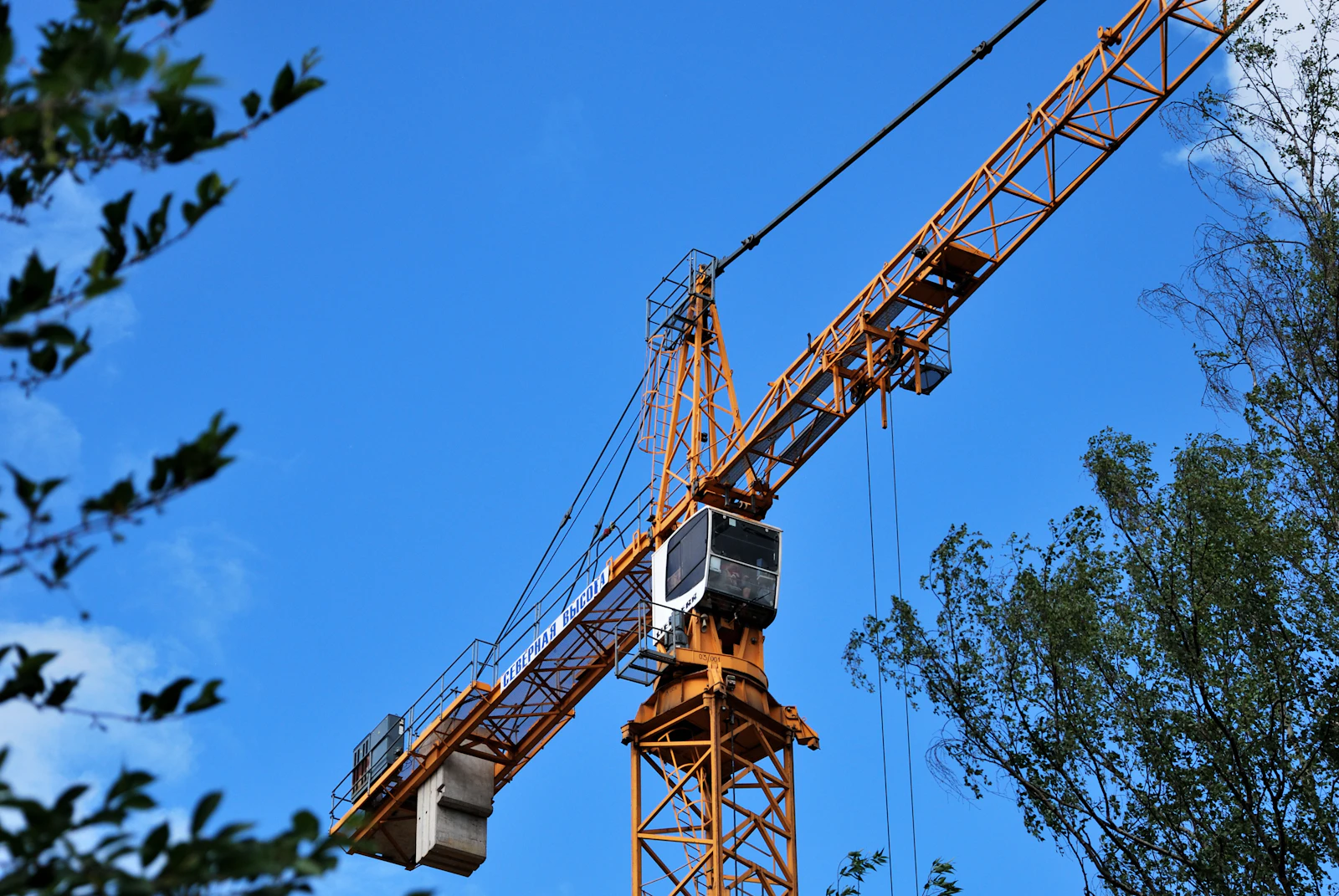
Mobile Crane Rental Rates San Antonio 2026
For mobile crane rental (operated mobile crane equipment hire) in San Antonio in 2026, plan most mid-size hydraulic cranes in the 40–90 ton class to price primarily on an hourly, portal-to-portal basis with minimum hours, then translate that into shift-based budgeting. As a 2026 planning range (assuming an 8-hour straight-time shift, one crane/operator, normal setup, and no unusual permits/escorts), expect about $1,700–$2,900 per day, $7,500–$12,500 per week (40 hours), and $24,000–$46,000 per month (160 hours) for common operated mobile crane hire. Smaller “city” cranes and boom-truck-style lifting will often budget lower, while heavier all-terrain and multi-operator configurations budget higher. In San Antonio, availability may come from both national fleets (e.g., United Rentals and Sunbelt Rentals where applicable) and specialist crane providers (e.g., Maxim and ALL Crane), but final pricing is driven less by brand and more by tonnage, reach, travel/mobilization, and jobsite constraints.
| Vendor |
Daily Rate |
Weekly Rate |
Review Score |
Website |
| TNT Crane & Rigging |
$2 150 |
$8 600 |
9 |
Visit |
| Scott-Macon Equipment (San Antonio) |
$1 950 |
$7 800 |
10 |
Visit |
| Howell Crane & Rigging |
$1 850 |
$7 400 |
9 |
Visit |
| Texas Crane Services |
$1 750 |
$7 000 |
7 |
Visit |
| Alamo Crane Service |
$1 900 |
$7 600 |
6 |
Visit |
Rate reality check: many crane providers quote hourly with a minimum and “port-to-port” billing (travel time included), rather than a pure day rate. A published 2026 crane service rate sheet shows straight-time hourly pricing such as $210/hr for a 40-ton (3-hour minimum), $235/hr for a 50-ton (3-hour minimum), $260/hr for a 65-ton (4-hour minimum), and $310/hr for a 90-ton (4-hour minimum), with overtime adding $60/hr, $25/hr added beyond 50 miles, and a 3% credit card fee where applicable (useful as a market benchmark when you build your San Antonio equipment hire budget).
How San Antonio Mobile Crane Hire Is Commonly Quoted (And Why “Daily Rate” Can Mislead)
When a PM or rental coordinator asks for a “daily rate,” most crane dispatchers still price the work as: (1) crane class and configuration; (2) minimum hours; (3) portal-to-portal billing window; (4) adders for rigging, mats, and logistics. That structure matters because a 3-hour minimum can become a billed 6–8 hours quickly if site readiness slips, if the pick sequence changes, or if downtown access windows close before you are ready to off-rent.
For estimating, use this conversion method for operated mobile crane equipment hire cost in San Antonio:
- Shift (day) budget = straight-time hourly x 8 hours (then add typical job extras)
- Weekly budget = straight-time hourly x 40 hours (confirm whether weekend standby is billable)
- Monthly budget = straight-time hourly x 160 hours (confirm off-rent rules and minimum weekly commitments)
Also distinguish between:
- Operated crane hire (operator included; common for mobile crane rental). Some rate guides explicitly note the hourly rate includes operator, maintenance, fuel, and insurance, which aligns with how most mobile crane services are billed.
- Bare crane rental (no operator). This is less common for one-off lifts but can appear on longer-duration projects with dedicated crews. Government equipment rental guides show examples of monthly bare rental figures for rough-terrain cranes (e.g., $8,500/month for 50-ton and $9,750/month for 60-ton as reference points), but freight, assembly, and compliance costs can easily dominate the total if the crane requires multiple truckloads or counterweight handling.
Key Cost Drivers for Mobile Crane Equipment Hire in San Antonio
Mobile crane hire pricing in the San Antonio market tends to swing on these drivers:
- Tonnage and chart-driven configuration: the “same” tonnage crane can price differently if you need a longer boom, a jib, or additional counterweight to meet radius and capacity requirements.
- Travel time and dispatch geography: portal-to-portal billing makes I-35/I-10 congestion and far-side-of-town work real money. Many crane services also add a distance adder beyond a set radius (one published 2026 schedule uses $25/hr beyond 50 miles as a benchmark).
- Downtown access and street occupancy: in central San Antonio, tighter setup footprints can require extra mats, traffic control, or off-hours delivery—each of which can introduce minimums and premiums.
- Ground conditions and matting: South Texas soils and caliche can require larger outrigger pads or timber/composite mats to meet bearing pressures. Not carrying mats in your estimate is a common “silent overrun.”
- Heat and weather planning: summer heat doesn’t change the load chart, but it can slow rigging cycles and increase hydration/rest breaks; if you are billed portal-to-portal, slower cycles increase billed hours unless you lock in production readiness.
2026 Planning Ranges by Common Mobile Crane Class (San Antonio Budgeting)
Use these as planning ranges for San Antonio mobile crane rental in 2026. Assumptions: straight time, typical 8-hour weekday shift, normal rigging, no extraordinary permitting/escorts, and jobsite is ready when the crane arrives.
- 23–30 ton mobile crane service: budget $180–$195/hr with a 2-hour minimum. Typical shift budget: $1,440–$1,560 plus adders.
- 40–50 ton mobile crane service: budget $210–$235/hr with a 3-hour minimum. Typical shift budget: $1,680–$1,880 plus adders.
- 65–70 ton mobile crane service: budget $260–$285/hr with a 4-hour minimum. Typical shift budget: $2,080–$2,280 plus adders.
- 90 ton mobile crane service: budget $310/hr with a 4-hour minimum. Typical shift budget: $2,480 plus adders.
Estimator note: these hourly numbers are best used as “should-cost” anchors. Your delivered cost in San Antonio frequently rises due to rigging crew minimums, mats, traffic control, and schedule windows.
Hidden-Fee Breakdown (What Actually Moves the Invoice)
For professional equipment hire cost control, treat the following as standard line items to confirm and carry:
- Minimum billed hours: common minimums are 2 hours (smaller cranes), 3 hours (40–50 ton), and 4 hours (65+ ton). If the lift finishes early, you still pay the minimum.
- Overtime: a published 2026 schedule uses an overtime adder of +$60/hr to the crane rate. Many providers also apply time-and-a-half rules after 8 hours or for weekends/holidays—confirm the trigger.
- Travel/portal-to-portal billing: if the crane is billed from yard-to-yard, a “short” lift can still bill 5–7 hours on the clock if travel and setup are not managed.
- Distance surcharge beyond a radius: one 2026 benchmark uses +$25/hr beyond 50 miles. Even inside Bexar County, confirm whether the job is “in zone.”
- Rigger / extra man: published 2026 benchmark shows $120/hr with a 2-hour minimum for a rigger/extra man. If you need 2 riggers, carry that twice and confirm their daily minimum (many rigs crews bill a full shift).
- Forklift or support lift: a 2026 benchmark lists $120/hr with a 2-hour minimum for a forklift—useful when unloading mats, counterweight, or rigging gear.
- Counterweight/boom configuration support: heavier configurations may require a smaller assist crane (one rate sheet notes a 23-ton may be required to erect/handle added boom/counterweight on a larger unit). That can turn a “single crane” day into a two-crane day.
- Payment method fees: some providers charge a 3% credit card fee; avoid surprises by aligning payment terms (PO/invoice vs card).
City-Specific Considerations That Affect San Antonio Mobile Crane Hire Cost
Three San Antonio realities that can materially change your equipment hire cost (even if your crane tonnage is correct):
- Downtown delivery windows and traffic: portal-to-portal billing means you should schedule arrival to avoid peak congestion; if your site only allows setup after a certain time, the “dead time” can still be billed unless you negotiate a start-at-site provision.
- Street/ROW coordination: if your lift needs partial lane closure or sidewalk occupancy, plan for permit/traffic control lead time and cost. Even when the crane rate is steady, traffic control can add multiple labor hours and potentially a separate subcontract.
- Heat-driven productivity limits: in July–September, plan for slower rigging cycles and allow for a longer billed window (especially for multi-pick HVAC sets) unless you can pre-stage picks and keep the crane continuously productive.
Example: Budgeting a One-Day HVAC Set With Real Constraints (San Antonio)
Scenario: Rooftop replacement with a 50-ton mobile crane on the north side of San Antonio. Eight rooftop picks, tight laydown, and the GC can only give a 7:00–3:30 window due to school traffic and tenant access restrictions.
- Crane (50 ton): carry $235/hr straight time x 8 hours = $1,880
- Portal-to-portal exposure: if travel/setup adds 1 hour each way and you are billed yard-to-yard, you could see 10 billed hours instead of 8 (carry a contingency of 2 hours = $470)
- Rigging support: 1 rigger at $120/hr with 2-hour minimum; if you actually need the rigger for the full shift, carry 8 hours = $960
- OT risk: if the last pick slips past the agreed window and you go into overtime, carry +$60/hr for 2 hours = $120 in crane premium (plus any labor OT multipliers)
- Distance adder risk: if dispatch is outside the radius and triggers +$25/hr for 10 hours, that’s $250
Takeaway: the headline “day rate” ($1,700–$2,900/day) is only the start. For San Antonio operated mobile crane equipment hire, schedule control (site readiness, staging, and a realistic billed window) is the most reliable way to prevent overruns.
Budget Worksheet (Mobile Crane Equipment Hire Allowances)
Use this field-friendly worksheet format when you request quotes and build a job budget (no tables—just line-item allowances):
- Crane class and configuration allowance: 40 ton / 50 ton / 70 ton / 90 ton (include required boom length, jib yes/no, counterweight requirement).
- Crane billing: ___ hrs straight time at $210–$310/hr (carry a minimum of 3–4 hrs even for short picks).
- Overtime premium allowance: ___ hrs at +$60/hr (plus confirm weekend/holiday rules).
- Travel/distance allowance: if outside radius, ___ hrs at +$25/hr beyond 50 miles (or your vendor’s zone schedule).
- Rigging labor allowance: ___ riggers at $120/hr (carry at least a 2-hour minimum each; many jobs require more).
- Support equipment allowance: forklift at $120/hr (2-hour minimum) if unloading mats/counterweight/rigging gear is expected.
- Lift planning allowance: engineered lift plan / critical lift meeting allowance $450–$1,500 depending on complexity and submittal needs.
- Matting allowance: carry $75–$225 per mat per day (quantity driven by outrigger load and bearing pressures).
- Traffic control/ROW allowance: flaggers/barricades allowance $85–$125/hr per person, plus any rental signage and a mobilization charge $250–$600.
- Permits allowance: city/utility coordination and oversize/heavy highway permits allowance $150–$900 depending on move and closures.
- Payment/processing allowance: carry 3% if paying by card or if your vendor applies a processing fee.
Rental Order Checklist (PO, Delivery, And Return Requirements)
Use this checklist to prevent change orders and “not-to-exceed” blowups on San Antonio mobile crane equipment hire:
- PO scope language: state crane tonnage/class, boom/jib configuration, and whether the quote is portal-to-portal or start-on-site.
- Minimum hours confirmed in writing: 2-hour, 3-hour, or 4-hour minimum (and whether “anything over X bills to 8” applies).
- Shift boundaries: confirm straight time window and the exact overtime trigger (after 8 hours, after 10 hours, or by clock time), plus the premium (benchmark +$60/hr to crane rate).
- Weekend/holiday billing rule: confirm whether Saturday is straight time, 1.5x, or a flat premium (carry a 10%–25% weekend premium allowance if not specified).
- Rigger needs: confirm how many riggers are included (if any). If separate, carry $120/hr per rigger with a 2-hour minimum as a benchmark.
- Matting responsibility: confirm who furnishes outrigger pads/mats and whether delivery of mats is included or requires a forklift/support truck (benchmark $120/hr forklift with 2-hour minimum).
- Site readiness requirements: laydown and pick path clear, swing radius protected, underground utilities located, and crane setup area graded/compacted before arrival to avoid billed standby.
- Access windows and cutoffs: document any downtown lane closure windows, noise restrictions, school traffic constraints, and whether the crane can stage on site if delayed.
- Permitting and compliance documents: COI with required limits/additional insured language; operator certification proof; crane inspection documents; and any engineered lift plan submittals if the GC/owner requires them.
- Off-rent / demob definition: specify when the clock stops (e.g., “off-rent when crane departs site” vs “off-rent when crane returns to yard”).
- Return-condition documentation: require time-stamped photos of setup area and any mats/road plates, plus sign-off on arrival/departure times to reduce disputes.
Cost Controls That Actually Work for Mobile Crane Hire
In practice, the best savings on mobile crane rental in San Antonio come from removing paid non-productive time and avoiding configuration surprises:
- Do a radius check early: if the lift requires more boom/jib/counterweight than expected, you may trigger an assist crane (some configurations explicitly note a smaller unit, such as a 23-ton, may be required to handle extra boom/counterweight on a larger crane).
- Stage picks to beat the minimum: if you are facing a 3-hour minimum, plan to keep the crane continuously picking—pre-rig loads, stage dunnage, and confirm rooftop receiver readiness.
- Control portal-to-portal exposure: set a realistic “gate open” time; if you force a crane to arrive early and wait, you pay. Conversely, if you delay the crane, you often still pay (standby or minimums).
- Negotiate distance adders: if the job will run multiple days, ask for a blended travel charge rather than an hourly mileage adder (benchmark: +$25/hr beyond 50 miles).
Permits, Escorts, And “Move” Costs (San Antonio Reality)
Even for “mobile” cranes, moves can trigger permitting and routing requirements based on size/weight. Texas issues mileage-based permits for moving unladen lift equipment that exceeds legal limits, and your vendor may pass through permit and route survey costs. Carry allowances such as:
- Permit processing: $150–$350 per move for routine permitting admin (higher if route complexity increases).
- Pilot/escort vehicles (if required): $125–$175/hr with 4-hour minimum per vehicle.
- After-hours move window: carry a dispatch premium $250–$500 if the move must occur at night to meet ROW restrictions.
When Bare Rental (Monthly) Can Pencil Out
If your project is long-duration and you have dedicated crane crews, bare monthly rental can be evaluated against operated hire. For reference, a Texas equipment rental rate guide shows monthly bare rental figures such as $8,500/month for a 50-ton rough-terrain crane and $9,750/month for a 60-ton rough-terrain crane (insurance and taxes not included in that guide). Bare rental can look attractive until you add: operator labor, oiler/rigger costs, maintenance expectations, mobilization, and compliance documentation. For many San Antonio projects, operated mobile crane hire remains the lower-risk procurement unless utilization is consistently high.
2026 Market Notes (What to Ask for in Quotes)
To keep your mobile crane equipment hire cost predictable in San Antonio, ask every bidder to quote the same scope language:
- Quote format: straight-time hourly, overtime rule, minimum hours, and whether pricing is portal-to-portal.
- Included items: operator, fuel, insurance, standard rigging gear, and normal setup time.
- Explicit adders: riggers at $120/hr (benchmark), forklift at $120/hr (benchmark), mats at $75–$225 each/day, engineered lift plan $450–$1,500, and any 3% processing fee.
- Schedule risk: cancellation window (24–48 hours is common) and a cancellation charge (often 2–4 hours of minimum billing).
If your bid package is consistent, you will get more comparable pricing and fewer “scope gaps” that turn into time-and-material disputes.