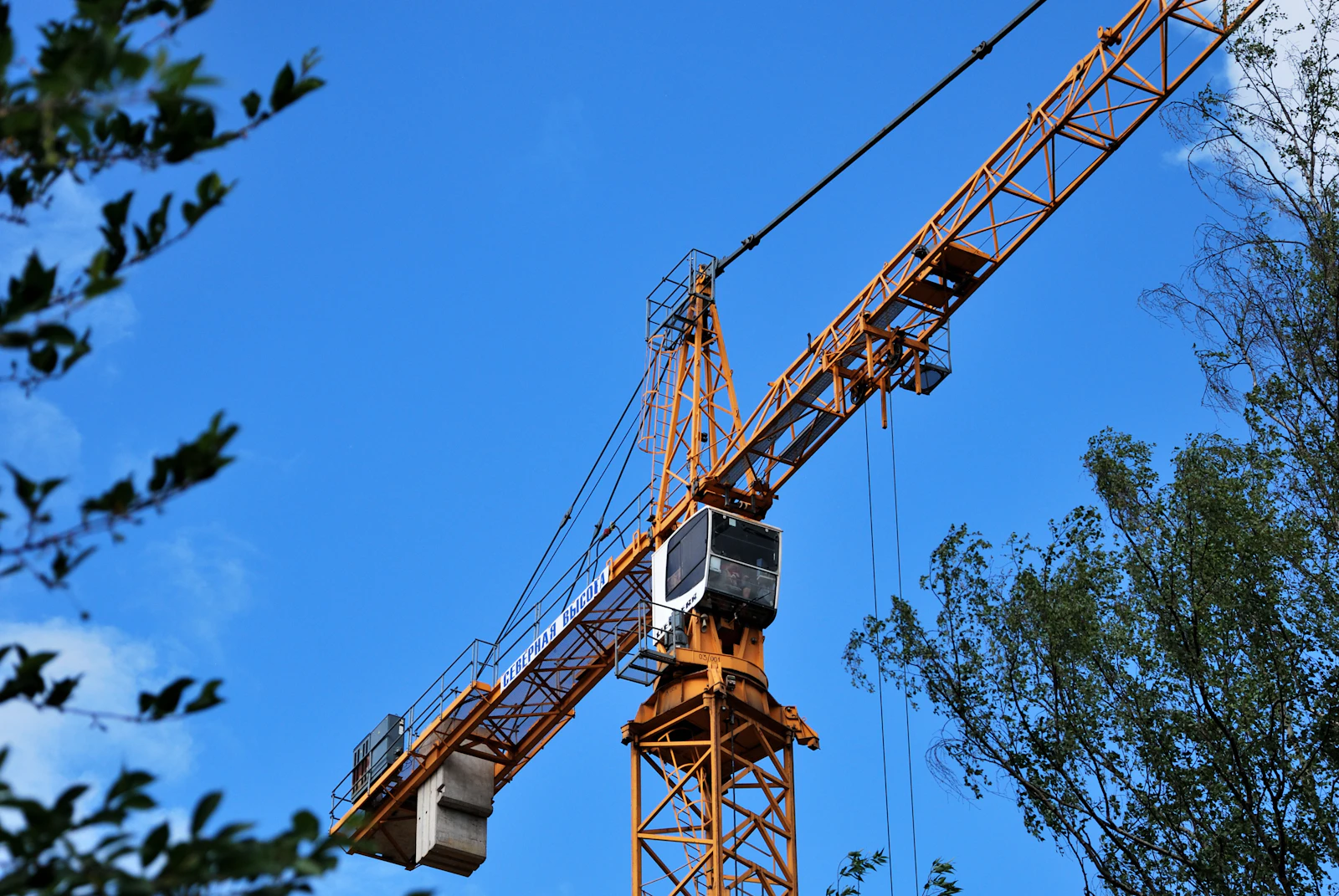
Mobile Crane Hire Costs San Antonio 2026
For structural steel erection in San Antonio, 2026 budgeting for mobile crane equipment hire typically lands in the following planning ranges (crane only, before labor/rigging/transport): $1,200–$2,250/day, $3,000–$5,600/week, and $7,500–$14,000/month for 50–100 ton rough-terrain class units based on published rental rate sheets, with heavier/longer-reach units often pricing higher (examples include $3,200/day and $4,300/day for 80–100 ton rough-terrain units on a 2026 rate sheet). In practice, steel erection is frequently quoted as an operated (wet) crane hire with minimum hours, mobilization, and lift-planning requirements that can dominate the total. In San Antonio, national rental providers (e.g., United Rentals, Sunbelt) and regional crane-and-rigging houses are commonly used—your final crane hire cost hinges on radius/mobilization, downtown access constraints, and whether the pick plan forces weekends or standby.
| Vendor |
Daily Rate |
Weekly Rate |
Review Score |
Website |
| Alamo Crane Services, Inc. |
$3 250 |
$8 450 |
8 |
Visit |
| TNT Crane & Rigging |
$3 450 |
$8 900 |
9 |
Visit |
| Barnhart Crane & Rigging |
$3 500 |
$9 100 |
9 |
Visit |
| Maxim Crane Works |
$3 400 |
$8 850 |
8 |
Visit |
| Scott-Macon Equipment (San Antonio Branch) |
$2 950 |
$7 800 |
10 |
Visit |
2026 Mobile Crane Rental Rate Benchmarks (Daily/Weekly/Monthly)
The market mixes “bare crane rental” (equipment only) with “operated crane hire” (equipment + operator, and sometimes oiler/rigging). For Webflow estimating and bid-level budgeting, start by benchmarking the equipment hire component using published rate sheets, then layer in jobsite-driven extras.
Published rate-sheet anchors (use as planning references, not guaranteed San Antonio pricing):
- 50-ton rough-terrain crane: about $1,200/day, $3,000/week, $7,500/month on one fleet rate sheet.
- 65-ton rough-terrain crane: about $1,375/day, $3,400/week, $8,500/month on the same sheet.
- 85–100 ton rough-terrain crane: about $2,000–$2,250/day, $5,000–$5,600/week, $12,500–$14,000/month (rate sheet).
- 80–100 ton rough-terrain crane (alternate 2026 sheet): $3,200/day / $9,600/week / $28,800/month (80 ton), and $4,300/day / $12,900/week / $38,700/month (100 ton).
Key estimating assumption you must confirm on every quote: what counts as a “day/week/month.” Some rental networks define a day as one 8-hour shift and a month as twenty 8-hour shifts. Another 2026 rate sheet explicitly states rates based on 10 hours/day, 50 hours/week, 200 hours/month. For steel erection, that difference can swing the effective hourly cost by 20%+ if your crew runs long shifts.
What Drives Mobile Crane Equipment Hire Cost in San Antonio?
In structural steel erection, capacity on the load chart (not the nameplate tonnage) drives crane selection and hire pricing. The same “80-ton” mobile crane can behave like a much smaller crane once you account for boom length, radius, and required configuration (counterweight, jib, outrigger spread).
- Radius and boom/jib configuration: Erection picks at 70–110 ft radius typically push you into more crane (and more counterweight) than the steel weight alone suggests.
- Ground bearing and mats: San Antonio’s mix of caliche, disturbed fill, and tight urban sites can force outrigger mats or engineered crane pads—often rented/charged separately.
- Access and street logistics: Downtown corridors (I-10/I-35 interchanges, narrow access streets, or constrained laydown near active public areas) can add traffic control, escorting, or night delivery premiums.
- Job sequencing: If the steel arrives “just-in-time” and trucks queue, you may pay standby time rather than productive picks.
- Demand timing: End-of-month pushes, summer outage work, and storm-recovery periods tend to tighten crane availability and lift equipment hire costs.
Rate Structures You’ll See on Mobile Crane Hire (And How They Bill)
Steel erection rarely pencils out on “daily equipment-only” pricing alone. Expect one of these billing structures:
- 8-hour or 10-hour day rate (plus overtime): Common for rough-terrain cranes. Confirm whether the “day” is 8 or 10 hours.
- Hourly operated crane hire (wet): Often paired with a 4-hour minimum or 8-hour minimum and portal-to-portal rules.
- Weekly/monthly equipment hire: Useful when the crane stays on site for a run of steel, even if it’s only “working” a few hours per day.
Planning numbers (San Antonio 2026 budgeting allowances):
- Hourly operated crane hire allowance (50–110 ton class): budget $220–$475/hr depending on tonnage, configuration, and included support (operator/oiler). Cross-check: public agency rate schedules show crane categories billed hourly (e.g., a 110-ton all-terrain listed at $426/hr) with separate mobilization fees.
- Minimum billed time: allow 4 hours (small picks) to 8 hours (steel erection day) per mobilization.
- Overtime multiplier: allow 1.5× after the contracted shift (commonly after 8 or 10 hours), and 2.0× for Sunday/holiday callouts if required by contract/labor rules.
- Standby rate: allow $125–$250/hr when crane and operator are held but not working due to missing steel, weather holds, or incomplete bolt-up.
Hidden-Fee Breakdown
Most cost overruns on mobile crane equipment hire happen in “small print” items. Build these into your estimate so your steel erection budget matches how crane providers invoice.
- Mobilization / demobilization: allow $450–$1,200 for smaller truck/RT cranes and $1,600–$3,500 for larger all-terrain classes, especially if the move triggers permits/escorts. A public contract schedule shows mobilization fees for crane categories (examples include $1,600, $2,000, $2,500, and $3,500).
- Oversize/permit costs: treat as pass-through; at least one major rental provider notes that oversized equipment may require a governmental permit and/or additional delivery costs and that the permit fee is not included in estimated rental fees.
- Fuel / make-up fuel: plan $6.50–$9.50/gal for billed make-up diesel if returned short, plus $75–$250 as a refuel service allowance.
- Damage waiver / rental protection: many renters carry a damage waiver or protection plan; one marketplace protection plan example is 25% of the rental cost unless you provide your own insurance.
- Cleaning: budget for steel-yard mud, grease, or concrete splatter on tires/undercarriage; one published rate sheet lists an excessive cleaning fee of $75/hour (after stated thresholds).
- Cancellation / dry-run: allow $250–$750 if the crane is dispatched and turned away due to no access, no laydown, or no certified signal person on site.
- After-hours delivery window: allow a 10%–20% premium if the move must occur overnight to avoid traffic restrictions or to meet a 6:00 AM pick start.
- Weekend/holiday billing: allow a 1.25× Saturday multiplier and 1.5×–2.0× Sunday/holiday multiplier for operated crane hire where applicable.
Accessories and Adders That Commonly Hit Steel Erection Crane Hire
For structural steel erection, the crane rarely arrives alone. These accessories routinely change your total equipment hire cost:
- Outrigger mats / crane mats: allow $35–$85 per mat per day for rental mats, or $450–$1,200/week for a bundled set depending on size/quantity.
- Spreader bar / lifting beam: allow $95–$275/day (or $300–$800/week) depending on capacity and whether engineered cert paperwork is required.
- Rigging package (slings, shackles, hooks, softeners): allow $60–$175/day plus replacement charges for cut slings or missing hardware.
- Man basket / personnel platform (if permitted by your program): allow $150–$350/day plus proof-of-inspection documentation.
- Wireless anemometer / wind hold instrumentation: allow $25–$60/day if required by site rules for elevated picks.
San Antonio Operational Constraints That Change Real Crane Hire Cost
- Delivery cutoffs: many dispatch desks require next-day orders by early afternoon; budget a $150–$400 “rush dispatch” allowance when steel schedules slip and the crane must be advanced.
- Off-rent rules: avoid paying for “extra days” because off-rent notice was missed. Build a 24-hour off-rent notice assumption into your internal closeout process (and document it by email).
- Heat and productivity: summer heat can force earlier starts and longer breaks. If your pick plan is sensitive to crew pace, standby can quickly exceed the base crane equipment hire rate.
- Dust-control requirements: on finished sites or near sensitive interiors, you may need ground protection, tire washing, or a sweeper. Carry $250–$600/day as a dust-control/cleanup allowance when the crane crosses finished paving or enters tight logistics routes.
Example: 80-Ton Mobile Crane Equipment Hire for a 3-Day Steel Erection Run
Scenario: 3 consecutive weekdays in San Antonio, setting beams and joists for a small commercial structure. One crane, one mobilization, 8-hour planned shift, moderate radius, no street closure.
- Crane equipment hire (80-ton class): budget $2,000–$3,200/day × 3 days = $6,000–$9,600 (planning range anchored by published day rates).
- Mobilization/demobilization: $900–$1,800 total (two moves) depending on whether escorts are required; larger schedules show mobilization fees can run $1,600+ for bigger classes.
- Damage waiver/protection: assume 10%–25% of rental (example program shown at 25%).
- Mats + rigging bundle: $450–$1,150 for the run (depending on mat count and whether spreader/beam is needed).
- Fuel/make-up fuel: $150–$350 allowance (site conditions dependent).
- Contingency for 2 hours/day overtime: add 6 hours at 1.5× operated rate (if your contract bills OT), or carry $900–$2,100 as an overtime allowance to protect the steel schedule.
Estimator takeaway: on steel erection, crane equipment hire may be only ~35%–55% of the final crane invoice once mobilization, protection, mats/rigging, OT, and standby exposure are included.
Budget Worksheet
- Mobile crane equipment hire (base): _____ days @ $_____ /day (use $1,200–$4,300/day depending on tonnage class).
- Weekly/monthly conversion check: if duration > 5 workdays, price the weekly; if > 20 shifts, price the monthly (confirm shift definition).
- Mobilization/demobilization allowance: $_____ (carry $900–$3,500 typical depending on class and permit triggers).
- Permits/escorts/traffic control: $_____ (allow $300–$2,500 if oversize routes or lane impacts are possible).
- Damage waiver/protection: _____% of base (carry 10%–25%).
- Rigging package: $_____ (allow $60–$175/day).
- Spreader beam / specialty rigging: $_____ (allow $95–$275/day).
- Outrigger mats / ground protection: $_____ (allow $35–$85 per mat per day).
- Fuel/make-up fuel + refuel service: $_____ (allow $150–$350).
- Cleaning exposure: $_____ (carry $150–$450; published example shows $75/hr).
- Standby/OT contingency: $_____ (carry 10%–20% of operated cost when steel delivery is uncertain).
Rental Order Checklist
- PO details: equipment class (tonnage), boom/jib needs, pick radius assumptions, requested day/week/month structure, and who provides mats/rigging.
- Insurance/COI: confirm required limits and whether equipment is scheduled; some rate sheets call out $1,000,000 general liability as a minimum requirement.
- Delivery plan: site address, gate codes, delivery window, laydown location, and who signs BOL/delivery ticket.
- Lift documentation: lift plan, critical lift triggers, engineered picks (if applicable), and who supplies signal person/rigger.
- Jobsite constraints: underground utilities, crane pad/ground bearing confirmation, overhead power clearance, and wind policy.
- Billing controls: minimum hours, portal-to-portal rules, standby definitions, overtime multipliers, and off-rent notice requirements.
- Return/off-rent: required photos, hour meter capture, fuel level documentation, and “return condition” sign-off to avoid cleaning/damage disputes.
How to Keep Structural Steel Erection Crane Hire Costs Predictable
For steel erection in San Antonio, the most effective cost controls are operational: reduce mobilizations, reduce non-productive standby, and eliminate billing ambiguity. Below are the coordinator-level tactics that typically move total crane hire cost more than negotiating $100/day off the base equipment rate.
Convert “Cranes” Into a Shift Plan (Not a Day Count)
Crane invoices follow shift definitions. Some programs use 8-hour shifts (common in national rental networks), while others publish 10-hour single-shift terms. If your steel crew is realistically running 10s (or expects a late truck), lock your contract to a 10-hour day rate or negotiate a predictable overtime block such as:
- OT block allowance: pre-authorize 2 hours/day at 1.5× for the first 3 days to protect the critical path.
- Standby cap: cap standby billing at 2 hours/day unless the GC issues a written hold.
- Weekend trigger language: define when Saturday becomes billable (e.g., crane on-site after 12:00 PM Friday counts as weekend mobilization).
Transportation and Permits: Treat as a Separate Cost Bucket
Mobile cranes are frequently oversize/overweight depending on configuration, counterweight package, and routing. One major provider explicitly warns that oversized equipment may require a governmental permit and/or additional delivery costs and that the permit fee is separate from estimated rental fees. For San Antonio planning, keep transport separate so it doesn’t get “lost” in your daily rate comparisons.
Recommended allowances (2026 San Antonio planning):
- Local mobilization inside metro: $900–$1,800 (in/out) for typical RT crane moves with straightforward access.
- All-terrain / heavier class mobilization: $1,600–$3,500+ where permits/escorts are likely. Public schedules show mobilization fees at these magnitudes.
- Permits: $75–$300 for simpler oversize permits; $300–$1,250 when routing, curfew windows, or multiple jurisdictions stack up.
- Escort / traffic control: $90–$140/hr per escort, with a 4-hour minimum (common market structure) when required for a move or lane impact.
Insurance, Damage Waiver, and Cleaning: Decide Up Front
Crane hire cost volatility often comes from risk allocation. If you don’t provide proper coverage, you may end up taking a damage waiver/protection plan at checkout. One marketplace protection plan example prices at 25% of the rental cost unless you opt out with proof of insurance. Also confirm cleaning expectations—rate sheets can include explicit cleaning charges such as $75/hour for excessive cleaning beyond included thresholds.
Practical controls:
- Pre-mob photo set: take 12–20 photos at arrival (tires, boom, hook block, cab, outrigger beams) and attach to the daily report.
- Refuel rule: define “return full” as 100% indicated fuel or a measured level; record fuel on both start and off-rent.
- Cleaning avoidance: require a 10-minute end-of-shift wipe-down and track-mat cleanup to avoid billed washouts.
San Antonio-Specific Cost Factors to Watch
- Early delivery windows: to avoid peak congestion on key corridors, crane moves often need early access. If your site can’t receive deliveries before 7:00 AM, budget rush/after-hours handling (carry $150–$400).
- Heat management: if the erection plan requires afternoon critical picks in July–September, carry more contingency for standby and slower cycle time (recommend 15% contingency on operated hours).
- Finished-surface protection: on urban infill sites with completed paving, mats and tire protection can be mandatory—carry $250–$600/day for protection/cleanup when the crane must traverse finished work.
Negotiation Points That Actually Reduce Crane Equipment Hire Cost
- One mobilization, more work: combine steel picks (beams + joists + deck bundles) into a contiguous run to avoid paying two mobilizations.
- Lock the shift basis: explicitly state 8-hour vs 10-hour day, and define “start time” (arrival on site vs hook-in time).
- Clarify permit pass-through: confirm that permits/escorts are billed at cost with receipts, not as an unmanaged allowance.
- Define standby: standby should convert to a reduced standby rate after the first 30 minutes if the delay is caused by other trades (missing steel, no access, incomplete bolt-up).
Documentation You’ll Want for Dispute-Free Off-Rent
- Off-rent notice: email timestamp + dispatcher confirmation, at least 24 hours before requested pickup.
- Final condition photos: same angles as pre-mob photos, plus hook block and any rented rigging accessories.
- Hour meter / shift log: daily sign-off by your foreman and the operator (avoid “he said/she said” on overtime).
- Return condition: confirm fuel level, obvious damage, and cleanliness to reduce exposure to fees (including published cleaning fee structures).
Bottom Line for 2026 San Antonio Mobile Crane Hire Budgeting
Use published daily/weekly/monthly equipment hire rates as anchors, but manage crane hire cost as a system: shift definition + mobilization/permits + risk (damage waiver) + accessories + standby/OT exposure. For structural steel erection, the “best price” is usually the quote that makes billing predictable—especially when oversized permit fees are excluded from base rates and must be planned separately.