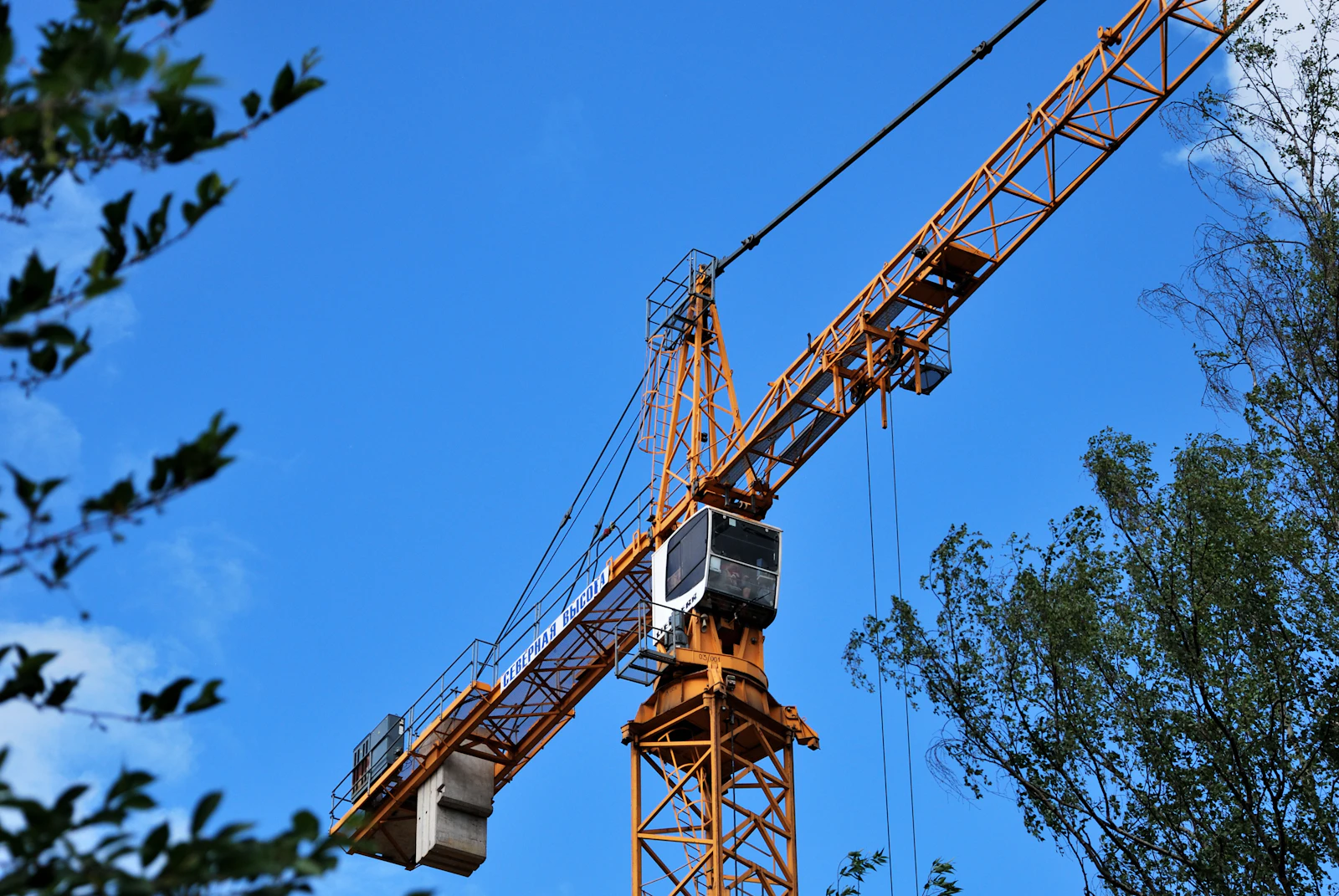
Mobile Crane Rental Rates San Francisco 2026
For structural steel erection in San Francisco, 2026 planning budgets for mobile crane equipment hire typically land in the following base rental ranges before mobilization, permits, traffic control, rigging labor, and jobsite constraints are added: $175–$625/hour, $525–$2,025/day, and $3,250–$9,750/week for mobile crane rental; or $350–$750/hour, $850–$2,450/day, and $5,000–$11,500/week for operated crane hire (crane plus operator) depending on capacity, boom length, and access conditions. These ranges align with how many Bay Area contractors procure crane service—through national fleets and local heavy-lift providers (e.g., United Rentals, Maxim Crane, and regional specialists such as Bigge) where the pricing structure is often “portal-to-portal” and influenced heavily by street logistics in SF.
| Vendor |
Daily Rate |
Weekly Rate |
Review Score |
Website |
| Bigge Crane & Rigging Co. |
$6 800 |
$27 200 |
8 |
Visit |
| Maxim Crane Works |
$6 500 |
$26 000 |
7 |
Visit |
| Bragg Companies (Bragg Crane & Rigging) |
$6 300 |
$25 200 |
9 |
Visit |
| American Crane Rental, Inc. |
$5 900 |
$23 600 |
10 |
Visit |
| United Rentals |
$850 |
$3 400 |
9 |
Visit |
Assumptions for the ranges above: (1) “Day” usually means an 8–10 hour shift (confirm the quote’s minimum hours), (2) rates commonly exclude mobilization/demobilization, counterweight trucking, and SF street permits, and (3) steel erection picks frequently trigger overtime, standby, and traffic-control adders that can exceed the base crane rent on constrained downtown sites.
What Drives Mobile Crane Hire Cost on Steel Jobs in San Francisco?
Mobile crane hire cost in San Francisco is rarely driven by the sticker day rate alone. For structural steel erection, the dominant cost drivers tend to be (a) the crane class (rough-terrain vs. truck crane vs. all-terrain), (b) mobilization complexity (counterweights, escorts, travel time), (c) street space constraints that require SFMTA/DPW permitting and lane control, and (d) crew structure (operator-only vs. full operated-and-maintained with riggers and a lift supervisor). In practice, two jobs with the same tonnage crane can land 30–60% apart in total hire cost based on whether the crane is working off a closed lane in SoMa vs. set entirely on private property with laydown and no transit impacts.
Typical 2026 planning ranges by crane class (used on steel erection)
- 40–60 ton rough-terrain (RT) crane, operated hire: plan $1,200–$2,250/day for a straightforward steel pick day, plus mobilization. If the job needs a street lane and meter spaces, budget permitting/traffic control separately (see below).
- 70–100 ton RT or small all-terrain, operated hire: plan $1,650–$2,450/day with higher mobilization sensitivity (counterweight and trucking more likely).
- 120–200 ton all-terrain or hydraulic truck crane, operated hire: plan $2,400–$4,500/day and expect added trucking for counterweights and boom/jib configuration. (These larger classes are where “cheap day rate” quotes often become expensive after move-in/move-out and support trucks.)
These are budgeting bands intended for 2026 estimating; exact rates vary by vendor availability, seasonality, union conditions, and site access.
San Francisco-Specific Cost Adders You Should Carry in 2026 Budgets
San Francisco adds real, measurable friction costs to mobile crane equipment hire—especially on steel erection where you may need curb control for trucks, a protected pedestrian path, and lift zones that don’t conflict with Muni operations. The city also has well-developed street-work requirements (the SFMTA “Blue Book”), and complex permits can require two months notice under SFMTA Special Traffic Permit guidance for higher-impact traffic changes (detours, restriping, transit impacts).
Street space, meters, and curb control (don’t bury these in “misc.”)
- Parking meter space control: if you need to take metered spaces out of service, the Temporary Exclusive Use of Parking Meters permit fee is $21/day effective July 1, 2026 (and scheduled to rise to $23/day July 1, 2027).
- Temporary Occupancy / street occupancy: SF Public Works requires fees/assessments for temporary street occupancy for construction operations, and you should plan both permit processing time and field conditions compliance (pedestrian access, barricades, etc.).
- Tow-away/no-parking administration: operationally, many SF street-space moves require tow-away signs to be posted and registered at least 72 hours in advance (confirm current DPW/SFMTA workflow for your permit type). (g
Mobilization and trucking allowances (often larger than the crane’s “day rate”)
- Move-in / move-out (mobilization/demobilization): carry $900–$2,250 each way for a smaller RT crane moving within the Bay Area; $2,500–$6,500 each way for larger truck/all-terrain setups when counterweights and support trucks are involved.
- Counterweight trucking: common allowance $1,200–$3,000 each way depending on weight, routing, and whether multiple loads are needed. (Some quotes itemize counterweights as a separate “each way” charge in the $1,500 range.)
- Oversize/overweight permits (transport): allowance $150–$750 per move depending on configuration; note that some rental providers explicitly state that governmental permit fees are not included in estimated rental fees.
- Escort cars / police support (when required): allowance $125–$225/hour per escort, often with a 4-hour minimum and portal-to-portal billing in dense SF corridors.
- Bridge tolls and slow travel time: if your crane/support trucks stage from East Bay yards, tolls plus congestion time can add $40–$120 in hard costs and 1–2 hours of billable travel time depending on the contract structure.
Hidden-Fee Breakdown for Mobile Crane Equipment Hire
For steel erection, “hidden fees” are rarely hidden—more often they are missed scope items between the GC, steel erector, and crane provider. Carry these allowances explicitly so your PO matches the vendor’s invoice logic.
- Minimum hours / shift definitions: common structures include 4-hour minimum for short calls or 8-hour minimum for operated work; some public bid/quote formats define a “day” as 10 hours.
- Overtime premiums: a typical structure is straight time through 8 hours, overtime after 8, and premium time on Sundays/holidays; one documented example shows $305/hr straight time, $370/hr overtime (over 8 hours and Saturday), and $435/hr premium time (over 10 hours, Sundays & holidays) for a 120-ton class crane (region-specific example; use as a template for how premiums are applied).
- Standby / weather stand-down: wind in the Bay and around high-rises can create crane downtime; many providers bill standby at a reduced percentage (commonly 50–100% of hourly rate depending on contract language) if the crane and operator are held on site.
- Fuel/fleet surcharges: allow 3–6% of invoice value; one example includes a 4% fuel adjustment capped at $400 per invoice.
- Damage waiver / rental protection: allow 8–15% of the equipment portion if you are not providing full coverage per vendor requirements.
- Environmental recovery fees: allow 2–5% or a flat $10–$25/day (varies by provider and contract).
- Cleaning fees (return condition): if the crane returns with concrete slurry, excessive mud, or contaminated rigging, carry an allowance of $75/hour for “excessive cleaning” as a realistic benchmark used elsewhere in heavy equipment rental terms.
- Late return / holdover: common holdover pricing is $150–$350/hour or an additional day if the crane cannot be re-dispatched.
Cost Drivers That Matter Specifically for Structural Steel Erection
Steel erection work shifts crane economics toward productivity and schedule certainty. A “cheaper” crane that needs extra repositions, struggles with chart at radius, or loses time due to access conflicts can cost more than a higher day-rate crane that finishes picks on schedule.
- Pick radius and chart margin: if you’re consistently at 80–90% of chart, expect slower cycle time, more engineering scrutiny, and potentially a larger crane class (step-change in mobilization cost).
- Rigging package completeness: steel picks frequently need spreader beams, softeners, shackles, taglines, and engineered below-the-hook devices. Typical adders: $250–$650/day for spreader bar rental, $25–$60 each for taglines (consumable loss), and $15–$45 each/day for specialty shackles/slings depending on rating and wear policy.
- Cribbing/mats/ground protection: SF soils, utilities, and basement lids can force larger outrigger mats and engineered load distribution. Allow $300–$900/week for mat rental on smaller jobs, or $1,200–$3,500/week for heavy mat packages on larger all-terrain setups.
- Lift planning / PE review: allowance $350–$1,250 for lift plan and site review on standard steel picks; $1,500–$4,000 if you need engineered pick points, customized rigging, or multi-crane coordination.
Example: Two-Day Mobile Crane Hire for a SoMa Steel Erection Sequence
Scenario: 6-story steel frame infill project in SoMa with a tight laydown. Crane must set up partially in the parking lane, with delivery trucks staged in a managed curb zone. Two erection days planned, 9 hours/day hook time target, with a realistic risk of 1 hour/day standby for truck sequencing.
- Operated 80-ton RT crane (base): $1,850–$2,450/day × 2 days = $3,700–$4,900
- Mobilization/demobilization within Bay Area: $1,400–$2,250 each way = $2,800–$4,500
- Counterweight/support truck allowance: $1,200–$2,000 each way = $2,400–$4,000
- Street space/meter control: carry $21/day per metered space (quantity-driven) plus internal labor to post/maintain barricades.
- Traffic control / flagging: $110–$175/hour per flagger, often 8-hour minimum (crew count per permit plan)
- Rigging gear package: $450–$1,200/day depending on spreader/multiple chokers
- Standby risk allowance: 1 hour/day at $350–$750/hour operated rate structure (if billed) = $700–$1,500
Budget take-away: even on a “two-day” steel sequence, it’s normal for SF-specific logistics (moves, curb control, and traffic plan labor) to match or exceed the crane’s base day rates. If you do not confirm off-rent cutoffs (e.g., whether you must release the crane by 2:00 PM to avoid another billed day), you can accidentally buy a third day.
Budget Worksheet (Estimator-Friendly, No Tables)
- Crane class allowance (RT 70–100 ton, operated): $1,650–$2,450/day × ___ days
- Minimum hours assumption: 8-hour min or 10-hour day (confirm per quote)
- Mobilization/demobilization: $900–$6,500 each way (size-dependent) × 2
- Counterweight/support trucking: $1,200–$3,000 each way
- Oversize/permit costs (transport): $150–$750 per move
- SFMTA/DPW street permits (allowance): $500–$5,000 (project-dependent; include internal admin time)
- Metered space control: $21/day/space × ___ spaces × ___ days
- Traffic control labor: $110–$175/hour × ___ people × ___ hours
- Rigging gear package: $450–$1,200/day
- Spreader bar / specialty rigging: $250–$650/day
- Lift planning/engineering: $350–$4,000 (complexity-dependent)
- Fuel surcharge: 3–6% of invoice (or capped per contract)
- Damage waiver / protection plan: 8–15% of equipment portion (if elected)
- Cleaning/return condition contingency: $75/hour × 2–6 hours
- Weather/wind standby contingency: 0.5–2.0 hours/day × hourly rate
Rental Order Checklist (PO, Delivery, Return Requirements)
- PO scope language: specify “operated and maintained” vs. “bare crane,” include portal-to-portal vs. on-hook billing, and state minimum hours (4, 8, or 10).
- Insurance / compliance: COI with required limits, waiver election (if any), and confirm whether your contract requires a lift director or rigger certification documentation.
- Site address + access plan: turning radii, staging location, and whether there is a hard cutoff time for deliveries (common: last acceptance 2:00–3:00 PM).
- Street permits: identify whether you need SFMTA Special Traffic Permit, DPW Temporary Occupancy/Street Space, and metered space control (include lead times; complex STPs can require 2 months notice).
- Traffic control plan: confirm who provides barricades, cones, and flaggers, and who owns daily inspection logs.
- Rigging inventory list: spreader bars, slings, shackles, taglines, softeners, and any below-the-hook devices with inspection tags.
- Ground bearing verification: outrigger reactions, underground utilities scan, and mat/cribbing plan.
- Off-rent process: define the exact off-rent time, who can authorize it, and what photo documentation is required at pickup.
- Return condition documentation: fuel level expectations (often “return full”), cleanliness expectations, and photos of tires/outriggers/boom before demob.
Note on reference rates: Caltrans publishes annual equipment rental rate books that represent cost of equipment ownership and are generally lower than rental yard rates, and they explicitly note that operator cost is not included in the equipment rate. Use these as a cross-check for internal equipment costing—do not treat them as a direct substitute for commercial mobile crane hire quotes.
How to Keep Mobile Crane Equipment Hire on Budget in SF Steel Erection
Once you’re inside the Crane & Rigging spend category, the biggest controllable driver is lost time—not just crane time, but the downstream time where ironworkers and delivery trucks stack up while the crane sits ready. In San Francisco, jobsite congestion, narrow streets, and permit-driven working windows make productivity planning a core part of controlling mobile crane equipment hire costs.
1) Lock the billing method: portal-to-portal vs. on-hook vs. guaranteed day
- Portal-to-portal: you’re billed from the time the crane leaves the yard until it returns. This captures bridge congestion and urban travel friction—often a real issue if the crane is dispatched from outside SF.
- On-hook (or on-site) billing: you pay once the crane is set and ready. This can look cheaper but may shift risk to the vendor, who will price it into the hourly rate or minimum hours.
- Guaranteed day (common in steel): a flat day that assumes 8 or 10 hours and then overtime beyond that. Public bid formats frequently define a “day” as 10 hours, which is useful for budgeting if you know you’ll run long picks.
Estimator action: write your PO to mirror the quote language exactly (including when overtime begins). If your vendor’s premium time structure includes Saturday overtime and Sunday/holiday premium time, carry those multipliers in your look-ahead schedule rather than in contingency.
2) Treat permits and curb control as part of crane scope, not “general conditions”
On SF steel jobs, crane setup is often inseparable from curb occupancy and traffic management. The SFMTA Special Traffic Permit (STP) cost itself is only one piece; the larger cost is the lead time and labor to comply with approved working methods, especially where transit impacts or lane re-striping are involved. SFMTA guidance indicates that complex permits can require minimum two months notice.
- Budget a permit admin allowance: $750–$2,500 internal labor/subs (runner time, revisions, site walks, printing/posting coordination).
- Carry a “meter space” line item: $21/day per metered space as of July 1, 2026, multiplied by the number of spaces and the full duration (including staging days).
- Field enforcement reality: if you miss the 72-hour posting/registration window, you may lose your setup time window and pay standby or re-mobilization. (g
3) Build a steel-erection “attachments and accessories” adder schedule (no surprises)
Even when you are hiring a mobile crane “operated and maintained,” many quotes treat rigging and accessories as separate billable lines. A practical 2026 allowance set for steel erection in SF:
- Rigging truck / gear transport: $450–$900/day
- Spreader beam: $250–$650/day
- Jib / swing-away (if needed for reach): $300–$950/day (or configuration charge)
- Extra outrigger mat package: $200–$600/day small mats; $1,200–$3,500/week engineered heavy mats
- Lift supervisor (when required by your safety plan): $95–$175/hour, often 8-hour minimum
Common Invoice Triggers (Where SF Jobs Go Sideways)
- Missed off-rent cutoff: if you don’t release the crane early enough, you can buy an extra day. Carry a job rule like “off-rent by 2:00 PM with written confirmation” and confirm it with the vendor dispatcher.
- Waiting time due to trucks: if steel deliveries arrive late or can’t access the laydown, the crane is still billed. A typical allowance is 1–2 hours/day of waiting time on downtown sites at $350–$750/hour operated rate structure.
- Weekend constraints: weekend picks can reduce traffic conflicts but can trigger premium billing. One documented premium structure bills higher rates on Sundays & holidays and overtime after 10 hours.
- Fuel and cleaning reconciliation: many heavy equipment rental terms assume “delivered full, returned full,” and bill makeup fuel; similarly, excessive cleaning can be billed at an hourly shop rate (benchmark $75/hour).
Buying Guidance for Rental Coordinators (When You Need Quotes Fast)
If you’re lining up mobile crane equipment hire in SF for steel erection with limited lead time, quote apples-to-apples by sending the same scope packet to each vendor:
- Lift data sheet: maximum pick weight (lbs), max radius (ft), max hook height (ft), number of picks/day, and whether any picks are “critical” (near chart limit).
- Setup drawing: crane footprint, outriggers, swing radius, and exclusion zone relative to pedestrian path and adjacent traffic.
- Street impacts: lane closures, meter spaces, bus stops, loading zones, and confirmation of permit responsibility (GC vs. steel sub vs. crane provider).
- Schedule: include start time, expected demob time, and whether work can extend past 8 hours (overtime exposure).
- Requested billing format: separate lines for (a) crane time, (b) operator, (c) mob/demob, (d) support trucks/counterweights, (e) rigging gear, (f) surcharges/waivers.
Risk and Compliance Notes That Can Affect Hire Cost
Regulatory and inspection scope affects cost when you cross into specialized crane categories. For example, California DIR fee schedules include an hourly inspection fee of $75 (with minimum increments) for certain tower crane inspection contexts; while this is not the typical case for standard hydraulic mobile cranes used in day-to-day steel erection, it matters if your project uses a fixed/mobile tower crane arrangement or triggers permit-driven inspection requirements beyond routine commercial practice.
Also, if you benchmark your internal equipment rates using state publications, remember these can represent ownership cost and explicitly note the operator is not included—useful for internal charge rate logic but not a substitute for commercial crane hire pricing.
San Francisco Operational Constraints to Confirm Before You Dispatch
- Delivery window and site access: confirm whether the crane can arrive before morning commute restrictions and whether there’s a “last truck in” time (commonly 2:00–3:00 PM in dense areas).
- Muni/transit proximity: if your swing radius or trucking blocks a transit lane, expect additional permit scrutiny and potentially more notice time.
- Dust and debris control: while steel picks don’t generate concrete dust, SF street-work standards still expect clean curb lines and maintained pedestrian access; failure can create stop-work conditions that convert into standby cost.
- Ground bearing/underground utilities: confirm outrigger reactions are compatible with vaults/basement lids; if not, you may need larger mats or a different crane class (step-change cost).
- Return-condition documentation: require demob photos, fuel level confirmation, and a signed off-rent ticket time-stamped by the superintendent to avoid billing disputes.
Source anchors for budgeting: San Francisco 2026 mobile/operated crane rate ranges used in this article are aligned to published SF ballpark ranges for 2026, and permit/lead-time notes reflect current SFMTA permitting guidance and code updates effective in 2026.