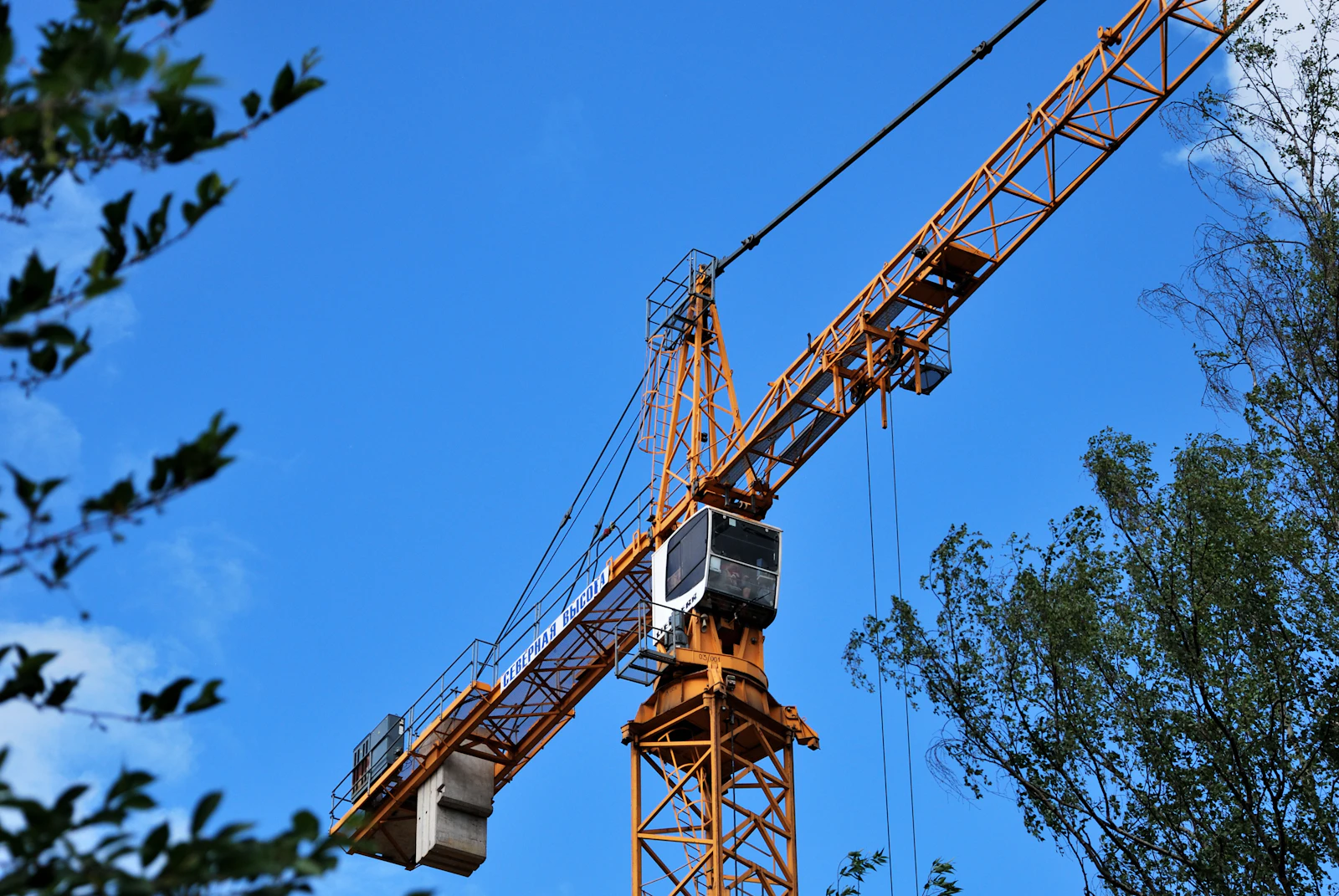
Mobile Crane Rental Rates San Francisco 2026
For 2026 planning in San Francisco, mobile crane equipment hire for tilt-up panel erection typically budgets in these operated-rate ranges (USD): $3,000–$4,500/day for compact 35–50 ton city/truck cranes, $4,200–$6,500/day for 60–90 ton hydraulic truck cranes, $5,200–$8,000/day for 100–140 ton class, and $7,000–$11,500/day for 160–275 ton class when a larger chart/radius drives the pick plan. Weekly equivalents commonly land at $12,000–$28,000/week and monthly (20 working days) at $45,000–$125,000/month depending on tonnage, travel, and support trucks. Assumptions: 8-hour shift basis (even if a 4-hour minimum applies), one operated crane, normal working hours, and excludes permits, traffic control, engineered lift planning, rigging crew, mats/cribbing, and special attachments. In the Bay Area market, managers often source from established providers such as Bigge Crane and Rigging, Maxim Crane Works, and other regional crane & rigging houses, but final hire cost is driven more by lift geometry, access, and site controls than by brand.
| Vendor |
Daily Rate |
Weekly Rate |
Review Score |
Website |
| Bigge Crane and Rigging Co. |
$4 800 |
$22 500 |
8 |
Visit |
| Maxim Crane Works |
$4 500 |
$21 000 |
7 |
Visit |
| King Crane Service |
$4 000 |
$18 500 |
7 |
Visit |
How to read these ranges: mobile crane hire is frequently quoted as an hourly operated rate plus minimum hours, plus mobilization/demobilization and job-specific adders. Published California rate sheets show hourly operated benchmarks from about $245/hr for ~35 ton up to $664/hr for ~275 ton, with a common 10% fuel/environment/insurance surcharge and separate OT/DT labor lines. Another California operated equipment rate sheet (open shop example) shows $335/hr for a 45-ton, $375/hr for a 75-ton, $395/hr for a 115-ton, and $495/hr for a 175-ton, plus a 10% fuel surcharge, a 4-hour minimum including travel, and separate counterweight truck and rigging-support charges. In San Francisco proper, it is normal to carry an uplift (often +10% to +25%) for tighter access, permit friction, and portal-to-portal travel time, especially if the crane and counterweight trucks stage from East Bay yards and cross bridges/toll corridors.
Practical 2026 rate planning by crane class (operated, before adders): For tilt-up panel erection in San Francisco, many picks fall into 75–200 ton planning depending on radius, panel weight, and boom length. As a rough budgeting approach, planners often use (a) an hourly operated benchmark, (b) enforce the minimum hours (commonly 4 or 8), then (c) add mobilization/demobilization, permits/traffic, rigging crew, and ground-protection.
- 35–50 ton mobile crane hire (tight urban setups, short radii): plan $325–$500/hr in SF, typically 4-hour minimum; day budget $3,000–$4,500 when travel and minimums are considered.
- 60–90 ton mobile crane hire (typical smaller tilt-up/structural picks): plan $450–$700/hr; day budget $4,200–$6,500.
- 100–140 ton mobile crane hire (common tilt-up class when radius grows): plan $600–$900/hr; day budget $5,200–$8,000.
- 160–275 ton mobile crane hire (longer radii, higher boom, heavy picks): plan $850–$1,300/hr; day budget $7,000–$11,500, often with 1–2 support trucks and more restrictive routing/permitting.
Estimator note: Caltrans publishes “equipment rental rates” as a cost-of-ownership baseline and explicitly notes these calculated rates are “likely to be lower than the rate charged by a rental yard” and also that the operator cost is not included. Use this as a floor-check, not as your hire price.
How Tilt-Up Panel Erection Changes Mobile Crane Hire Cost
Tilt-up panel erection is a rate-multiplier scope because crane time is not just “pick time.” Your real equipment hire cost is driven by (1) set-up time (outrigger deployment, mats/cribbing, swing radius controls), (2) cycle time (rig, hoist, swing, set, brace, release), and (3) interference management (trucks arriving with panels, bracing crews, welding crews, and slab edge protection). A mobile crane quote that looks competitive on hourly rate can still lose on total cost if the minimum hours, portal-to-portal billing, or standby policy isn’t aligned to your erection sequence.
Typical tilt-up-specific adders that show up on quotes (budget as separate cost codes):
- Engineered lift plan / critical lift documentation: $750–$2,500 for a basic engineered pick plan package; $1,500–$4,000 if a PE-stamped submittal, multiple crane setups, or complex radii/obstructions are involved.
- Spreader bar / strongback / specialty rigging rental: $250–$600/day for a spreader bar set (job-specific), plus rigging truck time if not already included.
- Panel hardware coordination: if the crane provider supplies specialty hardware (rare for tilt-up), budget $150–$400/day to cover wear, tracking, and inspection overhead; otherwise, ensure your tilt-up subcontractor’s hardware is in-scope and on-site before the crane is called off the yard.
- Ground protection (steel plates, mats, outrigger pads): budget $35–$85 each/day for mats/cribbing blocks depending on type; steel plate rentals are frequently quoted per plate plus delivery/pickup (for example, some CA rate sheets show $15/plate/day plus $250 each way delivery/pickup on plates).
Hourly Minimums, Portal-To-Portal Time, And Standby Billing
Most mobile crane equipment hire in Northern California is not “true hourly.” It is “hourly with guaranteed minimums,” and the minimums can include travel (portal-to-portal). One California operated rate sheet example states a 4-hour minimum including travel on labor and equipment. For San Francisco tilt-up work, the practical impact is that a “short” 2-hour pick window can still invoice like a half-day once the operator arrives, sets up, completes safety checks, and then breaks down and exits through controlled jobsite traffic.
Budget-impacting rules to confirm before you issue the PO:
- Minimum charge: confirm whether it is 4 hours, 8 hours, or “the greater of 4 hours or portal-to-portal.”
- Standby/wait time: common standby rates run $150–$350/hr (or full hourly) if the crane is on site but not picking due to delayed braces, missing welders, missing hardware, or permit/traffic holds.
- Overtime triggers: many rate sheets define OT for work beyond 8 hours/day, before early morning cutoffs, after evening cutoffs, and on Saturdays; DT often applies Sundays/holidays.
- Counterweight trucks/support vehicles: confirm whether counterweight moves are included or billed as separate hourly equipment (for example, $130/hr for a counterweight truck on one CA sheet).
San Francisco Logistics That Shift Real Crane Hire Spend
San Francisco adds cost through street/sidewalk occupancy management and limited staging. If your crane needs any occupancy within the public right of way (set-up in a lane, sidewalk staging, reserving parking for outrigger footprint, or supporting equipment), San Francisco Public Works describes a Street Space permit as required for occupancy and notes constraints such as limits on roadway/sidewalk occupancy and general permit requirements. (g Practically, this pushes cost into (a) permit admin, (b) traffic control labor, and (c) tighter working windows that can trigger overtime if you miss your pick sequence.
Two permit-driven cost items that commonly hit mobile crane equipment hire in SF:
- SFMTA Special Traffic Permit (STP): when you cannot comply with construction regulations, SFMTA lists a $399 base fee plus an $80 daily fee, and a $447 late fee if you miss the minimum notice. It also defines “two full working days” notice rules and notes that complex changes can require much longer notice.
- Street Space permit operations: Public Works notes tow-away sign posting/verification requirements (including 72 hours advance posting for tow-away verification) and potential penalties for violations up to $1,000/day. These aren’t “rental charges,” but they directly affect crane utilization and standby risk on tilt-up days. (g
Operational considerations specific to San Francisco that affect your hire cost (plan for them explicitly): (1) tighter delivery radius norms (many crane yards are East Bay; portal-to-portal time and bridge/toll routing can inflate billed hours), (2) narrow streets and limited curb lane storage which can force a smaller crane class or require additional street space, and (3) coastal wind/fog patterns that can slow panel setting and force longer crane on-site time (more standby or OT). For tilt-up, carry a contingency for at least 0.5–1.5 hours/day of utilization loss due to staging and permit-controlled access.
Hidden-Fee Breakdown For Mobile Crane Equipment Hire
To keep mobile crane hire cost from drifting on a tilt-up panel erection schedule, budget the “hidden fees” as explicit allowances. These are common line items seen on California crane rate sheets and job tickets (amounts vary by provider and union/open-shop structure):
- Mobilization / demobilization: $650–$1,800 each way for in-region moves; $2,000–$6,000+ if multi-truck counterweight moves, escorts, or night moves are required.
- Travel permits / routing permits: a published rate sheet shows $95 “travel permit” as an additional cost at cost; in SF, oversized routing often adds $150–$450 in admin/processing plus agency pass-throughs depending on configuration.
- Fuel/environment/insurance surcharge: a published CA sheet shows 10% applied to total invoice; many providers apply 3%–12% depending on policy and project.
- OCIP / certified payroll admin: one CA rate sheet lists an $285 one-time fee for OCIP/certified payroll administration.
- Rigging labor (if supplied): budget $95–$160/hr per rigger/signalperson depending on labor structure and classification; confirm minimum hours (often 8 for crew even if crane minimum is 4).
- After-8 and after-12 premiums: one CA operated sheet describes adders such as +$55/hr over 8 hours and +$110/hr over 12 hours for certain operated equipment structures (confirm your crane provider’s OT/DT matrix).
- Cleaning / mud management: $250–$750 if the carrier returns with heavy mud/concrete slurry; higher if street tracking triggers washdown requirements.
- Cancellation/reschedule fees: commonly 25%–50% of minimum hours if cancelled inside 24 hours; for complex moves, some providers charge full mobilization.
Example: One-Day 115-Ton Mobile Crane Hire For Tilt-Up Panel Erection In San Francisco
Scenario: 30 panels at ~28,000 lb average pick weight, max radius pushes a 115-ton class hydraulic truck crane. Site has tight staging and requires reserving curb lane for outriggers and panel trucking. Planned work window is 7:00 a.m.–3:30 p.m. (8 hours on-site). Assume a billed 8-hour day due to minimums/portal-to-portal and coordination risk.
Budget build (illustrative, not a quote):
- 115-ton operated crane hire: plan $650/hr x 8 = $5,200 (SF uplift applied vs. published CA benchmarks).
- Mobilization/demobilization: $1,250 lump sum (in-region move with normal routing).
- Counterweight/support truck: $130/hr x 8 = $1,040 (if billed separately).
- Rigging crew (2 riggers/signal): $140/hr x 8 x 2 = $2,240 (structure varies; confirm crew minimums).
- Spreader bar + rigging support truck allowance: $450/day.
- Ground protection mats: 12 mats x $60 = $720.
- SFMTA STP: base $399 + $80 daily = $479 (carry $0–$447 late-fee risk if schedule changes).
- Fuel/environment/insurance surcharge: 10% of crane-related invoice lines (often applied) = roughly $1,090 on the above (example).
Illustrative day total: approximately $12,269 before tax, before any street space fee, and before traffic control/flaggers. The two biggest swing factors are (1) whether portal-to-portal extends billed hours beyond 8, and (2) whether street occupancy controls compress the picks and push overtime.
Budget Worksheet (No Tables)
Use this as a fast estimator’s worksheet for mobile crane equipment hire cost in San Francisco for tilt-up panel erection (set your own quantities and unit rates):
- Operated mobile crane hire (by tonnage/class): allowance $4,200–$11,500/day
- Minimum hours / portal-to-portal overage: allowance +1–3 hours at billed hourly
- Mobilization/demobilization: allowance $650–$1,800 each way (increase for counterweight/escorts)
- Counterweight/support truck(s): allowance $130–$225/hr when separate
- Rigging crew (riggers/signal): allowance $95–$160/hr per person; carry minimums
- Lift director / superintendent (if required by GC policy): allowance $125–$185/hr
- Engineered lift plan / critical lift package: allowance $750–$2,500
- Spreader bars / specialty rigging: allowance $250–$600/day
- Mats/cribbing/steel plates: allowance $35–$85 each/day (plus delivery/pickup if applicable)
- SFMTA STP: allowance $399 base + $80/day (plus $447 late-fee risk)
- Street space + tow-away setup labor: allowance $500–$2,500 (admin + install + photo verification labor)
- Fuel/environment/insurance surcharge: allowance 3%–12% of crane invoice
- Traffic control/flaggers: allowance $95–$160/hr per flagger, plus equipment
- Contingency (SF access/wind/permit friction): allowance 10%–20% of crane day total
Scheduling And Off-Rent Rules That Control Total Crane Hire Spend
On tilt-up days, the lowest-risk way to control mobile crane equipment hire cost is to treat crane time like a production constraint: every missing item becomes paid standby. Build your erection plan around “crane ready” gates and confirm the provider’s off-rent rules in writing.
- Delivery window and cutoffs: confirm the latest “start” time that still bills as straight time; many providers treat early starts and late finishes as OT triggers. Published rate sheets define overtime as work in excess of 8 hours/day, and also for work before early morning or after evening cutoffs, and on Saturdays.
- Weekend/holiday billing: plan DT for Sundays/holidays and confirm holiday calendars. One rate sheet explicitly lists separate “Double Time” and “For work on Holidays” lines.
- Off-rent notice: many crane vendors require 24–48 hours notice to avoid minimum-hour or cancellation charges. Carry a 25%–50% minimum-charge risk allowance if you are sequencing around inspection/brace release milestones.
- Street occupancy lead time: SFMTA’s STP page defines “two full working days” notice and also notes that complex roadway changes can require much longer notice (examples include major construction impacts). If you change erection dates without permit runway, you can pay both (a) late fees and (b) paid crane standby while access is held.
Choosing The Crane Size That Lowers The Total Hire Cost
For San Francisco tilt-up work, the “cheapest” crane by hourly rate can be the most expensive by total invoice if it forces (1) multiple setups, (2) longer radii with low chart, or (3) slow cycling due to booming down/up around obstructions. A higher-tonnage crane can reduce total cost if it cuts set times, reduces panel “tailing” needs, or avoids a second crane day.
Cost control tactics used by experienced rental coordinators:
- Buy radius, not tonnage: request quotes by maximum planned radius and load (including rigging weight). A 90-ton at $600/hr that needs two setups can cost more than a 140-ton at $800/hr that stays in one spot.
- Ground bearing planning: if you skip matting and then the crane must be re-spotted, you can lose 1–2 billable hours plus reset time. Budget mats upfront ($35–$85 each/day) to protect schedule and reduce risk of out-of-service time.
- Support truck minimization: if you can keep counterweight on for the day and plan a single demob, you can avoid extra mobilizations that often run $650–$1,800 per move.
Contract And Ticket Terms That Affect Your Equipment Hire Cost
Most crane providers invoice off a daily job ticket; those terms can materially affect your final cost and cash flow, especially if you’re running multiple erection days.
- Payment terms and late charges: a California daily job ticket example states that amounts more than 30 days past due may bear interest at 1.5% per month (or maximum allowed by law). Treat this as a real cost when your pay app timing doesn’t match crane invoice timing.
- Scope boundaries: confirm whether the crane provider’s scope includes rigging/signal/hook/unhook activities or if your crew must provide it; misalignment creates paid standby and safety exposure.
- Insurance structure: if the project is OCIP/CCIP or requires certified payroll processing, budget explicit admin fees (one published example shows $285 one-time).
- Surcharges: confirm whether the 3%–12% fuel/environment/insurance surcharge is applied to labor only, equipment only, or the entire invoice; at 10%, this can add $700–$1,200 to a single heavy crane day.
San Francisco Permit Workflow Notes For Crane Days
Permit friction is a cost driver in San Francisco because it compresses workable hours and increases the probability of overtime or standby. San Francisco Public Works indicates Street Space permits can be applied for online through the Public Works Permits Portal, and notes that as of January 29, 2026, Public Works no longer accepts paper applications for certain permit types including Street Space and Temporary Occupancy. (g Build internal lead times so you are not paying a crane to wait on administrative release.
Also note Public Works’ operational requirements around tow-away zones: their Street Space page describes sign posting rules (including 72 hours advance placement/verification for tow-away requests) and general requirements such as maintaining pedestrian paths and keeping the right-of-way clean. If your erection requires curb lane reservation for outriggers, treat sign install, photo upload/verification, and enforcement coordination as a mini-schedule with hard dates. (g
Rental Order Checklist
Use this checklist to keep mobile crane equipment hire cost predictable on San Francisco tilt-up panel erection scopes (no tables, trade-ready):
- Commercials: PO number, agreed hourly rate(s), minimum hours (4 vs 8), portal-to-portal definition, mobilization/demobilization terms, standby rate, OT/DT matrix, and cancellation window (24–48 hours).
- Insurance: COI endorsements (additional insured + waiver of subrogation as required), OCIP/CCIP requirements, and any certified payroll admin fee acknowledgment (e.g., $285 one-time if applicable).
- Lift planning: pick list with max load (include rigging weight), max radius, boom/jib configuration, number of setups, and whether an engineered lift plan is required ($750–$2,500 allowance).
- Crewing: identify who provides riggers/signal; if vendor provides, confirm headcount and minimums (budget $95–$160/hr per person).
- Site logistics: crane access route, staging plan for panels, swing radius control, outrigger footprint, ground bearing/mat plan (budget mats $35–$85 each/day), and overhead utility clearances.
- Permits: Street Space permit and (if required) SFMTA STP; carry STP costs of $399 base + $80/day, and avoid $447 late fees by meeting notice requirements.
- Delivery/return documentation: pre-task plan sign-in, start/stop time capture (for dispute prevention), photos of setup area condition, and end-of-day demob checklist to avoid cleaning/ROW penalties.
- Closeout: signed daily ticket, attachments list returned (spreader bars, pads, mats), and confirm off-rent timestamp to prevent an extra minimum-hour charge next day.
2026 Market Planning Notes For Mobile Crane Hire In San Francisco
For 2026 scheduling, expect crane availability and pricing pressure to increase during peak construction windows (late spring through early fall) and during weeks when multiple large Bay Area infrastructure/utility scopes are drawing the same 100–275 ton fleet. Build procurement lead time so you are not forced into (a) premium mobilization, (b) weekend picks, or (c) paying OT because your permit window and panel delivery window don’t overlap.
City-specific cost considerations (San Francisco): (1) Portal-to-portal time can be materially higher than other metros due to bridge/toll corridors and congestion, so a “4-hour minimum” can behave like a 6-hour bill day on short picks; (2) curb lane control is often the true constraint—permit execution and tow-away verification timing can decide whether you pay standby; and (3) coastal wind and fog variability can slow panel plumbing/bracing and extend crane on-site time. For budgeting, carry at least 10%–20% contingency on the crane day total when the erection sequence is permit-constrained or when staging space is limited.