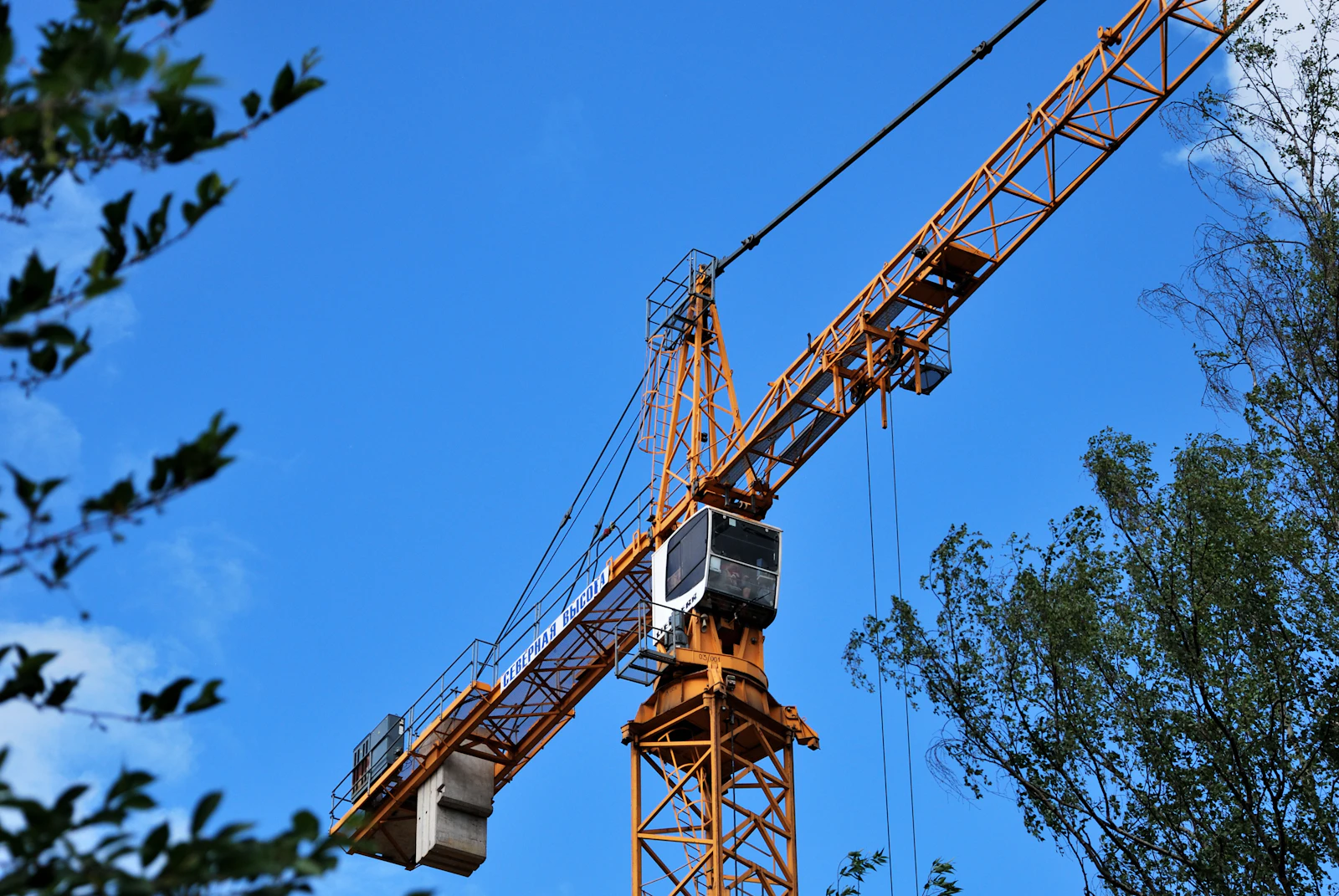
Mobile Crane Rental Rates Seattle 2026
For structural steel erection in Seattle, 2026 planning budgets for mobile crane equipment hire typically land in these ranges (USD): boom truck / small RT (12–30 ton) at $1,200–$2,100/day, $6,000–$10,500/week, and $24,000–$42,000/month; mid-size hydraulic truck/RT (35–60 ton) at $2,200–$3,800/day, $11,000–$19,000/week, and $44,000–$76,000/month; and steel-erection class all-terrain/hydraulic (70–175 ton) at $3,200–$6,100/day, $16,000–$30,500/week, and $64,000–$122,000/month. These “day/week/month” figures are best treated as equivalents derived from common hourly billing rules (portal-to-portal travel, 4-hour minimums, and 8-hour straight-time days) and will move with configuration (jib/counterweight), access constraints, and weekend/OT windows. In Seattle’s market, rental coordinators commonly quote crane-and-operator as an operated hire (often supplemented by riggers, mats, and lift planning) from established crane fleets such as NessCampbell and other regional/national providers that support Puget Sound steel work. Baseline published hourly rate sheets in the U.S. commonly show small-to-mid truck cranes in the low-to-mid hundreds per hour and 75–175 ton hydraulics in the mid-to-upper hundreds per hour, which is consistent with the budgeting bands above when escalated for Seattle conditions and 2026 labor/overhead.
| Vendor |
Daily Rate |
Weekly Rate |
Review Score |
Website |
| Bigge Crane and Rigging Co. |
$2,750 |
$11 000 |
9 |
Visit |
| Maxim Crane Works |
$2,650 |
$10 600 |
8 |
Visit |
| Millican Crane Service |
$2,450 |
$9 800 |
8 |
Visit |
| Northwest Crane Service |
$2,500 |
$10 000 |
8 |
Visit |
| Ford Crane Inc. |
$2,350 |
$9 400 |
9 |
Visit |
Assumptions used for the 2026 planning ranges above (adjust to your contract terms): 8-hour straight-time day; 5-day week; 20-day month; “operated & maintained” mobile crane hire (crane + operator) unless noted; travel billed portal-to-portal; rigging crew, mats/cribbing, permits, and lift engineering carried as adders.
What Drives Mobile Crane Hire Cost for Structural Steel Erection in Seattle?
Seattle structural steel erection tends to concentrate cost into a few predictable buckets: (1) selecting the right crane class for radius/weight (often 70–175 ton for urban steel picks), (2) billing minimums and time windows (4-hour minimums, OT, and weekend/holiday rules), and (3) access logistics (downtown staging, SDOT street-use requirements, traffic control, and limited laydown). Even when the crane’s posted hourly looks reasonable, the effective cost per pick can jump if you’re paying standby for ironworker sequencing, waiting on bolting/plumbing, or losing time to delivery windows and travel.
- Capacity and configuration: tonnage, boom length, swing clearance, luffing jib needs, and counterweight package.
- Jobsite access: setup footprint, outrigger spread, ground bearing and matting, and whether you must occupy a lane/alley or sidewalk.
- Time structure: 4-hour or 8-hour minimums, portal-to-portal travel, and overtime triggers.
- Support equipment: counterweight truck, rigging truck, man basket, spreader bar, and taglines.
- Labor model: operator included vs bare crane hire; rigger/signal labor; lift director/engineer as required.
Seattle 2026 Rate Benchmarks You Can Use to Sanity-Check Quotes
Because many Seattle-area crane companies quote by capacity and scope rather than posting public rate cards, it helps to triangulate from published examples and apply local project realities. Published rate sheets from other U.S. markets show (as examples) 35–40 ton truck cranes around $245–$255/hr, 60 ton around $320/hr, 70 ton around $370/hr, and 90 ton around $460/hr, with a stated 10% “fuel/environmental/insurance” surcharge and a $95 travel permit line item on that same sheet.
Pacific Northwest-adjacent published “operated hydraulic crane” pricing examples also show 35-ton at $315/hr, 45-ton at $345/hr, 75-ton at $385/hr, 115-ton at $425/hr, and 175-ton at $495/hr, plus a $135/hr counterweight truck and a $450/day jib/support-truck charge (where required).
Smaller boom-truck style equipment rental examples show $145/hr for a 12-ton unit with $175/hr overtime, a 4-hour minimum, and an 8% fuel surcharge, plus a published $20 permit charge for cranes 70 ton and up and stated setup/breakdown fees for larger classes.
How to apply this to Seattle: treat those published figures as external reference points, then add Seattle-specific drivers: portal-to-portal travel time through I-5/SR-99 congestion, tighter delivery windows downtown, higher likelihood of street-use/traffic-control costs, and labor structure that tracks Local 302 wage/fringe realities (even when billed as an all-in equipment hire rate). Local 302 wage sheets show June 1, 2026 hourly wages in the high-$60s to low-$70s for several groupings, which is one reason operator-inclusive crane hire rarely prices like generic equipment rentals. (g
Sizing the Crane for Urban Steel Picks (And What It Does to Your Hire Cost)
For structural steel erection, the “mobile crane” decision is usually not just tonnage—it’s capacity at radius with the right boom/jib configuration to clear adjacent structures and reach over active work. In Seattle, where laydown is limited, it’s common to see the crane set on one edge of the footprint and pick across the slab line, which pushes radius and can move you from (for example) a 60-ton class to a 90–115 ton class quickly.
Budget adders that frequently show up when you upsize or reconfigure:
- Counterweight truck / support truck: commonly billed as a separate hourly line (example reference: $135/hr) or as a daily mobilization line.
- Jib or long-configuration handling: budget a dedicated daily handling/support charge (example reference: $450/day) when the jib or extra rigging requires a second vehicle and additional load/unload time.
- Setup/breakdown fees: larger hydraulic classes often carry explicit setup/breakdown or “rigging” time blocks; confirm whether setup is included inside the minimum hours or billed as separate line items.
- Permits tied to crane class: even if the permit line is small on paper (published example: $20), the real Seattle cost driver is the street-use and traffic-control scope if you’re occupying a lane, alley, or sidewalk frontage for setup and swing clearance.
Hourly Billing Rules That Change the True “Day Rate”
Mobile crane hire for steel erection is rarely a simple “daily rate.” Most operated hires follow time rules that estimators should model explicitly:
- Minimums: 4-hour minimums are common on smaller cranes (published example shows 4 hours). If your steel package only needs two critical picks, you may still buy the full minimum.
- Portal-to-portal: travel time from yard to site and return is often billable; in Seattle, that can be a material line item due to congestion and restricted staging around dense neighborhoods.
- Overtime windows: published examples define overtime after 8 hours/day, and also for early/late windows and Saturdays, with separate double-time and holiday structures. If your erection plan pushes into late afternoon due to bolt-up, you can tip into OT quickly.
- Weekend/holiday planning: if the GC schedules weekend steel to avoid street impacts, budget the premium (often 1.5x–2.0x effective labor) and confirm whether the crane’s minimum block becomes an 8-hour day minimum.
Seattle-specific practical note: downtown delivery windows and “no-staging” frontages can force early starts. If your plan requires a 5:30 AM mobilization to set outriggers before traffic, verify the rental agreement’s early-hour OT rules and whether “travel” time is part of OT.
Rigging, Signal, and Steel-Erection Support Adders
Structural steel erection rarely succeeds with “crane + operator only.” Even when ironworkers provide some rigging, the crane provider may require qualified signal and a defined lift director. Published examples in the region show certified rigger/signalman at $115/hr (open-shop reference) and separate line items for additional personnel on OT/DT schedules in other markets.
Common adders to carry in a Seattle mobile crane equipment hire budget:
- Rigging gear rental: spreader bar, shackles, synthetic slings, beam clamps—often charged as a daily “rigging package” allowance (carry $150–$450/day depending on load class and whether engineered picks are required).
- Crane mats / outrigger pads: if the site is wet, soft, or has underground utilities, carry $300–$900/day for mats/pads and handling (Seattle rain and saturated subgrades make this a frequent reality).
- Standby time: if the crane is on-site but cannot work due to trade interference, many contracts still bill time; carry $150–$300/hr as a standby planning allowance for a 75–115 ton class (confirm with your provider’s terms).
- Lift engineering / pick plan: for critical lifts, budget $750–$2,500 depending on complexity, stamping requirements, and whether you need multiple iterations due to site changes.
Hidden-Fee Breakdown
To keep your Seattle steel-erection budget from being surprised at invoice time, model these “often real” costs up front and confirm what is included in the quoted hire rate:
- Fuel/environmental/insurance surcharges: published examples show 8% and 10% surcharge structures depending on company/market; treat 8%–12% as a 2026 planning range unless your quote states otherwise.
- Travel permits and admin fees: published example includes a $95 travel permit and a $285 one-time fee for OCIP/certified payroll handling in that market—Seattle projects with certified payroll/OCIP can carry similar “paperwork friction” costs.
- Mobilization/demobilization: carry $450–$1,250 per move for a mid-size mobile crane and $1,200–$3,500 per move for 115–175 ton class when counterweights/support trucks are involved (especially if the site is hard to stage).
- Traffic control and street-use impacts: carry $900–$3,000/day when lane closures, flaggers, or paid detail are required (common in South Lake Union/Belltown/Downtown cores).
- Cleaning and spill prevention: if your site requires drip pans, spill kits, or strict housekeeping (e.g., finished slabs), carry a $150–$600 cleaning/containment allowance.
- Late off-rent notice: confirm the cut-off time for next-day off-rent (commonly mid-afternoon). Missing that cut-off can effectively buy you another day minimum.
Example: Two-Day Seattle Structural Steel Erection With Real Constraints
Scenario: 2-day steel erection sequence in South Lake Union with a tight alley setup, limited laydown, and an early start to avoid peak traffic. Plan uses a 115-ton class hydraulic mobile crane for columns and beams, plus a counterweight/support truck.
- Crane hire (115-ton class): budget $425–$575/hr depending on configuration and market, with an 8-hour/day straight-time target. (External published reference for a 115-ton operated hydraulic crane shows $425/hr in another market; use that as a floor, not a Seattle promise.)
- Day 1 billed time: 9.5 hours portal-to-portal (includes 1.0 hour travel + 0.5 hour setup + 8.0 hours working) → carry 1.5 hours OT exposure if your contract triggers OT after 8.
- Counterweight/support truck: published reference $135/hr; assume same billed hours as crane.
- Rigger/signal support: 1 rigger/signal at $115/hr for billed hours; add a second rigger if picks require dual tag/control.
- Street-use/traffic control: carry $1,500/day allowance for a constrained urban frontage.
- Mats/pads: carry $600/day due to rain-softened subgrade and to protect utilities.
- Surcharges: apply 10% fuel/environmental/insurance allowance on crane-related lines unless your quote states otherwise.
Estimator takeaway: in this scenario, the crane’s headline hourly is not the whole story—Seattle access, support trucking, traffic control, and the risk of OT from steel sequencing can move total crane-related spend by 20%–45% versus a “clean site, straight-time, open setup” assumption.
How Seattle Conditions Change Mobile Crane Equipment Hire Cost (More Than You’d Expect)
Two to three Seattle realities consistently affect mobile crane hire costs for structural steel erection:
- Access and staging: many Seattle sites have no laydown and limited curb space. That increases portal-to-portal time, raises the probability of standby while ironworkers re-sequence picks, and can force night/early-hour work windows.
- Weather and ground conditions: rain and saturated soils increase matting needs and setup time. Budget extra for outrigger pad handling and for “reset” time if the crane must be repositioned to maintain safe bearing and swing clearance.
- Urban permitting/traffic control: if you need a lane closure or must control pedestrian paths, the traffic-control scope can rival the crane cost on short-duration picks (especially for 4-hour-minimum jobs).
Quote Normalization: What to Request So You Can Compare Crane Hire Apples-to-Apples
To keep mobile crane equipment hire quotes comparable across providers, request that each quote clearly states:
- Billing basis: portal-to-portal vs site-only; minimum hours (4-hour vs 8-hour); and the OT trigger (commonly after 8 hours/day).
- Included items: operator, basic rigging, hook block(s), headache ball, taglines, and standard outrigger pads.
- Excluded items (priced separately): counterweight truck/support truck (published reference $135/hr), jib handling (published reference $450/day), engineered lift plans, and traffic control.
- Surcharges: fuel/environmental/insurance surcharge percentage (published examples show 8% and 10%), plus any credit-card fee (published example 2%).
- Permits/admin: travel permit lines (published example $95), crane-class permit adders (published example $20 for 70+ ton), and OCIP/certified payroll admin (published example $285).
Budget Worksheet
Use this estimator-friendly worksheet structure to build a Seattle 2026 structural steel erection crane budget (edit allowances to your scope). No tables—just line items you can paste into an estimate narrative or cost code backup:
- Mobile crane equipment hire (operated): ____ hours @ $____/hr (carry 8-hour/day target; model OT after 8)
- Minimum-hour exposure: ____ days @ 4-hour minimum (if applicable)
- Portal-to-portal travel time allowance: ____ hours/day (Seattle congestion + staging limits)
- Counterweight/support truck: ____ hours @ $____/hr (planning reference: $135/hr)
- Jib/support handling: ____ days @ $____/day (planning reference: $450/day when required)
- Rigger/signal labor (if by crane provider): ____ hours @ $____/hr (planning reference: $115/hr)
- Rigging gear package: $250/day allowance (spreader bar, shackles, slings; increase if critical lifts)
- Mats/cribbing/pads: $600/day allowance (increase for wet subgrades/utilities)
- Lift engineering / pick plan: $1,250 allowance (range $750–$2,500)
- Traffic control / street-use support: $1,500/day allowance (range $900–$3,000/day)
- Permits/admin: $95 travel permit allowance + $285 OCIP/certified payroll allowance (if applicable)
- Fuel/environmental/insurance surcharge: apply 8%–12% to applicable crane lines (confirm rate)
- Cleaning/containment: $300 allowance (range $150–$600)
- Standby risk: 2–6 hours @ $200/hr allowance (steel sequencing/bolting delays)
Rental Order Checklist
Use this checklist to reduce change orders, standby, and invoice disputes on Seattle mobile crane hires:
- PO scope clarity: specify crane class (tonnage), configuration (jib yes/no), counterweights, and whether a support/counterweight truck is included.
- Billing terms confirmed in writing: portal-to-portal, minimum hours (4 vs 8), OT windows, weekend/holiday rules, and off-rent cut-off time.
- Delivery and staging plan: identify exact setup location, outrigger footprint, and swing clearance; confirm if alley/curb occupancy triggers SDOT street-use and traffic-control requirements.
- Ground bearing documentation: provide slab capacity/soil notes; confirm who supplies mats/pads and how mat handling is billed.
- Lift plan inputs: maximum load weights, pick radii, headroom constraints, and tandem-lift restrictions (if any).
- Personnel responsibilities: who provides signal, riggers, lift director, and safety documentation.
- Site readiness before crane arrives: laydown pre-staged, steel sorted by sequence, bolt kits and spud wrenches ready—minimize paid standby.
- Return/off-rent process: define “off-rent” notification method (email/text), time stamp requirements, and who signs daily tickets.
- Closeout documentation: daily time sheets, photos of setup/ground protection, and a clear record of delays by cause (steel not ready, access blocked, weather hold, etc.).
Practical Guidance: When a ‘Monthly’ Crane Hire Actually Makes Sense
Monthly-equivalent mobile crane hire can pencil when you have steady picks across multiple weeks (decking, miscellaneous steel, stairs, canopies) and can keep the crane working close to an 8-hour/day utilization without chronic standby. If your utilization is intermittent (common with bolting, welding, and deck sequencing), consider structuring the plan as multiple shorter “pick days” rather than paying standby across a long continuous rental—unless your contract terms allow true off-rent when the crane is idle.
2026 procurement tip for Seattle steel erection: reserve crane windows early for summer/fall peaks. If you anticipate after-hours street work, budget OT explicitly instead of trying to “value engineer” it away late—OT rules (after 8 hours, early/late windows, Saturday, and holiday) are where many estimates miss.