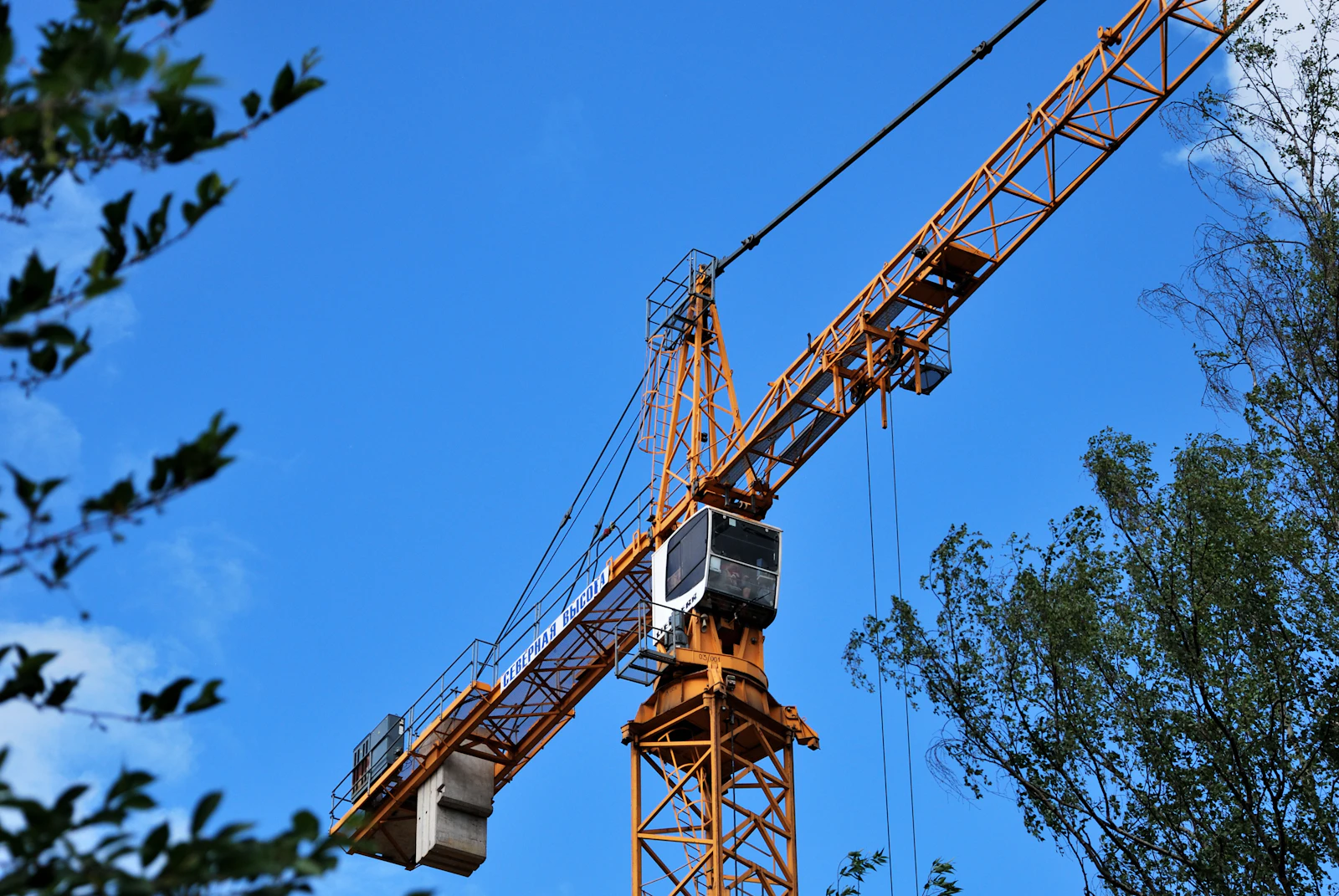
Mobile Crane Hire Costs Washington DC 2026
For Washington, DC (DMV) generator installation work, 2026 budgeting for operated mobile crane equipment hire typically lands in these planning bands (excluding permitting, traffic control, and most rigging/engineering): boom-truck / small hydraulic mobile cranes (20–45 ton class) at about $1,400–$2,900/day, $5,500–$10,500/week, and $18,000–$32,000/month; mid-size hydraulic truck cranes (50–90 ton class) at about $2,400–$5,800/day, $9,500–$22,000/week, and $30,000–$62,000/month; and all-terrain mobile cranes (100–130+ ton class) commonly at $4,500–$10,500/day, $18,000–$40,000/week, and $55,000–$120,000/month. Assumptions: 8-hour shift equivalency (even if billed portal-to-portal), one setup location, normal weekday hours, and no counterweight/assist-truck mobilizations. In the DC market you’ll typically source through national rental networks and regional crane-and-rigging providers, with pricing ultimately driven by portal-to-portal travel time, minimum-hour rules, and public-space constraints. Portal-to-portal billing and minimums are explicitly common in crane terms/rate sheets.
| Vendor |
Daily Rate |
Weekly Rate |
Review Score |
Website |
| Maxim Crane Works |
$3 600 |
$15 500 |
9 |
Visit |
| ALL Crane Rental & Sales |
$3 400 |
$14 800 |
8 |
Visit |
| Bay Crane (Bay Crane Service / Bay Crane East) |
$3 500 |
$15 200 |
9 |
Visit |
| Barnhart Crane & Rigging |
$3 900 |
$16 900 |
9 |
Visit |
| United Rentals |
$3 200 |
$13 900 |
8 |
Visit |
How Mobile Crane Hire Is Usually Billed For Generator Installation
Most mobile crane hire for generator installation in Washington, DC is quoted as an operated crane (crane + operator) and billed portal-to-portal—meaning the clock can run from dispatch/yard to jobsite and back, not just “hook time.” Portal-to-portal language and minimum-hour charging are standard across many crane providers’ terms and published rate notes.
Minimums matter more than the lift itself. In the DC metro, it’s common to see a 3-hour minimum for a boom-truck style crane (often including one setup at one location), and 4-hour minimums are also widely used in the broader market.
For estimating, treat your “day” and “week” as a billing construct rather than a calendar rental like a skid steer. A practical internal standard many rental coordinators use is: day = 8 billed hours, week = 40 billed hours, and month = 160 billed hours (single shift). These assumptions align with common crane terms that describe monthly basis hours (8 hours/day; 40 hours/week; 160 hours/month).
Also confirm billing increments. Many crane terms bill beyond the minimum in 30-minute increments, while some industrial tariffs bill in 15-minute increments after a stated minimum. That difference can change the effective cost on short generator picks, test lifts, or “one more set” adjustments.
What Drives Mobile Crane Equipment Hire Cost In Washington, DC?
Generator installation is a classic “heavy but short-duration” scope—meaning your total equipment hire cost is usually dominated by mobilization time, minimum hours, and site constraints rather than the number of picks. In Washington, DC, cost drivers commonly stack up in these ways:
- Crane class and configuration: A 38–45 ton boom truck can set many pad-mounted or courtyard gensets, but rooftop placements often push you into a 60–90 ton hydraulic truck crane (or larger) once you account for radius, parapet height, and required boom/jib.
- Counterweight and assist trucks: Larger hydraulic truck cranes may need additional trucks to carry components due to DOT restrictions; those assist trucks are typically billed in addition to crane travel and job time.
- Lift planning and engineered picks: A formal site survey and lift plan is often charged as a line item (common published values include $250–$300), and revisions can be hourly (example: $125/hour).
- Rigging and lift accessories: “Basic rigging included” can be narrow. Spreader bars, man/material baskets, radios, and specialty slings frequently add daily charges (examples published in rate sheets include $80/day spreader bars, $250/day man basket, and $40/day radios).
- Street geometry and congestion: Tight curb lanes, limited outrigger footprint, and the need for crane mats/pads increase setup time (and therefore portal-to-portal hours). Downtown DC also increases the probability of restricted delivery windows and staged arrivals.
- Public-space controls: If you need lane reductions, detours, or full closures, plan for additional submittals and on-street logistics tied to DDOT processes for mobile crane operations.
- Security and site onboarding: On federal, healthcare, or mission-critical sites, time/cost for orientations, security clearances, and similar onboarding is often billable as an extra under crane terms.
Hidden-Fee Breakdown
Below is a practical “hidden-fee” framework for mobile crane equipment hire costs in Washington, DC—use it to prevent the classic gap between a crane’s hourly rate and the final invoice total:
- Fuel surcharge (port-to-port): Some regional worksheets explicitly price fuel as a minimum charge (example: $50 minimum) plus a per-mile and per-hour factor (examples published: $1.00/mile and $6.00/hour of crane use for smaller cranes, and $1.50/mile plus $9.00/hour for larger crane classes).
- Rigger/signalperson: If required by your lift plan or GC safety rules, budgeting examples show a certified rigger/signalman at $125/hour (4-hour minimum) or $155/hour (4-hour minimum) depending on wage basis and program.
- Lift plan / site survey: Common published allowances include $250–$300, with revisions sometimes billed at $125/hour.
- Accessory adders: Published examples include $300 for a man/material basket/dumpster attachment bundle, $250/day for a basket, $80/day spreader bars, and $40/day radios.
- Boom-length or configuration charges: Some rate schedules apply incremental boom charges (example: $6/hour for certain boom ranges up to $18/hour at longer configurations).
- Standby / crew-only waiting time: Waiting for permits, curfews, escorts, shutdowns, or site access can be billed as a crew-only rate (example published: $135/hour one-man or $270/hour two-men).
- Overtime triggers: Overtime can apply for early/late hours, Saturdays, or long days (commonly at 1.5x), and double-time can apply Sundays/holidays (2x)—confirm with the provider’s terms before you book.
- Credit card processing: Some crane service rate sheets disclose a 3%–5% markup for credit card payment—avoid surprises by paying via ACH if allowed.
- Public-space permitting (when applicable): If your project crosses into formal street/alley closure approval workflows, DC pages list fees such as a $2,750 filing fee and $1,287 hearing fee for street/alley closure approval processes (not every crane setup requires this, but it can apply to certain closure scopes).
Washington, DC Logistics That Commonly Add Cost
Washington, DC crane work is often “logistics-limited” rather than “capacity-limited.” These are the city-specific items that most often push your mobile crane hire costs upward on generator installation projects:
- DDOT traffic control plan (TCP) expectations for mobile crane work: If your crane setup affects travel lanes, detours, or sidewalk space, anticipate submittals and review steps tied to DDOT’s mobile crane operation guidance, especially when full or partial closures require detours. This can lengthen lead time and increase billable standby risk if approvals slip.
- Restricted delivery windows and “no-staging” corridors: In dense DC zones, you may lose the ability to stage counterweights, mats, or the generator itself curbside. That can force a second handling step (telehandler/fork + decking time) that extends crane portal hours.
- Federal property/security onboarding: If the lift is adjacent to federal facilities or within controlled campuses, onboarding and access constraints can convert into billable time; some crane terms explicitly state that orientation/clearance time is an extra billable item.
- Summer heat and thunderstorm downtime: July–September scheduling in DC increases weather risk. If you’re installing a rooftop genset, build a standby allowance and define “weather stop” rules in the PO (who calls it, what gets billed, and what the remobilization looks like).
Example: Mobile Crane Hire Budget For A Rooftop Generator Set
Scenario: Set a 10,500 lb diesel generator on a mid-rise roof in Northwest DC. One crane setup on a curb lane, one pick off a flatbed, one final set on housekeeping pads. Work window is constrained to 9:30 AM–2:30 PM due to building operations, requiring an early arrival for setup and a hard stop for demob.
Planning estimate (illustrative allowances, not a quote):
- 80–90 ton hydraulic truck crane (operated): assume $375–$525/hour portal-to-portal, with an 8-hour equivalency used for day budgeting on a constrained site = $3,000–$4,200.
- Travel/portal time exposure: assume 2.0 portal hours embedded in the day due to congestion and staging = $750–$1,050 of the above day cost effectively “non-hook.”
- Fuel surcharge allowance: apply a minimum $50, plus $1.50/mile and $9/hour of crane use (if your vendor uses a similar method) = carry $200–$450 allowance depending on miles/hours.
- Lift plan / site survey: $250–$300.
- Certified rigger/signalperson: if required, budget $125–$155/hour with a 4-hour minimum = $500–$620 per person; carry 2 people if your GC requires dedicated signal + dedicated rigger = $1,000–$1,240.
- Radios: $40/day.
- Spreader bar: $80/day.
- Man/material basket contingency: $250/day to cover an unexpected rooftop access need (or a provider-specific attachment line).
- Traffic control & flagging: carry $1,200–$2,800/day depending on how many positions are required and whether you need a detour setup (DC-specific and scope-driven; verify with the approved TCP).
- Permitting allowance: if a formal closure approval path applies, DC lists fees including $2,750 filing and $1,287 hearing fees for street/alley closure approval (only applicable to certain scopes). If not applicable, you still may carry a smaller permit/admin allowance for DDOT/TOPS and parking controls.
- Standby allowance: carry 1.0 hour at a crew-only rate (example: $270/hour two-men) for security delays, late delivery of the generator, or roof access not ready.
Operational constraints that change cost in real life: (1) If the generator delivery misses the setup window, your crane can fall into standby/crew-only billing or even full portal time; (2) if indoor dust-control or infection-control rules slow the roof access route, you may consume the whole minimum day even with one pick; (3) if your setup requires a full lane closure and detour, your “cheap crane” becomes a “traffic control” job first.
Budget Worksheet
Use this bullet worksheet to build a PO-ready internal estimate for mobile crane equipment hire costs (Washington, DC) on generator installation scopes:
- Operated mobile crane (select class: 45T / 60–70T / 80–90T / 100T+): $____/hour; minimum hours: ____; estimated portal hours: ____
- Rigging package (basic vs specialty): allowance $____ (include shackles, spreader bar, softeners)
- Spreader bar: allowance $80/day (or vendor rate)
- Radios: allowance $40/day
- Man/material basket contingency: allowance $250/day
- Certified rigger/signalperson: ____ people @ $125–$155/hour, 4-hour minimum allowance
- Lift plan/site survey: allowance $250–$300; revisions $125/hour allowance
- Crane mats/pads (if not included): allowance $250–$900/day (site-dependent)
- Fuel surcharge: minimum $50 + per-mile/per-hour method allowance
- Traffic control plan (TCP) + flagging + devices: allowance $____ (DC scope-driven)
- Permits/admin: allowance $____ (carry $2,750 + $1,287 only if formal street/alley closure approval applies)
- Overtime contingency: add 15%–35% if work is outside normal shift windows or on Saturday/Sunday
- Standby/waiting time: 1–2 hours allowance at crew-only or crane hourly rate (define in PO)
Rental Order Checklist
Before issuing the PO for mobile crane hire (generator installation, Washington, DC), confirm these items to avoid change orders and billable standby:
- Provide lift details: generator weight (lb), pick radius (ft), set height (ft), and required boom/jib configuration.
- Confirm portal-to-portal basis, minimum hours, billing increments (15/30 min), and what counts as “setup” time.
- State the approved work window (arrival, setup, first pick, final pick, demob) and define overtime triggers in writing.
- Delivery logistics: generator truck ETA, laydown area, and who controls truck detention.
- Permits/TCP: identify whether DDOT review, detours, or closures are needed; confirm who supplies traffic control devices and flaggers.
- Site readiness: outrigger bearing surface, mats/pads responsibility, overhead utility clearance, and roof access control.
- Rigging responsibility matrix: who provides spreader bar, shackles, slings, softeners, and tag lines; document any specialty rigging adders.
- Return/off-rent requirements: required photos of rigging returned, accessory counts, and sign-off process to prevent “missing gear” backcharges.
- Billing admin: invoice backup required (time sheets, portal times, TCP costs), and payment method (avoid 3%–5% card markups if applicable).
2026 Planning Notes For Mobile Crane Rental In The DMV
In 2026, the most reliable way to budget mobile crane equipment hire costs for generator installation in Washington, DC is to treat the crane as only one component of a “lift system” cost: operated crane time + rigging + traffic control + permitting + schedule risk. Even when hourly crane rates look stable, minimum-hour rules, portal-to-portal travel exposure, and public-space constraints are what drive variance job to job. Portal-to-portal billing is explicitly described in common crane terms, and 160-hour monthly baselines are frequently stated for longer rentals.
Availability also changes your effective cost. If you’re booking around planned building shutdowns or utility cutovers, reserve earlier and include a cancellation/reschedule clause that matches your risk (for example, define a “no-cost cancel” cutoff at 48 hours and a reduced charge at 24 hours—exact policy varies by provider).
Shift Rules, Overtime, And Weekend Billing
Overtime is one of the fastest ways for generator installation lifts to exceed budget, because building operations frequently push picks into early mornings, evenings, or weekends. Many crane terms define overtime at 1.5x per man-hour and double-time at 2x, with overtime applying outside normal weekday windows and on Saturdays, and double-time applying Sundays/holidays.
Translate that into estimating tactics:
- If your lift needs a 6:00 AM street setup to beat traffic, assume overtime may apply to part (or all) of the shift depending on the provider’s defined “straight time” window.
- If you expect a long day (e.g., rooftop routing delays), carry an overtime multiplier for hours over 8 in the same day.
- For Sunday/holiday work, carry a double-time scenario and confirm if the provider treats federal holidays differently in DC.
Off-Rent, Detention, And Return-Condition Documentation
Even though mobile cranes aren’t “returned” like a mini-ex, rental coordinators still need off-rent controls to avoid paying for time you didn’t use:
- Off-rent notice cutoffs: define the cutoff time (for example, 12:00 PM or 2:00 PM the prior business day) for releasing a crane without rolling into another minimum day.
- Weekend/holiday billing: clarify whether a Friday demob that slips past a cutoff triggers weekend billing or a Monday minimum day.
- Truck detention: if the generator delivery is late, the crane can sit on standby—carry at least 1–2 hours standby allowance and pre-assign who authorizes “wait” vs “release.”
- Return condition for accessories: require photos and a signed accessory count for spreader bars, radios, baskets, and specialty rigging to prevent missing-gear charges; many rate sheets explicitly treat accessories as separate billable items.
Risk, Insurance, And Damage Waiver Mechanics
On crane scopes, risk transfer is often handled through certificates of insurance, contractual indemnities, and (sometimes) optional protection plans. Note that certain equipment lessors disclose that limited damage/theft waivers may not be available for crane rentals, so you should not assume a standard “damage waiver” applies the way it does on smaller rental equipment.
Where damage waivers or rental protection plans are offered for general equipment, pricing is often structured as a percentage of hire charges, and industry commentary commonly cites ~10%–15% as a typical range (provider-specific). Use that as an estimating placeholder only if your contract actually allows it for the crane class being supplied. (g
Also check what the plan actually caps. For example, one major rental company’s published RPP terms (jurisdiction-specific) describe caps tied to a percentage of replacement value/repair cost (e.g., references to 10% in certain contexts), which is very different from “full coverage.” Always read the crane provider’s crane-specific terms and exclusions.
Permitting And Public-Space Coordination For Crane Setups
In Washington, DC, the crane pick is frequently the easy part; the public-space plan is the hard part. If your setup requires a closure that moves into formal approval workflows, DC publishes fees such as a $2,750 filing fee plus a $1,287 hearing fee for street/alley closure approval processes. Treat those as scope-dependent and confirm applicability early—many lifts only need traffic control and temporary restrictions rather than a formal closure approval.
If you are working on or adjacent to National Park Service administered space (common around the National Mall area), NPS notes a $120 non-refundable application processing cost for certain special permits—again, scope-dependent, but important when you’re near NPS property lines.
Finally, DDOT documentation around mobile crane operations highlights review pathways and the importance of having the correct TCP/MOT approach, especially when full closures or detours are involved. That affects both lead time and the probability of paying standby while a revised TCP is obtained.
Ways To Reduce Total Equipment Hire Cost Without Undersizing The Crane
Cost reduction on generator installation crane scopes usually comes from reducing portal hours and uncertainty, not from forcing a smaller crane onto a risky chart point.
- Lock the pick path: mark the crane setup box and generator truck spot, confirm turning radii, and pre-stage mats and rigging so the crane is not waiting while the site “figures it out.”
- Bundle lift planning early: pay for the site survey/lift plan (often $250–$300) up front to avoid a day-of cancellation that burns a minimum shift.
- Minimize accessory surprises: if there’s any chance of needing a basket, radios, or spreader bars, include them in the initial PO so you don’t lose time sourcing them day-of (examples published: $40/day radios, $80/day spreader bar, $250/day basket).
- Schedule inside straight-time windows: if your provider defines weekday straight time (example shown: Monday–Friday 6:00 AM–4:30 PM), align picks inside that window to avoid overtime adders.
- Define “stop work” authority: document who can stop for wind/weather and how standby is billed, so you can make a fast call before you burn into overtime or a second minimum day.
If you want, share (1) generator weight, (2) estimated pick radius, (3) roof height/parapet, and (4) whether you need curb lane or full closure, and I can tighten the 2026 Washington, DC equipment hire cost range to the most likely crane class and minimum-hour outcome.