

Pallet Forks Rental Rates in Mesa (Daily/Weekly) — 2026 Costs

Price source: Costs shown are derived from our proprietary U.S. construction cost database (updated continuously from contractor/bid/pricing inputs and normalization rules).
Profile image of author
Eva Steinmetzer-Shaw
Head of Marketing

Pallet Forks Rental Rates Mesa 2026

For Mesa, AZ (East Valley) 2026 planning budgets, pallet forks equipment hire for a skid steer loader rental typically lands in the range of $50–$95/day, $150–$300/week, and $350–$900/4-week month depending on fork class (e.g., Class II), frame width, tine length, rated capacity, and whether the attachment is rented “standalone” or bundled with a skid steer from the same yard. Published rate sheets show how wide the spread can be: one national rate sheet lists $47.50/day, $123.50/week, $285/month for large skid steer pallet forks, while another published attachment sheet lists $75/day, $295/week, $895/month for 48-inch adjustable pallet forks. In Mesa, procurement teams commonly see pricing near the lower end when forks are added to an existing skid steer loader rental (same dispatch, same billing cycle), and closer to the upper end when forks require separate delivery, special carriage frames, or tight delivery/return windows. You can generally source forks through Phoenix-area branches of national rental houses and regional heavy equipment dealers; the key cost-control lever is how the attachment is mobilized, documented, and off-rented.

How Skid Steer Loader Rental Packaging Affects Fork Attachment Hire Cost

Pallet forks are one of the most frequently bundled skid steer attachments, and that bundling changes equipment hire cost more than tine size does. Some yards will only rent forks on their own machines (or will heavily preference it) because it reduces compatibility issues and damage claims; for example, one published listing states that attachments must go on that company’s skid steers only. For Mesa rental coordinators, that “machine-required” policy can create a real cost delta if you planned to run forks on an owned skid steer: you may end up paying an incremental skid steer loader rental cost you didn’t carry in the estimate.

Practical budgeting rule for Mesa: if you already have a skid steer on rent from the same supplier, plan an “add-on attachment” rate (often lower) plus minimal admin fees. If forks are rented standalone, carry separate delivery/pick-up, a higher probability of minimum rental, and more stringent return-condition documentation requirements (photos, fork lock pins, ID tags).

What Drives Pallet Forks Equipment Hire Cost in Mesa?

When your scope is “pallet forks” but the work term is skid steer loader rental, the correct cost build is: (1) forks base hire, (2) mobilization and billing rules, (3) compatibility/risk controls (which become fees when missed).

Fork Class, Capacity, and Frame Style

Pricing rises when you move from light-duty frames to heavier frames (thicker backrest, heavier carriage, higher rating). Even when the forks are “just steel,” higher-rated sets carry higher replacement exposure for the supplier, so the rental class increases. If your scope involves masonry cubes, pavers, or bundled steel, consider whether you need a heavier frame than the yard’s default. Carry a contingency for a “swap” if the first set is undersized—swaps can trigger extra freight, re-dispatch, and lost time.

Tine Length and Adjustability

Common tine lengths on skid steer forks are in the 36–48-inch class; longer tines and specialty frames generally move you toward the upper end of the Mesa 2026 planning range. If you must handle oversized loads (wide pallets, pipe bundles), add budget for fork extensions rather than overspec’ing the base fork set—extensions can be cheaper but may add freight and a higher damage-risk allowance.

Quick-Attach Interface and Site Compatibility

Most Mesa-area skid steer fleets use a standard quick-attach, but “close enough” is not good enough when you’re trying to prevent re-delivery charges. If you’re running compact track loaders (CTLs) alongside wheeled skid steers, validate coupler type, hydraulic clearances, and whether a backrest guard is required for your client’s safety plan. Any mismatch can create same-day downtime plus a second mobilization fee.

Hidden-Fee Breakdown

Most pallet fork attachment rental rates look inexpensive compared with the skid steer loader rental itself—until you account for the costs below. These are the line items that typically move the total equipment hire cost on real Mesa jobs.

Delivery / Pick-Up (Flat vs Mileage)

  • Each-way delivery base: some published pricing uses $120 each way for transport, plus mileage.
  • Per-mile transport: one published rate sheet uses $3.25 per loaded mile on top of the each-way base.
  • Municipal/contract-style transport: some schedules show $250 each way per item within 30 miles for transportation.
  • Mesa planning allowance: if you don’t have a negotiated freight schedule, carry $95–$175 each way for local dispatch inside the Phoenix metro, and add a mileage allowance for sites outside typical East Valley radii (e.g., far SE Valley, out toward Gold Canyon/Apache Junction, or long-haul to west-side yards).

Minimum Charges, Weekend Billing, and Off-Rent Cutoffs

  • Minimum rental: plan a 1-day minimum for standalone forks, even if used for a partial shift (some suppliers also apply a 4-hour minimum for will-call/pickup scenarios).
  • Weekend rate exposure: weekend billing is often not “free.” One published rental requirement states a weekend rate of 1.5× the daily rate (for short rentals).
  • Off-rent timing: carry an operational assumption that off-rents must be called in before a mid-afternoon cutoff (commonly around 2:00–4:00 pm) to stop billing the next day; missing the cutoff is a frequent cause of “one extra day” charges in practice.

Damage Waiver vs Insurance (and the Percentage That Matters)

  • Damage waiver: for estimating, carry 10%–15% of the base rental as a damage waiver line item when required by the supplier agreement (or when your internal policy prefers the waiver for attachments).
  • Deposit / authorization: if you are a new account or cash customer, carry a refundable authorization in the $200–$500 range for a fork attachment rental (varies by supplier and credit terms).

Cleaning, Wear, and Return-Condition Fees

  • Cleaning fee (typical allowance): $75–$250 if forks come back with concrete splatter, mud packed into the carriage, or adhesive residue from pallet wrap.
  • Pressure-wash charge (typical allowance): $95–$175 if your site cannot provide washout and the supplier must clean to re-rent standard.
  • Wear charges: some published sheets note that wear charges may apply to certain items; while forks are often exempt, your contract may still allow wear or repair billing if tines are abused.

Loss, Breakage, and “Small Parts” Adders

  • Missing lock pins / clips: carry $15–$40 per missing pin/clip set (small cost, high frequency).
  • Bent tine handling (typical allowance): $150–$400 depending on whether the tine can be straightened or must be replaced.
  • Tag/label replacement (typical allowance): $25–$60 if the capacity tag is destroyed/painted over (often flagged at return).

Mesa-Specific Cost Drivers: Dispatch Windows, Dust Control, and Heat

Mesa jobs have a few recurring operational constraints that directly change equipment hire cost for pallet forks:

  • Delivery windows in the East Valley: industrial corridors and new-build sites often restrict deliveries to morning windows. If you need a 7:00–9:00 am drop with a call-ahead, carry a scheduled delivery premium or standby time allowance (especially if the truck cannot stage).
  • Dust control indoors and around occupied facilities: Mesa projects in active warehouses, schools, or healthcare-adjacent facilities may require dust suppression and housekeeping. Budget for disposable floor protection, cleanup labor, and a higher probability of cleaning fees on return.
  • Heat impacts on utilization: in peak summer conditions, many sites shift heavy handling earlier in the day. That can shorten “productive hours” per billed day, making weekly rates more attractive than multiple daily rentals if the work spans several partial days.

Example: 5-Day Palletized Material Move Using Skid Steer Loader Rental in Mesa

Scenario: You have a skid steer loader rental already on site at a Mesa light-industrial TI project. You need pallet forks to unload (1) drywall bundles, (2) ceiling grid, and (3) boxed MEP rough-in. The site has a tight laydown area and requires deliveries before 10:00 am. The supplier is 18 loaded miles from site.

  • Forks hire (weekly rate preferred): plan $180–$300 for 1 week (instead of 5 separate day charges), depending on fork class and whether you qualify for “with machine” attachment pricing.
  • Delivery/pick-up: using the published transport structure as an estimating proxy, carry $120 each way + $3.25/loaded mile × 18 miles.
  • Damage waiver: add 10%–15% of the forks rental subtotal.
  • Weekend exposure: if your returns slip to Monday, carry a weekend multiplier risk (some policies can price weekends at 1.5× daily on short terms).
  • Return condition: carry $95 cleaning contingency if the forks are used on wet soil or mortar debris and you don’t have washout on site.

Cost-control callouts: (1) schedule the forks to arrive on the same truck as a planned skid steer service/delivery run (if possible), (2) take time-stamped intake photos showing straight tines and present pins, and (3) call off-rent before the supplier’s cutoff time to prevent a “one extra day” charge.

Budget Worksheet

Use this as a no-surprises budget build for pallet forks equipment hire cost in Mesa tied to a skid steer loader rental:

  • Pallet forks rental (base): $50–$95/day, $150–$300/week, or $350–$900/4-week month (select term to match realistic utilization).
  • Transport allowance: $95–$175 each way (local) or $120 each way + $3.25/loaded mile (proxy structure).
  • Damage waiver allowance: 10%–15% of rental.
  • Deposit/authorization (if required): $200–$500.
  • Weekend/holiday billing risk allowance: 0.5× daily rate (if return timing is uncertain) or treat as a full extra day.
  • Cleaning contingency: $75–$250.
  • Small parts contingency (pins/clips): $15–$40.
  • Fork damage contingency: $150–$400 (only when scope includes uneven terrain, demolition debris, or operator mix).

Rental Order Checklist

  • PO scope: specify “skid steer pallet forks (quick-attach), adjustable, rated capacity required, tine length, fork class.”
  • Compatibility confirmation: confirm coupler type, machine model, and whether the supplier requires forks to be used only on their skid steers.
  • Delivery requirements: delivery address, on-site contact, gate access, delivery window, and whether a liftgate/flatbed is required.
  • Intake documentation: photos of (1) tine straightness, (2) locking pins/clips, (3) data plate/capacity tag, (4) frame condition.
  • Off-rent rules: confirm cutoff time and whether weekends/holidays are billable when equipment is held on site.
  • Return requirements: broom-clean condition, no concrete, no wrap residue, pins returned, and outbound photos at pickup.
  • Jobsite controls: designate a laydown zone to prevent fork tip impact and bent tines (a common backcharge trigger).

Documentation and Site Controls That Protect Your Equipment Hire Budget

Pallet forks are simple, but claims are common because damages can be subtle (tine twist, heel cracks, carriage wear). To keep Mesa equipment hire costs predictable: require operator briefings on rated capacity, ban “fork prying,” and document each relocation between crews. If you’re moving pallets inside occupied facilities, add a written plan for floor protection and debris control—those controls reduce both cleaning charges and return disputes.
Our AI app can generate costed estimates in seconds.

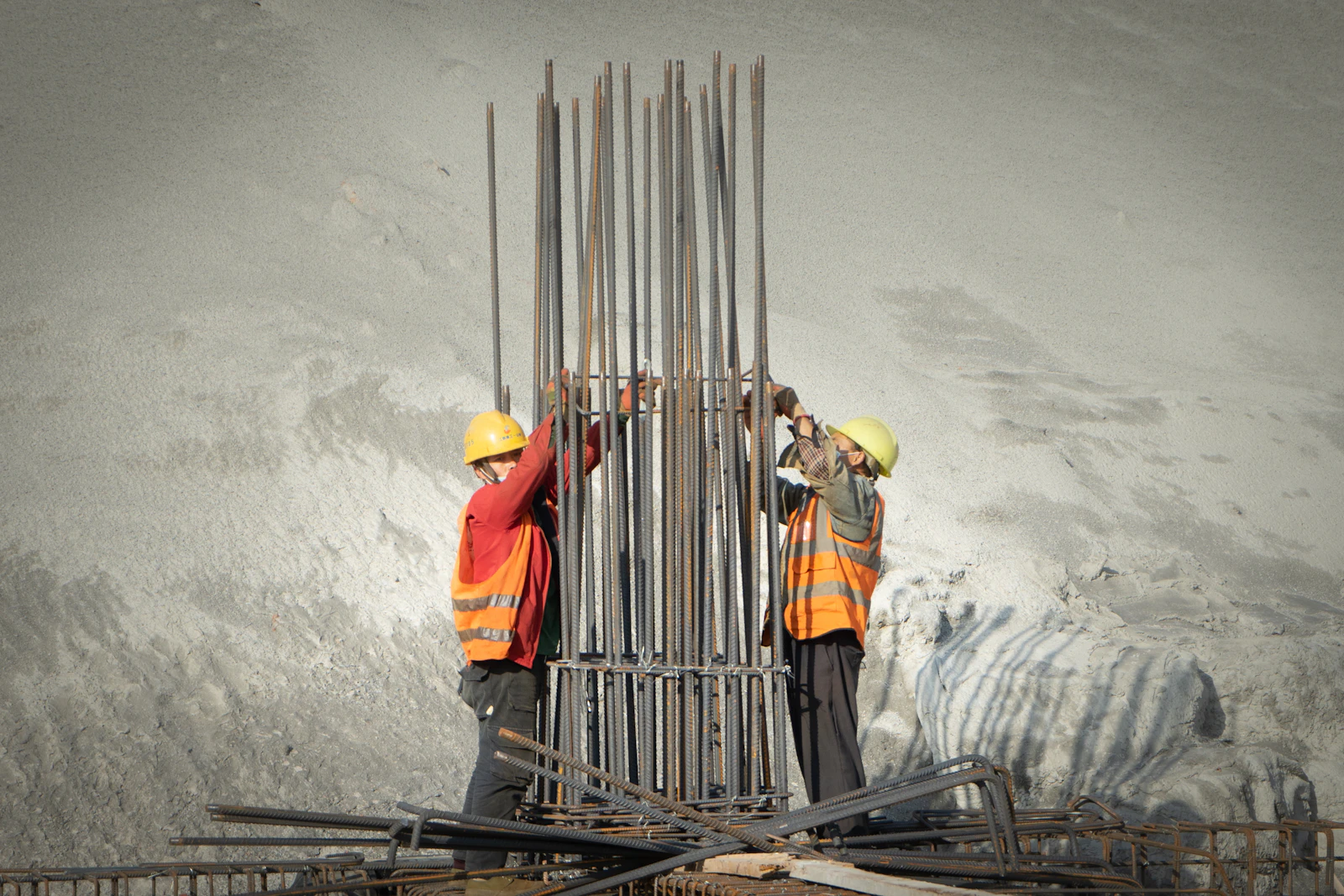
pallet and forks in construction work

Fork Extensions and Related Add-Ons That Commonly Change Pallet Forks Hire Cost

When the scope shifts from standard pallets to oversized bundles, the cheapest path is often an add-on rather than a full equipment class change. Contract schedules show daily/weekly/monthly pricing for fork extensions that can be material on multi-week jobs—for example, published extension sets include figures such as $27/day, $81/week, $211/month (96-inch set) and $38/day, $92/week, $260/month (72-inch set). If you need extensions in Mesa, treat them like their own rental line item with their own damage exposure (loss, bending, missing retainers) and their own freight implications.

Other cost-driving add-ons to consider when tying pallet fork attachment rental to a skid steer loader rental include:

  • Freight consolidation: if forks and skid steer are delivered separately, you may pay two mobilizations. Carry a second dispatch allowance of $95–$175 each way if consolidation is not confirmed.
  • Site access equipment: if the forks must be delivered inside a constrained yard, you may need a smaller truck or a timed delivery window—carry a $50–$150 scheduling premium allowance.
  • Ground protection: for finished sites, temporary mats can prevent damage claims; some schedules list ground protection mats (example pricing shown on published schedules).

Damage, Loss, and Return-Condition Costs to Control (What Actually Gets Backcharged)

From a rental coordinator perspective, forks create three recurring cost events: (1) bent/overloaded tines, (2) missing pins/retainers, and (3) dirty returns that slow the supplier’s next dispatch.

  • Bent tines: plan $150–$400 exposure per incident in internal risk allowances (higher if replacement is required).
  • Missing pin sets: plan $15–$40 per set, and require crews to store pins in the cab or a labeled parts bag.
  • Cleaning: plan $75–$250 if the forks are used in mud, slurry, or around concrete pours and you cannot wash down before pickup.
  • Late return / extra day risk: carry one extra day at $50–$95 if your schedule is uncertain, especially if off-rent must be called in before a daily cutoff.

On Mesa jobs with multiple subcontractors, the best cost control is custody: assign the forks to one foreman, restrict access, and require end-of-shift staging in a marked zone so the supplier can pick up without standby time.

2026 Market Notes for Mesa Equipment Hire Pricing

Mesa sits inside the broader Phoenix metro rental market, so seasonal construction swings and fleet availability can affect attachment pricing even when the attachment is “commodity.” For 2026 planning, expect the base pallet forks hire rate itself to remain relatively stable compared with powered equipment, but expect more variability in transport, minimum charges, and schedule-driven premiums (tight delivery windows, split deliveries, will-call vs dispatch).

If you need a defensible baseline for internal estimates, published sheets and schedules provide useful anchors across the market: one published national sheet shows pallet forks at $47.50/day, $123.50/week, $285/month along with a transport structure of $120 each way + $3.25 per loaded mile. Another published attachment sheet lists $75/day, $295/week, $895/month for 48-inch adjustable pallet forks and notes that wear charges may apply to some items. Contract schedules can also show comparable fork-set pricing (e.g., a 48-inch skid steer frame & fork set listed at $48/day, $125/week, $303/month) and example transportation terms (e.g., $250 each way per item within 30 miles). Use those as reference points, then apply Mesa-specific freight and timing assumptions.

Quick Estimating Rules of Thumb for Pallet Forks Equipment Hire in Mesa

  • If the forks are needed for 3+ working days: price as a week unless you have confirmed daily utilization and guaranteed same-day off-rent.
  • If the forks require delivery: budget transport as a first-class cost driver (often comparable to multiple daily rental charges).
  • If you are inside a finished/occupied facility: carry higher cleaning and return-condition controls; cleaning fees in the $75–$250 range are common allowances.
  • If multiple crews will touch the forks: carry a small-parts contingency ($15–$40) and require intake/return photos to reduce dispute time.
  • If the schedule crosses a weekend: confirm weekend billing policy up front; published policies can price weekends at 1.5× daily for short rentals.

When Equipment Hire Beats Ownership for Pallet Forks (Cost-Based View)

Forks are relatively low-cost to own, so ownership can win if you have a stable skid steer fleet and consistent material-handling needs. Equipment hire wins when you need: (1) the right class/capacity on short notice, (2) a second set for a surge week, (3) specialty frames or extensions, or (4) to transfer damage exposure via waiver and documented return processes. In Mesa, the most common “hire makes sense” case is when forks are bundled with a skid steer loader rental for a defined window and then cleanly off-rented—keeping total equipment hire cost predictable and minimizing yard-to-site mobilizations.
