

For San Antonio telehandler hire planning in 2026, budget pallet forks equipment hire in the range of $55–$110/day, $185–$350/week, and $550–$1,050/4-week month for a standard adjustable fork frame and tines (commonly 48–60 in). If the forks are rented as an attachment on the same contract as the telehandler, many yards will quote a lower incremental adder (often $0–$35/day) or bundle “standard forks included,” while specialty sets (block forks, truss forks, long tines, or carriage adapters) typically carry adders. These are planning ranges for 2026 (not an exact quote) and assume normal wear-and-tear, compatible carriage class, and standard weekday billing; your real pallet fork attachment rental rates will move with delivery radius, off-rent rules, and damage waiver/insurance elections. In San Antonio, national rental houses (e.g., United Rentals, Sunbelt Rentals, Herc Rentals, H&E Equipment Services) and regional yards typically stock multiple telehandler fork configurations, but availability tightens around peak commercial schedules and major plant shutdown windows.
| Vendor | Daily Rate | Weekly Rate | Review Score | Website |
|---|---|---|---|---|
| Sunbelt Rentals | $40 | $90 | 9 | Visit |
| United Rentals | $55 | $140 | 9 | Visit |
| Herc Rentals | $50 | $130 | 8 | Visit |
| EquipmentShare | $50 | $125 | 8 | Visit |
| HOLT CAT (Cat Rental Store / Texas First Rentals) | $60 | $150 | 8 | Visit |
Most rental coordinators get surprised by pallet forks hire cost when the job actually needs something other than the “standard” set that ships with a telehandler. Telehandler forks are not just two tines; the cost driver is the complete fork assembly (frame/carriage + locking hardware + tines) and whether the telehandler uses a quick-attach carriage that requires an adapter. In published rate sheets from some U.S. rental yards, adjustable pallet forks have been listed around $75/day, $295/week, and $895/month, which is consistent with a dedicated attachment-only line item rather than “included forks.”
For additional context when setting a 2026 budget, public/contract rate schedules for “set of pallet forks” can run notably lower (for example, a published contract schedule shows $43/day, $120/week, $325/month for a set of pallet forks, with separate transportation rules). Those contract numbers are not San Antonio-specific retail quotes, but they are useful as a reality-check that forks can be a relatively low-cost line item if the rental house is treating forks as a high-volume accessory and not a specialty attachment.
1) Whether forks are bundled with telehandler hire. If your telehandler dispatch is “standard carriage + 48 in forks,” you may see a $0 line for forks and pay only for the telehandler. If you need an extra set (second shift, split crews, multiple drop locations), expect a separate pallet forks equipment hire line item and separate loss/damage responsibility.
2) Fork length, rating, and application. Long tines and heavy-duty sets typically increase the weekly/monthly economics because they carry higher replacement exposure. Plan on incremental adders such as +$10–$25/day for 60 in tines vs. 48 in, or +$20–$45/day for specialty forks (block forks, wider ITA class, or high-capacity frames) when quoted as accessories.
3) Compatibility and carriage adapters. If the telehandler is rotating, has a special coupler, or you are mixing OEMs across fleet, you may need a carriage adapter. Budget $25–$75/day (or $90–$250/week) for an adapter when it is not included. Adapter availability is often the constraint, not the forks themselves.
4) Delivery radius and downtown logistics. San Antonio delivery costs for attachments tend to follow the same dispatch rules as the host machine. For planning: $125–$250 each way inside a local zone (often ~15–25 miles) is common, then a mileage adder of about $3.50–$6.00 per loaded mile outside the zone. If you need a tight delivery window (e.g., CBD congestion, limited dock access, or site rules), after-hours or dedicated-window dispatch can add $150–$350 on top of standard freight.
5) Heat, dust, and slab protection requirements. San Antonio summer heat does not change fork pricing directly, but it changes what the GC demands (fork heel covers, protective sleeves, or padding when moving palletized materials on finished slabs). Budget $12–$25/day for fork covers/padding when required, plus an increased cleaning allowance if you are staging on caliche/dusty lots.
Forks look simple, but the bill can move quickly once “standard terms” get applied. For equipment managers building a telehandler hire estimate in San Antonio, the following cost items are the usual deltas to plan and negotiate:
Off-rent timing (stop-billing rules). A common cost leak is assuming billing stops when the crew is “done” with the forks. Many yards require off-rent notice before a daily cutoff (often morning) and 24-hour notice for pickup scheduling. If you call off-rent after cutoff, you can pay another day even if the forks are sitting staged and unused.
Weekend and holiday billing conventions. Telehandler hire contracts often use a “day/ هفته” (weekday) billing logic, where a “week” might be 5 billable days (Mon–Fri) and weekends can count differently depending on contract terms. If you take delivery Friday and return Monday, confirm whether Saturday/Sunday are billed (some contracts bill a full weekend, others bill a reduced weekend, and some bundle into weekly). Do not assume a free weekend for attachment-only items.
Return documentation and condition photos. Forks are frequently moved between machines on site, which complicates accountability. Require a return photo set: (1) both tines, (2) heels, (3) frame tabs/locks, and (4) any ID tag/serial marking. Lack of documentation is how small damage waivers turn into large back-charges.
Accessory expectations (what must be returned with the forks). If the fork set came with a backrest, load guard, or specific coupler component, missing pieces are billed. Build your internal “kit list” at delivery and tape it to the telehandler cab.
Scenario. You have a commercial TI job near the I-10/I-410 corridor. The telehandler is already on a monthly rate, but the site needs an additional set of pallet forks to keep a second crew moving pallets while the primary forks stay dedicated to a material basket changeout schedule. You rent a second fork set for 4 weeks and close it out with pickup.
Result. Even though the “forks” line item looked like a modest monthly accessory, the all-in planning total lands around $1,259 once freight, waiver, and closeout risk are carried. That is why telehandler hire cost reviews should always break out pallet forks attachment rental rates and terms instead of assuming they are “free.”
Estimator’s note (2026 planning). If you can bundle the extra fork set onto the same telehandler contract and negotiate freight consolidation (single truck) or a reduced waiver for low-value accessories, this scenario is where you typically pull back $200–$500 without changing field productivity.
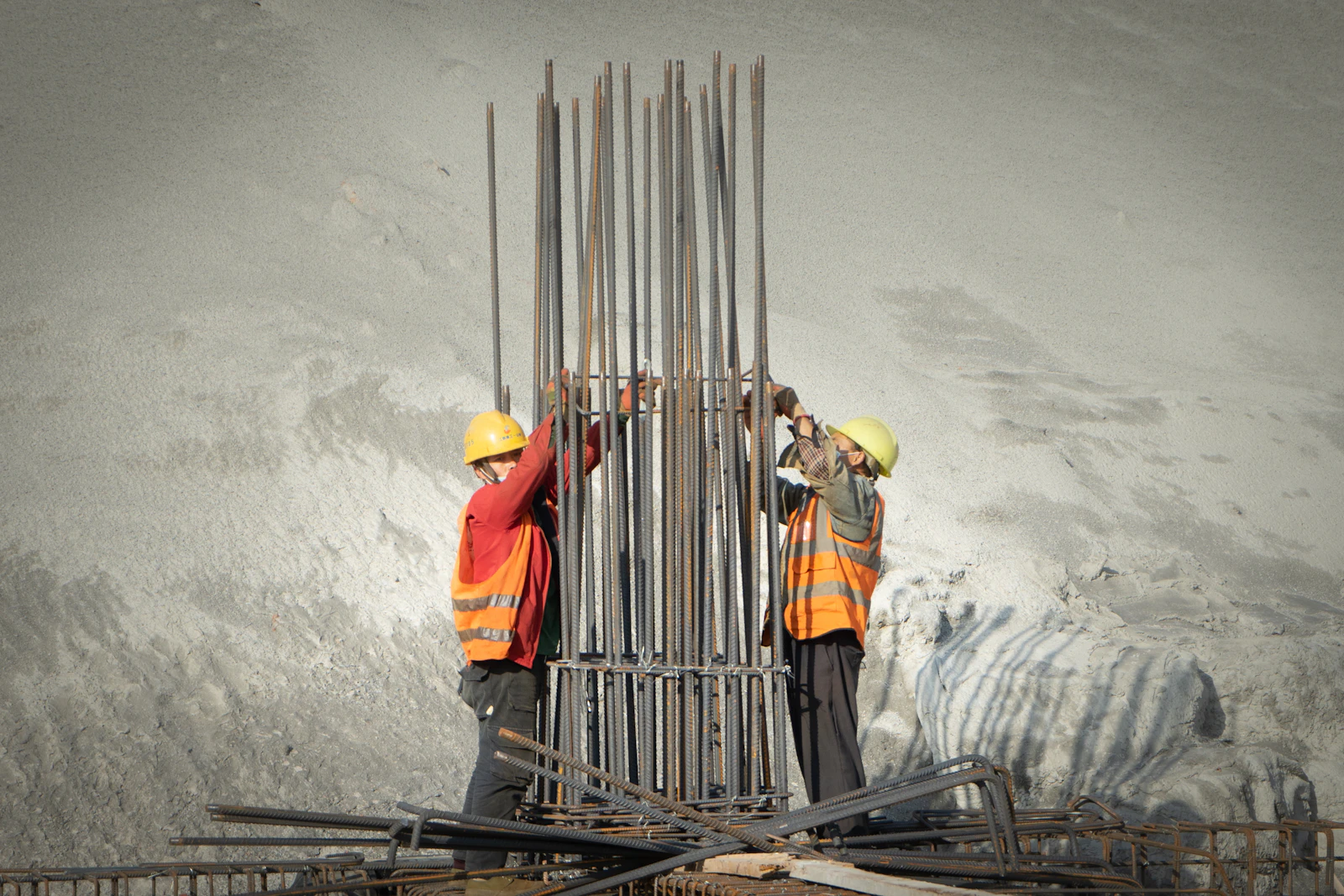
For rental coordinators, the cleanest way to control pallet forks hire cost is to treat forks as a logistics item as much as an equipment item. In San Antonio, the biggest budget swings usually come from freight (multiple trips), schedule changes (missed off-rent cutoff), and damage exposure (bent tines, missing locks). If you are pricing telehandler hire across multiple phases, consider pre-allocating two fork sets from day one (one in service, one standby) when the job has a history of “lost time to attachment swaps.” The extra monthly cost can be lower than the labor burn from waiting on a swap.
Consolidate freight. If you know you will need forks plus another attachment (bucket, truss boom, or platform), align delivery so one truck run covers multiple items. This is where you typically save $125–$250 per avoided trip.
Negotiate the “included forks” definition. Many disputes come from assuming “forks included” means “any forks.” Put it in writing: tine length, class/capacity, and whether block forks count as standard. If the job needs block forks, negotiating a fixed adder (e.g., $20/day) is usually cheaper than an open-ended specialty attachment rate.
Reduce damage exposure by controlling storage and swaps. The most expensive fork incidents are bent heels from side-loading and forklift-on-fork collisions in laydown yards. A single event can exceed the monthly hire cost; carrying a $250–$900 repair allowance for high-risk sites is realistic if you do not have strong controls.
Keep an eye on the telehandler-to-attachment ratio. Telehandler monthly rates can be several thousand dollars in many markets (published rate examples show daily rates in the high hundreds for larger telehandlers). Forks are often a small percentage of the total telehandler hire, but they can still be the item that triggers extra trips, late days, and back-charges—so treat them as a first-class scope line in your estimate, not an afterthought.
