

Panel Hoist Rental Rates in Charlotte (Daily/Weekly) — 2026 Costs

Price source: Costs shown are derived from our proprietary U.S. construction cost database (updated continuously from contractor/bid/pricing inputs and normalization rules).
Profile image of author
Eva Steinmetzer-Shaw
Head of Marketing

Panel Hoist Rental Rates Charlotte 2026

For Charlotte, NC solar panel installation crews, 2026 planning ranges for panel hoist equipment hire typically land in three common “classes” that rental coordinators should budget separately: (1) a manual panel lift/drywall-style panel hoist for staging panels under cover or at eave height (budget $45–$90/day, $120–$250/week, $325–$700/4-week), (2) a hand-crank material lift for heavier pallets, inverter skids, or staging on flat roofs (budget $85–$170/day, $240–$450/week, $700–$1,250/4-week), and (3) a ladder/platform hoist (often what Charlotte foremen mean by “panel hoist” on pitched-roof solar) to move modules from grade to roof edge (budget $120–$275/day, $300–$650/week, $900–$1,900/4-week). These are budgeting ranges (not guaranteed rates) and assume standard weekday billing, one-shift utilization, and normal wear; your all-in hire number is usually driven by delivery windows, weekend billing, and return-condition compliance as much as the headline day rate. National houses such as Sunbelt Rentals, United Rentals, and Herc Rentals can usually source these hoists quickly in the Charlotte metro, and local tool/roofing rental counters often fill in for smaller single-roof mobilizations.

Vendor Daily Rate Weekly Rate Review Score Website
United Rentals $65 $195 9 Visit
Sunbelt Rentals $60 $180 8 Visit
Herc Rentals $65 $195 8 Visit
Carolina Cat (Cat Rental Store dealer) $85 $255 9 Visit

What Drives Panel Hoist Equipment Hire Cost on Charlotte Solar Panel Installation Jobs?

Panel hoist hire cost is extremely sensitive to how the hoist will be deployed (ground-to-eave vs. ground-to-roof edge), what your “carry path” looks like once panels land at the roof edge, and whether the hoist can be positioned for uninterrupted feeding. In Charlotte, two recurring cost drivers are (a) tight delivery access around Uptown/South End (limited curb space, time-restricted loading, and parking control) and (b) weather and soil—summer thunderstorms and red clay can turn a staging area into a cleaning-charge event if the hoist is returned muddy. Budgeting a realistic all-in number means scoping the hoist like you would any other critical path tool: define load capacity, lift height, run time per day, and who owns the last 25 feet of handling (roof-edge rollers, roof carts, or manual carry).

Confirm what “panel hoist” means before you price it

On solar projects, “panel hoist” can mean one of several rental SKUs. If you price the wrong class, your budget will be wrong even if your day rate looks “cheap.”

  • Manual panel lift / drywall lift style: commonly used for overhead panels; some listings describe single-person overhead panel installation with around an 11 ft reach and 150 lb capacity, which is useful for protected staging and light lifts but usually not a roof-edge solar solution by itself.
  • Material lift (hand-crank): a push-around, portable lift for pallets/units; commonly rented through major equipment marketplaces as “material lifts.”
  • Ladder/platform hoist: the typical “roofing hoist” style used to lift shingles or solar modules up a ladder track to roof edge; this is the most common interpretation for pitched-roof solar module movement.

How hire duration and billing rules change the effective day rate

For equipment hire, rental houses generally convert to weekly and 4-week “cap” pricing, but your effective day rate can jump if you miss an off-rent cutoff or if weekend/holiday rules apply. One published ladder-hoist listing shows a Fri–Mon charge that bills like a day rate (i.e., you may pay a full “day” even if you only need it for a weekend window). Separately, rental contract language can also matter: some catalogs state that late returns can revert to the daily rate for the entire period, not a blended weekly rate, which is a meaningful exposure if you’re trying to keep a hoist “just one more day.”

Charlotte planning assumption (practical): if the roof schedule is weather-dependent, budget a 1-day “float” on the hoist (or at least pre-authorize extensions) rather than gambling on a next-morning return that triggers another full day.

Hidden-fee breakdown for panel hoist equipment hire (Charlotte)

To keep panel hoist rental costs predictable on solar panel installation work, treat the following as standard estimating allowances unless your rental agreement explicitly includes them.

  • Delivery / pickup (metro Charlotte): plan $95–$175 each way inside a typical service radius; for distance-based dispatch, plan $4–$7 per mile beyond the base radius, especially if the hoist requires a dedicated run or liftgate.
  • Minimum rental charge: some ladder-hoist rate cards show a $66 minimum even if you only need a few hours.
  • Weekend billing: plan a Fri–Mon weekend charge that may equal a full day rate for certain hoists (confirm on the contract).
  • Damage waiver / rental protection: budget 10%–15% of time charges (or a minimum weekly waiver) if you’re not providing a certificate that satisfies the rental house’s requirements.
  • Fuel surcharges and energy adders: even when the hoist is not fuel-hungry, some rental price lists note a 3% fuel surcharge added to invoices (verify whether your Charlotte branch applies a similar invoice adder).
  • Cleaning fees (mud, adhesive, roof tar): plan $35 for light cleaning and $85–$150 if the hoist comes back with red-clay mud packed into wheels/legs or roofing debris embedded in the track; many rental terms reserve the right to charge a “reasonable cleaning charge” for dirty returns.
  • Missing parts / loss exposure: budget replacement exposures such as $150–$300 for a missing cradle/roller assembly, $75–$125 for a missing tie-down kit, or $250+ for a damaged control pendant (actual exposure depends on make/model).
  • Late return and off-rent cutoffs: if your site misses the documented “due in” time, assume 1 additional day at the daily rate; if you miss an off-rent notification cutoff (often mid-afternoon), assume billing continues to the next business day.
  • After-hours logistics: if a GC requires early delivery (e.g., before 7:00 a.m.) or late pickup (after 5:00 p.m.), budget $150–$250 for after-hours dispatch, plus a potential $75/hour standby charge if the driver waits for a forklift or gate access.

Equipment specification choices that move the price (and prevent change orders)

Lift height and capacity: avoid paying for reach you cannot use

On pitched-roof solar, paying for more reach only helps if you can physically set the hoist at the correct base distance and safely load at grade. If the staging pad is sloped, soft, or constrained, you may be forced into a lower, slower hoist setup—and the “cheaper” hoist becomes expensive when it adds labor hours and triggers weekend carryover.

As a reference point for budgeting, published examples show:

  • A 10 ft drywall lift listed at $40/day, $100/week, $300/4-week (useful for light staging, not roof-edge hoisting).
  • An 18 ft material lift (650 lb class) listed at $75/day, $225/week, $675/4-week.
  • A 24–25 ft material lift listed at $167/day, $403/week, $834/4-week (regional example).
  • A 24 ft, 650 lb Genie material lift listed at $70/day, $280/week, $840/month on a published 2025 price list (example used to anchor 2026 planning ranges).
  • A ladder hoist shown at $93.50/day, $231/week, $577.50/month with a $66 minimum (example rate card).

2026 Charlotte budgeting note: use these published examples to set a floor, then add a local uplift for availability, seasonality, and delivery constraints rather than assuming you will achieve a catalog price on an urgent mobilization.

Required accessories and “small adders” that usually aren’t small

Solar panel installation teams often discover too late that the hoist itself is not the whole scope. Typical adders that influence equipment hire cost include:

  • Roof-edge receiving kit: roof roller or roof hook kit at $15–$35/day.
  • Extra ladder sections / track extensions: $20–$45/day depending on length and manufacturer.
  • Panel cradle / adjustable forks: $10–$25/day (or priced as a weekly accessory).
  • Safety tie-off and barricades: jobsite compliant cones/tape/weighted stands at $18–$40/day if you don’t already carry them.
  • Transport solution: small equipment trailer at $25–$45/day if pickup is cheaper than delivery but your fleet doesn’t have an appropriate trailer and tie-downs.

Operational constraints in Charlotte that change real rental cost

Delivery windows and site access (Uptown, South End, and tight lots)

Charlotte sites with restricted curb access can create “failed delivery” or waiting-time charges. If you can’t guarantee a 30-minute unload window, build a contingency: $75/hour standby and a possible re-delivery charge (often close to the original delivery fee). Also, many sites require COIs uploaded 24–48 hours before delivery; if you miss that window, the hoist can sit on a truck while your rental period is already running.

Off-rent rules (stop-billing) and documentation

To protect your equipment hire cost, implement a documented off-rent workflow: (1) photograph condition and serial number at pickup/return, (2) confirm “off rent” time in writing, and (3) ensure the hoist is staged for pickup. Missing the “due in” time or failing to call off-rent can easily add one extra daily charge—and some rental terms highlight that late return pricing can apply at the daily rate.

Return-condition requirements (mud, clay, and roof debris)

Charlotte’s red clay plus summer storm cycles is a predictable cleaning exposure. If the hoist is deployed on bare soil, budget ground protection (mats/plywood) or plan for cleaning. A realistic allowance is $85 for a “wash and inspect” cleaning event if the hoist returns with caked wheels, plus $35 for minor scraping/cleanup.

Example: Charlotte pitched-roof solar panel installation hoist budget (realistic constraints)

Scenario: 52-module rooftop solar array on a two-story light commercial building near South End. No forklift on site. Curb access is limited to a 45-minute morning window. Crew needs a ladder/platform panel hoist for three working days, but the forecast includes one thunderstorm day that could pause roof work.

  • Hoist time charge: budget 4 days (3 planned + 1 weather float) at $160/day = $640.
  • Weekend risk: if the storm pushes work into a weekend, confirm whether a Fri–Mon charge applies; if it does, carry a contingency of $175 (common weekend billing pattern on some listings).
  • Delivery + pickup: $135 each way = $270 (assumes easy truck access; add standby if the gate is locked).
  • After-hours dispatch (if required by GC): allowance $175.
  • Damage waiver: 12% of time charge (12% × $640) = $76.80.
  • Accessories: roof roller kit $25/day × 4 = $100; extra track section $30/day × 4 = $120.
  • Cleaning exposure: allowance $85 (red clay/mud risk).

Planning total (pre-tax): $640 + $270 + $175 + $76.80 + $100 + $120 + $85 = $1,466.80. This is why Charlotte solar panel installation buyers often see the all-in panel hoist equipment hire cost come in at 1.5×–2.5× the “day rate” once logistics and accessories are correctly scoped.
Budget Worksheet (panel hoist equipment hire allowances)

  • Panel hoist / ladder hoist time charge (day/week/4-week selection) allowance: $900–$1,900 per 4-week period (use for longer projects) or $120–$275/day for short mobilizations.
  • Delivery + pickup allowance: $190–$350 total (metro), plus mileage allowance $4–$7/mile beyond base radius.
  • Damage waiver / rental protection allowance: 10%–15% of time charges (or confirm COI compliance).
  • Weekend/holiday billing contingency: $175–$300 (one event).
  • Accessories allowance (rollers, cradle, track extensions): $35–$110/day combined.
  • After-hours/standby allowance: $150–$250 after-hours + $75/hour standby (carry 2 hours).
  • Cleaning allowance: $35 light / $85–$150 heavy.
  • Loss/damage exposure allowance (small parts): $100–$300 (pendant/cradle/tie-down kit).

Rental Order Checklist (PO, delivery, return, and cost control)

  • PO includes: equipment class (“ladder/platform panel hoist” vs “material lift”), lift height, capacity, accessories (roller kit, cradle/forks, extensions), and required delivery time window.
  • Confirm billing unit: day vs week vs 4-week; confirm any minimum charge and weekend billing rules (e.g., Fri–Mon).
  • COI workflow: submit certificate 24–48 hours in advance; confirm additional insured / waiver requirements before dispatch.
  • Delivery requirements: site contact name/phone, gate code, unload plan (crew present), and where equipment will be staged to avoid standby charges.
  • Off-rent procedure: confirm cutoff time for stop-billing; submit off-rent request in writing; record confirmation number.
  • Return-condition documentation: photos of track, wheels, cables, and serial number; note any pre-existing damage on delivery ticket.
  • Fuel/energy expectations: confirm refuel or recharge requirements and any invoice surcharges (carry allowance for invoice adders).

Draft costed estimates with AI assistance, then review before sharing.

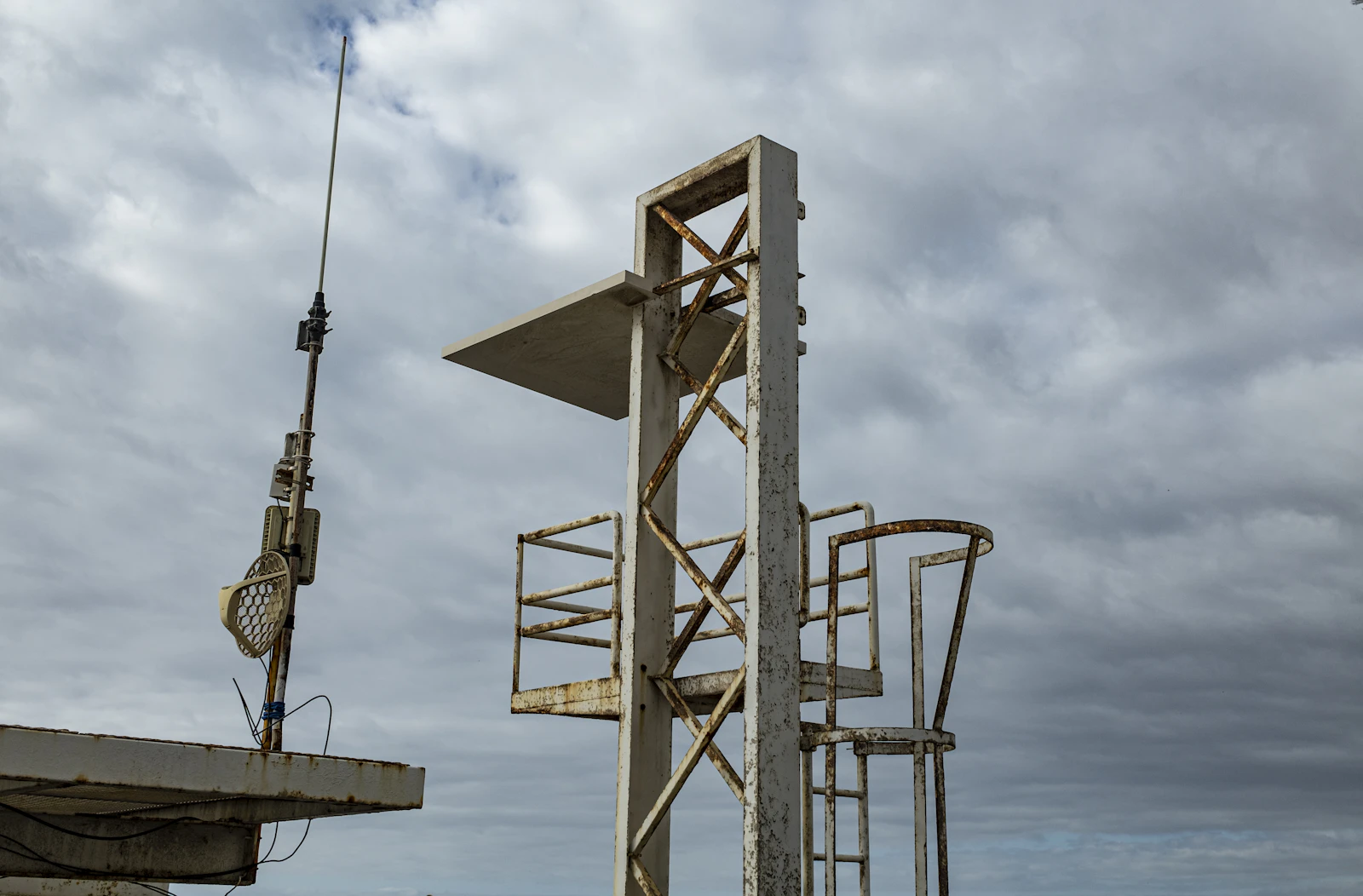
panel and hoist in construction work

How to reduce panel hoist hire cost without slowing solar production

On Charlotte solar panel installation work, the best cost wins are usually operational, not negotiated. Rental branches price risk: missed off-rent calls, dirty returns, and failed deliveries. If you reduce those risks, you tend to reduce your effective equipment hire cost even when the “book rate” stays the same.

Right-size the rental period to your actual roof production rate

If your crew installs 16–20 modules/day but your staging and electrical rough-in can’t keep up, the hoist becomes a paid idle asset. Align hoist days with the exact dates when panels must be moved from grade to roof edge, and avoid leaving the hoist on rent while the crew is doing rail layout, grounding, or inverter work. If uncertain, place the hoist on a short initial term with pre-approved extensions so you don’t get stuck paying an avoidable weekend span.

Bundle logistics to avoid extra delivery runs

When you can, coordinate delivery of the panel hoist with other time-critical rental items (lift equipment, barricades, or material handling accessories) so you pay one dispatch instead of two. In Charlotte, it’s common for a second “accessories-only” run to cost nearly as much as the main delivery if it requires a dedicated truck.

Contract and policy items that commonly impact the invoice

Late return language and daily-rate reversion

Some rental terms state that holding equipment beyond the due-in date/time triggers late return consequences and can result in daily-rate treatment; one published catalog section also emphasizes that late returns can be priced at the daily rate indicated on the contract for the entire period. For a solar crew, this matters most when weather forces a slip: if you’re going to miss the return window, extend proactively so the branch re-rates properly rather than defaulting to the most expensive structure.

Cleaning and “returned dirty” charges

Even if your hoist never touches a roof surface, it will sit in soil, gravel, or mud. Many rental terms explicitly allow a cleaning charge for equipment returned dirty. For Charlotte’s clay, the practical control is ground protection: spend $30–$60 on plywood/mats to avoid an $85–$150 cleaning line item and the downtime of a rejected return.

Utilization assumptions (one shift) and overtime exposure

If your site is pushing extended shifts, confirm whether the rental agreement defines a standard shift (often referenced as 8 hours/day, 56 hours/week, 240 hours/month in some rental terms) and how excess use is billed. While many panel hoists don’t meter hours like powered equipment, branches can still apply “excess use” rules to certain categories and may treat abuse/wear differently on hard-run jobs.

Charlotte-specific estimating notes for solar panel hoist equipment hire

  • Heat and humidity planning (July–September): allocate time for weather holds and secure storage. A one-day weather slip can trigger an extra $120–$275 day charge; pre-authorize extensions and set a stop-billing cutoff on the calendar.
  • Red clay and landscaping protection: if the hoist must be staged on grass/soil, plan ground protection or carry a cleaning allowance of $85 (typical “heavy clean” planning value for muddy wheels/legs).
  • Urban access: for Uptown or congested corridors, build a delivery standby allowance of $150 (2 hours × $75/hour) if access windows are uncertain.

Buying vs. hiring: when ownership actually lowers cost

For contractors running frequent residential solar panel installation crews (high repetition, similar roof conditions), buying a standard ladder hoist can reduce cost variance and eliminate recurring delivery fees. Equipment hire remains advantageous when your needs change (different lift heights/capacities), when storage/maintenance is constrained, or when you want the rental house to carry breakdown risk. As a rule of thumb for Charlotte budgeting: if you’re paying delivery/pickup on more than 2 hoist rentals/month, ownership often pencils out purely on logistics savings—provided you have compliant transport, storage, and an inspection program.

Procurement tips that reduce total installed cost (not just rental line items)

  • Spec the accessories on the PO: adding extensions or roller kits after delivery often triggers a second delivery charge.
  • Document condition at both ends: photos at delivery and return reduce disputes and speed off-rent processing.
  • Train the unloading plan: a “no forklift, no crew present” moment is how you get a standby charge and a failed delivery fee.
  • Plan return timing: return during branch hours and before the stated due-in time to avoid an extra day.

Quick reference: 2026 planning ranges (what to carry in a Charlotte estimate)

Use these as internal budgeting numbers for panel hoist equipment hire cost on Charlotte solar panel installation, then refine with quotes once the roof pitch, access, and staging plan are confirmed:

  • Manual panel lift (10–14 ft class): $45–$90/day; $120–$250/week; $325–$700/4-week.
  • Material lift (18–25 ft class): $85–$170/day; $240–$450/week; $700–$1,250/4-week.
  • Ladder/platform panel hoist (24–28 ft class): $120–$275/day; $300–$650/week; $900–$1,900/4-week.
  • Common adders to carry: delivery $95–$175 each way; damage waiver 10%–15%; accessories $35–$110/day; after-hours $150–$250; cleaning $35–$150; standby $75/hour; weekend event $175–$300; surcharge allowance 3% (if applied).