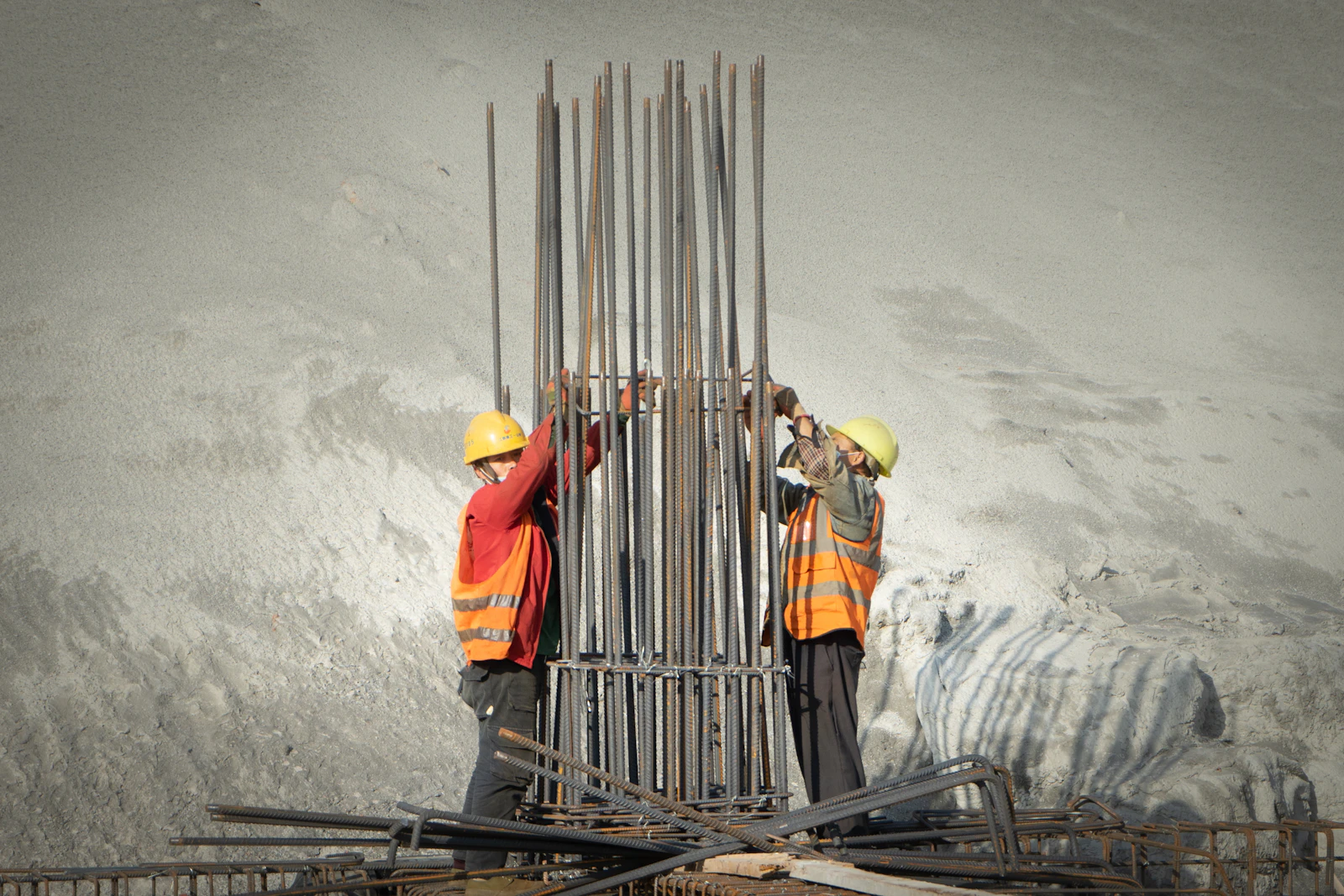
Pipe Rack Rental Rates San Jose 2026
2026 planning range for pipe rack equipment hire in San Jose, CA (USD):
| Vendor |
Daily Rate |
Weekly Rate |
Review Score |
Website |
| United Rentals |
$73 |
$143 |
9 |
Visit |
| Sunbelt Rentals |
$19 |
$48 |
3 |
Visit |
| Herc Rentals |
$11 |
$27 |
7 |
Visit |
- Standard “pipe rack” (commonly rented as an adjustable pipe stand / pipe jack with V-head, tripod base): $25–$60 per stand/day, $90–$210 per stand/week, and $260–$650 per stand/4-week period.
- Pipe rack with roller head / adjust-a-roll top (for fabrication line movement): $30–$75/day, $110–$260/week, and $320–$780/4-week.
- Heavy-duty fabrication stand / “max-jax” style pipe rack (higher stability, fit-up use): $40–$95/day, $150–$330/week, and $450–$1,000/4-week.
- Typical rental billing assumption: “Weekly” is usually a discounted 7-day period, and “monthly” is commonly billed as a 4-week (28-day) period, not a calendar month.
In San Jose, pipe rack equipment hire costs tend to look deceptively small at the unit level, but the total rental spend is driven by quantity, delivery logistics, and return-condition backcharges more than the rack itself. Most South Bay contractors source pipe stands/pipe racks through national rental networks (for example, United Rentals and Sunbelt Rentals) plus local tool houses and specialty mechanical/fusion suppliers that package pipe racks with welding, threading, and alignment tooling. For 2026 budgeting, expect Bay Area uplifts versus many published “national” rate cards, especially once you add delivery appointments, limited-access drop zones, damage waiver/insurance requirements, and cleaning or missing-parts charges at closeout.
What Drives Pipe Rack Equipment Hire Costs In San Jose?
“Pipe rack” can mean different things in the field. For mechanical contractors and fabricators, it typically refers to adjustable pipe stands/pipe jacks and fabrication stands used to support spools for cutting, threading, fit-up, and welding. For other scopes it can mean storage-style pipe racks for staging lengths of conduit/pipe. Clarifying which one you need is the first cost-control lever, because the rental house will price and deliver them very differently.
1) Configuration And Capacity (The Quick Spec Questions That Change The Rate)
- Head type: a basic V-head is usually the baseline; roller heads and “adjust-a-roll” heads typically rent higher because they include bearings/rollers and take more reconditioning time.
- Height range: common adjustable stands are in the ~27–50 inch range; if you need taller stands to match a welding positioner height or to clear dunnage, rates can step up due to heavier frames. (Example listing: a 27–50 inch, 2,000 lb V-head pipe stand is a common category in national fleets.)
- Load rating: do not assume every “pipe rack” is appropriate for large spools. A 2,000 lb rating is common in general rental categories, but larger diameter or eccentric loads may require heavier fabrication stands and can shift you from “tool” pricing into specialty/mechanical pricing.
2) Quantity And Utilization (Small Numbers Multiply Fast)
Pipe rack rental pricing is often optimized when you rent in sets. If you rent 10–30 stands for a fab line, ask for a program rate and ensure the quote reflects a consistent billing cycle (daily vs weekly vs 4-week). Even a modest delta of $8–$15 per stand/week becomes material when you have 20 stands on rent for 8 weeks.
3) Rental Term Structure (Daily vs Weekly vs 4-Week)
Many rental houses price small support equipment with a “3x daily = weekly” structure and “10–12x daily = 4-week” structure. That means the daily rate is rarely the best indicator of the final cost if you know the stand will be on site for more than 5–7 days. For planning, treat the 4-week period as your anchor and pro-rate only when you have a firm off-rent date and a clear off-rent process (see the off-rent rules section below).
4) Delivery Logistics In San Jose (Where The Real Cost Creep Happens)
San Jose delivery can be more expensive operationally than other markets because jobsite access is often appointment-based (industrial campuses, active tenant sites, and downtown curb constraints), and traffic makes missed windows costly. Typical adders to plan for in 2026:
- Delivery/pickup (each way): $110–$190 within a typical local radius; if the branch is dispatching from outside the South Bay due to availability, plan $190–$350 each way.
- Mileage outside local radius: $4.50–$7.50 per mile (often applied beyond an included zone).
- Wait time / detention: after a free window (often 15–30 minutes), $95–$140 per truck-hour is common for driver wait time when a site can’t receive the load.
- Re-delivery / missed appointment: $125–$275 if the driver is turned away due to no escort, no badge, or the drop zone not cleared.
- After-hours or weekend delivery: $150–$300 premium when you require a fixed delivery time outside normal dispatch hours.
San Jose-specific operational note: if your site is in North San Jose, Santa Clara, or Milpitas industrial corridors, include time for security check-in and escort rules. If you’re downtown or near active streets, include curb-space constraints and the possibility you’ll need an earlier delivery slot (often 6:00–9:00 a.m.) to avoid congestion and ensure safe unloading.
Hidden-Fee Breakdown
Pipe rack equipment hire costs can spike at invoice closeout due to “small” fees that apply per stand, per trip, or per rental period. In 2026, plan and control these line items deliberately:
- Damage waiver / rental protection: commonly 15% of the rental charges unless you provide an approved certificate of insurance (COI). Confirm whether it applies to accessories as well.
- Environmental or recovery fees: often 2%–6% on eligible rental items (policy and applicability vary by company and category).
- Cleaning / decon: $75–$200 per stand if returned with concrete splatter, paint, adhesive, heavy grease, or welding spatter; some rental houses enforce a minimum shop charge (commonly $150) if grinding is required.
- Missing parts: replacement charges add up fast on pipe racks (pins, chains, V-heads, roller head assemblies). Plan allowances such as $12–$25 per missing safety pin, $35–$90 per chain/retainer, and $75–$180 per head component depending on style.
- Minimum rental term: some specialty pipe-support items are billed on a minimum (commonly 3 days or 1 week). If your scope is truly one shift, confirm the minimum before dispatch.
- Restocking / cancellation: if you reserve a large lot and cancel late, plan a 10%–20% restocking/cancellation charge, plus trucking if already dispatched.
Example: 6-Week Pipe Spool Fabrication Staging In North San Jose
Scenario: A mechanical contractor stages fabricated spools inside an active facility with a single receiving dock. They need stable pipe rack stands for fit-up and tack weld, and roller heads for moving spools down the line. Constraints: delivery only 7:00–9:00 a.m., indoor use requires wipe-down (no grinding dust), and the facility requires COI on file before any equipment arrives.
- Quantity: 16 standard V-head pipe racks + 6 roller-head pipe racks.
- Term: 6 weeks (1 x 4-week + 2 additional weeks).
- Planning rates (San Jose 2026): $140/week per roller-head rack; $120/week per standard rack (programmed due to quantity).
- Estimated base rent: (16 × $120 × 6) + (6 × $140 × 6) = $11,520 + $5,040 = $16,560.
- Delivery/pickup: $165 each way × 2 trips = $330.
- Appointment premium: $85 (fixed-time dock appointment).
- Damage waiver: $0 if COI accepted; otherwise plan 15% of rental charges (15% × $16,560 = $2,484).
- Cleaning allowance: assume 20% of stands require wipe-down at $95 each = $418 allowance (tighten this by documenting condition at pickup and enforcing end-of-shift cleanup).
- Potential avoidable charge: one missed pickup window triggers re-dispatch at $175–$250; include a contingency of $200 if your site has tight receiving controls.
Takeaway: even though pipe racks look like “small tools,” the insurance/waiver decision plus delivery appointment controls can swing the total by $2,000–$3,000+ on a mid-size package.
Budget Worksheet
- Pipe rack stands (V-head): quantity ____ × $___/week × ____ weeks (allow 1 extra week for schedule float).
- Pipe rack stands (roller head / adjust-a-roll): quantity ____ × $___/week × ____ weeks.
- Fabrication stands (heavy-duty): quantity ____ × $___/week × ____ weeks.
- Accessories allowance (head swaps, pipe cradles, additional rollers): $8–$18 per unit/week allowance depending on head type.
- Delivery and pickup: $110–$350 each way (include appointment premium if required).
- Detention / wait time contingency: $95–$140 per truck-hour (budget at least 1 hour if site receiving is unpredictable).
- Damage waiver or insurance admin: 15% of rental (if no COI accepted) or $0 if COI is filed and approved.
- Cleaning / return-condition allowance: $75–$200 per stand for a percentage of the fleet (set an internal KPI to drive this to near-zero).
- Missing parts / loss allowance: set a cap (example: $300–$800) and enforce a sign-out process per stand and per head component.
- Tax and misc. fees (environmental/recovery where applicable): 2%–6% allowance on eligible items.
Rental Order Checklist
- Confirm scope definition: “pipe rack” means adjustable pipe stands/pipe jacks vs storage rack (attach spec sheet and photos if possible).
- List required tops: V-head vs roller head vs adjust-a-roll; document load rating and maximum pipe diameter needed.
- Confirm billing cycle: daily, weekly, and whether “monthly” is a 28-day period.
- Provide delivery details: site address, receiving hours, dock/laydown location, gate codes, badge/escort rules, and whether a liftgate is required.
- Set a delivery window with a named receiver; avoid missed appointments (budget and schedule impact).
- Insurance: submit COI with required limits (commonly $1,000,000 GL) and verify it satisfies the rental company so you can waive the damage waiver if desired.
- At delivery: photograph condition, count stands and head components, and record any missing pins/chains immediately on the contract.
- During use: store indoors or cover; keep head components together; tag stands by crew/area to reduce loss.
- Off-rent process: confirm off-rent cutoff time (often same-day cutoff around 2:00 p.m.) and required notice method (portal, email, phone).
- Return condition: wipe down, remove concrete/paint, and stage in one accessible pickup point to avoid detention and re-dispatch.
- At pickup: photograph staged equipment and obtain pickup confirmation with count.
Rate reality check: published rate cards show that pipe jacks/stands can be very low in some national/co-op schedules (for example, day rates in the single digits to low tens on older national rate schedules) while local retail branches may publish ~$20/day class pricing for a basic pipe stand. San Jose 2026 planning should assume an uplift from those baselines due to labor, trucking, and branch availability constraints.
How To Quote Pipe Rack Hire Like A Rental Coordinator (So Invoices Match Your Estimate)
Accurate pipe rack equipment hire estimates are less about guessing the stand rate and more about controlling the commercial rules that govern when rent starts, when it stops, and what gets backcharged. For San Jose projects, align your internal estimate with how the rental house will actually invoice:
- Define “rental out” and “rental in” timestamps: many invoices bill from dispatch/delivery (not first use) through pickup/return processing (not the moment your crew stops using it). Build at least 1–2 buffer days when schedules are unstable.
- Match your work plan to billing periods: if you expect 9–10 days, quote a 2-week plan, not “10 dailies.” If you expect 33–35 days, budget 2 × 4-week periods unless the vendor confirms pro-rating beyond the 4-week minimum.
- Confirm minimums: specialty stands (or bundled welding/fusion packages) may carry a 1-week minimum even if the base category looks “daily rentable.”
Rate Negotiation And Program Pricing Considerations
Pipe rack hire is often negotiated as part of a broader mechanical support package (welders, bevelers, threading, fusion tooling, material handling). Two practical levers for San Jose cost control in 2026:
- Bundle to reduce trucking: a $140/week stand is rarely the problem; repeated $165 deliveries and $125 re-deliveries are. Bundle stands into one drop and one pickup whenever feasible.
- Ask for a “set rate” per fabrication bay: if you operate multiple bays, request a per-bay weekly rate that includes a defined quantity (example: 6 V-head stands + 2 roller-head stands per bay). This reduces mid-job add-on orders that reset minimum terms.
- Standardize head components: mixing brands/styles increases missing-part risk. Standardize on one head type and keep spares on the PO (example allowance: 2 spare V-heads at $75–$180 each to prevent production downtime).
Off-Rent, Weekend Billing, And Documentation That Protects Your Backcharge
For pipe rack equipment hire, “off-rent discipline” is the most reliable way to avoid paying for idle tools. In the South Bay, align your superintendent, yard, and receiving team on these controls:
- Off-rent cutoff time: many dispatch operations require same-day notice before early afternoon (commonly around 2:00 p.m.) to stop billing and schedule pickup next day. Miss the cutoff and you can pay an extra day.
- Weekend/holiday rules: some branches offer favorable weekend terms for small tools, while others bill straight calendar time. Put the weekend rule in writing on the quote if weekend timing matters (e.g., Friday delivery and Monday pickup).
- Return-condition photos: require a final photo set showing (a) quantity count, (b) head types, and (c) condition. This is your best defense against disputed missing parts and cleaning charges.
- Staging for pickup: if stands are scattered across a multi-floor TI or behind security barriers, pickup becomes detention. Stage all pipe racks in one accessible point and avoid $95–$140/hr wait time.
Compliance And Use Limitations
Pipe racks/pipe stands are supports for material and fabrication work—not engineered scaffolds, not personnel platforms, and not substitutes for designed structural support. Keep these compliance notes in your rental file:
- Capacity and stability: do not exceed the rated capacity; confirm the rating for the exact model delivered (commonly around 2,000 lbs for standard tripod pipe stands in general rental catalogs).
- Indoor dust-control: if you’re inside a live data center/semiconductor/medical tenant space in San Jose, include requirements such as wipe-down at shift end and no grinding near occupied areas. This reduces cleaning charges ($75–$200/stand) and prevents site violations that delay off-rent.
- Access and safety requirements: delivery instructions should include PPE and access rules for drivers; restricted sites that turn drivers away are the #1 cause of re-delivery charges ($125–$275).
When Buying Beats Hiring (And When It Doesn’t)
Pipe racks are one of the few categories where buying can outperform hiring quickly—but only if loss control is strong and you have a place to store and maintain them.
- Hire makes sense when: you need a surge quantity for a short outage (2–8 weeks), you want standardized racks across multiple sites without transporting your own, or you need specialty tops (roller heads/adjust-a-roll) that you don’t want to maintain.
- Buying often wins when: you continuously run fabrication bays year-round and you routinely pay cleaning/missing-parts charges. If you are paying 2–3 “replacement head” charges per quarter (often $75–$180 each), you likely have a process issue that ownership won’t fix without tighter controls.
- Hybrid strategy: own a baseline (e.g., 12–20 stands) and hire surge quantities. This keeps your peak rental spend predictable and reduces delivery churn.
2026 Planning Notes For San Jose And The South Bay
- Availability risk: pipe racks are small, but large-quantity orders can still be constrained when multiple mechanical projects ramp simultaneously. Reserve early if you need 20+ stands of the same head type.
- Traffic and delivery windows: plan for earlier delivery slots (often 6:00–9:00 a.m.) on constrained sites; avoid fixed-time deliveries unless required because premiums ($150–$300) and missed-window re-deliveries ($125–$275) can erase negotiated rent savings.
- Invoice review cadence: audit weekly. Catching one extra billed week on 20 stands at $90–$210/week can save $1,800–$4,200 immediately.
- Insurance decision: if your COI is not accepted, the waiver is commonly 15% of rent. Make this a pre-mobilization item so the job doesn’t default into waiver fees.
Bottom line for pipe rack equipment hire costs in San Jose (2026): treat stands as a managed rental fleet. Lock the correct head type, negotiate a quantity program rate, control delivery appointments, enforce off-rent cutoffs, and document condition to keep “small tool” invoices from turning into a surprise closeout bill.