

For Washington (assumed: Washington, DC metro including the District, Northern Virginia, and suburban Maryland), 2026 pipe rack equipment hire typically falls into three pricing “lanes”: (1) small pipe stands/pipe supports used for welding and spooling, (2) rolling pipe/conduit storage racks used for staging material on renovation and fit-out projects, and (3) heavy-duty pipe racks/catwalk-style systems (more common in energy/industrial yard contexts). As a planning range, budget $15–$45/day, $30–$120/week, and $60–$360/month per pipe stand; $40–$150/day, $120–$450/week, and $300–$1,300/month for a rolling pipe/conduit rack; and $250–$700/day with $5,000–$13,000/month for specialized heavy-duty rack/catwalk systems (where available). These are 2026 planning ranges that assume standard M–F billing and typical metro-area delivery constraints; actual quotes vary by quantities, duration, access restrictions, and whether racks must be delivered inside the building footprint. In the DC region, most coordinators source these through national rental houses (for example, United Rentals, Sunbelt Rentals, and Herc Rentals) or through local scaffold/welding supply yards that can support short-turn spooling and fit-out schedules.
| Vendor | Daily Rate | Weekly Rate | Review Score | Website |
|---|---|---|---|---|
| United Rentals | $15 | $45 | 9 | Visit |
| Sunbelt Rentals | $14 | $42 | 7 | Visit |
| Herc Rentals | $16 | $48 | 9 | Visit |
| BigRentz | $17 | $51 | 4 | Visit |
Pipe rack rental rates look simple until you apply jobsite realities. In Washington, DC, the fully loaded hire cost is often driven more by logistics and contract terms than the base rate printed on a ticket. The most common cost drivers we see in the DC metro are (a) delivery access (tight alleys, limited loading zones, security screening), (b) duration and off-rent timing (weekend billing and cutoff times), and (c) the exact rack type (single V-head stand vs. multi-bin rolling rack vs. engineered rack/catwalk components).
City-specific considerations (Washington, DC metro): First, delivery windows are frequently constrained to early morning (e.g., 6:00–9:00 AM) for downtown and federal-core work, which can trigger a scheduled-delivery surcharge if you miss a standard route. Second, many sites require COIs, driver IDs, and sometimes escort/badging; if the truck cannot be unloaded immediately, you may incur detention/wait-time fees. Third, indoor renovation work often adds dust-control and floor-protection requirements; racks that return with drywall dust packed into casters or concrete slurry on crossbars can collect cleaning charges even when the equipment itself is undamaged.
Before you request quotes, align on the functional class of “pipe rack.” In rental catalogs, “pipe rack” can describe very different equipment:
Estimator note: If your superintendent says “we need pipe racks,” confirm whether they mean stands (supporting pipe being worked) or a storage rack (staging multiple pieces). Misclassification is one of the fastest ways to blow the equipment hire allowance because delivery class, freight footprint, and replacement value are completely different.
Use the following ranges as a starting point for budgetary estimating in Washington, DC. These are intentionally presented as ranges (not “exact vendor pricing”) because account discounts, jobsite access, and fleet availability can move the number materially week to week.
1) Pipe stand hire (V-head or roller head): Plan $15–$45/day, $30–$120/week, and $60–$360/month per stand. Low published rate examples exist in other U.S. metros (e.g., $15/$30/$60) but DC deliveries and higher overhead frequently bring effective cost into the upper half of this range once fees are applied.
2) Rolling pipe/conduit rack hire (multi-bin/arms, optional casters): Plan $40–$150/day, $120–$450/week, and $300–$1,300/month. Costs trend toward the high end when you need higher capacity, higher-grade casters for indoor slab protection, or delivery into a constrained basement/garage.
3) Specialty heavy-duty rack/catwalk systems (when specified): Plan $250–$700/day and $5,000–$13,000/month, plus service/handling charges. Published price book examples show $250/day and $5,000/month for a “pipe rack” category item and $650/day and $13,000/month for a hydraulic catwalk system (not typical building fit-out equipment, but relevant when an industrial spec is issued).
To keep pipe rack equipment hire costs under control, treat the base rate as only one line item. In Washington, DC, the following adders are common in practice (planning allowances):
These are the contract and field details that determine what your final invoice looks like:
Your provided CMS slug includes “scissor lift rental.” If the requirement is a platform pipe rack (an accessory that mounts to a scissor lift to hold conduit/pipe), pricing is usually treated as an accessory rental rather than a stand/rack rental. Published accessory pricing in one U.S. market shows a Genie scissor-lift platform pipe rack at $100/day and $150/week (use as a directional reference; DC account pricing will vary).
For budgeting, treat platform rack accessories as carrying their own delivery/handling exposure: even when the lift is already on rent, the accessory can incur an extra $25–$75 handling line if it ships separately, plus additional “missing hardware” risk (mounting pins/bolts) at return.
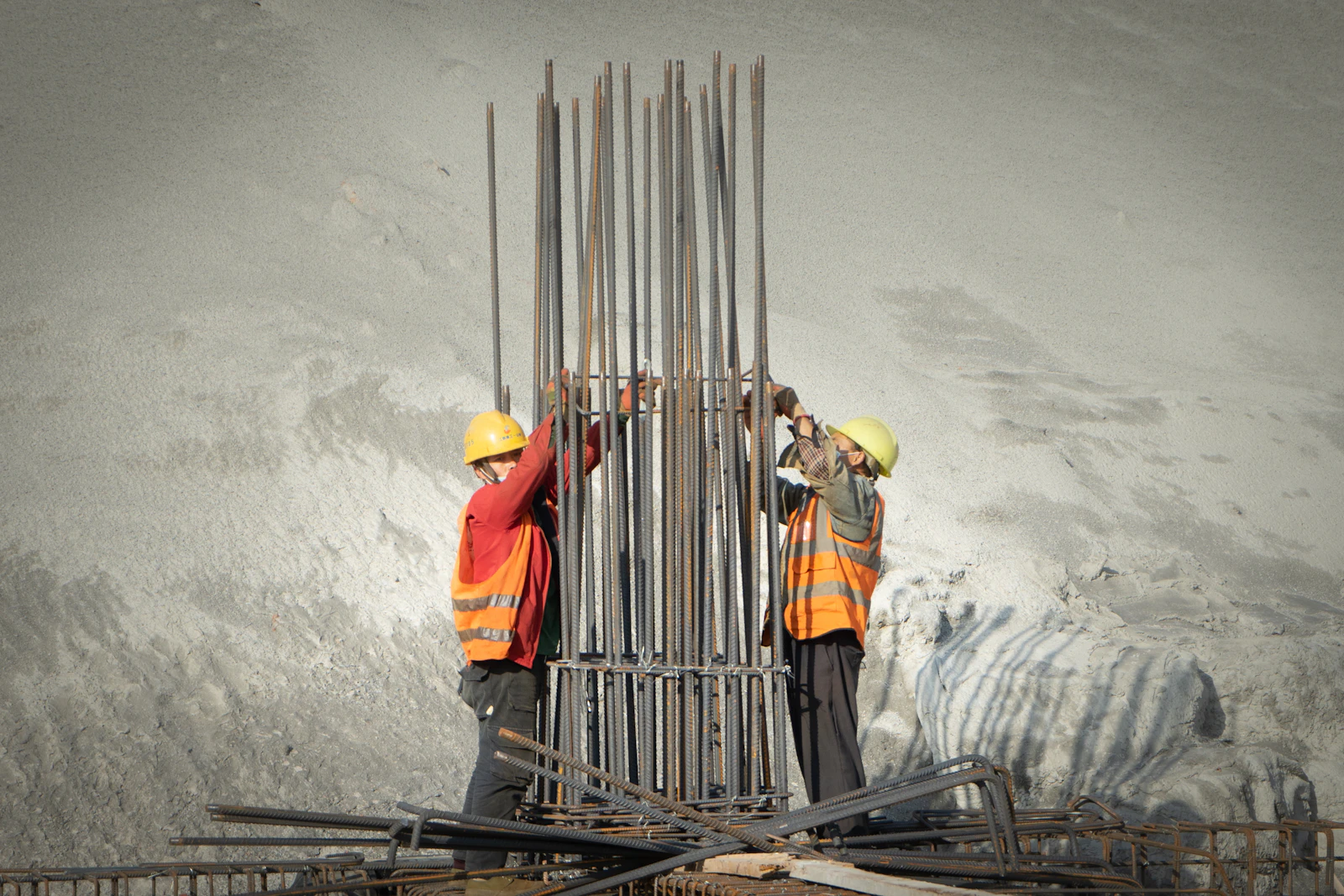
Scenario: A mechanical subcontractor is prefabbing and staging pipe in a basement level of a downtown Washington, DC renovation. Security requires all deliveries between 6:00–7:30 AM. The GC provides a freight elevator but only a 30-minute dock slot, so unloading has to be efficient. The crew requests 12 adjustable pipe stands (V-head/roller mixed) plus 2 rolling pipe/conduit racks for staging.
Budget build (planning numbers, not a quote): Use a mid-range Washington allowance of $75/week per stand and $275/week per rolling rack for a 6-week duration. Rental subtotal: stands 12 × $75 × 6 = $5,400; racks 2 × $275 × 6 = $3,300. Add delivery/pickup $150 each way (tight downtown routing) = $300. Add damage waiver at 12% of rent = $1,044 (damage waiver commonly runs 5%–15%, depending on company and equipment). Add cleaning allowance: $50 per item for 14 items = $700 (charged only if required). Add one dock-delay event: 1 hour wait time at $95/hr = $95. Total planning budget: $10,839 before tax.
Operational constraint that changes cost: If the demob request is placed after the branch off-rent cutoff on a Thursday, and pickup can’t be routed until Friday afternoon, you may pay an extra day or even a weekend depending on billing rules. That’s why coordinators include a “1 extra day exposure” allowance (for this package, roughly $150–$450 depending on whether the supplier bills calendar days over weekends).
Bundle deliveries: Even when stands are inexpensive, the trip charges are not. Align pipe rack deliveries with other small equipment (fans, vacuums, carts) to avoid paying $95–$175 each way multiple times.
Set an off-rent reminder: Put the supplier cutoff time on the look-ahead schedule. Missing a cutoff can cost you an extra billed day; missing a Friday cutoff can create a weekend billing event.
Control return condition: A 10-minute wipe-down at demob can save a $35–$85 cleaning line. For indoor projects, treat caster cleaning as mandatory—drywall dust and tile grout are the usual culprits.
Manage small parts like tools, not “equipment”: The most common closeout disputes involve missing pins, chains, and specialty heads. Bag-and-tag hardware on receipt and return, and attach photos to your off-rent email.
If you need a sanity check while building a Washington allowance, it helps to anchor to published list pricing in other markets and then adjust for DC delivery/access constraints:
Use these anchors to pressure-test your Washington quotes: if your supplier is quoting near the oilfield rack numbers for what is functionally a pipe stand package, it’s a signal to re-check the spec language and equipment classification.
