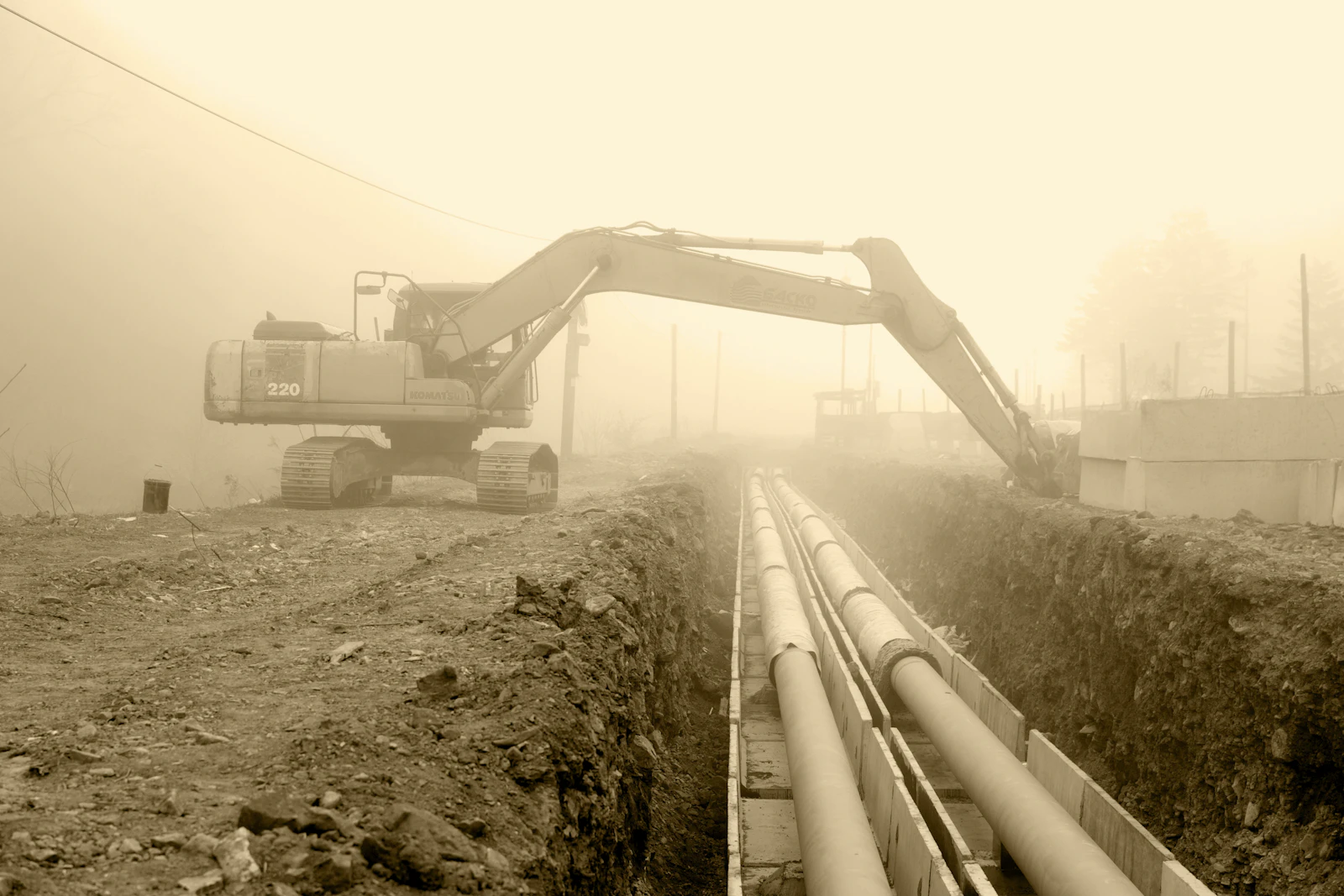
2026 planning ranges for pipeline equipment hire in Austin (as part of concrete pump hire): budget $180–$420/day, $550–$1,250/week, or $1,650–$3,200/month for a typical pipeline kit (steel line + clamps/gaskets + elbows + reducer + end hose) sized for a stationary/line pump on commercial flatwork and light structural placements. Most Austin-area concrete pump providers price pipeline as a length allowance inside a pour minimum (often a 3–4 hour minimum) and then charge incremental line footage, so coordinators should plan both an equipment-hire component and a per-foot/per-pour component. For 2026, assume a standard 8-hour day, 40-hour week, rental billing on calendar days (not operating hours), and that downtown access, washout controls, and after-hours permitting can move total hire materially.
| Vendor |
Daily Rate |
Weekly Rate |
Review Score |
Website |
| Brundage-Bone Concrete Pumping (Austin Branch) |
$1 200 |
$6 500 |
9 |
Visit |
| Capital Concrete Pumping (Austin) |
$1 100 |
$6 000 |
8 |
Visit |
| Mohawk Concrete Pumping (Austin/Central TX) |
$1 150 |
$6 200 |
8 |
Visit |
| MG Concrete Pumping (Greater Austin) |
$1 050 |
$5 800 |
7 |
Visit |
Pipeline Rental Rates Austin 2026
In concrete pumping, “pipeline” means the delivery system that moves concrete from the pump to the point of placement: hardline (steel pipe), elbows, reducers, couplings/clamps, gaskets, and the terminal hose. In Austin concrete pump hire, you’ll usually see pipeline priced in one of three ways:
- Included line length inside a base pump minimum (e.g., 100–200 ft included) with a per-foot add thereafter.
- Per-pour package where the first truck/pour includes a standard pipeline and each additional truck/load adds a smaller increment.
- Standalone pipeline equipment hire (less common) where the GC/self-perform team rents pipeline sections and accessories to match a pump they already have on site.
Published market examples show how line-footage adders are commonly structured: one contractor example shows a base service that includes 100 ft of line and then charges $0.50 per additional foot; another example shows 200 ft of hose included with an additional hose charge of $1.00–$2.50 per foot depending on job type.
Austin budget guidance (equipment-hire view): for pipeline-only hire (without pump truck), most coordinators carry an allowance based on (1) how many feet of steel line will be staged, (2) the number of elbows/reducers needed for routing, and (3) how harsh the placement environment is (risk of line damage, concrete set-up in line, and cleaning burden). For 2026 estimating in Austin, a practical way to budget is to break it into a base kit plus line extensions and consumables/fees:
- Base pipeline kit hire (up to ~100 ft equivalent): $180–$420/day (or $550–$1,250/week).
- Additional steel line extensions: $0.50–$2.00 per foot per day equivalent (or priced per section; see below). Use the higher end when the supplier treats additional pipeline as specialty hardline, heavy-wall, or tight-access hand-carry.
- End hose adders (premium / specialty): +$25–$90/day depending on diameter, whip-hose length, and abrasion rating.
How Pipeline Scope Is Actually Priced Inside Concrete Pump Hire
Because pipeline is inseparable from pumping performance and safety, many Austin providers bundle a standard pipeline length with the pump and operator. That bundle is typically governed by a minimum (commonly 3–4 hours) and then time-based overage. Consumer-facing sources cite line pump hourly ranges around $150–$200/hour with minimum charges in the $400–$600 band; for trade planning in a high-growth metro like Austin, coordinators should expect published “minimum” structures to exist, but still validate what is included (line length, number of elbows, priming method, washout).
Two pipeline-related questions that change total equipment hire cost more than most teams expect:
- Included line length and routing complexity: If the base includes 100 ft but the placement needs 180 ft with multiple offsets, you can pay for (a) extra footage and (b) extra fittings (90s, 45s, reducers) and (c) higher labor time to build, brace, and manage line pressure.
- Cleaning responsibility and return condition: “Pipeline returned with set concrete” is usually treated as damage, not cleaning. That can convert a routine rental into replacement charges quickly (and it’s avoidable with correct priming, continuous movement, and documented washout).
Pipeline Components and Typical 2026 Hire Allowances (No Pump Included)
Use these as 2026 Austin planning allowances for pipeline equipment hire when you need to carry a transparent cost model (for example, on negotiated work where you must justify adders). These are not “posted prices” for a specific vendor; treat them as estimator ranges that reflect common rental billing practices for specialty accessories:
- Steel hardline (10 ft section, 3 in or 4 in): $10–$22/day per section (heavy-wall upgrade often +$3–$6/day per section).
- Steel hardline (5 ft half-section): $6–$14/day per section (useful for final alignment and reducing field cutting).
- 90° elbow (steel): $18–$40/day each (abrasion-rated elbows at the top of the range).
- 45° elbow (steel): $14–$32/day each.
- Reducer (e.g., 4 in to 3 in): $20–$45/day each.
- Coupling/clamp (HD) + gasket: $2–$6/day each (many suppliers bill gaskets as consumable at $1–$3 each if damaged/lost).
- End hose / placing hose (typically 3 in): $25–$55/day (longer whip hoses or specialty abrasion ratings can be $60–$90/day).
- Cleanout ball/sponge & catcher: $8–$25/day (lost balls commonly billed at $25–$75 each).
Practical check: a 150 ft run built from fifteen 10 ft sections, plus four elbows, one reducer, sixteen clamps, and one end hose can easily carry $280–$650/day in pipeline-only equipment hire before delivery, cleaning, damage waiver, and after-hours handling—especially when the supplier treats it as specialty line rather than “included hose.”
What Drives Pipeline Equipment Hire Cost in Austin (2026)
Austin’s pipeline concrete pump hire cost is shaped by job access and schedule reliability as much as the pipeline itself. Three city-specific cost drivers show up repeatedly on real tickets:
- Downtown congestion and restricted staging: limited curb space increases hand-carry distance and build time. It also raises the chance you’ll incur standby time if the ready-mix arrives out of sequence.
- Heat management: summer placement in Central Texas increases risk of slump loss and line friction; teams often add lubrication/priming materials and tighten truck spacing to avoid set-up in line (which is a major damage/cleaning cost risk).
- Noise/time restrictions for pours near sensitive receptors: within the City of Austin, concrete installation during certain overnight windows requires a non-peak hour permit; if your pour schedule slips into restricted time, you can absorb overtime, re-dispatch, or reschedule fees.
Hidden-Fee Breakdown for Pipeline Concrete Pump Hire
To keep pipeline rental for concrete pumping predictable, cost-control the “small” line items that routinely exceed the base hire:
- Delivery / pickup: common local charges are $95–$175 each way within a base radius, then $4–$8/mile beyond (or a zone fee). For tight downtown windows (e.g., deliver before 7:00 a.m. or after 3:00 p.m.), budget an additional $75–$150 for timed delivery.
- Minimum rental / minimum dispatch: even for pipeline-only swaps, many yards enforce a $150–$300 minimum or a 1-day minimum once the line leaves the yard.
- Damage waiver (rental protection): commonly 8%–15% of eligible rental. Confirm whether pipeline is included and what exclusions apply (set concrete in line is often excluded).
- Cleaning fees: if returned with residue, budget $65–$175 per event; if concrete has begun to set, suppliers may escalate to shop labor at $120–$185/hour plus parts.
- After-hours / weekend handling: a Saturday pickup or late return can trigger a $125–$250 service premium or an extra day billed (calendar-day billing is common).
- Lost/damaged small parts: missing clamps and gaskets add up fast; carry a $40–$120 allowance per pour for “small parts attrition” on high-tempo sites unless you have tight controls.
Example: Austin Backyard Flatwork With 180 Ft Pipeline Run (Real Constraints)
Scenario: 25 CY placement behind an occupied building in central Austin. Pump sets at curb; pipeline must route 180 ft with two offsets and one reduction to manage placement. Pour must start at 7:00 a.m. to avoid conflicts with adjacent operations, and there is no space for a washout pit inside the fence line.
- Pipeline base kit (100 ft equivalent): $300/day allowance.
- Extra 80 ft line footage: $0.50–$1.50/ft planning range = $40–$120 (use the higher end if hardline sections and elbows are added, not just hose).
- Extra elbows/reducer package: $60–$140/day (two 90s + one 45 + reducer).
- Timed delivery window (to beat traffic and secure staging): $100.
- Washout box rental + haul-off: $95 box + $175 disposal = $270.
- Damage waiver at 10%: if applied to $460 eligible rental, add $46.
- Standby risk: carry 1 hour standby at $175/hour if trucks are not sequenced (this is where many “pipeline-included” assumptions fail in practice).
Resulting pipeline-related cost exposure: even when the pump itself is priced separately, pipeline and site controls can reasonably land around $826–$1,221 for this single pour when you include delivery logistics and washout compliance. The controllable levers are (1) accurate line-length takeoff, (2) eliminating standby by dispatch discipline, and (3) documented cleaning/return condition.
Budget Worksheet (Estimator / Rental Coordinator Use)
- Pipeline kit hire (base allowance): $______ (use $180–$420/day typical).
- Additional line footage allowance: ____ ft × $____/ft = $______ (carry $0.50–$2.00/ft/day equivalent).
- Fittings allowance: elbows (qty ___ × $____), reducers (qty ___ × $____), cleanout cap (qty ___ × $____).
- End hose allowance: $______ (standard $25–$55/day; specialty $60–$90/day).
- Delivery / pickup: $______ (often $95–$175 each way + mileage beyond radius).
- Washout system: $______ (box + haul-off commonly $200–$450 per pour depending on site).
- Prime / line lube materials: $______ (carry $35–$90; add grout/prime mix if required).
- Damage waiver: ____% of eligible rental (carry 8%–15%).
- Cleaning contingency: $______ (carry $100–$250 when access or schedule risk is high).
- Weekend / after-hours premium: $______ (carry $125–$250 if applicable).
- Small parts loss allowance: $______ (carry $40–$120 per pour unless controlled).
Rental Order Checklist (PO, Delivery, Return, and Off-Rent Control)
- PO notes: specify pipe diameter (3 in vs 4 in), total planned feet, number of elbows (90/45), reducer requirements, and end hose length.
- Delivery requirements: confirm delivery cutoff time (e.g., “deliver no later than 6:30 a.m.”), staging location, and site contact phone.
- Access plan: document hand-carry distance, gate width, and any crane/forklift support required for hardline bundles.
- Washout plan: confirm washout box location, water source, and responsibility for haul-off and manifests if required by site policy.
- Off-rent rule: clarify whether off-rent must be called in by 2:00 p.m. for same-day stop billing, and whether weekends/holidays are billable days.
- Return condition documentation: require photos of cleaned line, count of clamps/gaskets, and a signed return ticket noting missing/damaged items.
- Safety accessories: confirm line restraints/whip checks (if used), bracing needs, and exclusion zones for high-pressure lines.
Local vendor availability note (prose only): Austin has multiple concrete pumping providers that can supply pipeline with line pumps and boom pumps (including large multi-location firms and Austin-based line pump outfits). When you request quotes, ask specifically what line length is included and what the incremental pipeline charge is after that included footage to avoid scope gaps.
How to Reduce Pipeline Equipment Hire Cost Without Increasing Risk
Pipeline cost control in Austin is mostly about preventing re-dispatch, standby, and “return condition” disputes. The lowest pipeline hire number is rarely the lowest total concrete pump hire cost if it causes schedule drift or cleaning/damage exposure. Use the following practices to protect the budget while keeping production predictable:
- Do a measured line takeoff (not a guess): take the routing from pump set point to placement, then add 10%–15% for field adjustments. Over-ordering adds rental; under-ordering causes same-day dispatch and overtime.
- Normalize on one diameter when possible: jumping from 4 in to 3 in can require reducers and increases places where concrete can hang up. Each reducer is often a $20–$45/day hire item (and also a cleaning risk).
- Limit elbows: every 90° elbow is friction and wear. Swapping two 90s for a smoother route can remove $40–$80/day in elbow hire and reduce prime/standby risk.
- Schedule discipline to avoid standby: if standby is billed at $150–$200/hour, a single missed truck slot can cost more than the entire pipeline kit.
Pipeline Adders That Commonly Appear on Austin Concrete Pump Hire Tickets
When rental coordinators audit invoices, these are the pipeline-related adders that frequently explain why “the pump was cheap” but the final total wasn’t. Build them into your 2026 budget so you don’t have to absorb them as job overruns:
- Priming / lubrication: line lube typically $35–$90 per pour. If the pumping provider requires grout, allow 1 CY of grout/prime mix plus a possible ready-mix short-load charge; carry $160–$240 for the material itself (market dependent) plus truck fees.
- Pipeline handling labor: if pipeline is provided but hand-carry/build is billed separately, budget a two-person handling crew at $85–$140/hour (loaded) for 2–4 hours on constrained urban sites.
- Line moves / reconfiguration during pour: some providers bill a “move” at $75–$200 each if the line must be broken down and reset multiple times.
- Washout noncompliance recovery: if your site does not have an approved washout solution, expect a last-minute add of $200–$450 for a box and haul-off (or higher if after-hours).
- Return-day billing rules: if pipeline is delivered Friday and returned Monday, many suppliers bill 3–4 calendar days. If you need true “pour-day only” billing, negotiate it explicitly in the PO notes.
Austin-Specific Scheduling Constraints That Change Total Hire
Austin projects are particularly sensitive to schedule windows, noise restrictions, and downtown logistics. If your pour drifts into restricted hours, you can encounter overtime and re-dispatch charges that look like “pipeline fees” but are really schedule penalties. The City of Austin’s non-peak hour concrete installation rules are a concrete example of how schedule compliance can be a cost driver (permits apply to certain locations and time windows).
- Plan for traffic-based staging: carry a $75–$150 allowance for timed deliveries and an additional $0–$200 for on-street staging coordination (varies by site control and ROW needs).
- Heat and set risk: carry a $100–$250 contingency on summer pours for additional lube/cleanup effort when the risk of line buildup is higher.
- Dust control indoors: for interior placements, budget $50–$125 for floor protection and containment consumables to keep pipeline from tracking slurry and to meet site housekeeping requirements (often mandated by the GC).
Rental Controls: Off-Rent, Weekend Billing, and Documentation
Pipeline hire is commonly low-dollar-per-piece but high-risk for loss and disputed condition. Treat it like tools: count it, photo it, and off-rent it immediately.
- Off-rent cutoff: confirm the supplier’s cutoff (often mid-afternoon). Missing the cutoff can add 1 extra day of pipeline charges across every section and fitting.
- Weekend/holiday billing: ask whether Saturday and Sunday count as billable days when equipment sits idle. If yes, negotiate a “weekday-only” rate for long-duration staging, or schedule returns before weekend to avoid 2 extra days of charges.
- Return condition: require jobsite photos of (a) cleaned line ID markings, (b) elbow interiors, and (c) end hose. A $65–$175 cleaning fee is manageable; “set concrete in pipeline” can escalate into parts replacement.
- Small parts control: issue clamps and gaskets in counted bundles; close out with a signed count sheet. A typical missing clamp charge might only be $15–$40, but losing 10–20 over multiple pours becomes material.
When to Treat Pipeline as Its Own Equipment Hire Line Item
Even if pipeline is “included,” it’s smart to carry a standalone pipeline equipment hire allowance on the estimate when any of the following apply:
- Long runs: total line length exceeds the common included range (often 100–200 ft), triggering a per-foot adder. Published examples show adders such as $0.50/ft beyond 100 ft or $1.00–$2.50/ft beyond 200 ft depending on scope.
- Multiple offsets: more than 3–4 elbows, which increases both hire and cleaning risk.
- Interior placement: stricter housekeeping means more protection, more labor, and higher scrutiny on return condition.
- Phased pours: pipeline staged over multiple days introduces calendar-day billing exposure unless you can off-rent between phases.
Practical 2026 Ranges to Carry in Austin Estimates
If you need a single set of allowances for early budgeting (design development through GMP), these are defensible 2026 ranges for pipeline equipment hire costs tied to concrete pump hire in Austin:
- Short run (≤100 ft equivalent) pipeline allowance: $250–$650 per pour-day inclusive of basic delivery handling and light consumables.
- Medium run (100–200 ft) with 2–4 elbows: $450–$1,050 per pour-day depending on access and washout requirements.
- Long/complex run (200+ ft or interior routing): $850–$1,850 per pour-day once you include additional line footage, protection/containment, and realistic cleaning contingency.
For procurement, request that bidders separate (1) base pump minimum, (2) included pipeline length, (3) incremental pipeline per foot or per section, and (4) cleaning/return-condition rules in writing. That structure makes pipeline concrete pump hire cost in Austin auditable and prevents post-pour surprises.