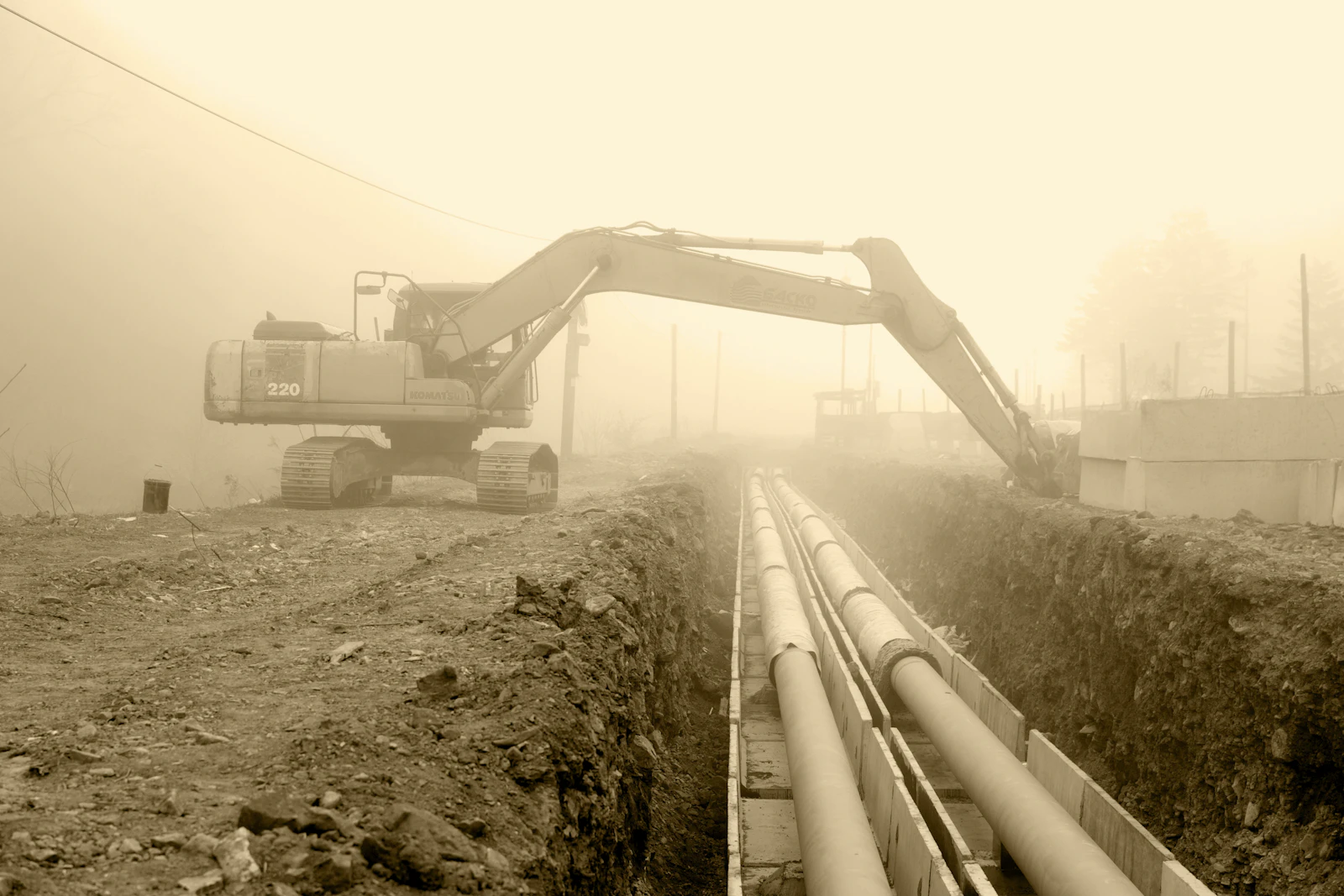
Pipeline Rental Charlotte Concrete Pump Hire
For 2026 budgeting in Charlotte, pipeline equipment hire for concrete pump work (steel pipe + hose + clamps/reducers as a “line package”) typically pencils out at $175–$450 per day, $525–$1,250 per week, and $1,600–$3,200 per month for the pipeline kit only (no pump truck, no operator), assuming a baseline 100–150 ft of usable system, standard couplers, and normal wear. When pipeline is bundled into concrete pump hire, the pipeline is commonly “included” up to a stated length and then charged as a per-foot adder; for example, one published concrete pumping pricing page shows a $525 base service that includes 100’ of line and then charges $0.50 per additional foot over 100 ft. For Charlotte-area procurement, expect pricing to vary by access constraints (Uptown delivery windows, South End lane restrictions), washout compliance requirements, and whether the pipeline must be staged overnight or across a weekend.
| Vendor |
Daily Rate |
Weekly Rate |
Review Score |
Website |
| Sunbelt Rentals |
$850 |
$2 900 |
9 |
Visit |
| United Rentals |
$900 |
$3 050 |
8 |
Visit |
| Herc Rentals |
$825 |
$2 800 |
8 |
Visit |
| Brundage-Bone Concrete Pumping (Concrete Pumping Holdings) |
$1 800 |
$9 000 |
9 |
Visit |
| American Concrete Pumping Association (member directory for Charlotte-area pump providers) |
$1 700 |
$8 500 |
8 |
Visit |
2026 Budget Ranges For Pipeline Equipment Hire On Charlotte Concrete Pumping
Pipeline “hire cost” behaves differently than a typical rental-yard item because many concrete pump providers treat pipeline as part of the pumping system rather than a standalone rental. The cleanest way to budget pipeline equipment hire costs is to carry (1) a baseline included length allowance and (2) a per-foot overage allowance, plus (3) cleaning/washout and logistics allowances that can swing the final invoice.
Common published structures you can use as anchors when building a Charlotte pipeline hire allowance:
- Included line then per-foot adder: One published pricing example shows base service including 100’ of line and an additional line charge of $0.50 per foot over 100 ft.
- Threshold-based hose/line charges: One concrete pumping rate page states $1 per foot over 50’ of hose system.
- Tiered pipeline adders for longer runs: A line-pump rate sheet shows pipeline footage adders of $1 per foot for jobs requiring over 150 ft of line (151–249 ft) and $2 per foot for longer runs (noting extended footage).
Charlotte-specific estimator note: Charlotte pours frequently involve tight access (rear-yard placements in older neighborhoods, podium decks in Uptown, or long pushes around existing structures). That means the “pipeline delta” (the overage beyond included footage) is where cost creep happens—especially if the crew must route the line to protect landscaping, avoid overhead utilities, or maintain fire lane clearance.
What Drives Pipeline Hire Pricing On Charlotte Pours?
Pipeline equipment hire costs for concrete pump work are driven by more than just total feet of pipe. For accurate 2026 forecasting, scope these items explicitly on your requisition and your internal estimate notes.
1) Total pipeline footage (measured the way the supplier measures)
Many pumpers measure from pump outlet to point of discharge along the actual routed path, not “as the crow flies.” A 140 ft straight-line distance can become a 210–240 ft routed pipeline once you account for barricades, scaffolding, crane mats, pedestrian routing, and keeping a corridor open for inspection traffic. Once you cross typical included thresholds (often 100–150 ft), per-foot adders apply (e.g., $0.50/ft over 100 ft in one published example; $1/ft over 50 ft in another).
2) Pipe diameter, reducers, and end-hose requirements
Even when “pipeline” is the requested equipment, the real cost is the system configuration: steel line size, number of reducers, and the last 10–20 ft hose arrangement for placement control. Reducers, elbows, and specialty sections increase handling time and risk of plugs—both of which can translate into standby time, overtime, or “special situation” charges depending on terms.
3) Scheduling and access logistics (where Charlotte gets expensive)
In Charlotte’s busier submarkets, pipeline delivery and retrieval costs can jump when you require narrow windows (e.g., 7:00–9:00 AM gate access), escorted entry, or off-hours demobilization to clear lanes before evening traffic. If your provider charges “port-to-port” travel time at the hourly rate (a condition shown on a published line pump rate sheet), that travel time becomes part of your pipeline-related cost exposure because long pipeline runs often correlate with longer setup and teardown.
Hidden-Fee Breakdown For Pipeline Equipment Hire
Pipeline equipment hire for concrete pump work is one of the easiest places to get hit with unplanned adders. Build these into your 2026 Charlotte budget as explicit allowances so the field team doesn’t have to “solve it in the moment.”
- Fuel surcharge (invoice-level): One published rate sheet applies a 7% fuel surcharge to invoices. Even if the pipeline is your focus, this can apply to the overall pump/line invoice.
- Primer fee / priming materials: A published line pump rate sheet shows a $25 primer fee. If you’re running long pipeline or tight mixes, primer consumption risk goes up.
- Washout and prime-out containment: One rate sheet notes $100 if no washout is provided and optional washout/prime-out bags at $195 per unit (customer responsible for disposal). Charlotte crews should assume washout containment is non-negotiable on many sites due to stormwater requirements and owner policies.
- Weekend / Saturday overtime rules: One published sheet calls out $25 per hour overtime on Saturday. If your pipeline run requires repositioning or extended finishing time, Saturday exposure is real.
- Cancellation fees: Examples include a $300 cancellation fee for cancellations with less than 8 hours notice. Another published rate page states a $225 charge if a job is canceled within 2 hours of scheduled time. (In practice, pipeline-heavy setups are the ones most likely to trigger “show-up” style charges.)
- Delivery zone fees / dispatch fees: A Charlotte-area concrete pumping e-commerce item shows a delivery distance “Zone A” fee of $75. Use this as a planning reference for small mobilization adders tied to your job’s distance from the yard.
How To Scope Pipeline Length And Accessories (So You Don’t Overpay)
For a rental coordinator or estimator, the most effective way to control pipeline equipment hire cost is to eliminate “unknown footage” and “unknown accessories.” Use these scoping prompts:
- Confirm included footage: Ask what footage is included before adders apply (examples show included 100’ in one published package).
- Confirm the per-foot adder and when it starts: Published examples show adders like $0.50/ft beyond 100 ft, $1/ft beyond 50 ft, and tiered adders of $1/ft beyond 150 ft and $2/ft for longer footage.
- Measure the routed path: Require the superintendent to mark a pipeline route on the logistics plan. Include vertical rise, stair towers, or deck-to-deck moves that require extra elbows.
- Define the discharge control needs: If you need tighter placement control, you may need additional end hose length or specific hose diameter, which can change cleaning time and damage exposure.
- Specify indoor protections: For interior pours, carry an allowance for dust-control/containment and floor protection; interior routing often increases pipeline handling time and cleanup expectations.
Example: 220-Foot Line Run To A Backside Slab In Uptown Charlotte
Scenario: You have a placement behind an occupied building with a routed pipeline distance of 220 ft. Access is restricted to a 7:00–9:00 AM delivery window, and the owner requires contained washout. Pour is scheduled on a Saturday due to tenant access.
Planning math (pipeline-focused allowances):
- Pipeline overage footage: If a provider includes 100 ft and charges $0.50/ft after that (published example), then overage is 120 ft × $0.50 = $60.
- Alternative tiered exposure: If your provider applies a tiered rule such as $1/ft once you exceed 150 ft, then the “long run” adder could be 70 ft × $1 = $70 (illustrative, confirm tiers in writing).
- Washout containment: If no washout is provided on site, one published sheet shows a $100 fee; or use a bag allowance at $195 per unit if required.
- Saturday overtime exposure: Carry a minimum allowance for 2 overtime hours × $25/hr = $50 if the finish runs long.
Operational constraints that change your final hire cost: If the line cannot be fully cleaned and broken down before the access window closes, you may incur additional standby time, an extra mobilization, or an extra billing day depending on off-rent rules. In Charlotte, also watch for red-clay mud on rainy weeks—muddy pipe sections tend to trigger more cleanup time at demob and can become a “return condition” dispute unless you photograph condition at pickup and return.
Commercial Terms That Change Final Pipeline Equipment Hire Cost
Pipeline equipment hire costs for concrete pump work are frequently governed by the same commercial terms as the pumping package. Even if your internal coding splits “pipeline” separately, the supplier may not. For 2026 Charlotte planning, treat the following as cost drivers and risk items that must be aligned before the pour.
- Hourly minimums and travel rules: Some rate sheets show pipeline-related work being billed with travel time charged at the hourly rate (“port to port”). This matters in Charlotte when the yard is outside the I-485 loop and your site is constrained (Uptown/South End) and requires staged arrival.
- Yardage/load structures that indirectly drive pipeline charges: One published pricing example includes 8 yards in the base and charges $15 per additional yard over that. Another Charlotte-area pump listing illustrates a structure of $650 covering the first 10 yards and then $185 for each additional load. While these are not “pipeline-only” numbers, long pipeline runs correlate with longer setup, more risk of slow pumping, and more likelihood you cross minimums or add loads.
- Cancellation and reschedule rules: Carry cancellation allowances such as $300 under 8 hours notice (published example) and confirm weather carve-outs, because pipeline-heavy setups often require pre-staging crew and equipment.
- Invoice penalties / late fees: One published line pump rate sheet notes a 10% late fee under stated “30/60/90” terms if not paid on time. If your project uses pay-when-paid terms, align expectations early to avoid friction and holds on future dispatch.
- Fuel surcharges and show-up charges: Examples include invoice-level fuel surcharges like 7% (published) and separate show-up fuel surcharges such as $35 per show-up on another contractor’s terms page.
Budget Worksheet (Pipeline + Pump-Line Allowances)
Use this as a no-table worksheet for internal ROM budgeting and to build a requisition that matches how concrete pump providers actually invoice pipeline usage.
- Pipeline kit hire (baseline): $175–$450/day (assume 100–150 ft system; confirm what is included on your supplier’s terms).
- Pipeline kit hire (weekly): $525–$1,250/week (carry if you expect multi-day deck pours or phased placements).
- Pipeline kit hire (monthly): $1,600–$3,200/month (carry only if supplier truly offers a monthly line-kit structure; many do not—confirm).
- Additional pipeline footage allowance: 75–200 ft @ $0.50–$2.00/ft (anchor examples include $0.50/ft over 100 ft and tiered $1/ft–$2/ft on longer runs).
- Washout containment allowance: $100 fee if no washout is provided (published example) OR $195 per washout/prime-out bag (published example; disposal by customer).
- Primer allowance: $25 primer fee (published example).
- Fuel surcharge allowance: 7% of invoice (published example) OR carry a small fixed fuel add-on if your supplier uses a show-up fee model.
- Saturday / weekend operations allowance: 2–4 hours @ $25/hr OT on Saturday (published example) plus a contingency for restricted-site demob.
- Delivery/pickup/mobilization allowance: $75 local delivery zone reference (published example), adjusted upward for staged access, escorts, or tight Uptown windows.
- Damage/cleaning contingency (pipeline return condition): Allow $150–$500 per incident for stuck clamps, hardened concrete in a section, or missing gaskets/caps (planner’s allowance—confirm replacement pricing with supplier).
Rental Order Checklist (Concrete Pump Pipeline Hire)
- PO scope clarity: State “pipeline/line kit footage included,” the per-foot adder start point (e.g., after 100 ft), and maximum planned footage (e.g., 250 ft) so dispatch sends the right quantity.
- Delivery window and site access: Provide a hard delivery window (e.g., 7:00–9:00 AM), gate codes, staging area, and whether a spotter is required for backing/traffic control.
- Off-rent / return rules: Confirm how off-rent is called (email vs phone), what time cutoff applies (e.g., off-rent called after noon bills next day), and whether weekends/holidays are billable days when equipment is on site.
- Washout plan: Identify washout location and containment method; if using bags, confirm quantity and disposal responsibility (a published example prices bags at $195 each).
- Return-condition documentation: Require photos at delivery and at pickup/return (pipe IDs, clamp count, gasket condition, hose ends capped) to reduce disputes.
- Job readiness: Confirm crew is ready to receive and immediately assemble/route the line; idle line on the ground increases the chance of damage, loss, or concrete contamination.
- Billing triggers: Confirm cancellation terms (e.g., $300 under 8 hours notice in one published example) and who has authority to cancel.
Reducing Pipeline Hire Risk And Preventing Cost Creep
Pipeline is deceptively simple equipment; most overages come from field realities. These controls typically produce the highest ROI in Charlotte:
- Pre-route the line: Require a marked route and a “measured footage” sign-off the day before the pour. This is the fastest way to avoid surprise adders like $0.50/ft, $1/ft, or $2/ft tiers once you exceed included lengths.
- Plan for contained washout: Carry washout fees and bags in the estimate (e.g., $100 if no washout provided, $195 per bag) so the superintendent is not forced into a last-minute compliance decision.
- Align on weekend billing: If your pour must occur on Saturday, pre-approve Saturday OT (e.g., $25/hr in one published example) and clarify whether pipeline staged through Sunday accrues additional billable days.
- Control cancellations: Use a single point of contact for cancellation to avoid avoidable charges (examples include $225 within 2 hours and $300 within 8 hours depending on provider).
Charlotte field note (local conditions): Summer heat in Charlotte can tighten schedule pressure—slump management, truck spacing, and finishing windows can extend the time the line is assembled and on site. Longer on-site time increases exposure to Saturday overtime, additional cleaning effort, and return-condition disputes. Conversely, winter cold snaps can create prime/plug risk in long runs; confirm whether your supplier treats “special pumping situations” as bid-only and whether there are minimum charges tied to atypical conditions.