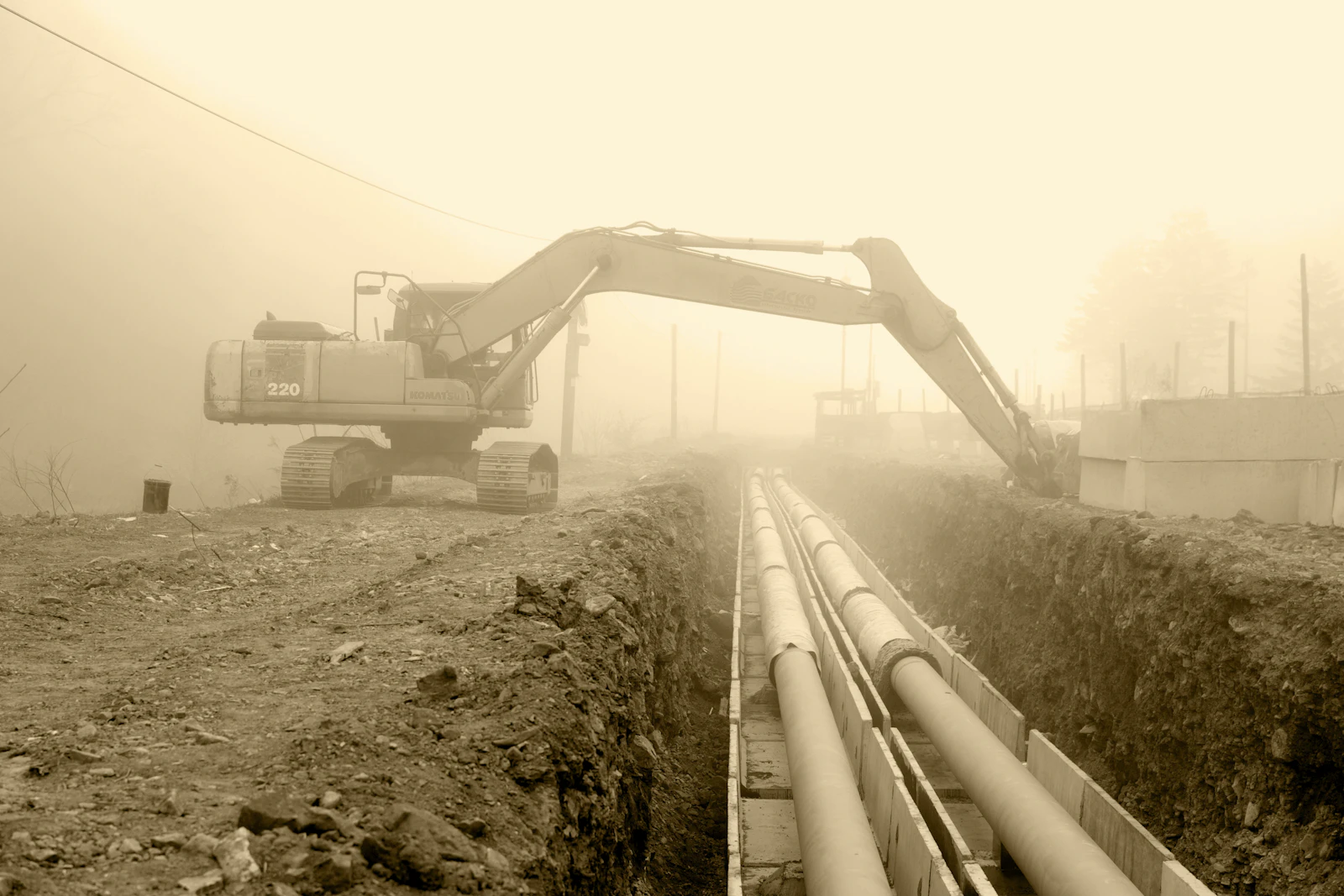
Pipeline Concrete Pump Hire Costs Chicago 2026
For Chicago-area pipeline concrete pump hire (i.e., line pump / pipeline placement service with operator) in 2026, budget $900–$1,800 per day for short, single-pour callouts (often built from a 4-hour on-site minimum plus travel and common adders), $3,600–$7,200 per week for multi-pour programs that keep the same pump/crew in rotation, and $9,500–$18,000 per 28-day month where you can legitimately treat pumping as a recurring service line item rather than a one-off dispatch. These are planning ranges (not guaranteed vendor price sheets) and assume normal-weight concrete, typical access, daytime weekday work, and a standard pipeline package (often 2.5 in. line) without unusual standby. In Chicago you will commonly compare national pumping operators (for example, Brundage-Bone) alongside major local ready-mix/pumping divisions (for example, Cemstone) and regional pumping contractors, but the final equipment hire cost will be driven more by minimums, portal-to-portal travel billing, and schedule risk than by the pump model badge.
| Vendor |
Daily Rate |
Weekly Rate |
Review Score |
Website |
| Wil-Pump Concrete |
$1 450 |
$7 250 |
10 |
Visit |
| Original Concrete Pumping Service, Inc. |
$1 500 |
$7 500 |
9 |
Visit |
| YARD 1 Concrete Pumping |
$1 000 |
$6 000 |
8 |
Visit |
| Concrete By Wagner, Inc. |
$1 300 |
$6 500 |
7 |
Visit |
How Pipeline Concrete Pump Hire Is Actually Priced (Service Hire vs. Bare Rental)
Most “pipeline rental” requests in the Chicago concrete market are fulfilled as a pumping service hire, not a bare equipment rental. That matters because your cost exposure is dominated by: (1) minimum billable hours, (2) travel and mobilization rules, (3) adders for pipeline length, special mixes, and compliance, and (4) standby caused by access or concrete supply interruptions.
Common rate architecture you will see on dispatch paperwork and T&Cs includes the following (your PO should mirror these concepts even if the vendor presents them differently):
- On-job hourly minimum: AM pours frequently carry a 4-hour minimum “time on job” charge.
- Travel billing: it is common to see a 1-hour minimum travel charge for dispatch.
- Energy/fuel surcharges: some pumpers apply an energy charge of 10% on invoices, and others apply a fuel surcharge trigger (example terms show 8% added when fuel exceeds $3.00/gal).
- Primer / grout / slick-pack: primer is often billed per bag (examples show $45 per bag with a two-bag minimum, and another 2026 rate sheet shows $40 per bag).
- Pipeline (system) included vs. extra: a line pump package may include 200 ft of 2.5 in. system, with overage billed at $2 per foot.
Estimator’s note for Chicago: you will often get a cleaner budget if you convert the above into an “equivalent day rate,” but your contract language should still preserve the underlying mechanics (minimum, travel, standby, adders). This prevents surprise costs when a “$1,200/day” budget turns into a higher invoice because of downtown staging delays or late concrete trucks.
2026 Planning Rate Ranges And What They Assume
Use the ranges below for pipeline concrete pump equipment hire cost planning in Chicago when you do not yet have final access drawings or confirmed pour sequencing. These ranges are intentionally broad because pumping is schedule-sensitive.
- Daily (single dispatch / one pour window): $900–$1,800. Assumes 4-hour on-job minimum, typical travel, and a standard pipeline package near the pump set location.
- Weekly (multiple pours / repeat dispatch): $3,600–$7,200. Assumes 3–5 pours/week with reasonable continuity (same GC, same site), minimizing remobilization and cancellation risk.
- Monthly (28-day service program): $9,500–$18,000. Assumes recurring placements where travel and setup are predictable and you can negotiate better standby/cancellation language.
Key assumptions you should state in the estimate narrative: (1) normal-weight mix; (2) no certified payroll/OCIP processing; (3) no after-hours or weekend premium; (4) washout area provided on site; (5) pipeline length at or below the included footage; and (6) no waiting on concrete (standby).
What Affects Pipeline Concrete Pump Equipment Hire Cost in Chicago?
Pipeline (line) pump hire cost in Chicago typically moves with the items below. For each, the practical estimator action is to assign an allowance and a control method (submittal, pre-pour walk, or dispatch call).
- Pipeline length, diameter, and routing: if your placement needs exceed the included system (often 200 ft), overage can run $2/ft, and long runs may trigger grout requirements (example language references grout when the system is 250 ft or more).
- Downtown access and staging: Chicago alley access, crane swing zones, and street occupancy rules often force early set times; if the pump is on site but cannot set up, you can burn the minimum and then pay standby.
- Concrete supply variability: a line pump is sensitive to interrupted supply. If trucks miss slots due to Chicago traffic windows, you pay standby or overtime to finish.
- Weekend/holiday pours: Saturday premiums are common (example adders show +$45/hr Saturday and 2x hourly rate Sundays/holidays; another 2026 terms page shows overtime adders of +$40/hr on Saturday and +$80/hr on Sunday, plus an overtime adder after 8 hours/day).
- Extra labor: if the pumper requires an extra man, examples show $85/hr. In tight interiors, you may also need a dedicated hose handler from your side to avoid extra-man charges.
- Compliance/admin burdens: certified payroll and OCIP/CCIP processing can carry a 5% processing fee in some terms; site orientations/safety classes may be billed at $85/hr; drug testing can be $250/person.
- Cancellation windows: late cancellations can convert into a billable minimum (example language: jobs cancelled less than 2 hours to dispatch can be subject to a 2-hour minimum; other terms show cancellation billed at a travel rate of $175/hr for travel/operator expenses).
Hidden-Fee Breakdown
Below are the cost items that most often explain why the final invoice is higher than the initial “day rate” budget for pipeline concrete pump hire in Chicago. Treat these as line-item allowances in your estimate and as explicit clauses in your PO.
- Delivery / pick-up charges: rather than a flat delivery fee, pumping service is frequently billed as travel time (example language shows a 1-hour minimum travel charge). For out-of-area dispatch, terms can shift to portal-to-portal travel at a published travel rate (example: $175/hr beyond a distance threshold).
- Fuel or recharge surcharges: plan for an invoice adder such as 10% energy charge, or a trigger-based fuel surcharge (example: 8% when diesel exceeds $3.00/gal).
- Damage waiver vs. insurance: pumping service hire often relies on your COI/contract risk allocation. If a vendor offers a damage waiver, treat it like an insurance-like adder (budget 3%–8% of charges as a planning allowance if required by your vendor onboarding).
- Cleaning, washout, and disposal: if the vendor supplies washout bags, example terms show $95 per bag. If your site cannot provide a washout area (common downtown), budget an off-site washout/disposal allowance (typical Chicago-market allowance $150–$450 depending on restrictions and time).
- Pipeline overage and pre-setup: if you need prior-day pipeline delivery/setup, example terms show $85/hr portal-to-portal.
- Special mixes: some terms apply $0.50/yd for fiber and lightweight mixes.
- Permits: permit burdens may be passed through; example terms show a $150 charge when travel requires permits. In Chicago CBD work, you should also budget your own street occupancy/traffic control costs separately.
Operational Constraints That Change Real Rental Cost (Chicago-Specific)
- Delivery windows and dispatch cutoffs: many pumpers lock their first-start windows; if your job misses a set time because the site is not ready, the clock still runs. Build your plan around a hard “pump on ground” time with access cleared.
- Off-rent rules don’t behave like normal rentals: you are not “off-renting” a machine; you are consuming crew time. A two-hour placement can still invoice as 4 hours on-job plus travel.
- Weekend/holiday billing: if you pour Saturday to avoid Chicago weekday congestion, you may pay a Saturday premium (examples show +$45/hr Saturday and 2x Sunday/holiday; another set shows Saturday overtime +$40/hr and Sunday +$80/hr).
- Cold-weather impacts: winter pumping can increase setup and cleanup time (frozen staging areas, slower finishing, and higher risk of standby while you protect the pour). Add an allowance of 0.5–1.5 extra billable hours for cold-season operational drag on congested sites.
- Indoor dust-control and housekeeping: pipeline runs through interiors often require protection, catch pans, and documented washout/containment. If you cannot provide a compliant washout plan, expect paid time for containment setup and removal.
Example: Downtown Chicago Pipeline Pour With Real Constraints
Scenario: 45 CY podium slab placement, pump set in a tight alley with a 6:30 AM access window, pipeline run of 220 ft (2.5 in. line), normal-weight mix, weekday.
- On-job minimum: 4 hours at a planning rate of $190–$240/hr = $760–$960 (rate range used for budgeting; actual contract rate may differ).
- Travel: 1-hour minimum travel = $190–$240.
- Pipeline overage: 20 ft over included 200 ft at $2/ft = $40.
- Primer: 2 bags at $45/bag = $90 (or if your vendor uses $40/bag, that’s $80; confirm at dispatch).
- Energy charge: 10% applied to applicable charges (planning) = roughly $110–$140 in this scenario.
- Downtown standby risk: if the alley is blocked and you lose 1 hour, add $190–$240 standby (or it simply pushes you beyond the minimum and increases time-on-job).
Resulting planning total: approximately $1,200–$1,710 before any weekend premium, washout bag charges ($95/bag if required), extra-man labor ($85/hr), or certified payroll/OCIP processing (5%). This is why a “simple 45-yard” job can land anywhere from a low-$1k invoice to well above $2k depending on readiness and restrictions.
Building A PO That Matches How Pumping Is Billed
For pipeline concrete pump hire in Chicago, the fastest way to lose cost control is to issue a PO that looks like a conventional equipment rental (e.g., “1 day line pump”). Instead, mirror the billing logic: hourly + minimums + travel + defined adders. You are not just buying equipment time; you are buying crew availability and a dispatch slot.
Include these commercial controls in your PO scope language:
- Define the billable clock: “time on job” vs. portal-to-portal (and whether travel is a separate line). Some published terms state pricing is portal-to-portal unless otherwise noted, and may charge cancellation at a travel rate.
- Minimums and triggers: state the 4-hour minimum and the travel minimum so your PM team does not expect a 2-hour invoice.
- Adders schedule: pipeline overage at $2/ft over included footage; prior-day setup at $85/hr; extra man at $85/hr; primer at $45/bag with minimum; washout bags at $95/bag; permit charges; certified payroll processing at 5%.
- Overtime and weekend premiums: reference your vendor’s published adders if known (examples show overtime after 8 hours/day, Saturday adders, and Sunday/holiday multipliers).
Budget Worksheet
Use the bullets below as a practical estimator worksheet for pipeline concrete pump equipment hire cost on Chicago bids. Adjust the allowances for job constraints (downtown vs. suburban, winter vs. summer, interior vs. exterior).
- Base pumping service hire: 4-hour minimum at $____/hr (allow $190–$240/hr as a 2026 Chicago planning range unless you have negotiated rates) plus expected additional hours.
- Travel: 1-hour minimum travel (or vendor travel rate) = $____.
- Pipeline package: included system (often 200 ft) + overage allowance (e.g., 50 ft x $2/ft = $100).
- Primer: 2 bags x $45 = $90 (or confirm vendor pricing).
- Washout/cleanup: allow 1–2 washout bags x $95 = $95–$190, plus an off-site disposal contingency of $150–$450 for restricted downtown sites.
- Energy/fuel surcharge: allow 8%–10% of pumping charges where contract terms apply.
- Standby (concrete delays / access delays): allow 1.0 hour at $____/hr for first-pass budgets; raise to 2.0–3.0 hours for Chicago CBD pours with street/alley uncertainty.
- Weekend premium allowance: if Saturday is possible, add $45/hr (or the vendor’s published Saturday overtime adder) times expected hours; if Sunday/holiday is possible, carry a 2x multiplier contingency.
- Extra labor: if hose handling cannot be provided by your crew, allow $85/hr for an extra man for the expected duration.
- Compliance/admin: certified payroll/OCIP processing at 5%; orientation time at $85/hr; drug testing at $250/person if the site demands it.
- Cancellation contingency: carry at least a 2-hour exposure if cancellation occurs inside dispatch windows, or the vendor’s travel-rate cancellation language.
Rental Order Checklist
Use this checklist to reduce change orders and disputed charges on pipeline concrete pump hire in Chicago.
- PO details: job address, billing address, cost code, “time on job” vs. portal-to-portal definition, and the stated minimum hours.
- Dispatch requirements: requested arrival time, on-site contact, concrete supplier dispatch number, and confirmed truck spacing plan (minutes between trucks).
- Access plan: pump set location, turning radius constraints, alley/drive clearance, overhead obstructions, and whether a street occupancy/parking reservation is required.
- Pipeline scope: planned footage (confirm if over 200 ft), diameter (2 in./2.5 in./3 in.), number of bends/reducers, and hose whip-check requirements.
- Washout plan: designated washout area or containment method; confirm whether washout bags will be used (and billed).
- Mix notes: fiber/lightweight or special admixtures that can trigger adders (example: $0.50/yd for fiber/lightweight).
- Site rules: PPE, orientation, certified payroll/OCIP/CCIP, and drug testing requirements (example flat charge $250/person).
- Return/closeout documentation: require daily tickets showing start/stop times, travel time line items, pipeline footage used, primer issued, washout method, and any downtime notes signed by your foreman.
Where Chicago Teams Commonly Lose Money On Pipeline Pump Hire
- Over-ordering pipeline “just in case”: if your route is actually 180 ft but you request 260 ft, you may invite overage and setup time. Walk the route and measure the run before the pour.
- Not controlling standby: one late truck can burn the difference between a minimum-charge job and an overtime job. If your vendor adds overtime after 8 hours/day (example: +$40/hr after 8), the cost curve steepens quickly.
- Weekend scheduling without pricing it: Saturday premiums (e.g., +$45/hr or other published adders) can be material on a 6–10 hour day.
- Downtown washout assumptions: if the building management prohibits washout, you will pay time and disposal. Put the washout decision in writing before you dispatch the pump.
When Pipeline Concrete Pump Hire Is Not The Lowest-Cost Option
Pipeline (line) pumping is usually cost-effective when you have constrained access but predictable production. However, consider alternate placement methods when any of the following are true:
- Very small yardage with easy access: if the pour is under 8–10 CY and you can chute close, the 4-hour minimum may dominate total cost.
- High standby risk: if your ready-mix supply is uncertain (plant opening windows, traffic, or tight union rules), you can end up paying for “availability” rather than pumping.
- Long interior runs with strict housekeeping: the indirect labor to protect finishes and manage washout can exceed the pumping cost itself.
2026 Market Notes For Chicago Pipeline Pumping Budgets
For 2026, build your Chicago pipeline concrete pump equipment hire budgets to be resilient to surcharges and compliance friction. Published pumping terms in the broader region show that vendors may apply energy/fuel surcharges (for example, 10% energy charge or an 8% fuel surcharge trigger), overtime adders, and explicit admin fees for certified payroll/OCIP processing. Those items are small individually, but they stack quickly on a short pour where minimums apply.
Practical closeout tip: require your superintendent to photograph (1) the pump set location, (2) the measured pipeline footage, and (3) the washout setup before pumping starts. That documentation is often the difference between a clean approval and a back-and-forth on billed overage, cleanup, or standby.