

For Denver concrete pump hire, “pipeline” (placing line) costs usually show up as (1) the base dispatch minimum that includes a set amount of hose/line and (2) add-on charges driven by total line footage, job duration, and cleanup/return condition. For 2026 planning in the Denver metro, budget pipeline equipment hire using two practical bands: (A) dry-hire pipeline packages (hose/pipe/clamps rented as equipment) and (B) wet-hire concrete pump service (pump + operator) where the vendor supplies the pipeline and bills line-foot adders. As “anchors,” published Metro Denver line-pump minimums include a $450 base for 3 hours with $125/hour thereafter (delivery inside Denver included) and similar rate structures from other local pump providers, so most cost control is about managing minimum-hours exposure and pipeline scope (how many feet, how many moves, and how clean the line returns).
| Vendor | Daily Rate | Weekly Rate | Review Score | Website |
|---|---|---|---|---|
| United Rentals (Fluid Solutions – Denver) | $250 | $750 | 8 | Visit |
| Sunbelt Rentals (Pump Solutions – Brighton/Denver Metro) | $260 | $780 | 10 | Visit |
| Rain for Rent (Fort Lupton/Denver Metro) | $275 | $825 | 10 | Visit |
| Herc Rentals (Denver) | $240 | $720 | 8 | Visit |
| Xylem Rental Solutions (Godwin/Flygt) | $290 | $870 | 7 | Visit |
2026 planning ranges (Denver) — Pipeline equipment hire (dry hire): For a typical ground-line “hose + fittings” kit (commonly used behind a line pump or trailer pump), plan $175–$350/day, $550–$1,050/week, and $1,650–$2,900/month depending on diameter (2.0–3.0 in.), pressure rating, and whether steel slickline pipe sections are included. For steel pipeline (slickline) rented by section, plan $12–$25/day per 10-ft section, $40–$85/week per section, and $120–$240/month per section. A clamps/gaskets bundle commonly adds $20–$45/day ($70–$140/week; $200–$400/month) if not included.
2026 planning ranges (Denver) — Concrete pump hire with pipeline included (wet hire): Convert the local “3–4 hour minimum” into a day-equivalent budget: $550–$900 per dispatch for a standard line-pump package (includes a baseline amount of line, often 100–150 ft), then expect overtime/standby in the $125–$180/hour band once you exceed the minimum window. Local published examples include $595 for 3 hours + $125/hour adders, and another Metro Denver posting lists a ground-line pumping menu starting at $650 for the first barrel truck with +$150 per additional truck and $180/hour travel when applicable.
Most Denver-area concrete pump hire is not priced like a generic equipment rental day-rate for pipe; it’s priced like a production service with pipeline included up to a threshold, then billed as measurable adders. Several published rate sheets/menus illustrate the common structure:
For an equipment/rental coordinator, the key is to treat “pipeline” as a scope item you can control: confirm diameter, total feet, number of bends, number of deck moves, priming plan, and return/cleaning expectations. If you don’t lock these, the invoice will “find” the cost via adders.
1) Total installed line footage (including verticals and returns). The base package might cover 100–150 ft, but Denver infill and podium work frequently needs 200–350 ft once you route around fencing, street closures, or limited setup zones. Even a low published adder of $0.50/ft becomes material at 250 ft; higher adders (seen in some markets) can make line length the biggest controllable delta.
2) Minimum-hours exposure and standby. A 3-hour base with $125/hour adders is a great rate only if the site is truly “pump-ready” when the truck arrives. If concrete trucks stack, access is blocked, or finishing capacity is short, you end up buying standby. Published Metro Denver examples show 3-hour bases (e.g., $450 for 3 hours with $125/hour after) and similar structures from other providers.
3) Travel time, dispatch radius, and Denver logistics. Some Metro Denver postings state delivery inside Denver is included in the base price, while another local menu uses a travel/time concept (e.g., $180/hour travel) when the job is outside typical zones. Plan for the real-world Denver constraints that can increase billable time: downtown curb-lane staging, narrow alleys (LoDo/RiNo), and morning delivery cutoffs (many pumpers want a “wheels rolling” slot, not a flexible window).
4) Payment terms, deposits, and transaction fees. Some local terms note projects paid in advance and a 3% card processing charge for credit/debit, which matters if you’re pushing one-time pours through a card instead of a credit account. For dry-hire pipeline equipment, plan a refundable deposit in the $500–$2,000 range (higher if specialty pipe sections are included), plus a loss/damage hold until inspection/cleanliness is confirmed.
5) “Per truck” or “per load” structures that hide pipeline time. One Metro Denver menu shows $650 for the first barrel truck and +$150 per additional truck. Another Metro Denver provider publishes an “additional load” concept with retail examples like $185 per additional load beyond the base (and discounted contractor pricing). When you see per-load billing, pipeline scope still matters because long hose runs typically slow placement and can increase load count or time-on-site.
Use these allowances to build a realistic Denver pipeline equipment hire cost budget (and to write cleaner PO language). These are planning allowances unless your selected pump provider confirms otherwise in writing.
Scenario: 38 CY slab pour in a constrained Denver infill lot (single-lane access, no on-site washout pit, curb-lane staging only). The concrete pump hire is a wet-hire line pump with pipeline included up to a baseline, plus adders.
Estimator takeaway: pipeline length and site readiness can swing this pour by $400–$1,200+ even when the base minimum looks competitive.
Use this as a non-table budgeting artifact for a Denver pipeline equipment hire line item tied to concrete pump hire.
Use this checklist to reduce pipeline equipment hire surprises on Denver concrete pump hire POs.
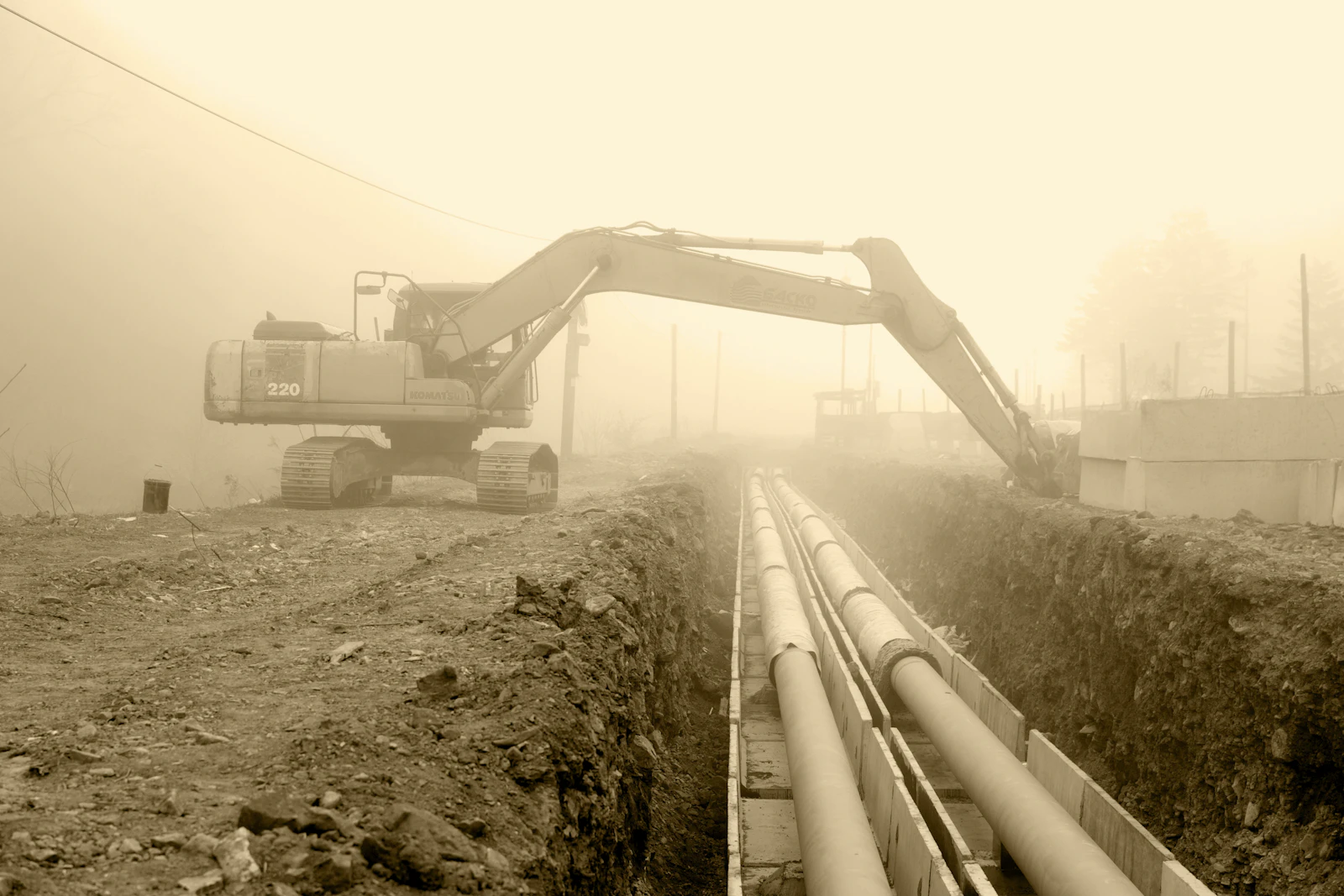
Downtown staging and access windows. In central Denver, the difference between a low-cost pipeline add-on and a high invoice is often access timing. If the pump and pipeline arrive but cannot set due to blocked curb lane, towing activity, or a late concrete ticket, your pipeline is “free” but your clock isn’t—hourly adders like $125/hour start to accumulate after the minimum window.
Elevation and temperature swings. Denver’s elevation and dry conditions don’t automatically increase a pipeline rate, but they increase the risk of (a) losing prime, (b) stiffening in the line during delays, and (c) cleanup time. In cost terms, that means you should budget (and contract) for prime volume ($75–$150) and clarify who pays when the line must be re-primed due to jobsite-caused delays.
Winter cleanup. Freeze conditions can extend washout time and complicate “return condition.” If you’re dry-hiring pipeline equipment, insist on written return criteria (cleaned, drained, capped) to prevent post-return cleaning charges in the $150–$500 band.
For concrete pump hire, the “pipeline” scope can include more than just hose. Safety/technical guidance describes concrete pumping systems as including the pump and the pipeline (slickline), couplings, intermediate/end hoses, bends, transitions, and supporting equipment. That definition matters commercially: if you need steel line, supports, and specialty transitions, treat it as a separate equipment-hire package with a mobilization and a monthly rental—don’t assume it’s covered by a simple line-pump minimum.
Recommended 2026 scoping language (non-table):
If you’re scheduling a sequence (e.g., curb/gutter, podium pours, or multiple placements per week), you may need a “monthly-equivalent” budget even though pump providers quote per dispatch. Here’s a practical conversion approach for Denver pipeline equipment hire costs:
Monthly-equivalent planning band (wet hire): this commonly lands around $5,500–$11,500/month for recurring line-pump work once you include overtime, typical line-foot adders, and at least one washout/cleanup event. For dry-hire pipeline equipment supporting a stationary pump or self-performed pumping, use the earlier equipment bands (e.g., $1,650–$2,900/month for a standard pipeline package) but add realistic cleaning, loss/damage risk, and logistics labor.
These are not “market clearing” prices, but they are useful anchors when you are normalizing quotes for Denver pipeline equipment hire tied to concrete pump hire:
Action for rental coordinators: when reviewing Denver concrete pump hire quotes, request (1) included pipeline length, (2) per-foot line adders, (3) washout handling rules, (4) standby definition, and (5) cutoff times for cancellations/off-rent. Those five items are usually more important than negotiating the base minimum down by $25–$50.
