Build your next estimate with CountBricks
Create an itemized estimate for your project, with materials, labor, and quantities you can review and edit.
Create my estimateStart a 7-day free trial. Sign up, then enter your project details.
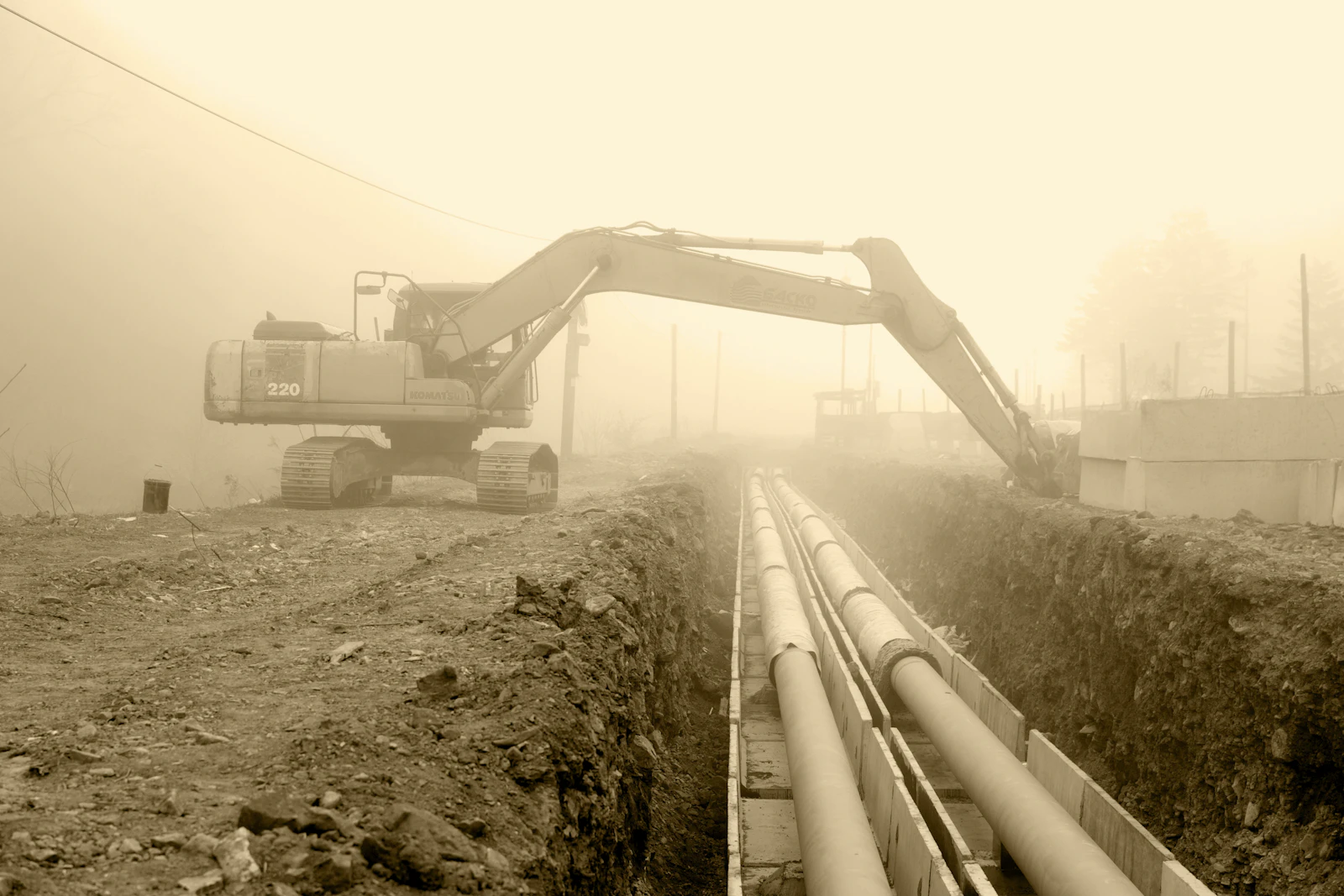
For El Paso concrete pump hire in 2026, “pipeline” typically means the placing line package (steel pipe sticks, elbows, reducers, clamps, gaskets, and end hose) rather than an oil-and-gas pipeline. Budgeting is usually done two ways: (1) standalone pipeline equipment hire (rarely offered without a pump) and (2) pipeline billed as part of a pumping service ticket (most common). For 2026 planning in El Paso, allow $250–$550/day, $850–$1,650/week, and $2,400–$4,800/month for a typical 150–200 LF placing-line package (4–5 in.) with standard clamps/gaskets, plus per-foot adders when the pour needs longer reach. When pipeline is bundled into service, many contractors include a base length (often 100–200 LF) and then charge an additional per-foot line fee; those line fees can materially move the invoice on elevated, long-reach, or tight-access jobs.
| Vendor |
Daily Rate |
Weekly Rate |
Review Score |
Website |
| Concrete Pumping Inc. (CPi) — El Paso |
$1 200 |
$7 200 |
9 |
Visit |
| Bull Concrete & Pumping — El Paso |
$1 100 |
$6 600 |
9 |
Visit |
| Hernandez Concrete Pumping, Inc. — El Paso metro |
$1 250 |
$7 500 |
8 |
Visit |
| Legend Concrete Pumping — Anthony, NM (El Paso area) |
$1 300 |
$7 800 |
10 |
Visit |
| Brundage-Bone Concrete Pumping — Texas dispatch |
$1 500 |
$9 000 |
8 |
Visit |
Pipeline Rental El Paso Concrete Pump Hire
In the El Paso market, pipeline “rental” most often shows up as a placing-line charge on the pump provider’s invoice. A published example from a pumping contractor shows a $525 base service that includes 100’ of line and then bills $0.50 per additional foot beyond that included length. Another published rate sheet example (outside El Paso, but commonly used for internal budgeting) shows line-pump billing that includes line length thresholds and then charges $1/ft for certain overage bands and $2/ft for longer runs. These structures matter because pipeline is not a “flat accessory” on jobs where you’re routing around existing structure, working from a distant curb lane, or placing into multi-bay interiors.
2026 planning ranges for El Paso pipeline equipment hire (assumptions: standard steel line, normal wear, no extraordinary cleaning, no lost components, business-hours logistics):
- Placing-line package (150–200 LF) equipment hire: $250–$550/day; $850–$1,650/week; $2,400–$4,800/month.
- Additional pipeline length (over included/base line): $0.50–$2.00 per foot, depending on diameter, access, and whether the provider treats the adders as “extra hose” or “extra steel line.” (Examples of published adders include $0.50/ft and $1–$2/ft structures.)
- End hose / whip hose hire (typically 10–25 ft): $40–$85/day; $130–$250/week; $380–$750/month.
- Specialty accessories (reducers, deck gun, extra 90s, slickline segments): $25–$120/day each, depending on wear class and whether the item is considered “consumable risk.”
Reality check for coordinators: pipeline charges are often small compared with pump time and minimums, so the cost risk is usually in (a) extra length adders, (b) standby time billed while the crew struggles with routing, and (c) cleaning/return-condition back-charges. Some Texas contractors publish trailer-mounted pump rates like $145/hour with a 3-hour minimum, reinforcing why pipeline routing and readiness (forms, rebar clearance, truck spotting) matters more than shaving $0.10/ft on line. A separate published rate sheet example shows $175/hour for a line pump, plus minimums and surcharges—again emphasizing that pipeline planning is largely a productivity and risk-control exercise.
What Drives Pipeline Equipment Hire Costs on El Paso Jobsites?
Pipeline hire pricing for concrete pump work is not just “feet of pipe.” In El Paso, expect the following jobsite realities to change the effective hire cost:
- Long-reach routing and obstructions: If the pump can’t get within a normal included-length distance, your pipeline adders can stack fast. A 300 LF run can mean 100–200 LF of overage depending on what’s included in the base.
- Heat and rapid set: Summer placement windows often compress (early morning pours), which increases the value of fast setup and clean return. Faster set also raises the risk of hardened concrete in clamps/elbows if washout is delayed.
- Dust-control and housekeeping requirements: Interior commercial builds and TI projects in El Paso commonly require dust control, floor protection, and documented cleanup—conditions that can trigger cleaning fees if the line is returned with concrete residue.
- Site access controls (including military or secure facilities): Deliveries to controlled-access sites can cause “waiting time” and missed cutoff windows, which is where standby and overtime charges appear.
Pipeline Line-Item Structures You’ll See on Invoices
Most pumping providers bill pipeline in one of these patterns (and it’s worth confirming which applies before issuing a PO):
- Base line included + per-foot overage: Example: base includes 100’ of line with $0.50/ft beyond.
- Tiered per-foot overage: Example: over 150 ft charged at $1/ft for a band, and longer runs charged at $2/ft.
- Included length + per-stick adders (informal): Some dispatchers will quote “extra sticks” rather than linear feet; if so, clarify what they count as a “stick” (often 10 ft) and whether elbows count separately.
There are also service models where pipeline is bundled into a base “service” price. One published example shows a $525 base that includes both a line allowance and a concrete quantity allowance (8 yards in that example) with an additional $15 per yard beyond the included quantity. Even if you’re only focused on pipeline equipment hire, these bundled structures affect how vendors recover their pipeline wear-and-tear costs (and why they scrutinize return condition).
Hidden-Fee Breakdown
Pipeline equipment hire costs become unpredictable when the “non-rental” line items trigger. Use the following as a 2026 El Paso budgeting checklist (confirm which items apply on your MSA):
- Fuel surcharge: published examples include a 7% fuel surcharge applied to invoices.
- Show-up / mobilization fuel: published examples show a $35 per show-up fuel surcharge in some markets.
- Primer fee: published example shows a $25 primer fee per job.
- Washout / no washout provided: published example shows a $100 fee if washout isn’t provided.
- Washout/prime-out containment bags: published example shows $195 per unit (with customer responsible for disposal).
- Overtime / weekend premium: published example shows $25 per hour overtime on Saturday.
- Cancellation charges: published example shows $300 cancellation fee for short notice and escalating terms closer to pour time.
- Late payment fee language: published example includes a 10% late fee structure (30/60/90).
- Delivery / pickup for pipeline-only moves (common when line is staged ahead): 2026 El Paso planning allowance: $150–$300 each way within a typical metro radius; plus $4–$7/mile beyond an agreed free radius; plus $75–$150 for timed delivery windows (e.g., 6:00–7:00 AM gate).
- After-hours return / off-rent cutoff: plan for 0.5–1.0 day extra if off-rent must be called before a cutoff (often mid-afternoon) and the vendor does not process weekend off-rents.
- Damage waiver / rental protection: typical planning allowance 10%–15% of the equipment hire subtotal if elected (or required by policy).
- Cleaning / hardened material in line: 2026 planning allowance $150–$350 per event for cleaning and reconditioning; severe cases can be charged as replacement rather than cleaning.
- Missing small parts (high frequency): plan allowances of $8–$20 per gasket, $25–$60 per clamp pin/retainer set, and $40–$120 per whip-hose end fitting, depending on vendor standards.
Pipeline Components That Change Hire Cost (and What to Clarify)
When a dispatcher quotes “pipeline,” confirm what the package includes. For accurate equipment hire cost control, align on:
- Diameter and wear class: 4 in. line is not priced like 5 in. line; heavy-wall/wear-line is often treated as premium inventory.
- Steel vs. hose proportions: More hose can mean easier routing but higher wear risk and higher per-foot adders.
- Count basis: “Feet,” “sticks,” or “sections.” Get the unit basis in writing.
- Included elbows/reducers: Jobs with multiple 90s, goosenecks, reducers, and deck guns often trigger adders even if linear footage is unchanged.
Budget Worksheet
Use this as a no-table estimating artifact for El Paso pipeline equipment hire (2026 planning allowances; adjust for contract terms and scope):
- Pipeline equipment hire (base 150–200 LF): $250–$550/day (or $850–$1,650/week for multi-day slab cycles).
- Additional line over base: 100 LF allowance at $0.50–$2.00/LF = $50–$200 (scale as needed).
- End hose / whip hose: $40–$85/day.
- Reducers / deck gun / extra elbows: $60–$240/day allowance (2–4 items).
- Delivery + pickup (if pipeline is staged separately): $300–$600 round trip.
- Damage waiver: 10%–15% of equipment hire subtotal.
- Primer and washout allowances: $25 primer + $100 washout exposure (if no designated washout) + $195 washout bag (if required) = $320 potential adders.
- Fuel surcharge exposure: 7% allowance if the provider applies it.
- Weekend/overtime exposure: $25/hour Saturday overtime allowance (e.g., 4 hours = $100).
- Cleaning contingency: $200–$350.
Example: 350 LF Interior Placement Run With Tight Delivery Windows
Scenario: TI build-out near central El Paso with a 6:30 AM delivery window (noise control), pump set at curb, and pipeline routed through an interior corridor to reach a back-of-suite pour. Required placement reach is 350 LF. The pump provider includes 150 LF in the base package; the remaining 200 LF is billed as additional line at $1.00/LF (budget example consistent with published $1/ft overage structures) = $200 pipeline overage.
- Pipeline equipment hire (1 day): $400 (mid-range planning)
- Additional pipeline overage (200 LF @ $1.00): $200
- Timed delivery window fee: $125 (allowance)
- Primer fee exposure: $25
- Washout bag requirement (interior/no washout): $195
- No washout provided exposure: $100 (if washout plan fails)
- Fuel surcharge exposure: 7% of applicable invoice items
Operational constraint that protects cost: pre-walk the route to confirm corridor width, door protection, and turning radii so you don’t add elbows/hoses onsite (and burn billed standby while the crew reconfigures the pipeline).
Rental Order Checklist
Use this checklist to keep El Paso pipeline equipment hire charges auditable and to prevent end-of-job disputes (no tables, coordinator-ready):
- PO scope language: state diameter (4 in. vs 5 in.), base included LF, and the exact overage basis (per foot or per stick).
- Delivery requirements: delivery address, on-site contact, gate codes, and a hard delivery window (e.g., 6:00–7:00 AM) with after-hours access plan.
- Off-rent rules: confirm cutoff time for off-rent calls (e.g., “before 3:00 PM”) and weekend/holiday billing policy.
- Return condition: define “clean” (no hardened concrete in elbows/clamps; hose capped; gaskets returned) and require photos at pickup and return.
- Washout plan: confirm whether washout is provided on-site; if not, approve washout bag pricing and disposal responsibility in advance.
- Inventory count on dispatch and return: count sticks/hoses, elbows, reducers, clamps, gasket sets; document shortages same-day to avoid later back-charges.
- Insurance / damage waiver decision: select DW% or provide COI, and confirm deductibles and excluded damage (e.g., improper cleaning).
If your internal controls require benchmarking, note that public-agency pump-related rate sheets in Texas can show high hourly equipment rates (for example, metered boom pump truck rates in the low-to-mid hundreds per hour depending on size). This reinforces why controlling pipeline setup time and extra-footage adders often matters more than the base pipeline day rate.
How to Negotiate Pipeline Hire Terms That Actually Control Total Cost
When pipeline is treated as “just an accessory,” contracts drift into vague language (and that’s where overage and cleaning disputes come from). For 2026 El Paso concrete pump hire, the best cost-control comes from tightening three definitions: included length, overage basis, and return condition.
- Included length definition: confirm whether “included line” counts only steel sticks or also includes the end hose and reducer. A base package example shows 100’ of line included; on interior work, that can be consumed quickly once you add routing and a whip hose.
- Overage basis: if billed per foot, require the provider to note the deployed LF on the ticket; if billed per stick, define stick length (commonly 10 ft) and whether partial sticks count as full.
- Return condition / cleaning standard: set a standard that is practical in El Paso heat: line cleared promptly, clamps opened and rinsed, end hose capped, and photos taken before pickup.
Cost Drivers That Dispatchers Won’t See Until the Morning of the Pour
These are the site-driven cost drivers that cause same-day pipeline changes and invoice surprises:
- Truck spotting and staging: If the concrete trucks can’t cycle efficiently, the pump sits longer, and the pipeline remains “on rent” longer. Published line-pump examples show hourly billing and minimums (e.g., $175/hour on one published sheet), so waiting is expensive.
- Pour sequence changes: Late rebar inspections or form corrections can force re-routing (extra elbows/hoses) and can push work into weekend overtime bands (published example: $25/hour Saturday overtime).
- No-washout situations: Interior placements often prohibit washout onsite; published examples show explicit charges like $100 when washout isn’t provided and $195 for washout/prime-out bags.
Delivery, Pickup, and Off-Rent: Where El Paso Logistics Add Cost
For pipeline-only staging (line delivered ahead of pump day), El Paso logistics can be the hidden driver. The metro footprint and job distribution (east-side growth corridors, I-10 transit, and controlled-access facilities) increases the chance of:
- Missed delivery cutoffs: plan an allowance of $75–$150 for timed delivery windows, especially for early-morning placements to avoid heat.
- Extended “possession” billing: if a vendor’s policy requires off-rent calls by a cutoff (often mid-afternoon) and you miss it, budget an extra 0.5–1 day charge even if the line is physically ready.
- Extra trip charges: if the line is not palletized/secured for pickup, vendors may require a second trip; carry $150–$300 as a re-trip exposure.
Risk Allowances for Loss, Damage, and Documentation
Pipeline systems have a lot of small components that are easy to lose in the mud or during rushed cleanup. If you don’t control the count process, your “pipeline hire” can effectively become a parts replacement ticket. For 2026 planning, include allowances and controls:
- Gaskets and clamp hardware: carry $100–$250 as a small-parts allowance per large pour day (higher for multi-route interior work).
- End hose damage exposure: carry $150–$400 when dragging whip hose over rebar or abrasive deck edges is unavoidable.
- Cleaning contingency: carry $200–$350 when washout is delayed by access, water restrictions, or disposal rules.
- Ticket documentation: require the driver/operator to note (a) total LF deployed, (b) any extra elbows/reducers, and (c) washout method used (onsite washout vs bagged containment).
Second Example: Weekend Pour With Line Overage and Cancellation Exposure
Scenario: A Saturday slab pour in west El Paso with a changed mix arrival time. Your vendor’s published-style terms include Saturday overtime ($25/hour) and cancellation fees (example: $300 if cancelled inside an 8-hour notice window). Even if your chosen vendor’s numbers differ, the cost logic is consistent.
- Pipeline hire: $450/day (planning)
- Extra line: 120 LF beyond base at $0.50–$2.00/LF = $60–$240 exposure (range reflects common published-style approaches).
- Saturday overtime exposure: 3 hours @ $25/hour = $75
- Fuel surcharge exposure: 7% on applicable charges
- Cancellation exposure (if weather pushes pour and you can’t reschedule): $300
Practical Notes for 2026 El Paso Pipeline Equipment Hire Budgeting
- Do not assume “pipeline only” is available: many providers treat placing line as part of concrete pump hire service rather than rentable inventory. Build your estimate to match the ticket structure (base + overage + surcharges).
- Plan for published-style surcharges: examples include 7% fuel and specific washout/primer fees.
- Use a route walk as a cost-control tool: a 15-minute pre-walk can prevent 60–90 minutes of billed standby while elbows/hoses are swapped and the line is re-run.
- Confirm whether a show-up fuel charge applies: some providers publish fixed amounts (e.g., $35 per show-up fuel surcharge).
If you want, I can convert your specific scope (diameter, total LF, anticipated elbows/reducers, whether you need staged delivery, and pour schedule) into a line-item allowance narrative you can paste directly into a PO and a subcontract exhibit—still with no tables and focused strictly on pipeline equipment hire costs.