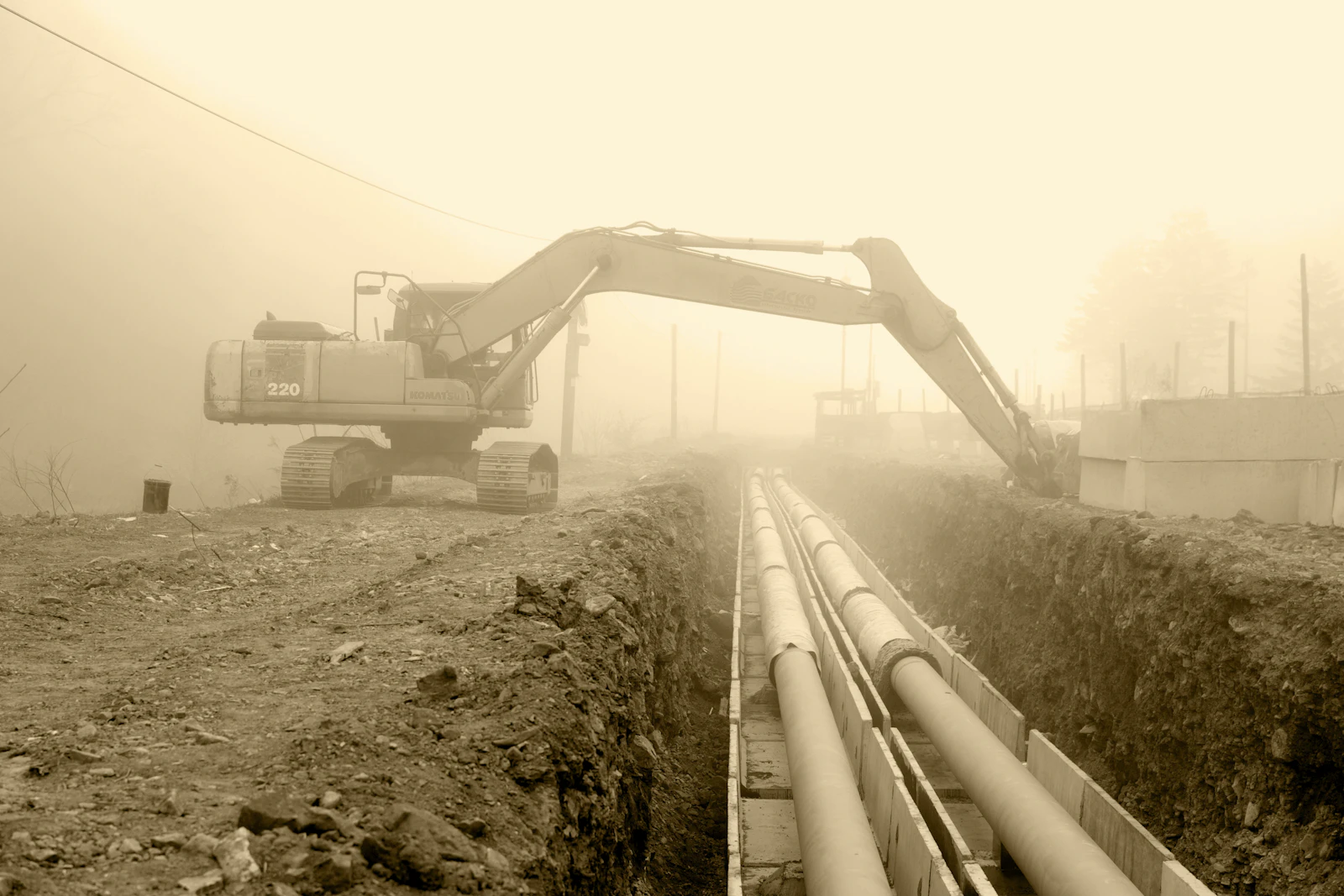
Pipeline Rental Fresno Concrete Pump Hire
For 2026 planning in Fresno, CA, “pipeline” on a concrete pumping scope is typically the slickline / placement pipe and hose package (steel pipe sticks, elbows, reducers, clamps, gaskets, end hose/whip, and occasionally grout/primer tooling). Pipeline is most often bundled into an operated concrete pump hire, but it can also be priced as a separate equipment line item when you need extra footage, a specialty configuration, or you’re holding pipe on site across multiple pours. A practical Fresno budgeting range for a dry-hire concrete pump pipeline package (typical 150–250 ft equivalent plus fittings) is $350–$900/day, $1,100–$2,700/week, and $2,900–$6,500/4-weeks, assuming standard wear-and-tear, normal return condition, and no concrete set-up in the pipe. When pipeline is charged “by the foot” as an accessory to pump hire, planners commonly see $0.75–$1.50 per ft per pour (plus mobilization and delivery/pickup). Rates move materially with diameter (2.5 in vs 4–5 in), wall thickness, pressure class, job access, and weekend/after-hours handling.
| Vendor |
Daily Rate |
Weekly Rate |
Review Score |
Website |
| Allied Concrete Pumping |
$3 100 |
$13 900 |
8 |
Visit |
| ECP Shotcrete & Concrete Pumping (Express Concrete Pumping) |
$2 800 |
$12 600 |
8 |
Visit |
| Brundage-Bone Concrete Pumping |
$3 400 |
$15 300 |
7 |
Visit |
| The Conco Companies (Conco Pumping) |
$3 500 |
$15 800 |
9 |
Visit |
| Glen's Concrete Pumping |
$1 950 |
$7 500 |
8 |
Visit |
What Counts as “Pipeline” for Concrete Pump Hire Scopes
Rental coordinators and estimators will save time (and avoid change orders) by defining pipeline the way pump contractors do:
- Steel slickline / placement pipe sticks (commonly 10 ft sticks; 4 in or 5 in for boom-to-slickline systems; smaller diameters for grout/pea gravel work).
- Elbows and bends (45° and 90°), plus reducers to match boom tip/hose sizes.
- Couplings/clamps and gaskets (these are often where “missing item” back-charges show up).
- End hose/whip hose (e.g., 10–25 ft sections for placement control).
- Prime/cleanout accessories (cleanout balls, blowout adapters, primer pots, or grout requirements depending on the contractor’s standard).
In Fresno, pipeline is frequently discussed alongside “hose included” in line pump pricing—many pump packages include a baseline hose length (often 150 ft) and then add charges for extra reach or specialty slickline arrays.
2026 Planning Ranges: Dry-Hire Pipeline Packages vs Per-Foot Adders
Because many Fresno-area concrete pump providers treat pipeline as an accessory rather than a standalone rental, you’ll typically see one of these billing models. Use the model that matches your contract and how long the pipe will be off the yard:
1) Package-based pipeline equipment hire (dry hire)
Use this when you need pipe staged on site for multiple days/phases, when your pour sequence spans weekends, or when you need to control “off-rent” timing:
- Standard pipeline package (150–250 ft equivalent with basic elbows/reducers/clamps/whip): $350–$900/day, $1,100–$2,700/week, $2,900–$6,500/4-weeks.
- Additional steel pipe sticks (common adder when you exceed the base kit): $6–$14 per 10-ft stick/day, $20–$45 per stick/week, $60–$120 per stick/4-weeks.
- Specialty elbows/reducers (heavy-wall or high-wear pieces): $10–$35/day each depending on size and spec.
2) Per-foot pipeline adders (accessory to pump hire)
Use this when pipeline is only required for a single placement and the pump contractor provides/installs it:
- Slickline charge: plan $0.75–$1.50/ft for the required system length (commonly stated as “charged per foot”), plus separate line items for handling/delivery/pickup if applicable.
- Extra hose beyond included length: commonly $1.50/ft or $2.00/ft once you exceed the included baseline (many packages include 150–175 ft before adders apply).
Assumptions behind these ranges (important for 2026 budgets): pricing assumes standard 10-hour weekday handling, normal jobsite access for a flatbed/boom truck, no special rigging, and returns that are free of set concrete and tagged with a piece-count signed by your foreman and the driver.
What Drives Pipeline Equipment Hire Costs in Fresno?
Pipeline hire costs behave more like a “high-risk accessory” than a generic rental item. The biggest cost drivers are below—each one can convert an apparently simple pipe rental into an expensive short-term hire:
- Total footage and diameter: 4 in vs 5 in pipe, and heavier wall sections for abrasive mixes, change both rental and damage exposure.
- Configuration complexity: multiple elbows, elevation changes, tight radii, or long runs across active operations increase labor, risk, and time-on-site charges.
- Project schedule: if you’re staging for multiple pours, the “off-rent” date becomes the cost lever (especially when a weekend is between pours).
- Access and mobilization out of Fresno/Clovis: rural Fresno County and ag-field access can push mileage/mobilization and create higher cleaning/contamination risk from dust and mud.
- Heat and curing tempo: Central Valley summer conditions commonly push early-morning pours, which can trigger after-hours dispatch or weekend surcharges if you can’t hit normal yard cutoffs.
Hidden-Fee Breakdown (Where Most Budget Overruns Occur)
Pipeline hire is rarely “just the pipe.” These are the most common adders rental coordinators should plan for on a Fresno concrete pump pipeline rental or pump-and-pipe hire scope:
- Delivery / pickup: plan $125–$350 each way inside a typical metro radius, or $4–$8 per loaded mile when billed mileage-based (often with a minimum). If the contractor uses a stated mobilization schedule, you may also see $2.00/mile with a $140 minimum structure on some terms.
- After-hours window: $150–$300 dispatch fee for deliveries before 7:00 a.m. or after 4:00 p.m. (common when trying to beat Fresno summer heat or coordinate with plant slots).
- Minimum rental / minimum handling: even if you only need 60–100 ft, plan a $250–$500 minimum for a pipeline kit because counting, loading, and inspection time is real.
- Damage waiver (rental protection): commonly 10%–15% of the rental line item (and it typically does not cover negligence, concrete set-up, or theft).
- Cleaning fee: $75–$250 for normal wash/cleanup; $250–$600 if concrete is left to set in pipe or couplings and the yard must jackhammer/burn it out.
- Washout containment: if the pump contractor provides cleanup bags, plan $80 per bag (or your own washout solution per site rules).
- Priming/primer: if the contractor supplies prime/grout, plan $50 as a typical line item (some contractors require grout for slickline systems).
- Weekend/holiday surcharge: planning allowance of $50/hour overtime surcharge is a realistic placeholder where weekend/holiday terms apply, especially for Saturday PM / Sunday pours.
- Missing parts: typical back-charges seen in the field: $15–$35 per missing pin/safety clip, $40–$120 per clamp, and $10–$25 per gasket depending on size/spec (your actual contract governs).
- Standby / waiting time: if the pipeline is installed and the pour is delayed, plan $120–$180/hour for standby on operated scopes (this is where “truck spacing” and batch plant variability hurts).
Operational Rules That Change the Real Rental Cost
Put these constraints in writing on the PO and on the foreman’s pour plan. They are the most frequent “we didn’t budget that” drivers on pipeline equipment hire:
- Off-rent cutoffs: many yards treat off-rent as effective next-business-day unless the equipment is physically returned, inspected, and checked in by a stated cutoff (commonly late morning). If you miss the cutoff on Friday, you may buy a weekend.
- Weekend billing: some contractors bill Saturday/Sunday as full charge days even if the pipe is idle, because it is still off the yard.
- Return condition and documentation: require photos at pickup and at return (pipe ends, clamp count, gasket condition). Add a “piece count signed by driver + your receiver” requirement to stop disputes.
- Refuel/recharge equivalents: pipeline isn’t fueled, but the equivalent cost is clean and empty. “Concrete left in the line” is the pipeline version of “return full.”
- Indoor dust-control and protection: if pipeline is used inside a warehouse or finished space, you may need poly protection, drip trays, and a stricter cleanup standard—plan labor and cleaning allowances to avoid restoration back-charges.
- Safety/clearance constraints: limited setup footprint (tight Fresno infill sites) can force longer pipeline runs, more elbows, or a different pump arrangement—often increasing both footage and time.
Example: 240 ft Pipeline Setup for a Fresno Warehouse Slab (Costed Like a Real PO)
Scenario. You’re coordinating a 240 ft placement run (steel slickline + end hose) because the pump can’t stage at the door. Pour is a Tuesday 5:30 a.m. start to avoid daytime heat and tenant traffic. You want pipeline staged the prior afternoon and returned same day after washout.
- Pipeline package dry hire: $650/day (1 day).
- Additional footage adder: 4 extra 10-ft sticks at $10/stick/day = $40.
- Early dispatch: $200 (before-hours delivery window).
- Delivery/pickup: $250 each way = $500 (if billed as flat each-way handling).
- Damage waiver: 12% of rental line item (assume $690 rental subtotal) = $82.80.
- Cleaning allowance: $150 (normal return condition).
Planning total (pipeline only): approximately $1,622.80 before tax and before any standby time. This is why pipeline “adders” matter: a modest one-day pipe need can still clear $1.5k once you include handling, early windows, and protection.
Budget Worksheet (Pipeline Equipment Hire Allowances)
Use this as a non-table estimating artifact for Fresno concrete pump pipeline hire scopes:
- Base pipeline package (dry hire): $_____ /day × ___ days (allow $350–$900/day).
- Additional pipe sticks: ___ sticks × $_____ /stick/day (allow $6–$14).
- Elbows/reducers/special fittings: $_____ allowance (allow $60–$250 per mobilization for specialty pieces).
- Delivery + pickup: $_____ each way (allow $125–$350 each way) or mileage basis.
- After-hours / early-morning window: $_____ (allow $150–$300).
- Damage waiver: ___% of rental (allow 10%–15%).
- Deposit / credit hold: $_____ (allow $500–$2,500 depending on account status and kit value).
- Cleaning / decon: $_____ (allow $75–$250 normal; $250–$600 heavy).
- Washout containment: ___ bags × $80 (if contractor supplies) or site-provided washout plan.
- Standby risk: ___ hours × $_____ /hour (allow $120–$180/hour on operated scopes).
Rental Order Checklist (PO, Delivery, Return Requirements)
- PO scope: specify diameter, pressure class, total footage required, and whether it’s steel slickline, hose-only, or mixed.
- Inclusions: list elbows (45°/90°), reducers, clamps, gaskets, end hose length, and cleanout accessories.
- Delivery details: jobsite address, gate codes, Fresno site contact, laydown area, and requested arrival window (include “before-hours” approval if needed).
- Cutoff rules: confirm off-rent timing and return cutoff; state who signs piece count at pickup and at return.
- Insurance: provide COI if required; confirm whether damage waiver applies and what it excludes.
- Return condition: require “clean, empty, and capped/secured,” with photo documentation of pipe ends and couplings.
- Dispute prevention: require a yard receiving signature and a reconciled piece count within 24 hours of return.
When Pipeline Hire Is Bundled Into Concrete Pump Hire in Fresno
Most Fresno concrete pump hire scopes treat pipeline as part of an operated placement package rather than a standalone rental. The key cost-control move is to identify what is included (baseline hose/pipeline) and what becomes an adder once you exceed it. Many line pump offerings include a base run length (often around 150 ft of hose) in the package, then charge per foot above that threshold.
How to Compare Quotes Without a Table (Apples-to-Apples)
To keep your procurement file defensible and avoid scope gaps, normalize pump-and-pipeline quotes into these comparable buckets:
- Base included footage: confirm the included hose/pipeline length (e.g., 150 ft vs 175 ft vs 200 ft).
- Extra footage rate: confirm the $ per foot for additional hose/pipeline and whether it’s measured “installed length” or “delivered length.” Examples of published terms in other markets include adders like $1.50/ft over a baseline and $2.00/ft over a different baseline.
- Handling costs: delivery/pickup, mobilization, and any stated minimums.
- Time rules: standby, cancellations, and weekend/holiday premiums.
- Cleanup and washout: who provides the washout area, containment, and what fee applies if the contractor must supply bags or decon support.
Fresno-Specific Cost Drivers to Call Out in 2026 Planning
Local conditions in the Fresno–Clovis market tend to affect pipeline hire and pipeline adders in a few predictable ways:
- Heat-driven start times: summer schedules often push earlier dispatch (pre-7:00 a.m.) to reduce placement risk. Early windows can trigger dispatch premiums and can increase standby risk if batch plant slots slip.
- Dust and soil contamination: Central Valley dust and ag-field access increase the chance that couplings, gaskets, and clamps return gritty or damaged—plan a more realistic cleaning allowance and insist on capped ends during staging.
- Rural mileage beyond metro radius: projects outside core Fresno/Clovis frequently flip delivery from a flat “local” charge to mileage-based billing or higher each-way handling. Use a mileage allowance if you’re in Madera, Sanger, Selma, or further into Fresno County.
Insurance, Damage Waiver, and “Concrete Set-Up” Exposure
Pipeline is easy to damage in ways that damage waiver doesn’t cover. Your PO language should be explicit:
- Damage waiver: budget 10%–15% of rental lines and confirm exclusions.
- Theft / unsecured staging: if you’re staging pipe overnight, plan for lockup, fenced laydown, or a security allowance. Missing clamps and pins are the most common shrink items.
- Concrete set-up: treat set-up as a potentially large back-charge. A realistic allowance is $250–$600 if the yard must perform heavy decon, and higher if components require replacement rather than cleaning.
Cancellation, Standby, and Weekend/Holiday Billing (Where Schedules Break Budgets)
Pipeline costs spike when scheduling goes sideways. If your pour is dependent on inspections, rebar sign-off, or temperature windows, consider these planning placeholders:
- Cancellation cutoff: some contractors charge a minimum block if you cancel after a stated time the prior business day (common on pump-and-pipeline dispatch terms).
- Weekend/holiday surcharges: planning allowance of $50/hour for overtime conditions is a defensible placeholder when weekend/holiday terms are in play.
- Standby time: plan $120–$180/hour when crews and pipeline are on site but not pumping (batch delays, mix rejections, truck spacing).
Example: Two-Pour Sequence That Accidentally Buys a Weekend
Scenario. You dry-hire pipeline on a Friday for a small first pour, expecting to off-rent same day, then you slip the return to Monday due to a late finish and missed yard cutoff.
- Friday rental: $550/day.
- Saturday/Sunday hold (if billed as full days off-yard): 2 × $550 = $1,100.
- Monday return day billing (if counted until checked in): $550.
- Cleaning (mud/dust from laydown): $175.
Outcome. A “one-day” pipeline need becomes $2,375 before delivery/pickup. The prevention is procedural: schedule return transport before cutoff, pre-stage a rinse/clean area, and assign a receiver to complete piece-count documentation.
Ownership vs Equipment Hire (Pipeline-Specific)
Some contractors consider buying pipeline to avoid repeated adders. For Fresno operations, ownership tends to pencil only when you have (a) frequent pumping work, (b) controlled storage, and (c) the ability to maintain and inspect couplings/gaskets. Equipment hire remains preferable when:
- you need short-term specialty diameters or heavy-wall arrays,
- you want risk shifted for wear items,
- you need flexible footage without tying up yard capital,
- you must avoid carrying inventory and managing shrink.
Practical 2026 Controls for Rental Coordinators
- Define “pipeline” in the contract: list components, counts, and sizes (don’t rely on “standard kit”).
- Pre-pour photos: document pipe condition and count at delivery.
- End-caps and containment: require capped ends during staging to minimize Fresno dust ingress.
- Return plan: schedule same-day return transport and confirm yard cutoff time in writing.
- Cleanup responsibility: designate washout area and confirm whether cleanup bags are required and priced.
Note on sources used for planning assumptions: Published pump-contractor terms in other U.S. markets show common structures for per-foot hose/slickline adders, mobilization/delivery minimums, prime charges, cleanup bag fees, and weekend overtime surcharges; use those structures to stress-test Fresno budgets even when local vendors quote custom terms.