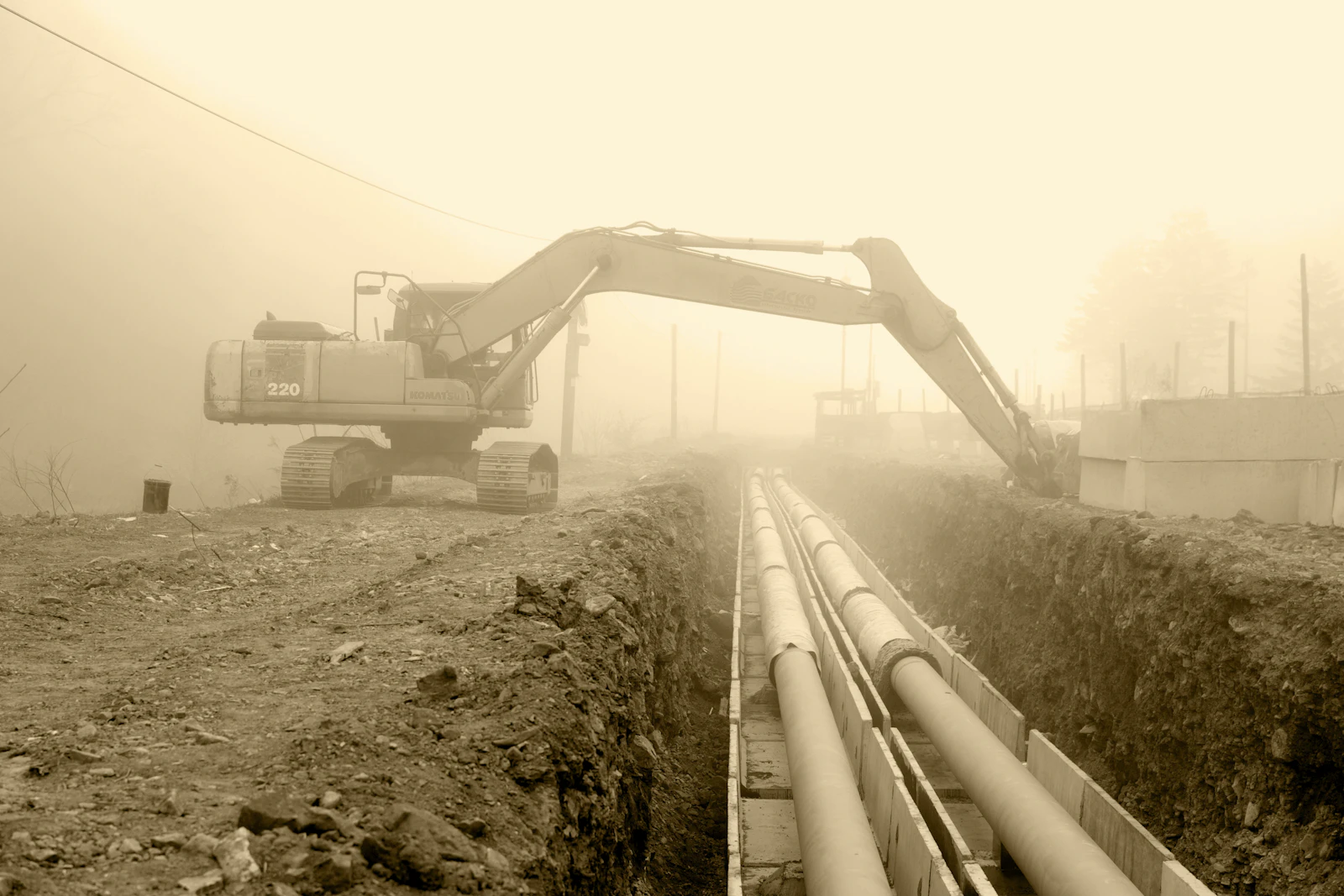
For pipeline equipment hire supporting concrete pump hire in Houston, most contractors won’t see a “standalone pipeline day rate” on quotes—pipeline (slickline/steel pipe + hose + clamps + elbows) is usually bundled into the pumping service and then billed as included footage plus per-foot adders. For 2026 planning in Houston, carry $150–$450/day for a typical 100–150 ft add-on pipeline package beyond what’s included, $600–$1,700/week, and $1,800–$5,500/28-day month (assumes weekday work, normal access, and that you return line clean/ready-to-run). On long-reach placements or multi-drop routing, pipeline adders can exceed the pump’s base minimums quickly if length, labor, washout, and after-hours rules aren’t locked down.
| Vendor |
Daily Rate |
Weekly Rate |
Review Score |
Website |
| Brundage-Bone Concrete Pumping (Houston) |
$2 000 |
$10 000 |
8 |
Visit |
| S.T.A.R. Concrete Pumping Co., Inc. |
$1 500 |
$6 500 |
9 |
Visit |
| Dynamic Concrete Pumping |
$2 200 |
$11 000 |
8 |
Visit |
Pipeline Rental Houston Concrete Pump Hire
In concrete pumping, “pipeline” typically means the delivery system from the pump outlet to the point of placement: straight steel slickline (often in 10-ft sections), elbows, reducers, clamps/gaskets, and the flexible end hose (tip hose). In the Houston market, expect pipeline pricing to be quoted in one of three ways:
- Included footage (e.g., 150–200 ft included) with a per-foot charge beyond that.
- Tiered per-foot charges (cheaper for moderate extensions; higher when you exceed a threshold like 250 ft).
- Labor-and-time driven adjustments (extra hands, port-to-port time, standby/overtime) that effectively reprice pipeline handling even when per-foot looks small.
Published examples show included hose/line packages such as 150’ of 2.5” hose included with a line pump service and a $3/LF charge beyond 150 ft, along with washout fees and hourly overtime tiers. Another published schedule shows 200 ft included and $2.50/ft for 200–400 ft. Industry price sheets also show “extra hose over 150’” billed at $1.50/ft, with minimum hours, fuel surcharge language, and “port to port” billing.
2026 Pipeline Equipment Hire Cost Ranges (Houston Planning)
Assumptions used for the ranges below: concrete pump hired with operator; pipeline is priced as an add-on (or treated as a separate “line set” charge); standard 8-hour weekday shift; normal access within Greater Houston; pipeline returned washed out with no hardened material; no extraordinary permitting or nighttime noise restrictions.
- Pipeline add-on (100–150 ft beyond included): $150–$450 per shift/day; $600–$1,700 per week; $1,800–$5,500 per 28-day month.
- Long-reach pipeline add-on (250–400 ft beyond included): $400–$1,200 per shift/day; $1,600–$4,500 per week; $5,500–$14,000 per 28-day month (driven by higher per-foot tiers and extra labor for handling).
- Steel pipe “hard-line” across drive lanes / protected paths: add $8–$15 per foot per shift when steel is required for traffic protection and hose is not allowed (carry as a risk allowance; confirm with the pumper’s line spec and your GC safety plan).
Reality check: many pumpers will still invoice pipeline as “extra hose/line per foot,” not as a daily rate. Published per-foot adders range from $1/ft (over a small included system), to $1.50/ft (over 150’), to $2/ft (example municipal schedule), to $2.50/ft (200–400’), to $3/ft (over 150’), and tiered models show $2/ft at longer reaches.
What Drives Pipeline Hire Cost More Than Pump Size
Pipeline costs swing hardest with (1) total developed length, (2) the number of direction changes and elevation transitions, and (3) how many times you move/reconfigure the line during the pour. On paper, an extra 150 ft at $1.50/ft is “only” $225—but on site it can trigger:
- Extra handling labor: published examples include $85/hour for an extra man, and other schedules price additional operator labor at $80/hour with a multi-hour minimum.
- More priming and more waste: published schedules show a $25 primer fee, and prime-out / washout containment can be separately charged.
- More washout exposure: “no washout provided” fees are published at $100, $250, $300, and even $350 depending on provider and pump type.
- Time-based billing from travel to return: “port to port” language appears in published schedules, meaning the line set time and cleanup time can effectively bill pipeline handling at the pump hourly rate.
Hidden-Fee Breakdown For Pipeline Equipment Hire
For Houston estimates, treat these as explicit allowances (not contingency), because pipeline charges are commonly “trigger-based” and show up after the pour when dispatch reconciles line footage, labor hours, and cleanup time.
- Minimum charge rules: published examples include a 3-hour minimum and a 4-hour minimum model.
- Weekend premiums: published schedules show Saturday premiums such as +$10/hour and +$25 setup, and Sunday/holiday premiums such as +$20/hour and +$50 setup.
- Overtime tiers: one published example bills $145/hr up to 8 hours, then adds +$35/hr up to 12 hours.
- Fuel surcharges: published fuel surcharge examples include 7% and 12%.
- Washout/containment products: published examples include a $195 charge for pump washout/prime-out bags (with disposal responsibility called out).
- Cancellation / show-up: published examples include $300 cancellation language and “show-up charge equivalent to setup” within a short window such as 2 hours.
- No washout area fees: published examples show $250 (line pumps) and $350 (boom pumps).
- Late fees / commercial terms: published examples include a 10% late fee (with aging terms referenced) that can become a real cost on disputed line-footage reconciliations.
Houston-Specific Cost Drivers For Pipeline And Line Handling
Delivery radius and traffic: Greater Houston’s footprint makes “included travel” a pricing lever. Even when the pipeline itself is billed per foot, you often pay for the crew’s travel and truck time if “port to port” is in the terms. Carry a planning allowance for extra billable time if your site is outside the core loop system or requires crossing toll corridors at peak hours.
Heat/humidity impacts: Summer placements can compress workable windows. Faster set and higher hydration demand can increase line cleaning urgency and the likelihood of a hardened-material cleanup event if trucks stack. Treat cleanup risk as a pipeline cost driver, not just a finishing issue.
Downtown/medical center access constraints: limited staging can force smaller, more frequent pipeline moves (multiple drops), increasing labor hours even if total footage is unchanged. If you anticipate more than two line reconfigurations during a shift, budget an extra handling allowance rather than assuming a single “set and go.”
Example: Houston Pipeline Adders On A Long-Reach Interior Pour
Scenario: interior slab placement requiring 350 ft total developed line from curbside pump position to pour area, routed through a service corridor with two 90-degree turns and floor protection. Crew can only stage materials between 6:00–7:00 a.m. due to building loading rules; off-rent must be called in before 3:00 p.m. to avoid another day’s billing (confirm your supplier’s cutoff).
- Included line: assume 150–200 ft may be included depending on provider. Published examples show 150’ included and 200 ft included structures.
- Extra footage billed: assume 150 ft extra beyond a 200-ft included package.
- Pipeline adder (per-foot): plan using a band of $1.50–$3.00/ft depending on tier and logistics (published examples show $1.50/ft, $2.50/ft, and $3/ft in different schedules). That yields $225–$450 for 150 ft.
- Primer and washout: carry $25 primer plus $100–$350 if washout access is constrained or containment is required (published examples show $100 and $250–$350 “no washout” style fees).
- Extra labor: if the corridor requires dedicated line tending, carry $85/hour for an extra man as a planning reference and cap it with a minimum-hour expectation.
Estimator takeaway: on constrained Houston interiors, it’s common for pipeline-related adders (extra line + washout/containment + added labor) to land in the $500–$1,500 range for a single shift even when the pump minimum itself is unchanged.
Budget Worksheet (Pipeline Equipment Hire Allowances)
- Base pipeline allowance (beyond included footage): $150–$450 per shift (typical 100–150 ft add-on).
- Long-reach pipeline allowance: $400–$1,200 per shift (250–400 ft add-on).
- Per-foot escalation reserve: 150 ft x ($1.50–$3.00/ft) = $225–$450 (adjust to your takeoff).
- Steel hard-line / protected crossing reserve: 50 ft x ($8–$15/ft) = $400–$750 (only when required by the site plan).
- Primer/priming grout allowance: $25–$75 (use published $25 as a floor).
- No-washout / containment allowance: $100–$350 depending on access and pump type.
- Fuel surcharge allowance: 7%–12% applied to billable services.
- Weekend premium allowance (if applicable): +$10/hr Saturday; +$20/hr Sunday/holiday; plus setup adders.
- Cancellation/show-up risk allowance: $300 or “setup-equivalent” if schedule is fluid.
Rental Order Checklist (Pipeline/Line Items To Lock Before Dispatch)
- Confirm included footage and diameter (e.g., 2.5" hose vs steel slickline) and how additional footage is measured (developed length vs straight-line).
- Specify maximum required footage and routing constraints (interior corridors, turns, vertical rises, protection needs).
- Document billing basis: port-to-port vs on-site only; minimum hours; weekend/holiday rates; overtime tiers.
- Identify who supplies labor for setup/breakdown and cleanup assistance (some published terms place setup/breakdown labor responsibility on the customer).
- Washout plan: location, containment method, disposal responsibility; confirm applicable fees.
- Return condition documentation: photos of cleaned line, caps installed, and any wear/damage noted at off-rent.
- Cutoff times: delivery window, off-rent call-in deadline, and return/cleanup completion expectations (especially on multi-day placements).
How To Take Off Pipeline Footage For Concrete Pump Hire
Pipeline cost control starts with a takeoff that matches how pumpers bill. For Houston placements, build your takeoff around developed length (every horizontal and vertical segment), and explicitly count:
- Vertical rise (stairs, elevated decks, podium slabs). Even when billed per foot, vertical routing usually increases handling time and the number of elbows/clamps required.
- Turns and transitions (each 45°/90° change is more setup time and more leak points to manage).
- Drop count (number of times the crew must relocate discharge). A “single pour area” is not the same as “single discharge location.”
Once you have a measured developed length, align it to the provider’s included footage. Published included values include 150’ of 2.5” hose and 200 ft of hose in different schedules.
Per-Foot Pipeline Adder Strategy For 2026 Budgets
For 2026 Houston budgeting, you can build a realistic pipeline adder band without guessing vendor-specific pricing by anchoring to published per-foot examples:
- Short extension band: $1.00–$1.50 per foot (published examples show $1/ft over a small included system and $1.50/ft over 150’).
- Mid extension band: $2.00–$2.50 per foot (published examples show $2/ft and $2.50/ft ranges).
- High-handling / long-line band: up to $3.00 per foot where logistics are tight or where the provider’s schedule explicitly prices $3/LF beyond included length.
Houston note: even if your vendor’s per-foot number is “low,” the real pipeline cost can still rise through minimum-hour billing and added labor to manage line inside active facilities. Published schedules show minimums such as 3 hours and 4 hours.
Damage Waiver, Deposits, And Why Pipeline Condition Matters
Pipeline components look rugged, but concrete pumping line systems are wear items. When you’re effectively “hiring” pipeline through a pumping service, you’re still financially exposed to damage and abnormal cleaning. Even if your vendor does not line-item a damage waiver, you should treat it as a cost risk and manage it like one.
To quantify the exposure for internal budgeting: published parts pricing examples show individual delivery hoses and tip hoses in the $475–$525 range, elbows around $75–$99, and some delivery pipe listings at $99 (example sales sheet pricing). If your job grinds line on rebar chairs, drags it across sharp deck edges, or allows hardened buildup, replacement/repair costs can stack quickly across multiple components.
2026 planning allowances (Houston): carry a $500–$2,500 refundable deposit/hold risk for pipeline-only rentals (when available), and a 8%–15% damage waiver band if your organization’s rental policy expects it (verify the provider’s actual waiver structure).
Return-Condition Rules That Commonly Change The Invoice
Pipeline hire cost is highly sensitive to what happens in the last 45 minutes of the shift. Align your superintendent and placing crew with these expectations to avoid surprise line items:
- Washout access is non-negotiable: published “no washout” fees range from $100 to $250 to $300 to $350. If your site cannot provide a washout area, decide in advance whether you’ll pay the fee, supply containment, or relocate washout.
- Prime/primer fees and prime-out materials: published examples include a $25 primer fee and separate charges for washout/prime-out bags.
- Off-rent timing: if you miss the vendor’s dispatch cutoff, you can unintentionally buy another billable day even if the line physically leaves the site. Treat off-rent call-in as a closeout deliverable.
- Documentation: take time-stamped photos of cleaned line, caps installed, and the washout location condition to protect against disputed cleanup charges.
Operational Controls For Houston Rental Coordinators
Use these controls to keep pipeline equipment hire aligned to estimate:
- Specify included footage in the PO and add a not-to-exceed for additional line footage unless authorized.
- Pre-approve line routing (especially interior) so the crew doesn’t discover turns/doorways that force an additional 100–200 ft at the last minute.
- Confirm who supplies setup/breakdown labor. Published terms can assign setup/breakdown assistance to the customer, which becomes a real labor cost if your crew is not staffed for line handling.
- Schedule trucks to prevent stacking. Pipeline is most likely to harden when trucks wait and the operator can’t keep line moving—leading to abnormal cleanup exposure.
- Plan for overtime and weekends if Houston traffic or site windows compress your day. Published schedules show Saturday overtime and explicit weekend premiums.
When Pipeline Hire Should Be Quoted Separately
Ask for a separate pipeline (slickline) line-item quote—rather than accepting a generic “extra hose” number—when any of these apply:
- Long reach (total developed line expected to exceed 250 ft), because tier changes are common in published schedules.
- Multiple placements (more than 2 discharge locations), because labor hours often outrun per-foot economics.
- No washout certainty, because published fees are material and vary by pump type.
- Facility interiors requiring floor protection and spill controls, where cleanup and documentation requirements are stricter.
Closeout: A Practical 2026 Pipeline Hire Budget Rule
For Houston concrete pump hire planning, a workable budgeting rule is to treat pipeline as a measured utility: take off the developed length, subtract the included baseline (often 150–200 ft), then price the remainder at $1.50–$3.00/ft and add explicit allowances for washout/containment, primer, fuel surcharge, and at least one hour of extra handling labor on constrained sites. This approach matches the way published schedules structure “extra hose” and washout fees, and it reduces the chance that pipeline costs surprise you at invoice reconciliation.