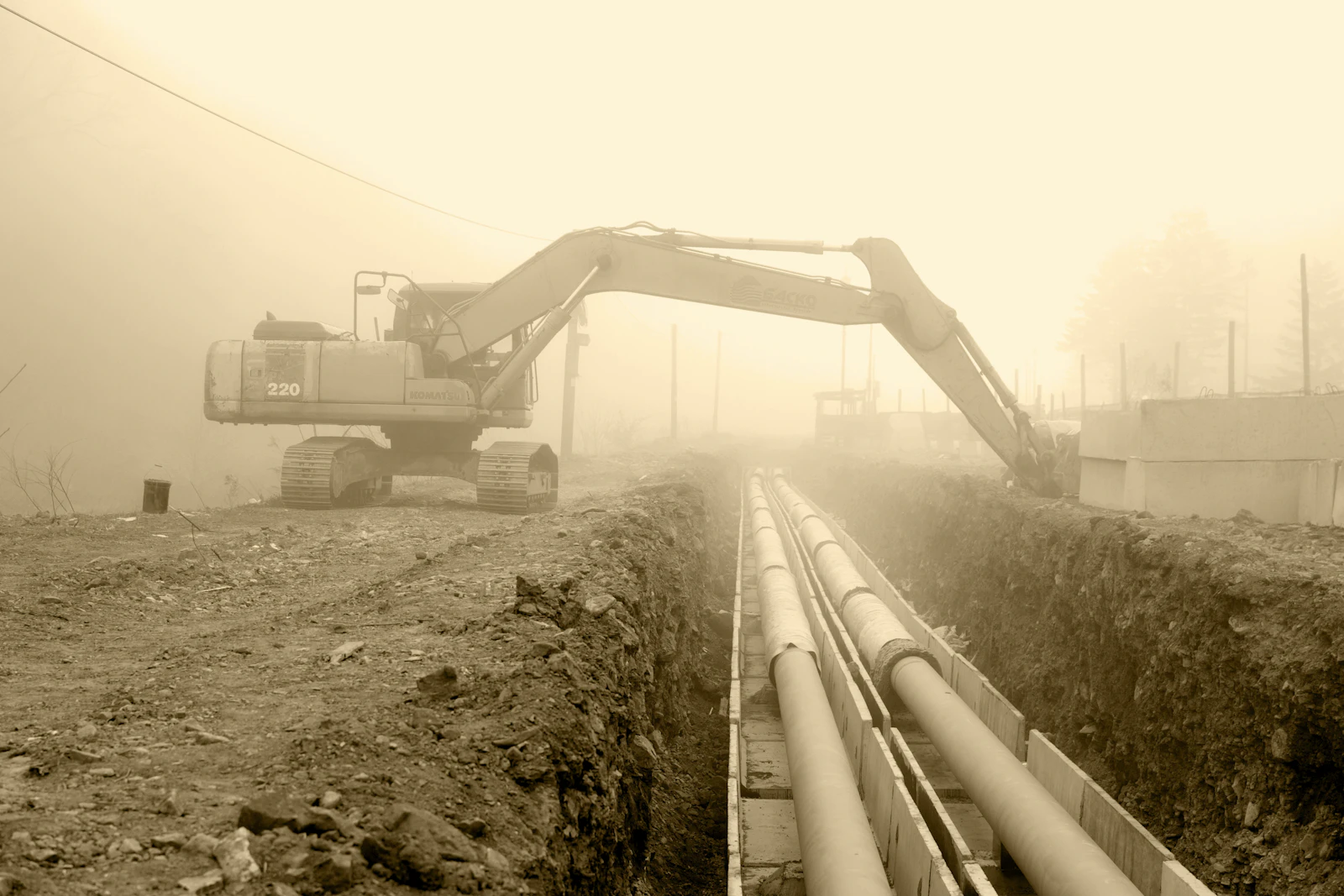
Pipeline Rental Rates Los Angeles 2026
For 2026 budgeting in Los Angeles, “pipeline” is rarely hired as a stand-alone item; it is typically bundled into an operated concrete pump hire ticket (line pump or boom pump) with a standard included length of hose/line, then billed as an extra pipeline/placing line adder when you exceed the included footage or require specialty steel line routing. As planning ranges for LA work, budget $0.50–$3.00 per additional foot of concrete pump pipeline (hose or steel placing line) beyond the included package, which commonly equates to $50–$300 per extra 100 ft per shift/day, $250–$1,500 per week (5 shifts), and $1,000–$6,000 per month (20 shifts) depending on diameter, routing complexity, and who provides handling labor. Independents and regional pump providers (for example, local operators publishing rate sheets similar to Phil’s Concrete Pumping and other LA-ready-mix/pump combos) can look inexpensive on base minimums but vary materially on pipeline adders, washout/disposal, standby rules, and weekend premiums—so the “pipeline hire cost” you actually pay is driven by ticket structure and site logistics as much as the pipe itself.
| Vendor |
Daily Rate |
Weekly Rate |
Review Score |
Website |
| Brundage-Bone Concrete Pumping (Los Angeles) |
$1 750 |
$7 800 |
8 |
Visit |
| The Conco Companies (Conco Pumping – Southern California) |
$1 700 |
$7 600 |
9 |
Visit |
| De Leon Concrete Pumping |
$1 400 |
$6 300 |
7 |
Visit |
| Los Angeles Concrete & Framing Co. (LACFCO) |
$1 550 |
$6 900 |
9 |
Visit |
| PJ Concrete Pumping |
$1 450 |
$6 500 |
8 |
Visit |
What “Pipeline” Means For Concrete Pump Equipment Hire
In Los Angeles concrete pump hire, “pipeline” usually refers to the placing system used to move concrete from pump outlet to point of placement. Depending on the pour, your pipeline package may include:
- Flexible hose (commonly 2.5" hose on many line pumps) for residential/backyard routing.
- Steel placing line / slickline (often 3", 4", or 5" hard line in 10 ft sticks) for longer runs, reduced friction loss, and better control around tight bends.
- Fittings and accessories (reducers, elbows, clamps/couplers, gaskets, end hose/whip hose, pipe stands, safety whip-checks, and cleanout gear).
From a rental coordinator’s perspective, the key is that pipeline isn’t just “feet of pipe.” It is feet + fittings + handling time, and most invoices expose that through per-foot adders, per-yard adders, minimum-hour rules, and cleanup/washout requirements.
How Concrete Pump Pipeline Hire Is Billed In Los Angeles
LA pipeline equipment hire costs for concrete pumping are most often embedded in one of three billing models. Knowing which model you’re being quoted is the fastest way to avoid scope gaps and line-item disputes.
1) Base minimum (or set-up) includes a standard pipeline length, then per-foot adders
This is common on smaller line pump dispatches and is where “pipeline hire cost” shows up as an extra-line adder. Examples from published rate structures include:
- Set-up including 1st hour + 200 ft hose published at $325, then $125/hour thereafter; extra hose/pipeline $2.50/ft from 200 ft to 400 ft.
- Another published base service structure shows $525 including 100’ of line and 8 yards, then an additional line charge of $0.50 per foot beyond 100 ft and $15 per yard beyond 8 yards.
- A ready-mix/pump service serving Los Angeles County states 200 ft of hose included, then $2.50 per additional foot of hose beyond 200 ft.
2) Minimum-hours + hourly pump time, with pipeline treated as an additional-material/extension charge
Published West Coast-style line pump structures often start with a minimum, include a defined hose allowance, then charge hourly after the minimum and per-foot after included hose. One published example shows $650 as a 4-hour minimum including 1 hour travel time, initial set-up, and 150’ of 2.5” hose, plus $6 per yard pumped; after 4 hours, $145/hour up to 8 hours, then an additional $35/hour up to 12 hours; extra hose beyond 150 LF at $3/LF.
3) “All-in day/shift equivalent” planning (internal estimating only)
If you’re building an internal budget for a multi-pour LA job (e.g., a podium deck sequence or multiple mats), it’s often practical to convert minimums, hourly, and pipeline adders into a shift-equivalent daily/weekly/monthly allowance. For Los Angeles concrete pump pipeline equipment hire costs, a workable 2026 estimator structure is:
- Pipeline add-on (per-foot method): $0.50–$3.00 per additional foot over included line, plus fittings and handling labor allowances.
- Shift-equivalent daily (pipeline-only adders): $50–$300 per extra 100 ft per shift/day (derived from the per-foot structure above).
- Weekly: $250–$1,500 per extra 100 ft (5 shifts).
- Monthly: $1,000–$6,000 per extra 100 ft (20 shifts).
Assumptions: pipeline is returned same-day in acceptable condition; no extraordinary traffic control; no long-distance travel premiums; and the vendor’s included footage is documented on the dispatch/ticket. When those assumptions break (DTLA curb control, hillside access, interior dust-control restrictions, or late ready-mix), pipeline “rent” is usually not the overrun—standby time and re-mobilization are.
Cost Drivers That Move Pipeline Equipment Hire Costs In The LA Basin
Los Angeles pricing variance is usually driven by constraints that change how much line you need and how long the placing system stays deployed. The most common cost drivers to call out in a scope letter or subcontract exhibit are below.
Included footage vs. actual routing
Two projects with the same yardage can have very different pipeline hire costs: a straightforward curb-adjacent placement might stay within an included 100–200 ft package, while a gated rear-yard, school campus, or interior mat pour can push total routing to 250–450 ft. At LA-typical published adders like $0.50/ft or $2.50/ft, an extra 150 ft is either $75 or $375 per pour before fittings and labor.
Fittings, reducers, and vertical changes
Steel placing line “feet” can be the easy part. Elbows, reducers, and transition hoses often drive handling time and loss risk. For 2026 planning (not vendor pricing), many contractors carry allowances such as:
- Reducer/transition allowances: $25–$75 per day each (common for 5" to 4" or 4" to 3" transitions depending on pump and mix).
- Elbow allowances: $15–$45 per day each (90°/45° steel elbows are high-wear and easy to lose/damage).
- Clamp/coupler and gasket loss exposure: $10–$30 per missing clamp and $2–$6 per gasket (small-dollar items that become large when the return condition is sloppy).
Handling labor and “extra man” exposure
Long line runs and interior routing can require a hose-hand, spotter, or additional labor for line moves. Even if the vendor doesn’t list an “extra man” line-item, the cost can surface as longer portal-to-portal hours or standby exposure. On LA schedules, a single extra hour at $125/hour or a per-minute overage structure can dwarf the pipe footage itself.
Access, curb control, and dispatch windows (Los Angeles-specific)
In Los Angeles, pipeline routing and cost are heavily influenced by where you can stage. DTLA/Hollywood/Koreatown jobs routinely require curb reservations, lane control, or timed arrivals to avoid paid waiting. If your pour is scheduled for a narrow window (e.g., early morning concrete), you should budget:
- Traffic-control/flagging allowance: $65–$95/hour per flagger (site-driven; confirm jurisdiction and union requirements).
- Permit/curb reservation allowance: $250–$1,000 per event (varies by location and scope).
- Re-position / move exposure: $20–$50 per equipment move is a published negotiable range on at least one Southern California sheet, and moves also add time.
Hidden-Fee Breakdown (Pipeline And Concrete Pump Hire)
These are the ticket adders that routinely cause pipeline equipment hire cost overruns in Los Angeles concrete pump hire. Where a number is from a published sheet, it’s noted; otherwise it’s a planning allowance you should validate in your quote request.
- Extra pipeline/line footage: published examples range from $0.50/ft over 100 ft to $2.50/ft beyond 200 ft (and other guidance notes $1.50–$3.00/ft as a typical extension band).
- No-washout / washout management fee: published example $300 when no washout area is available; other guidance suggests $250–$450 is common depending on pump type/market.
- Primer / slick-pack: published guidance notes 1–2 bags of primer often billed $40–$80; one 2026 rate sheet example shows $40 per bag of primer.
- Weekend premiums: one SoCal sheet shows +$10/hour and +$25 on set-up for Saturdays, and +$20/hour and +$50 on set-up for Sundays/holidays.
- Standing/overage time: one LA-serving provider states a production expectation of 4 minutes per yard, then a charge of $2.50 per additional minute.
- Cancellation / short-notice dispatch: published examples include a show-up charge equivalent to the set-up rate if not cancelled at least 2 hours prior, and another LA-serving provider states a $450 cancellation fee.
- Fuel and environmental surcharges: one SoCal sheet lists $35 fuel surcharge and $15 environmental surcharge per show-up.
- Payment/closeout friction: one LA-serving provider states $100 if staff must return to collect payment, a $1,500 late fee if not received by end of business day, and a 4% credit card surcharge—these are not “pipeline charges,” but they hit the same ticket.
Example: Backyard Slab With Long Pipeline Run (Silver Lake)
Scenario: 18 CY backyard slab in Silver Lake with narrow access; pump stages curbside and must route line through side yard with hose protection mats. Access requires careful staging to avoid blocking driveways; washout area is designated, but space is tight and line moves are slow.
Planning method: use a published base structure as a benchmark, then add LA-specific risk allowances.
- Base service: $525 including 100’ of line and 8 yards.
- Additional yards: 10 extra yards at $15/yard = $150.
- Additional line: measured route requires 260 ft total; 160 ft over included 100 ft at $0.50/ft = $80.
- LA logistics allowances (estimator-controlled): $150–$350 for hose/line protection, spotter time, and slow line moves (confirm who supplies labor and protection).
- Contingency for standby: 1 hour at a typical published hourly benchmark such as $125/hour = $125 (only if ready-mix sequencing is uncertain).
Result: even with “cheap” pipeline footage, the cost control lever is operational discipline: confirm included footage, measure the route, protect finishes, and coordinate truck spacing so you don’t buy an extra hour of standby because the second truck is late.
Practical Controls To Keep Pipeline Equipment Hire Costs Predictable
- Pre-walk the pipeline path and mark intended routing length (in feet) on the pour plan. Don’t guess.
- Define return condition in writing: flushed, capped, no concrete build-up on clamps/couplers, and photographs at pickup/return.
- Lock a delivery/callout cutoff (LA traffic makes “late arrival” a predictable risk). Ensure the dispatch has your gate code, staging plan, and a contact who can clear curb space.
- Confirm washout and slurry containment location before the pump arrives; otherwise you risk a published washout charge like $300 or a market-typical $250–$450 range.
Budget Worksheet For Pipeline Equipment Hire (Use As A 2026 Allowance Builder)
Use this as a non-table checklist to build a Los Angeles pipeline equipment hire cost allowance that matches how concrete pump hire is actually invoiced.
- Base concrete pump hire minimum: confirm set-up/minimum structure (examples published include $325 set-up including 1st hour + 200 ft hose, or $525 base including 100’ line + 8 yards, or $650 4-hour minimum including travel and 150’ hose).
- Included pipeline footage: document included 100 ft, 150 ft, or 200 ft (whatever the vendor states) and measure expected route.
- Additional pipeline/placing line: allowance at $0.50–$3.00 per additional foot (use the vendor’s published number where available; otherwise carry a conservative internal allowance).
- Additional yardage charge: carry per-yard adders beyond included thresholds (examples include $15/yard over 8 yards and $6/yard pumped on another structure).
- Primer/slick pack: allowance for 1–2 bags at $40–$80 total (or use published $40/bag where applicable).
- Washout compliance: $0 if owner-provided washout is accepted; otherwise carry $250–$450 exposure (one published example is $300).
- Weekend/after-hours premium: allowance for Saturday/Sunday differentials (published examples include +$10/hour Saturday and +$20/hour Sunday, plus set-up adders).
- Traffic control / curb management (DTLA-heavy scopes): allowance $250–$1,000 for permit/curb control and $65–$95/hour per flagger (validate per jurisdiction and project labor conditions).
- Damage waiver / insurance: allowance 10%–15% of rental/service subtotal if the provider offers a damage waiver in lieu of COI endorsements (confirm program details).
- Deposit / credit hold: allowance $500–$2,500 depending on whether pipeline is treated as a rentable asset with loss exposure.
- Cleaning / return condition: allowance $150–$500 if returned with concrete buildup or missing caps; add a higher allowance for steel line used in interior pours with strict housekeeping.
Rental Order Checklist For Concrete Pump Pipeline Hire
- PO and scope: specify “pipeline/placing line length required (ft), diameter, and fittings list (reducers/elbows/end hose).”
- Jobsite details: address, cross street, and LA-specific constraints (no-staging zones, school hours, film/parking restrictions, narrow hillside access).
- Delivery window: confirm cutoff times and whether billing is jobsite-only or portal-to-portal. If the supplier uses timed windows, record them; one LA-serving provider references 2-hour delivery windows and pump setups arriving 30 minutes before the mix.
- Concrete mix notes: pea gravel vs 3/8" vs larger aggregate, lightweight, or high-PSI mixes; confirm if a special slurry/primer requirement changes costs.
- Washout plan: location, containment, and who provides water/wheelbarrow if required by vendor terms.
- Protection and access: specify hose protection boards/mats, corner guards, and dust-control requirements for interior routing.
- Onsite sign-offs: who signs the pump ticket, who tracks total line footage deployed, and who approves any added line or moves.
- Return/off-rent: define off-rent time, return location, and required return documentation (photos of pipe IDs if present, count of clamps, elbows, reducers).
Off-Rent Rules And Return-Condition Documentation (Where Pipeline Costs Blow Up)
Pipeline is a high-loss accessory category: clamps walk off, reducers disappear, and concrete build-up turns “cheap per-foot” into a repair/cleaning invoice. For Los Angeles concrete pump pipeline equipment hire costs, set internal controls that match how vendors protect themselves:
- Same-day off-rent cutoff: if the pipeline is not flushed, de-rigged, and ready by the vendor’s cutoff, you can get billed another day/shift. Carry an internal cutoff assumption (e.g., 2:00–4:00 PM) and validate on the order.
- Photo documentation: take pre-pour photos of all fittings staged and post-flush photos showing clean ends/caps installed.
- Counting protocol: count sticks/hoses and all couplings at load-out and return (missing $10–$30 clamps add up quickly, and specialty reducers can be materially more).
- Indoor work: budget extra time for line moves, protection removal, and controlled washdown—this commonly shows up as more billed hours rather than “more pipeline.”
When Owning Pipeline Beats Hiring In Los Angeles
If your company self-performs frequent line-pumped placements (recurring ADU foundations, multi-lot sidewalks, or repetitive interior pours), owning pipeline can outperform hiring when three conditions are true:
- High repetition: you regularly exceed included hose (e.g., needing 250–400 ft routing) and pay per-foot adders on most pours.
- Controlled storage and loss prevention: you can store and inventory clamps/fittings so you are not repurchasing missing accessories via backcharges.
- Labor planning: you can staff hose handling and cleanup so the pump operator is not burning billable time on tasks your crew can do faster.
Even when you own pipeline, you’ll still see pump-vendor charges for primer, standby, washout compliance, and weekend premiums. The financial win is reducing repeated per-foot adders and minimizing missing/damaged accessory backcharges through better inventory discipline.
Los Angeles Planning Notes For 2026 Scheduling
- Traffic is a cost item: if your contract is portal-to-portal or includes travel time inside the minimum, you still need to plan your ready-mix sequence to prevent standby. Published structures show hourly billing after minimums (e.g., $125/hour or $145/hour) where a single delay can erase any savings from a low pipeline-per-foot rate.
- Weekend pours change the math: published weekend premiums (e.g., +$10/hour Saturday, +$20/hour Sunday/holiday plus set-up adders) should be treated as a schedule-driven cost, not “unexpected fees.”
- Washout is non-negotiable: if your site cannot support washout containment, carry the published $300 example or a conservative $250–$450 range and decide in advance who owns that exposure (GC vs concrete sub vs pump service).