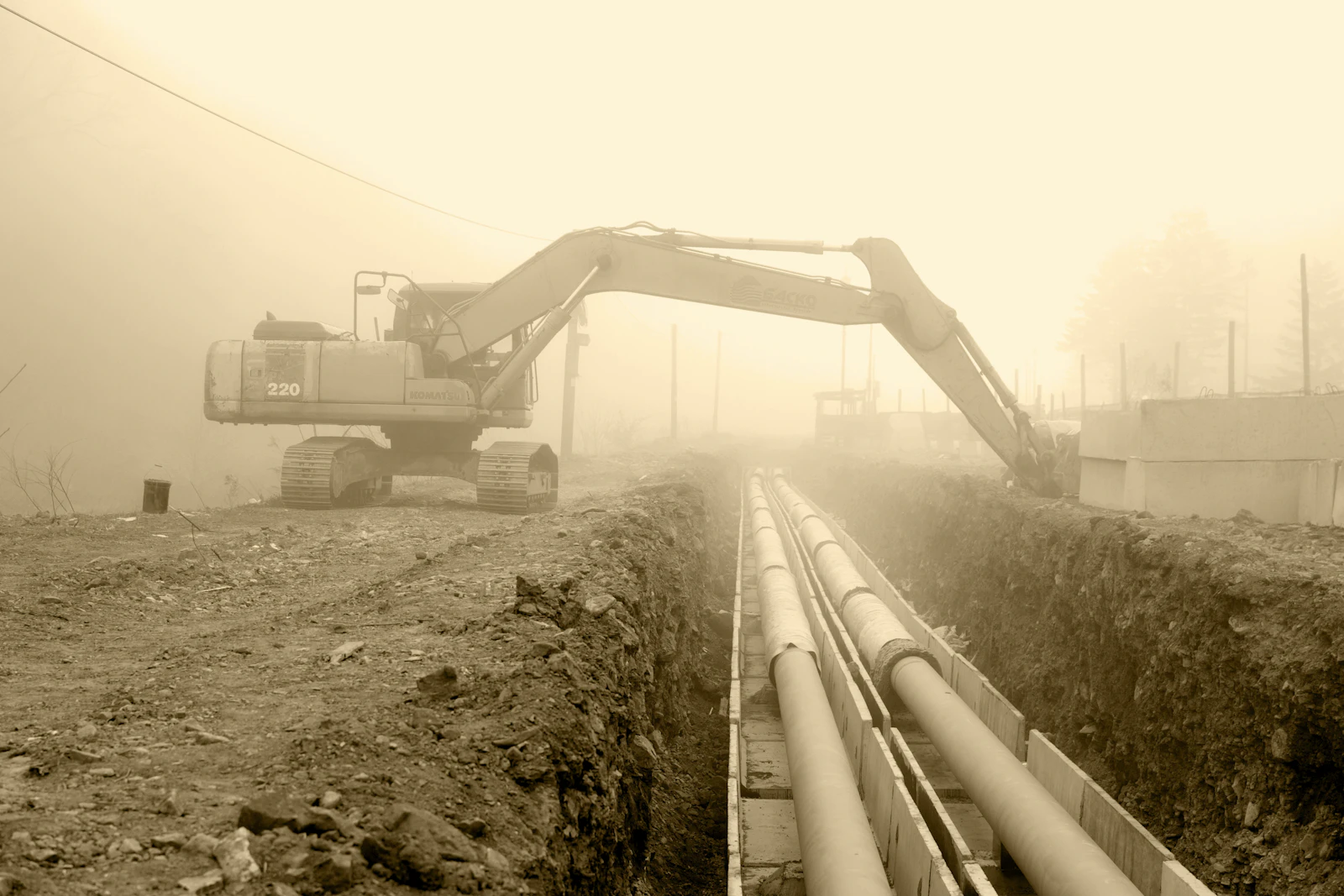
Pipeline Rental Rates Philadelphia 2026
For pipeline equipment hire supporting concrete pump hire in Philadelphia in 2026, most rental coordinators should budget by line-set length and accessories rather than by “one-size” day rates. As a planning range, a typical 100–150 ft slickline package (steel pipe, clamps, gaskets, 1–2 elbows, and a short end hose/whip) commonly lands around $175–$450 per day, $525–$1,250 per week, and $1,450–$3,250 per 4-week month for equipment-only pipeline hire, assuming standard wear class and normal return condition. If you’re sourcing the line as an add-on through a pumping subcontractor (common in Philly), published examples show extra line often priced per foot beyond an included length, such as $0.50/ft, $1.00/ft, $1.50/ft, and $2.00/ft depending on provider/terms and what is “included” in the base.
| Vendor |
Daily Rate |
Weekly Rate |
Review Score |
Website |
| MCH Concrete Pumping Inc. |
$950 |
$4 500 |
8 |
Visit |
| Madison Concrete Pumping (Madison Concrete Construction) |
$1 750 |
$8 000 |
7 |
Visit |
| Andrien Concrete (Pump Rental) |
$900 |
$4 200 |
10 |
Visit |
| City Mini Mix |
$1 050 |
$4 900 |
9 |
Visit |
| Healy Long & Jevin (HLJ) Concrete Pump Rentals |
$2 200 |
$9 500 |
8 |
Visit |
What Pipeline Equipment Hire Covers For Concrete Pumping
In concrete pumping, “pipeline” typically refers to the slickline/pumping line and accessories that carry concrete from the pump outlet to the point of placement. Industry references describe the pumping line as the pipeline (slickline) including couplings, intermediate/end hoses, bends, transitions/reducers, and supporting hardware.
Most Philadelphia scopes treat slickline as modular, with straight pipe provided in standard lengths (commonly 10 ft sections) and then configured on site with clamps, gaskets, and elbows to match access constraints and pour sequence.
For estimating and PO description, a “pipeline equipment hire” package usually needs:
- Straight steel slickline sections (e.g., 3 in, 4 in/DN100, 5 in/DN125), typically counted in 10 ft increments.
- Coupling clamps and pins (expect clamps to be tracked as serialized or counted inventory).
- Gaskets (often treated as consumables; confirm whether they’re included or billed if missing/damaged).
- Elbows (45°/90°), plus one or more reducers (e.g., 5 in to 4 in, or 4 in to 3 in) when you must transition to hose or manage aggregate size limits.
- End hose/whip hose and restraints (where used), plus wear items like sponge balls/cleanout accessories if required by the supplier.
- Pipe rack or jobsite storage method (especially if you’re holding pipeline across multiple pours and want to avoid damage/loss).
How Length, Diameter, And Wear Class Drive Pipeline Hire Costs
Pipeline hire cost scales nonlinearly with length because accessories and handling risk grow with every additional stick. Use these planning assumptions for Philadelphia concrete pump pipeline rental rates in 2026:
- Length allowances: Many pumpers include a base line length in their service price (often around 100–150 ft), then apply a per-foot adder. Published examples show base-included line lengths and adders such as: base including 100 ft then $0.50/ft after that, or pricing that adds $1.00/ft after 150 ft.
- Diameter and pressure: 5 in slickline with heavy-wall ends typically rents higher than 4 in/DN100 because it’s heavier to handle, harder to keep undamaged, and commonly specified for higher-volume placements. Budget +15% to +35% for heavy-wall/“HD ends” inventory versus standard ends when the supplier differentiates wear class.
- Verticals and elbows: Every 90° elbow you add is both an equipment adder and a wear/plug risk. Carry $12–$25 per day per steel elbow (or $35–$80 per week) as a planning allowance when elbows are itemized separately rather than bundled.
- Reducers and transitions: Reducers tend to be billed as a distinct line item when not included. Carry $15–$30 per day per reducer (or $45–$95 per week) depending on size and wear class.
- End hose / whip: If you need an end hose, budget $25–$60 per day (or $75–$180 per week) for the whip/end hose rental, plus $10–$25 for restraints/whip checks if billed separately.
Estimator note: If you are buying pipeline access through a pumping subcontractor rather than renting equipment-only, published schedules show the market often treats added line as a per-foot charge (e.g., $1.50/ft over 150 ft on one published sheet, and $2.00/ft in another published set of terms).
Philadelphia Logistics That Change Your Pipeline Equipment Hire Invoice
Philadelphia pipeline equipment hire costs are highly sensitive to delivery windows, jobsite access, and return timing because slickline is bulky and typically delivered on a flatbed or rack truck.
- Delivery / pickup charges: Plan $225–$450 each way for metro Philadelphia delivery/pickup of a pipeline rack package, or a mileage model such as $160–$200 loading/unloading each way plus $4.00–$6.50 per mile (benchmarks are commonly published in contract rate sheets for other heavy rental categories).
- Center City constraints: Tight streets and limited staging frequently force early delivery. Budget +$150–$300 for after-hours/early-window delivery (e.g., before 7:00 AM), and assume the driver may require a contact + unload plan to avoid demurrage.
- Bridge/toll and route constraints: If your pipeline is crossing from NJ yards (or your job is on the riverfront with limited access), carry $35–$125 in “route premium” allowance for tolls/permit routing or extended travel time, depending on who holds the trucking scope.
- Winter and washout reality: In freeze periods, washdown/washout operations take longer and sometimes require protected washout containment. Carry +0.5 hr of site time impact for cleanup coordination (even if pipeline is equipment-only, the return condition depends on field washout discipline).
Hidden-Fee Breakdown For Pipeline Equipment Hire
Pipeline rental invoices get expensive when “non-rental” lines stack up. For Philadelphia concrete pump pipeline hire, carry these as explicit allowances so the PM is not surprised at closeout:
- Minimum rental period: Commonly 1 day minimum for short-term pipeline equipment hire, even if used only for a partial shift.
- Weekend/holiday billing: If you take delivery Friday and return Monday, many suppliers bill the weekend unless you negotiate “weekend free” terms. Carry a 15% weekend premium or assume a minimum 3-day billing window on short hires.
- Off-rent rules: Common cutoff is “off-rent when checked in,” not when your crew stops using it. Carry 1 extra day contingency if you are returning after the yard’s receiving cutoff (often early afternoon such as 2:00 PM).
- Damage waiver: Typical rental waivers run 10%–15% of rental charges. (Confirm whether it covers dents/bends vs. only catastrophic loss.)
- Cleaning / return condition: “No washout area” and dirty returns are frequent backcharges in pumping operations; published price sheets show line items like a $250 no-washout-area fee for line pumps and $350 for boom pumps in at least one published schedule. For pipeline-only hire, carry $200–$500 as a realistic cleaning/handling contingency if your site plan does not include an approved washout location.
- Missing components: Carry unit backcharges such as $35–$85 per missing clamp, $3–$12 per missing gasket, and $25–$60 per missing pin/safety clip depending on the coupling system.
- Premium time for deliveries/returns: If the supplier schedules premium time, published terms in pumping services can include premiums such as $95/hour on Saturdays/Sundays/holidays (your rental house may price differently, but the risk is real—carry a premium-time allowance when access restrictions force weekend moves).
- Overweight/permit admin: If the delivery vehicle requires permitting or special routing, published terms can include adders such as $50 overweight permit fees and other permit fees in the $100 range. Carry $50–$250 as an admin/permit allowance for congested Philly corridors or restricted staging plans.
Budget Worksheet (Pipeline Equipment Hire)
Use this no-table worksheet to carry a clean 2026 budget for pipeline equipment hire on Philadelphia concrete pump work.
- Base pipeline equipment hire (100–150 ft): $175–$450/day (or $525–$1,250/week).
- Extra pipeline length beyond base (allowance): 150 ft × $0.25–$0.75/ft-day = $38–$113/day (equipment-only planning factor; confirm supplier’s model).
- Steel elbows (allow 2): 2 × $12–$25/day = $24–$50/day.
- Reducer (allow 1): 1 × $15–$30/day.
- End hose/whip (allow 25–50 ft): $25–$60/day.
- Pipe rack / dunnage / banding (jobsite control): $45–$120/week for a rack or restraint kit (or internal lumber/rigging allowance if self-provided).
- Delivery + pickup (metro): $225–$450 each way, or mileage-based equivalent (carry $500–$900 total).
- Damage waiver: 10%–15% of rental subtotal.
- Cleaning/return-condition contingency: $200–$500 (increase if no washout area is planned; published pumping sheets show $250 no-washout-area fees).
- Loss/damage contingency: $250–$1,000 depending on exposure (urban sidewalk storage, multiple trades, or overnight staging).
Example: Center City Slab Pour With A 260 ft Line Set
Scenario: You have a Center City Philadelphia garage slab pour where the pump can’t set close to the placement due to lane closure limits. The pump subcontractor includes 150 ft, but you need an additional 110 ft of pipeline to reach the back of the bay, plus two extra elbows to navigate around columns.
Planning cost build (illustrative):
- Equipment-only pipeline hire for 260 ft total line: $325/day base + ($0.40/ft-day × 110 ft extra) = $369/day (equipment-only model).
- Accessories: 2 elbows × $18/day = $36/day; 1 reducer = $22/day; end hose = $45/day.
- Delivery constraints: Early delivery window add = $200; delivery + pickup = $700 total.
- Risk adders: Damage waiver at 12% on rental lines; cleaning contingency $350 due to limited washout space.
Operational constraint: If the supplier’s billing is instead “included line + per-foot adder” through the pumping service, published examples show adders ranging from $0.50/ft after 100 ft to $1.00/ft after 150 ft to $1.50/ft over 150 ft and even $2.00/ft under certain terms—so the same extra 110 ft can swing from $55 to $220 as a line-item before you account for time, labor, or weekend premium.
Rental Order Checklist
Use this checklist to reduce backcharges and keep pipeline equipment hire aligned to the concrete pump schedule.
- PO scope language: List total feet and diameter (e.g., “5 in slickline, 260 ft total”), include elbows/reducers/end hose, and clarify whether clamps/gaskets are included.
- Delivery requirements: Confirm delivery date/time window, site contact, unload method (forklift/crane/manual), and where the rack will be staged.
- Street access plan: Confirm curb space, cones/flaggers, and whether the driver can idle/unload without blocking lanes (Center City often requires a tighter plan).
- Off-rent instructions: Confirm the supplier’s receiving cutoff time and the exact definition of “off-rent” (call-in vs. check-in).
- Return condition: Confirm cleaning expectation, whether sponge balls/cleanout are required, and what documentation the supplier expects (photos of line condition, clamp count, and rack condition).
- Loss prevention: Assign custody to one foreman, tag/count clamps and gaskets at delivery, and store on a rack—not scattered across floors.
Risk, Compliance, And Return-Condition Standards That Affect Hire Cost
Concrete pumping line is safety-critical. Industry guidance describes the concrete pumping system as including the pipeline (slickline) and associated bends, couplings, transitions, and supporting structures—and emphasizes designing, installing, testing, and operating to stringent requirements (including manufacturer specifications).
From a cost-control standpoint, this matters because suppliers will backcharge for conditions that create safety risk or require their shop to perform extra inspection/repair work on return. Build these into your 2026 Philadelphia pipeline equipment hire plan:
- Inspection/repair on return: Carry $150–$450 for “shop time” if returned dented, with damaged ends, or with clamp lugs bent (the more verticals/elbows, the more likely this occurs).
- Evidence of misuse: If the line is run dry, forced through a plug, or dragged across rebar/steel edges, expect higher wear charges or accelerated replacement backcharge. Carry an additional 5%–10% contingency if your access path includes steel grating, dock plates, or tight corners.
- Mandatory accessories: Some suppliers require restraints/whip checks and specific coupling systems; if you don’t have them, you’ll rent them. Carry $10–$25 per restraint kit and $5–$15 per clamp safety pin/keeper as a planning allowance.
How Pipeline Hire Interacts With Concrete Pump Hire In The Real Market
In Philadelphia, you’ll see two common commercial models for “pipeline costs” on concrete pump work:
1) Equipment-only pipeline hire (separate from pumping): You rent the slickline set like any other rental asset (day/week/4-week), and you manage return condition and inventory count. This is most common when the GC or concrete contractor wants control across multiple pours, or when the pumping provider is not the same entity as the pipeline supplier.
2) Pipeline billed as a pumping-service adder: The pumping subcontractor includes a base line length, then charges extra line by the foot. Published examples show a base price that includes 100 ft of line with an adder of $0.50/ft after that; other published examples show $1.00/ft after 150 ft, and still others show $1.50/ft over 150 ft or $2.00/ft under certain terms.
Coordinator guidance: If you compare bids and one vendor is “cheap,” verify what line length is included and how they define “line” (hose only, steel only, or steel + hose + elbows + reducers). This is one of the largest drivers of invoice spread on tight-access Philadelphia placements.
Monthly Pipeline Equipment Hire: When It Actually Wins In Philadelphia
Monthly (4-week) pipeline equipment hire can be cost-effective when you have repeat pours and can control custody of the inventory (secure storage, clamp counts, and consistent washout discipline). It is often a poor fit when your jobsite cannot store line securely or you are moving between multiple addresses where trucking repeats.
Use these 2026 planning triggers:
- Good monthly candidate: You have 6–10 pours scheduled inside a 4-week window, and your line set stays on one site in a locked laydown or container. Carry $1,450–$3,250 for the monthly pipeline rental itself (typical 100–150 ft set), plus $120–$250/week if you rent a small job box/storage solution to reduce loss.
- Poor monthly candidate: You expect weekend-only pours, uncertain inspections, or frequent address changes (Center City to University City to South Philly). In that case, delivery/pickup repeats can exceed the rental savings. Carry $225–$450 each way for each move, plus premium-window allowances when street access is restricted.
Cost-Control Tactics That Don’t Add Operational Risk
- Lock the line length early: Require the superintendent to walk the path and confirm total footage before ordering. A single late discovery of “need 80 ft more” can trigger rush trucking and premium-time charges.
- Standardize couplings: Mixing clamp standards across suppliers is a fast way to create missing/hybrid inventory and backcharges. Keep one coupling system per project whenever possible.
- Own the washout plan: Even when pipeline is equipment-only, return condition depends on field washout. Published schedules show meaningful fees tied to washout constraints (e.g., $250 no washout area fee in one published line-pump schedule). Use that as a signal to enforce washout containment and end-of-pour cleanup discipline.
- Photograph and count at custody transfer: At delivery and at pickup, document total sticks, elbows, reducers, clamps, and gasket quantities. This is your best defense against “missing clamp” disputes.
2026 Planning Ranges Summary For Philadelphia Pipeline Hire
If you need a one-paragraph budgeting rule for pipeline equipment hire costs in Philadelphia tied to concrete pump hire: budget $175–$450/day for a standard 100–150 ft line package (equipment-only), add $0.25–$0.75/ft-day for extra footage when equipment is unbundled, then carry $500–$900 total for delivery/pickup, 10%–15% for damage waiver, and a $200–$500 cleaning/return-condition contingency. For pumping-service adders, published examples show extra line charged by the foot in the approximate band of $0.50/ft up to $2.00/ft depending on included length and terms—so always reconcile “included line” before award.