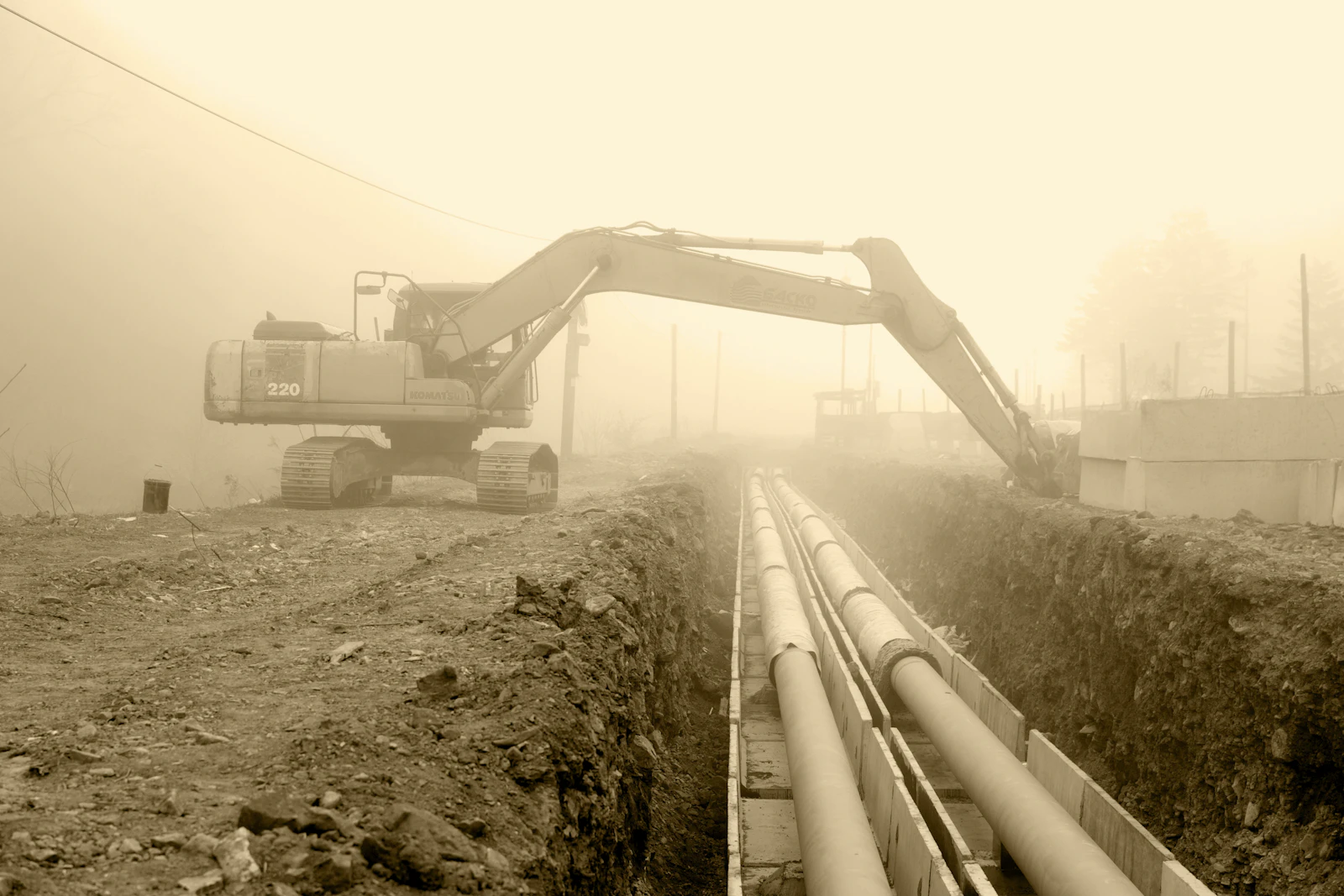
Pipeline Rental Rates in San Jose (Daily/Weekly) — 2026 Costs
Construction Costs San Jose
Price source: Costs shown are derived from our proprietary U.S. construction cost database (updated continuously from contractor/bid/pricing inputs and normalization rules).
Eva Steinmetzer-Shaw
Head of Marketing
For 2026 planning in San Jose, pipeline equipment hire (concrete pump line/pipeline: steel pipe or slickline sections, rubber hose, bends, reducers, clamps, and gaskets) typically budgets in three ways: (1) standalone pipeline rental rates billed by the day/week/month; (2) per-foot line adders on a wet-hire concrete pump order; or (3) a base included line length (often 100–175 ft of hose) with paid adders beyond. As a budgeting range for a Bay Area rental coordinator, plan $180–$450/day, $650–$1,400/week, and $1,800–$3,800 per 28-day month for a “standard” 150–200 ft pipeline kit suitable for typical line-pump placements (hose-heavy, limited steel). For steel-heavy or specialty configurations (more elbows, reducers, and higher-wear pipe), plan $280–$700/day, $950–$2,200/week, and $2,600–$5,800/month. These are planning ranges assuming clean, serviceable sections, standard couplers, and a 28-day “month” structure commonly used in equipment hire. Many San Jose pours will source pipeline through the pump provider (e.g., ready-mix/pumping service packages that publish included hose footage and per-foot adders).
| Vendor |
Daily Rate |
Weekly Rate |
Review Score |
Website |
| The Conco Companies (Conco Pumping) |
$1 750 |
$7 200 |
9 |
Visit |
| PJ Concrete Pumping |
$1 650 |
$6 800 |
8 |
Visit |
| Precision Concrete Pumping (San Jose) |
$1 450 |
$6 000 |
9 |
Visit |
| Millennial Concrete Pumping (San Jose) |
$1 350 |
$5 500 |
10 |
Visit |
| No Limit Concrete Pumping (Bay Area) |
$1 550 |
$6 400 |
9 |
Visit |
Pipeline Rental Rates San Jose 2026
The most estimator-friendly way to quote pipeline hire cost is to break the pipeline into billable “building blocks” (length + diameter + fittings + handling rules). In Silicon Valley, pipeline is rarely treated as a commodity accessory—access constraints, washout restrictions, and delivery windows routinely move the total cost more than the nominal day rate.
2026 planning rate ranges (San Jose / South Bay) for pipeline equipment hire:
- 2.5 in to 3 in rubber hose package (150–200 ft total, with standard clamps/gaskets): $180–$450/day; $650–$1,400/week; $1,800–$3,800/28-day month.
- Steel pipe / slickline package (e.g., 80–140 ft steel plus 50–100 ft hose, with 4–8 elbows): $280–$700/day; $950–$2,200/week; $2,600–$5,800/28-day month.
- Incremental “adder” pricing when pipeline is bundled with pump hire: budget $1.00–$3.00 per foot for additional line beyond included footage on wet-hire jobs, depending on how the supplier prices labor/handling versus pure equipment. Published examples show adders as low as $0.50/ft on one provider’s pricing note and as high as $2–$3/ft on other published line-pump terms.
Assumptions used for these 2026 San Jose planning ranges (adjust to your supplier’s rate sheet and T&Cs):
- Minimum charge: 1-day minimum for standalone line hire; if bundled with pump service, expect minimum hours (often 4-hour minimums in published line-pump packages).
- Monthly definition: 28 days, frequently capped near ~160 billable hours in many equipment hire programs (important for long projects that go idle).
- Condition: returned cleaned, drained, and stacked; no hardened material in pipe/hose.
- Exclusions: pumping labor/operator, pump truck/trailer, concrete, traffic control, and site labor for hose handling unless explicitly included.
How Pipeline Is Actually Billed on Concrete Pump Hire in San Jose
In the San Jose concrete pump hire market, pipeline is commonly priced using one of these billing models. Choose the model that matches how your supplier quotes; then normalize it into an internal “effective” equipment hire cost so your project team can compare options.
- Included hose length + per-foot overage: Example published terms include 150 ft included with a $3/LF overage charge, and 175 ft included with a $2/ft overage charge. This approach is easy to estimate early (you only need a realistic run length), but it can hide weekend billing and off-rent rules in the fine print.
- Line rental/delivery fee thresholds: Some providers publish fixed adders such as $95 when the line exceeds 150 ft and $245 above 250 ft, reflecting extra handling and logistics (and sometimes an additional laborer). Use this model when your run length is highly variable day-to-day (multi-pour sites).
- Pure equipment hire (day/week/month) with separate delivery: More common when a contractor wants pipeline staged on-site for multiple pours (e.g., podium decks, sequential grade beams) and doesn’t want to re-mobilize a full pump package each time.
What Drives Pipeline Equipment Hire Cost on Bay Area Pump Jobs?
Pipeline rental pricing is sensitive to more variables than most “attachments,” because the pipe/hose is both a wear item and a safety-critical system. The cost drivers below explain why two line kits with the same total length can have meaningfully different equipment hire costs.
- Total run length (including vertical): Always measure the real route (around obstacles, through corridors, up stairs), not the straight-line distance. In San Jose TI work, a 90 ft straight-line can turn into 140–180 ft of routed line once you respect protected egress paths and “no drag” requirements inside finished spaces.
- Diameter and mix: 2.5 in hose is maneuverable but can be slower and more sensitive to mix design; 3 in hose and steel can improve flow but raises handling effort, elbow count, and wear exposure.
- Fittings and “geometry”: Each 45°/90° elbow, reducer, or swivel adds both rental value and risk of stoppage. More bends also increase cleanout time and can trigger higher cleaning fees.
- Handling method: If the supplier provides a hose-hand (or requires one) for safety/production, what looks like “pipeline cost” can actually be embedded labor.
San Jose-Specific Factors That Commonly Add Cost
Local conditions in San Jose and the broader South Bay often show up as “small” line items that add up fast on pipeline equipment hire:
- Delivery radius and congestion: It’s common to see a base delivery zone (often ~20–30 miles from a yard) and then mileage beyond that. For budgeting, carry $175–$425 each way for delivery/pickup of a line kit, plus $4–$7 per mile outside the supplier’s standard radius, and expect higher charges for time-critical windows.
- Delivery cutoffs: Same-day or next-morning line deliveries may require order confirmation by early afternoon (often 2:00–4:00 p.m.). Miss the cutoff and you risk a next-day delay—or a $125–$250 “after-hours/expedite” charge.
- Indoor dust-control expectations: Semiconductor/biotech/office TI work in Silicon Valley frequently requires containment and cleanup. If you’re pumping indoors, budget a dust/containment allowance such as $75–$200/day for floor protection and a $250–$600 post-work cleaning/demob charge if the supplier is expected to leave the area “broom clean.”
Pipeline Takeoff: The Minimum Information Your Rental Desk Needs
To keep pipeline equipment hire cost from turning into a change-order machine, your internal takeoff should be specific enough that the supplier can load the correct mix of pieces on the first mobilization.
- Total required length: include an extra 10%–15% contingency for routing changes and safety clearances.
- Line type: hose-only vs mixed steel + hose; note any “no steel inside” restrictions (finished interiors) or any “no hose drag” requirements.
- Elbows: count likely 45°/90° changes in direction; budget 2–6 elbows on tight access work as a starting point, more for multi-corner corridor runs.
- Reducers: steel-to-hose transitions; reducer needs often get missed and then trigger a downtime run.
- Couplers/clamps and gaskets: include spares. A realistic allowance is +10% clamps/gaskets over the theoretical count to cover swaps and field losses.
- Support plan: pipe stands, cribbing, or hangers if the line crosses walkways or must be elevated.
Common Adders and Allowances (Use These in Your 2026 San Jose Budget)
Below are the adders that typically control total cost more than the nominal pipeline day rate. Carry these allowances on the estimate and confirm on the supplier’s written quote:
- Damage waiver / equipment protection: budget 10%–18% of the rental subtotal if you elect the waiver instead of providing proof of coverage.
- Security deposit: commonly $750–$2,500 for standalone pipeline kits depending on total replacement value and credit terms.
- Cleaning fee (if returned dirty): budget $200–$650; higher if there is hardened material or multiple pieces require scraping.
- “Set-in-line” / hardened concrete remediation: carry a high-risk allowance of $30–$85 per foot for replacement/repair exposure on affected sections, plus downtime impacts (this is where documentation matters).
- Missing/damaged small parts: typical chargebacks you should assume can occur include $8–$18 per gasket, $45–$95 per clamp, and $25–$60 for a lost sponge/cleanout ball.
Bottom line for San Jose: treat pipeline as a “system rental,” not a cheap accessory. If you do a realistic run-length takeoff, carry delivery/cleaning allowances, and pre-negotiate off-rent rules, you can usually keep pipeline equipment hire within ±10%–15% of budget even on tight-access Silicon Valley work—without relying on last-minute change orders.
Hidden-Fee Breakdown for Pipeline Equipment Hire
Pipeline rental costs drift when the field assumes “we can return it tomorrow” or “washout will be fine.” In the Bay Area, pipeline-related extras are often driven by logistics and compliance rather than equipment scarcity. Use the checklist below to proactively control the most common hidden charges.
- Delivery and pickup structure: confirm whether you are paying (a) flat-rate mobilization, (b) per-mile, or (c) portal-to-portal time. For budgeting in San Jose, carry $175–$425 each way, and a congestion/limited-access adder of $75–$175 when the driver must wait for site escort, badge-in, or a freight-elevator slot.
- Weekend and holiday billing: clarify whether Saturday counts as a full day, and whether Sunday/holidays are billable days even if equipment sits idle. A practical allowance is a 1.5× weekend factor if the supplier’s off-rent process is Monday-only.
- Off-rent rules: many suppliers require off-rent notice before a cutoff (commonly mid-afternoon). If you miss it, you may pay an extra day even if the pipeline is physically ready for pickup.
- Fuel/environmental surcharges: even for “just pipeline,” some providers add an environmental or energy surcharge. Carry 3%–7% of the invoice total as a planning allowance.
- Washout / disposal: when the jobsite cannot provide an acceptable washout area, published pump-service terms show dedicated fees (for example, a $300 washout fee in one published line-pump rate note). In 2026 San Jose planning, carry $250–$500 for washout/disposal exposure depending on access and whether slurry must be removed from site.
- Overtime windows: early starts and late finishes frequently trigger premium rates. Published terms in some markets show overtime adders such as $75 per hour outside standard weekday windows; in San Jose budgeting, carry $65–$150/hr exposure for after-hours handling/return support if your project is schedule-driven.
How to Convert Per-Foot Line Adders Into an “Effective” Daily Equipment Hire Cost
When pipeline is bundled into a wet-hire pump order, the supplier may quote “extra line per foot” rather than a day rate. To compare options, convert it to an effective cost using your expected run length and number of pours.
- Step 1 (included line): confirm included footage (often 100–175 ft). Published examples include 150 ft included and 175 ft included on line-pump pricing notes.
- Step 2 (overage): measure your actual routed line length and subtract included footage.
- Step 3 (apply adder): apply the per-foot price. Published examples range from $0.50/ft to $3/ft depending on provider and structure.
- Step 4 (normalize): divide by pours/days to create an effective pipeline hire cost per day.
Example: San Jose TI Pour With Real Constraints (Numbers Included)
Example: Interior equipment pad pour for a TI project near North San Jose. Constraints: freight elevator access window 6:30–7:30 a.m., “no hose drag” across finished hallway, and washout must be off-site. You plan a mixed kit because steel needs to bridge a long straight corridor efficiently, then hose is used for final placement.
- Planned routed line: 240 ft total (includes turns and standoff routing).
- Assumed included footage on pump order: 150 ft included.
- Extra line required: 90 ft overage.
- Per-foot adder (planning): $2.00/ft (mid-range of published examples).
- Pipeline overage cost: 90 ft × $2.00/ft = $180.
- Delivery/pickup allowance: $325 each way due to tight delivery window and staging (budget) = $650.
- Containment/cleanup allowance: $150 for floor protection + $350 demob cleaning = $500.
- Off-site washout/disposal exposure: $350 (budget range $250–$500).
- Damage waiver: assume 12% of applicable rental/line items if elected (budget).
In this scenario, the “extra line” itself is not the big number; the real cost control is (a) hitting the delivery window, (b) having a compliant washout plan, and (c) documenting return condition so cleaning and damage disputes don’t eat margin.
Budget Worksheet (Pipeline Equipment Hire)
Use the following allowance-based worksheet for 2026 San Jose pipeline equipment hire budgeting (adapt lengths and quantities to your takeoff). Add these as estimate line items; do not bury them in “misc.”
- Pipeline kit rental (hose-only 150–200 ft): $650–$1,400/week allowance
- Steel pipe/slickline adders (as required for corridors/bridging): $300–$900/week allowance
- Elbows/reducers/clamps/gaskets (plus 10% spares): $120–$380/week allowance
- Delivery to site (South Bay): $175–$425 allowance
- Pickup / return logistics: $175–$425 allowance
- After-hours / windowed delivery premium: $125–$250 allowance
- Weekend/holiday billing exposure (if off-rent is Monday): 1.5× factor allowance
- Cleaning exposure (returned dirty): $200–$650 allowance
- Washout/disposal exposure: $250–$500 allowance
- Damage waiver / equipment protection (if elected): 10%–18% of rental subtotal allowance
- Loss/damage small parts exposure: $150–$400 allowance (gaskets, clamps, sponge balls)
- High-risk “set-in-line” contingency: $500–$2,000 allowance (project-dependent)
Rental Order Checklist (PO, Delivery, Return)
- PO scope: specify total footage, diameter, steel vs hose mix, maximum number of elbows, reducers, and whether spares are required.
- Delivery requirements: site contact, gate code, badging instructions, and a hard delivery window; confirm cutoff time for next-day delivery.
- Staging plan: where the line will be dropped (must be flat, secure, and accessible for pickup without moving stored materials).
- Off-rent procedure: written instructions for off-rent notice time (e.g., “off-rent by 2:00 p.m. to avoid extra day”).
- Washout plan: designated washout location or approved off-site plan; confirm whether a washout fee applies when none is available (carry $250–$500 exposure).
- Return condition documentation: photos of each major component at pickup and at return; note existing wear, dents, and coupler condition.
- Missing parts control: count clamps/gaskets before and after; store small parts in a labeled tote, not loose in a gang box.
- Safety note: confirm the correct configuration and restraints for the planned placement (especially near public paths or where hose whipping risk exists).
When Owning Pipeline Makes Sense Versus Equipment Hire
Ownership can outperform pipeline rental when you have repeated, standardized pours and internal discipline for cleaning, inspection, and storage. For most San Jose contractors, the decision hinges on utilization and loss control rather than the nominal daily rate.
- Consider owning when you are consistently using the same 150–250 ft configurations at least 2–3 days per week for multiple months and you have a controlled washout/cleaning process.
- Prefer equipment hire when job geometry varies (TI interiors, podium decks, split pours) or when the supplier’s bundled per-foot adders effectively include the handling support you would otherwise staff yourself.
If you want, share your expected line length, number of elbows, whether the run is indoors, and the planned pour schedule (single day vs multiple mobilizations). I can tighten the 2026 San Jose pipeline equipment hire budget into a quote-ready allowance structure without using tables.