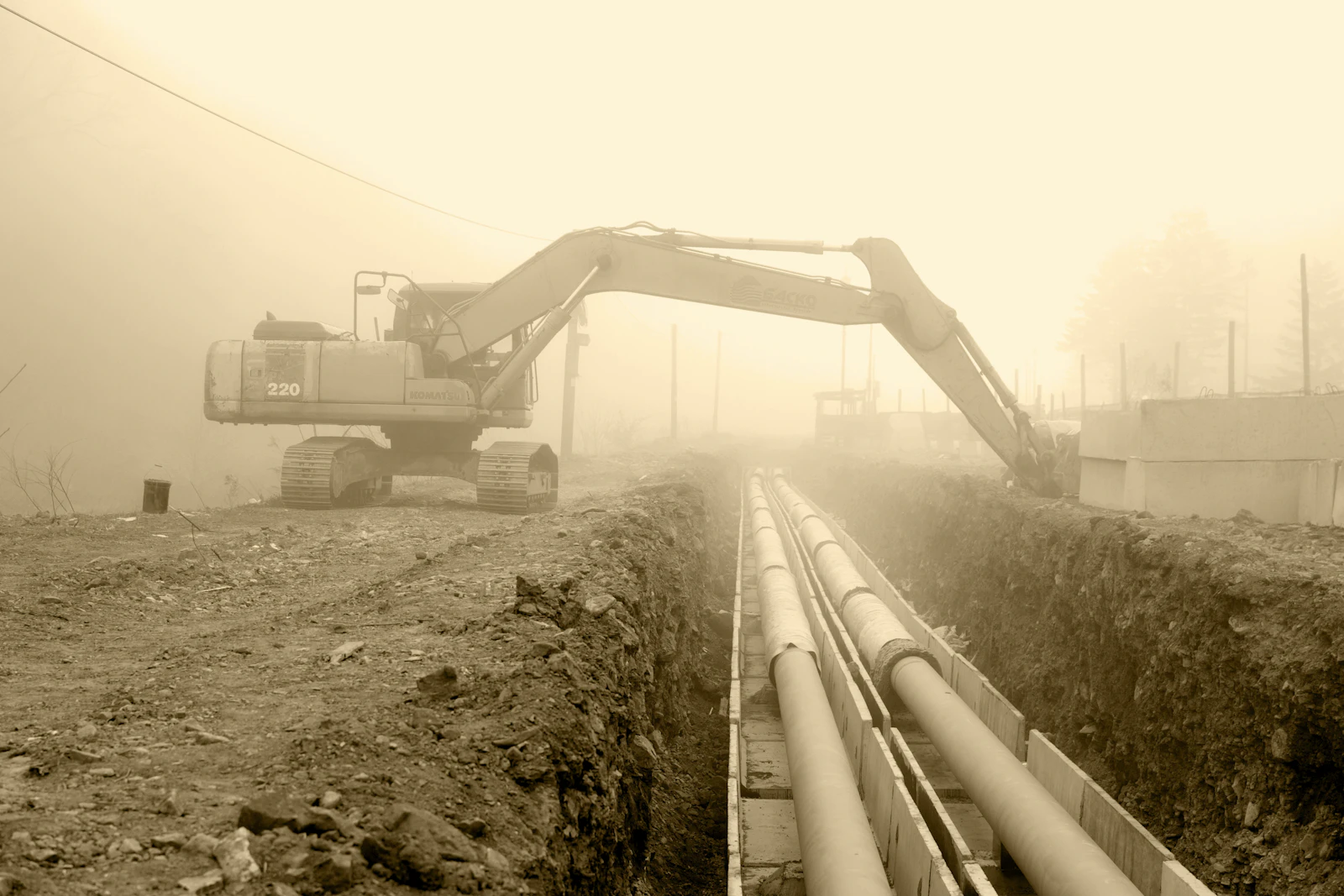
Pipeline Equipment Hire Costs Washington 2026
For Washington, DC-area concrete pump hire, “pipeline” is typically budgeted as a hose/steel line set package that’s either (a) included up to a base length with the pump and operator (wet hire) or (b) quoted as a standalone equipment hire item for extended runs, site constraints, or multi-day placements. For 2026 planning in Washington, budget $250–$650/day, $750–$1,900/week, and $2,000–$4,800/month for a job-ready pipeline package sized around 150–300 LF (2.5 in hose and/or 3 in slick line) with clamps, gaskets, and typical transitions. Longer runs and elevated placements can push the effective pipeline hire cost higher when vendors charge per-foot beyond the included length (common in pump-service quotes) and when delivery windows, washout, and cleaning requirements are tight in the District.
| Vendor |
Daily Rate |
Weekly Rate |
Review Score |
Website |
| Andrews Equipment Company, Inc. (Concrete Pump Rentals) |
$1 350 |
$4 900 |
10 |
Visit |
| Bartley Concrete Pumping |
$1 500 |
$5 400 |
10 |
Visit |
| Brundage-Bone Concrete Pumping (Washington DC Branch) |
$1 800 |
$6 800 |
10 |
Visit |
What “Pipeline” Means on a Washington Concrete Pump Hire Order
In Washington concrete placing, pipeline hire usually refers to the delivery system between the pump outlet and the point of placement. The set you actually pay for (and get billed for when it is out on rent) is typically a combination of:
- 2.5 in rubber hose (often supplied in 25–50 ft sections) for flexible routing, final placement, and tight access.
- Steel line / slick line (commonly 3 in or 4 in) for long horizontal runs, reduced friction losses, and improved wear life versus full-hose runs.
- Couplings/clamps and safety pins for each joint, plus spare gaskets.
- Reducers, elbows, and transitions (e.g., from pump outlet to line size, or steel-to-rubber transitions).
- Whip hose at the end of line for placement control (often a 10–14 ft whip as an adder if not included).
- Priming/“slick pack” consumable (often billed separately even if the pipeline is “included”).
On many wet-hire line pump quotes, you’ll see a base included hose length and then a per-linear-foot adder once you exceed it. For example, one published line pump service quote includes 150 ft of 2.5 in hose and charges $3/LF beyond that allowance, and also calls out a $300 washout fee when there’s no washout area.
2026 Planning Ranges for Pipeline Hire (Daily, Weekly, Monthly)
The ranges below are budgetary planning numbers for Washington, DC (DC–MD–VA metro) based on common rental period structures and the way pipeline is frequently monetized (included-length plus adders). Many rental contracts define a standard rental period as an 8-hour day, 40-hour week, and 176-hour month; overtime multipliers can apply once you exceed those hours.
Pipeline package (hose-only), 150 LF class (2.5 in) with clamps/gaskets (typical for shorter pushes and residential/commercial infill):
- $250–$450 per day (equipment hire only; excludes pump/crew)
- $750–$1,250 per week
- $2,000–$3,200 per month
Pipeline package (mixed steel + rubber), 200–300 LF class (3 in slick line + 2.5 in hose lead/whip):
- $400–$650 per day
- $1,150–$1,900 per week
- $3,000–$4,800 per month
Add-on planning allowances (equipment hire adders you will actually see on invoices):
- Extra hose beyond included length (wet hire): plan $2.50–$3.00 per LF once you exceed the included hose on the pump service order (published examples show $2.50/ft in the 200–400 ft range and $3/LF beyond a 150 ft included allowance).
- Reducer / elbow / specialty transition: plan $15–$45 per day each depending on size and wear category.
- End whip hose (if not included): plan $25–$75 per day.
- Spare clamps/gasket kits: plan $10–$30 per day for a “consumables & smalls” bundle (or be prepared for replacement billing).
Estimator note: If your vendor quotes pipeline strictly as “included hose” rather than a separate line item, convert it to an effective equipment hire cost by isolating the extra-hose adders plus any washout/cleaning/damage-waiver charges triggered by pipeline length and routing.
Pipeline Length, Routing, and Included-LF Allowances
In the Washington market, pipeline cost is frequently “hidden” in the pump service structure: a minimum call-out (hours or a base package) that includes a defined hose length, and then a measurable adder for anything longer. Two published examples illustrate how quickly pipeline length becomes the cost driver:
- One line pump service price sheet includes 200 ft of hose and charges $2.50/ft for hose from 200 ft to 400 ft, with weekend premiums that stack on the base service rates.
- Another published line pump quote includes 150 ft of 2.5 in hose and charges $3/LF beyond that included length, and calls out a $300 washout fee if no washout area is provided.
Practical implication for equipment hire budgeting: If your pour requires 260 LF of pipeline and the vendor includes 150 LF, you’re paying for 110 LF as an adder. At $2.50–$3.00/LF, that pipeline delta alone budgets at $275–$330 on top of the base pump hire, before washout, weekend billing, damage waiver, and cleaning charges.
Hidden-Fee Breakdown for Pipeline and Line Set Hire
Washington, DC jobs routinely trigger “non-obvious” charges because the pipeline is what drives cleanup complexity, access constraints, and risk exposure. Build your estimate with explicit allowances for the following common equipment-hire cost levers:
- Minimums and time basis: Many pump service quotes use minimums such as a 4-hour minimum for line pump service.
- After-hours, weekend, and holiday premiums: Example published premiums include +$10/hour and +$25/set-up for Saturday work, and +$20/hour and +$50/set-up for Sunday/holidays (adders on top of standard hourly/set-up charges).
- Washout constraints: If the site cannot provide an approved washout area, budget a dedicated fee (one published example shows a $300 washout fee).
- Cleaning fees (returned condition): Many rental rate sheets separately list a cleaning fee line item; budget a $75–$250 cleaning exposure for concrete-contaminated hose/pipe returns, with higher exposure for hardened material.
- Damage waiver / rental protection: It’s common to see 10% damage waiver (example policy) or 15% damage waiver (example rate sheet) applied to rentals unless you provide a compliant certificate of insurance; one published policy also caps waived direct costs at $300 (subject to exclusions).
- Deposit / security: Some rental programs require a security deposit; plan $500–$2,500 depending on line value, clamps count, and whether you’re a cash/credit account.
- Lost/damaged smalls: Pipelines fail commercially on missing clamps/pins/gaskets. Budget replacement exposure such as $25–$60 per clamp, $3–$8 per gasket, and $10–$25 per end cap if your returns are not counted and documented.
- Overtime multipliers on multi-shift jobs: If your “day” exceeds the standard shift basis, some rental terms apply multipliers (example: 1.75× for double shift and 2.50× for triple shift).
Washington, DC-Specific Cost Drivers for Pipeline Hire
Pipeline equipment hire costs in Washington, DC are often less about the nominal day rate and more about the logistics and compliance friction that push adders onto the order:
- Delivery radius and traffic realism: In the District, a “short” delivery is not always short in hours. Budget $125–$275 for local delivery/pickup within a typical metro radius, plus $3–$6/mile (or equivalent) beyond the base zone. Also budget a $75–$150 re-delivery charge if the site is not ready at the scheduled window.
- Restricted staging and protected pathways: When pipeline must be routed through corridors, lobbies, or finished areas, you may need to add protective measures and stricter cleaning expectations. Budget $50–$125/day for “pipeline protection and return-condition documentation” time/cost (photos, inventory, caps, containment), even if it’s carried as a job overhead line.
- Washout and environmental constraints: If the GC cannot provide a compliant washout option, the pump provider may apply a dedicated fee (published example: $300) or require you to hire washout containment.
Local planning assumption: For Washington, DC work, treat pipeline as a high-control asset: tight delivery windows, limited laydown, and high expectations on returned cleanliness mean you should budget more for cleaning exposure and “smalls” loss than you would on a wide-open suburban slab pour.
Budget Worksheet
Use this no-table worksheet to build a purchase-orderable budget for pipeline equipment hire costs tied to concrete pump hire in Washington, DC. Adjust quantities to match your line plan (LF, diameter, steel vs rubber):
- Pipeline package (150–300 LF class): $250–$650/day (select your assumed length class)
- Extra hose adder allowance: 100 LF at $2.50–$3.00/LF = $250–$300
- Reducers/elbows/transitions allowance: 3 each at $15–$45/day = $45–$135/day
- End whip hose allowance: $25–$75/day
- Washout fee contingency (if no washout): $300
- Cleaning fee contingency: $75–$250 (returned condition dependent)
- Damage waiver / RPP allowance: 10%–15% of rental charges (unless COI eliminates it)
- Delivery + pickup allowance: $250–$550 round trip (DC constraints)
- Weekend/holiday premium allowance (if applicable): +$10–$20/hour and +$25–$50 per set-up (carry as contingency if pour may slide)
- Loss/damage smalls contingency: $150–$400 (clamps, gaskets, caps, pins)
Rental Order Checklist
Pipeline hire goes smoothly when the rental coordinator collects the details that prevent re-delivery, missing components, and cleaning back-charges:
- PO scope: state diameter(s), total LF, steel vs rubber split, number of elbows/reducers, whip hose, and whether a clamp/gasket kit is included.
- Insurance: confirm whether a COI is provided to remove damage waiver (or accept the 10%–15% waiver line).
- Delivery window: confirm site receiving hours and DC access constraints; note any “cutoff” for next-day changes (carry an internal cutoff like 2:00 PM prior business day).
- Off-rent / return rules: document the off-rent time (carry an internal target like 3:00 PM to avoid next-day billing) and whether weekends are billed when equipment is still on site.
- Washout plan: identify washout location/containment or accept the washout fee risk.
- Return condition documentation: photo the inside/outside of hose ends, cap all ends, count clamps/pins, and tag any damaged pieces before pickup.
- Indoor dust-control and housekeeping: confirm whether a “clean corridors” requirement changes your routing and cleanup plan (which can change fees and schedule).
Example: 260 LF Courtyard Placement in Northwest Washington, DC
Scenario: A courtyard pour requires a line pump with pipeline routed through a gated alley and around a service corridor. The pump quote includes 150 LF of 2.5 in hose. You need 260 LF total due to routing and protection (no straight shot), and you have a tight building receiving window.
- Base pipeline package (planning): $400/day (mixed steel + rubber class)
- Extra hose length: 110 LF × $2.50–$3.00/LF = $275–$330
- Washout exposure: if no designated washout is approved, add $300
- Damage waiver allowance: 10%–15% of equipment hire charges
- Delivery/pickup (DC constraints): $350 round trip allowance
- Cleaning contingency: $150 (returned condition dependent)
Result: Even before the pump’s own wet-hire minimum and yardage/hour charges, the incremental pipeline-driven cost exposure commonly lands around $1,475–$1,780 for the day once you include extra LF, delivery, washout, cleaning, and waiver allowances. The cost-control move here is not “shop the day rate,” it’s reduce LF (optimize routing), confirm washout before dispatch, and tighten return documentation to avoid clamp losses.
How Pipeline Hire Shows Up Inside Concrete Pump Wet Hire Pricing
In Washington, DC, pipeline is often monetized inside a broader “pump service” structure, so pipeline equipment hire can be easy to underestimate if you only look at the minimum call-out. Published pump service examples show how pipeline-related items appear as included lengths, per-foot adders, washout fees, and premium time:
- A published line pump quote lists a $650 minimum (4-hour) and includes 150 ft of 2.5 in hose, then charges $3/LF for additional hose and includes a $300 washout fee when no washout area is provided.
- A published concrete pumping service schedule shows a $325 set-up including the first hour and 200 ft of hose, then charges $2.50/ft for additional hose from 200 ft to 400 ft, with Saturday and Sunday/holiday premiums layered on top.
- Another published pump service example shows a 4-hour minimum with $175/hour and includes both rubber hose and steel pipe lengths as part of the placement system, with after-hours/weekend charges applying.
Estimator takeaway: If your procurement system needs an “equipment hire” breakout, treat extra hose per-foot charges, washout, cleaning, and damage waiver as pipeline-driven costs even when the vendor invoice labels them under pump service.
Billing Period Definitions, Overtime, and Off-Rent Rules
Pipeline costs escalate when the equipment remains on rent across weekends or when multi-shift placements run long. Many equipment rental terms are built around a standard single-shift basis—8 hours/day, 40 hours/week, 176 hours/month—and may apply multipliers for additional usage. One published example shows double shift billed at 1.75× and triple shift billed at 2.50× the standard rate.
For Washington, DC pipeline hire, align the GC schedule and off-rent process to avoid “phantom days”:
- Set a firm off-rent time (internally, carry something like 3:00 PM) and require confirmation that the vendor has acknowledged the off-rent. If they miss pickup because access wasn’t ready, you can get billed an extra day.
- Weekend/holiday exposure: If pipeline sits on site, expect weekend billing policies to apply. If the pour slips into Sunday/holiday time, published examples show +$20/hour and +$50/set-up premiums (or equivalent).
- Cancellation / show-up charges: Some pump service schedules apply a show-up charge equal to set-up unless cancelled with notice (example: 2 hours prior). That becomes a pipeline cost risk if your line plan changes last minute after dispatch.
Priming, Lubrication, and End-of-Shift Cleanup Costs
Pipeline is not “just pipe”—it has operating consumables and cleanup requirements that drive real cost. In addition to washout/cleaning fees, plan for:
- Priming (“slick pack”): budget $25 per mobilization as a planning number when it’s billed as a separate consumable.
- No-washout site condition: if the job cannot legally/physically accept washout on site, published examples show a dedicated $300 fee; alternatively you may need to hire containment (carry that cost in your job overhead if it’s outside the pump vendor’s scope).
- Cleanup minimums: published schedules show cleanup minimums (e.g., $50 minimum for smaller volumes), which correlate strongly with pipeline length and routing complexity.
Operational control: A short pre-pour walkthrough that confirms hose routing, protection, and washout location will often save more than negotiating a small reduction in the base pipeline hire rate.
Risk Controls That Reduce Damage, Cleaning Back-Charges, and “Smalls” Loss
If you are consistently seeing high pipeline closeout charges in Washington, DC, tighten these controls (they directly reduce equipment hire costs and post-rental disputes):
- Inventory counts at drop and pickup: count clamps/pins and photograph the bundle; missing accessories are commonly excluded from damage waiver coverage per typical rental policy language for accessories/hoses and are billed at replacement cost.
- Cap and tag ends: cap all ends before pickup to reduce contamination and demonstrate returned condition. Carry a $10–$25 allowance for replacement caps if your field teams do not retain them.
- Dedicated “line steward” for long runs: on complex DC routing, assign one person to manage kinks, pinch points, and corridor protection. This is usually cheaper than paying for damaged hose sections, re-delivery, and schedule slippage into premium hours.
- Return-condition documentation: photo each damaged section before it leaves site; it improves your ability to dispute “pre-existing damage” claims.
Buy vs Hire: When Pipeline Ownership Starts to Pencil
Pipeline ownership can make sense if you have repeat work with stable configurations (e.g., the same corridor routing weekly), but the Washington, DC reality is that each site is different—routing, protection, washout, and access change project to project. Hire tends to remain cost-effective when:
- You only need extended line sets occasionally (avoid carrying inventory and replacement of clamps/gaskets).
- You want the vendor to manage inspection/retirement of worn hose sections.
- Your projects are schedule-driven and you need the flexibility to scale from 150 LF to 300+ LF without tying up capital.
Ownership starts to pencil when you are paying repeated per-foot adders (e.g., $2.50/ft or $3/LF) on almost every pour and your team is capable of maintaining and documenting the asset condition.
Quick Reference: Pipeline Cost Drivers to Confirm Before You Issue the PO
- Included LF on the pump hire order (150 ft vs 200 ft is a meaningful delta).
- Extra LF adder rate ($2.50/ft vs $3/LF planning).
- Minimum hours (often 4-hour minimum in published examples).
- Weekend/holiday premium structure (+$10 to +$20 per hour, +$25 to +$50 set-up in published examples).
- Washout plan (avoid the $300 fee where possible).
- Damage waiver percentage (10%–15% unless COI removes it).
If you want, share your target LF, diameter preference (hose-only vs slick line), and whether the pour is weekday or weekend in Washington, DC, and I can re-cast the above into a tighter 2026 pipeline equipment hire budget range that matches your planned routing and access constraints.