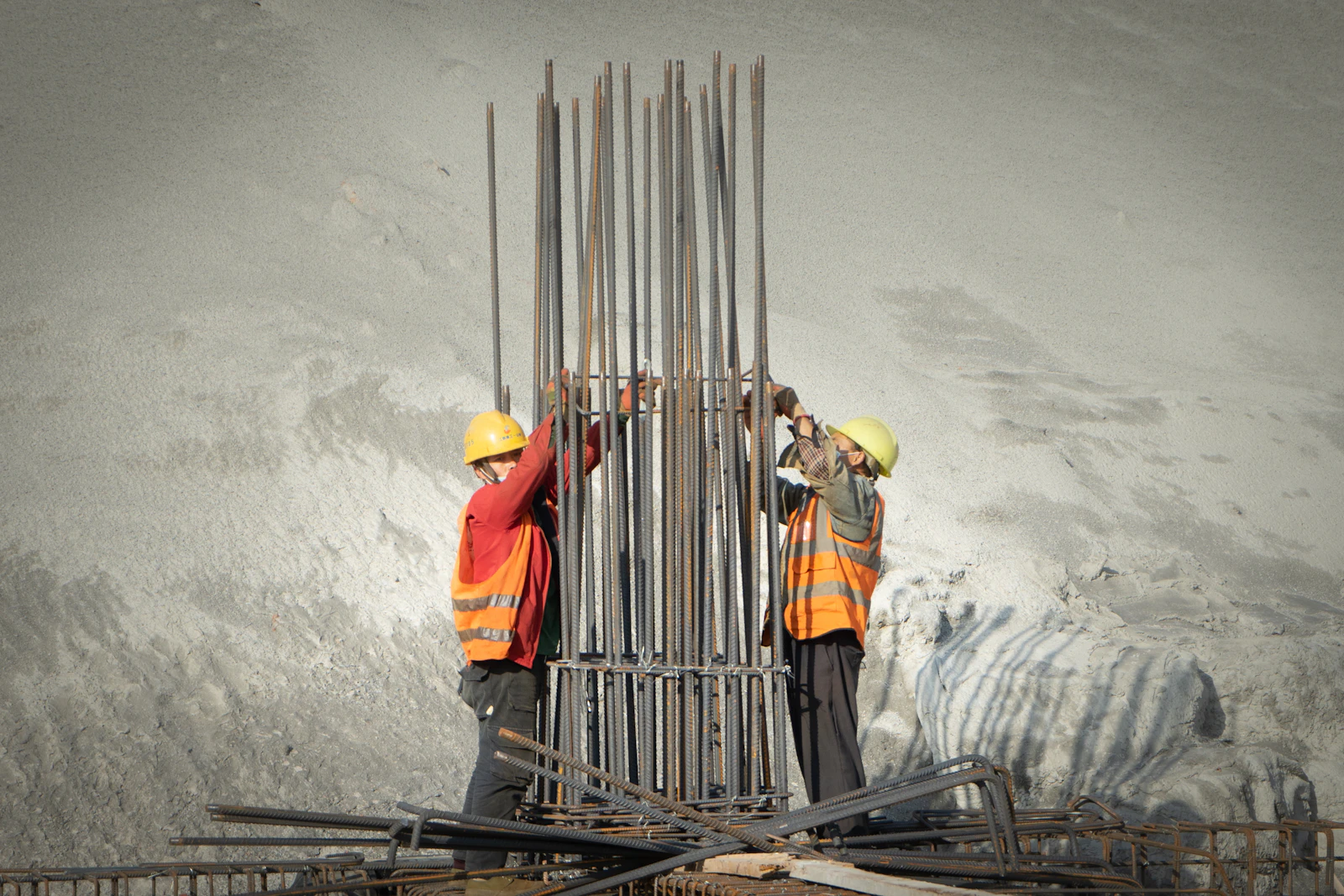
For retaining wall construction in Atlanta, a practical 2026 planning budget for rock drill equipment hire typically lands in these ranges (USD, excluding tax): a pneumatic handheld rock drill at $110–$190/day, $330–$575/week, or $1,050–$1,850 per 4-week month; a rock drill kit (drill plus common hoses/oiler and basic steel/bit package) at $140–$220/day, $420–$650/week, or $1,450–$2,300 per 4 weeks; and a 185 CFM towable compressor at $150–$260/day, $480–$750/week, or $1,400–$2,100 per 4 weeks. Most Atlanta-area quotes are issued by national rental houses with local branches (for example, United Rentals, Sunbelt Rentals, and Herc Rentals) as well as specialty rock-busting suppliers; the lowest “day rate” is rarely the final cost once delivery windows, damage waiver, fuel/refuel, and bit wear are added.
| Vendor |
Daily Rate |
Weekly Rate |
Review Score |
Website |
| United Rentals |
$90 |
$310 |
8 |
Visit |
| Sunbelt Rentals |
$88 |
$305 |
8 |
Visit |
| Herc Rentals |
$85 |
$295 |
9 |
Visit |
| EquipmentShare |
$92 |
$320 |
7 |
Visit |
Rock Drill Rental Rates Atlanta 2026
Use the ranges below as budgetary equipment hire pricing for 2026 planning in metro Atlanta (single shift, typically up to 8 engine-hours/day; 4-week month assumed). Actual quotes vary by availability, account status, and whether you’re renting “tool only” vs. a bundled kit that includes drill steel and bits.
- Pneumatic rock drill (tool only): plan $110–$190/day. Tool-only pricing is often attractive, but you’ll still need an oiler, hose/whip-checks, and a matched compressor package.
- Rock drill kit (tool + in-line oiler + basic bits/steel allowance): plan $140–$220/day. Published kit pricing in the market commonly clusters around the mid-$100s/day, with week and month discounts.
- 185 CFM towable diesel compressor: plan $150–$260/day depending on age/spec (sound-attenuated units, higher pressure, and newer Tier emissions packages often price higher). Published daily rates can be anywhere from the mid-$100s to the mid-$200s/day.
- Common “ready-to-drill” package (rock drill kit + 185 CFM compressor): plan $290–$470/day before delivery, fuel/refuel, waiver, and wear items.
Atlanta-specific budgeting note: if your retaining wall site is inside the Perimeter (I-285) or in high-traffic corridors, assume tighter delivery slots (often 2–4 hour windows) and a higher probability of “missed delivery” re-run fees if the site is not ready on arrival. Also, Atlanta’s red clay and summer storms tend to increase cleaning time and hose/connection maintenance, so build a cleaning allowance into the equipment hire plan.
What Drives Rock Drill Equipment Hire Costs for Retaining Wall Construction in Atlanta?
Rock drilling for retaining wall work is usually about hole count, diameter, and depth (dowels into rock, deadmen, or localized tieback/anchor holes), and those three factors drive what you actually spend on hire.
- Hole diameter and depth: moving from 1.25 in to 1.75 in button bits, or increasing embedment from 12 in to 24 in, typically increases bit wear and slows production—often costing more in extra days than the tool upgrade itself.
- Rock hardness in the Atlanta metro: granite and other hard rock conditions can push you into heavier drill classes or more aggressive bit strategies (and a larger bit-wear allowance).
- Access constraints on wall lines: tight backyards, staged excavation benches, and limited spoil areas can reduce drill productivity. If you can only safely drill from a 4–6 ft bench for portions of the alignment, you may lose enough time to add a full day of rental.
- Dust control requirements: if drilling near occupied properties, schools, hospitals, or interior courtyard walls, you may need wet drilling or a vacuum/shroud approach. That can add hire items (water tanks/pumps or HEPA vac) plus labor and cleanup.
- Shift and weekend work: many rental agreements assume single-shift use. A common planning allowance is a +35% to +60% adder for a second shift, and +70% to +100% for a third shift (confirm with your supplier before you plan overtime drilling).
Typical Add-Ons and Accessories That Change the Real Equipment Hire Total
For retaining wall construction, the rock drill itself is only part of the hire cost. Build your estimate around a “complete drilling system” so you don’t get surprised mid-job.
- Air hose and safety gear: plan $12–$25/day for a hose set (often 50–100 ft) plus whip checks; replacement charges for damaged hose ends are commonly $35–$95 each, and lost whip checks often back-charge at $10–$20 each.
- In-line oiler / lubricator oil: plan $8–$15/day for the oiler if it’s not included; lubricator oil is usually treated as a consumable (budget $10–$18/quart, and plan 1–2 quarts for short runs depending on tool spec and run time).
- Bits and drill steel wear: even when “included,” most suppliers expect return in serviceable condition. Budget a $75–$150 per-bit damage/wear allowance for hard rock days, and $50–$120 for drill steel damage (bent steel, mushrooming, damaged couplers) depending on what your rental agreement defines as “normal wear.”
- Compressor fuel and refuel service: if the compressor isn’t returned full, plan on $5.50–$7.50/gal plus a $25–$60 refuel service charge. For a typical 185 CFM unit, a realistic short-day fuel allowance is 4–8 gallons/day depending on load, ambient heat, and idle time.
- Dust suppression water (when required): plan $45–$95/day for a small water tank/trailer (or equivalent water handling), plus $25–$60/day for a small pump/hoses if not already onsite. If you need a HEPA vacuum for strict dust control, published rates can run around $170/day in some markets.
- Generator (only if needed): if your drilling plan depends on powering auxiliary vacs/lighting and site power is not available, budget $85–$150/day depending on kW class and whether it’s towable.
Hidden-Fee Breakdown (What Often Appears After the Day Rate)
This is where Atlanta equipment hire totals usually move. When you compare quotes, normalize these items so you’re comparing true cost, not just the base rental rate.
- Delivery and pickup: commonly $125–$250 each way for metro deliveries within a typical local radius (often ~10–20 miles), then $4–$7/mile beyond that. Some suppliers also apply a $75–$150 minimum delivery charge even for short hops.
- Off-rent cutoff: many branches require off-rent notifications by roughly 2:00–4:00 PM to stop billing the next business day. Missing the cutoff can add 1 extra day even if the equipment is no longer in use.
- Weekend/holiday billing: picking up Friday and returning Monday often bills as 2–3 days unless you have a negotiated weekend rate. If your retaining wall schedule is weather-sensitive, clarify “weather standby” rules before you start.
- Damage waiver: commonly 10%–15% of the rental charges (tools + compressor + accessories). This can be material on multi-week work.
- Cleaning fees: if returned muddy (common in Atlanta red clay), plan $45–$150. Heavy clay packed around hitch assemblies or hose bundles tends to trigger the higher end of cleaning charges.
- Minimum rental period: some drill kits have a 1-day minimum even if used for a few hours. If you only need 2–4 hours of drilling, ask about half-day rates; some compressor programs publish a 4-hour minimum.
Example: Atlanta Retaining Wall Dowel Drilling (Real-World Numbers)
Scenario: You’re drilling dowel holes for a segmental retaining wall where refusal hits shallow rock. You need 60 holes at 1.5 in diameter, 18 in deep, across a constrained site where drilling can only occur 9:00 AM–5:00 PM due to neighborhood noise restrictions. You plan 2 rental days to cover production risk and weather.
Budget build-up (equipment hire cost planning, USD):
- Rock drill kit: $180/day × 2 = $360
- 185 CFM compressor: $190/day × 2 = $380
- Hose/whip-check bundle: $18/day × 2 = $36
- In-line oiler (if not included): $12/day × 2 = $24
- Delivery + pickup (inside I-285, constrained access): $200 + $200 = $400
- Damage waiver at 12% of rental items (on $800): $96
- Fuel/refuel allowance: 10 gallons at $6.25/gal = $62.50 plus refuel service $35 = $97.50
- Cleaning allowance (mud/clay): $85
- Bit/steel wear allowance (hard rock day): $120
Planned total (before tax): approximately $1,600. The key operational constraint here is the limited drilling window; if you lose half a day to delivery delays or a missing bit size, you can easily add a third billed day (another $290–$470 in base hire before fees), which is why most retaining wall coordinators build a contingency day into the drilling package.
Budget Worksheet (No Tables)
Use these line items as a working checklist for rock drill equipment hire costs on retaining wall construction in Atlanta.
- Rock drill (tool-only) or drill kit: allowance $140–$220/day
- 185 CFM towable compressor: allowance $150–$260/day
- Hose set (50–100 ft), whip checks, fittings: $12–$25/day
- In-line oiler: $8–$15/day
- Lubricator oil (consumable): $10–$18/quart (allow 2 quarts)
- Bit/steel wear allowance: $75–$150 per bit (allow 1–2 bits depending on rock)
- Delivery and pickup: $125–$250 each way (add mileage beyond local radius)
- Damage waiver: 10%–15% of rental
- Fuel/refuel: $5.50–$7.50/gal + service $25–$60
- Cleaning: $45–$150
- Downtime contingency: 0.5–1.0 extra day of base hire to cover weather, access, and hard-rock surprises
Rental Order Checklist (PO, Delivery, Return)
- PO includes: equipment description (rock drill model/class), compressor CFM/PSI, accessories (hose length, whip checks, oiler), and required bit diameter(s) (example: 1.25 in, 1.5 in, 1.75 in).
- Confirm billing basis: day vs. week vs. 4-week and single-shift definition (engine-hours and/or time window).
- Confirm delivery window and site contact; note Atlanta traffic constraints and gate/drive aisle restrictions; require call-ahead 30–60 minutes prior to arrival.
- Document condition at delivery: photos of tool body, hose ends, couplers, and compressor hour meter.
- Verify compressor return requirements: fuel level (full), drain moisture if required, secure hoses and safety chains.
- Off-rent procedure: who calls off-rent, cutoff time (often 2:00–4:00 PM), and where equipment must be staged for pickup.
- Return-condition documentation: photos at pickup, bit count, steel count, and any wear notes to reduce disputes.
Next-step estimating tip: on retaining wall packages, ask for an “all-in drilling system” quote (drill + compressor + hoses + oiler + one primary bit) and then separately price the variables (additional bits, steel lengths, delivery, waiver, and wear). That structure makes it easier to control the real equipment hire cost when conditions change.
How to Control Rock Drill Equipment Hire Costs on Atlanta Wall Schedules
Most overruns on rock drill equipment hire are schedule-driven rather than rate-driven. In Atlanta retaining wall construction, two practical controls tend to deliver the biggest savings: (1) tight coordination of delivery/off-rent (so you don’t buy “dead days”), and (2) pre-defining wear, fuel, and dust-control expectations so those costs don’t arrive as surprises.
- Delivery readiness: have the drill location benched, stable, and accessible when the truck arrives. A missed delivery can burn half a day and still bill a full day of rental. If you have a narrow driveway or staged excavation, plan for a smaller delivery vehicle or transload and budget an additional $75–$150 for specialized handling where applicable.
- Off-rent timing: if drilling finishes at noon, it can still be cheaper to keep the equipment until the next morning if your branch cutoff is 2:00–4:00 PM and pickup cannot happen same-day. Build your work plan around cutoff times, not just production.
- Weekend strategy: avoid “stranded weekends.” If your retaining wall crew is off Saturday/Sunday, returning Friday (or off-renting early Friday) can save 1–2 billed days. If you must hold equipment over a weekend due to sequencing, negotiate a weekend rate before dispatch.
City-Specific Considerations for Rock Drill Hire in Atlanta
Keep these Atlanta realities in your equipment hire cost plan (they’re not always obvious until the first delivery attempt).
- Traffic and delivery windows: inside I-285 and on major corridors, delivery windows often drift. If your site has restricted access (schools, hospitals, downtown), budget a premium delivery slot or after-hours delivery if offered, which can add $100–$250 to a standard delivery.
- Heat and humidity impacts: hot, humid days increase idle time (breaks, hose management, water for dust), and they can reduce real drilling output. If your plan assumes 30 holes/day, consider scheduling to protect that productivity rather than adding rental days later at full freight.
- Red clay cleanup: muddy hoses and hitch assemblies drive cleaning charges. A simple control is to stage equipment on geotextile or plywood and require a quick rinse/wipe-down daily; it’s cheaper than a $45–$150 cleaning bill at return.
Insurance, Damage Waiver, and Deposit Planning (Cost Impacts)
For professional retaining wall work, your supplier will usually require either a certificate of insurance meeting their limits or acceptance of a damage waiver. From a pure cost-control perspective, the key is consistency across projects.
- Damage waiver: plan 10%–15% of rental charges (and confirm whether it applies to delivery, fuel, and consumables—often it does not).
- Deposits and credit holds: if you don’t have an established account, budget a refundable deposit/hold of roughly $200–$1,000 for smaller drill packages, sometimes more for multi-item packages. This is not a “cost,” but it impacts cash flow and can delay dispatch if not arranged.
- Loss/damage exposure: drill steel and bits are easy to misplace on busy wall sites. A realistic internal control is to assign one foreman to sign out/in bits and steel daily; replacing a premium bit can easily land in the $75–$150 range per item (or higher if you’re back-charged at replacement value).
When a Different Drill Setup Is Cheaper Than Extending the Rental
If your production is slower than planned, the instinct is often to “just keep the drill one more day.” Sometimes that’s correct; other times, a different setup reduces total hire cost.
- Upgrade the compressor rather than adding days: if you’re running multiple air tools (or the drill is starving for air due to hose length/leaks), stepping up to a higher-capacity unit can be cheaper than adding 1–2 extra days of drilling. Even a $40–$90/day compressor step-up can pay for itself if it avoids one extra billed day.
- Add the right bit rather than “making do”: if you’re burning time in hard rock, paying $75–$150 for the correct bit strategy can be cheaper than extending tool+compressor hire.
- Use strict dust control only where required: if only 20% of the drilling is near sensitive receptors, plan a segmented approach: wet drill or vacuum control for that segment only, rather than carrying a HEPA vac for the whole rental period.
Ownership vs. Hire (Retaining Wall Contractors)
For recurring wall work, ownership can be attractive, but the decision should be based on utilization and the “system” cost (drill + compressor + hoses + bits), not just the rock drill tool price.
- If you routinely rent the drill+compressor package for 8–12 days/year, ask suppliers for seasonal or project-rate pricing. Even a 10% discount on a $1,600 drilling event saves $160 per occurrence.
- If your jobs are sporadic and weather-driven, hire remains safer because you avoid carrying maintenance and consumables, and you can right-size the kit to the specific wall alignment (hole diameter/depth) each time.
Final Estimating Reminders for Rock Drill Equipment Hire Costs
- Confirm what “kit” includes: number of bits (example: 1–3), steel lengths (example: 2 ft and 4 ft), couplers, and whether an oiler is included.
- Normalize compressor assumptions: a 185 CFM unit is a common baseline for pneumatic drilling; published pricing varies widely (from low-$100s/day to mid-$200s/day), so treat the compressor as a major cost driver, not an afterthought.
- Don’t forget the “small” charges: a $35 refuel service, a $85 cleaning fee, and a 12% waiver can be the difference between beating and missing a wall drilling budget.
- Document condition at both ends: photos at delivery and return reduce disputes and help you defend “normal wear” vs. damage back-charges.
If you share your expected hole count, diameter, depth, and whether you need wet drilling or strict dust control, you can turn the above allowances into a tighter, job-specific equipment hire estimate for Atlanta retaining wall construction.