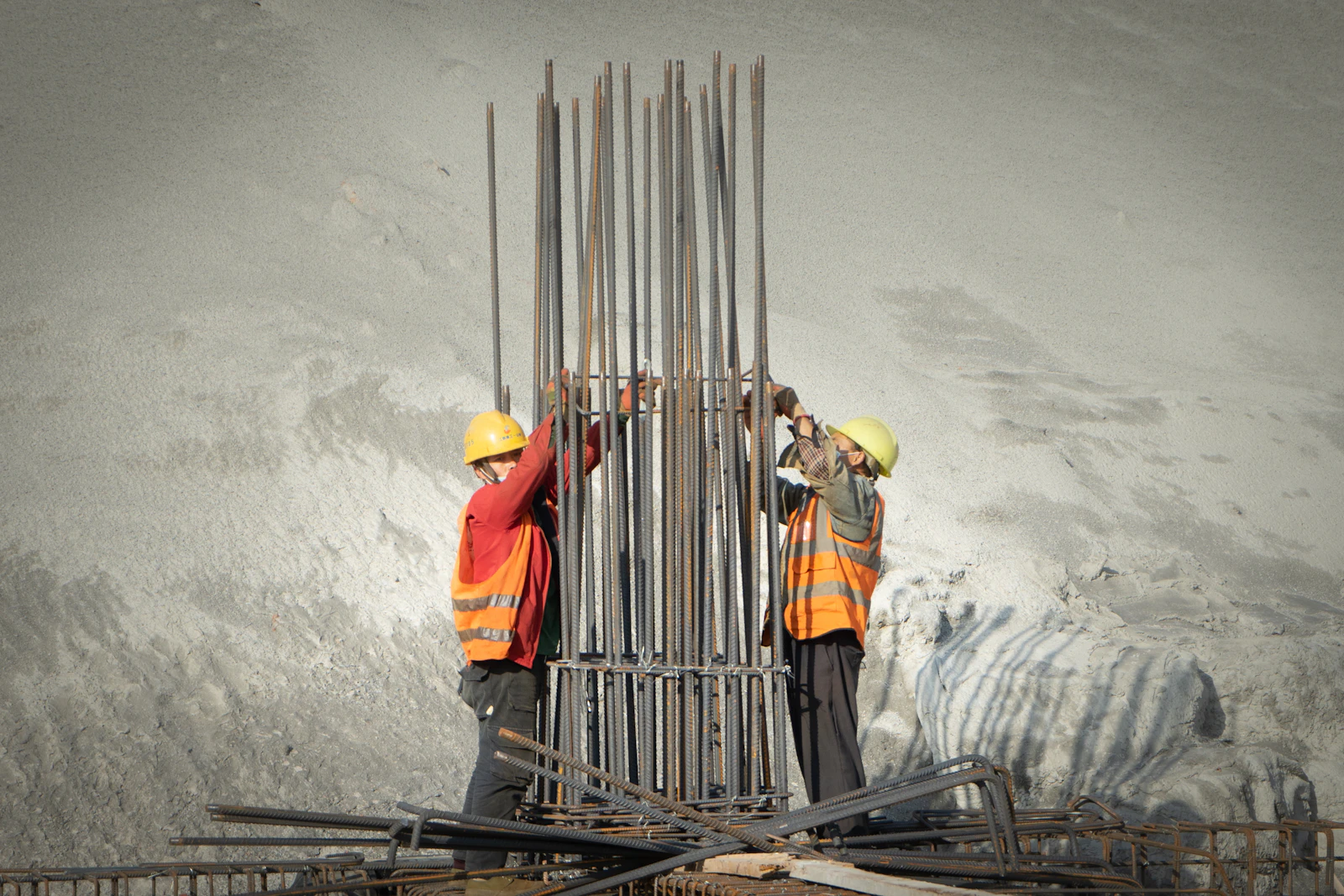
For rock drill equipment hire in Austin supporting retaining wall construction, 2026 planning budgets typically fall into three pricing tiers depending on what your crew means by “rock drill”: (1) a heavy SDS-Max / spline rotary hammer for limestone and concrete drilling at roughly $55–$110/day, $200–$375/week, and $450–$950/4-week; (2) a pneumatic air rock drill (30–60 lb class) at roughly $95–$190/day, $300–$650/week, and $850–$1,650/4-week; and (3) a rock drill package (air rock drill + 185 CFM towable compressor + hoses + starter steel/bit) at roughly $240–$460/day, $850–$1,700/week, and $2,100–$4,400/4-week, before delivery, waiver, fuel, and consumables. In Austin, national rental houses (with local branches) and local tool yards both compete on availability—your actual hire cost is usually won or lost on logistics, off-rent timing, and return condition rather than the base day rate alone.
| Vendor |
Daily Rate |
Weekly Rate |
Review Score |
Website |
| United Rentals |
$185 |
$555 |
8 |
Visit |
| Sunbelt Rentals |
$179 |
$537 |
8 |
Visit |
| Herc Rentals |
$170 |
$510 |
7 |
Visit |
| Ahern Rentals |
$165 |
$495 |
7 |
Visit |
| The Home Depot Tool Rental |
$125 |
$375 |
8 |
Visit |
Rock Drill Rental Rates Austin 2026
Important scoping note: “Rock drill” is a category name used inconsistently in rental catalogs. For retaining wall work in Austin (frequent shallow limestone, caliche pockets, and mixed fill), most rental requests land in one of these definitions:
- Electric rotary hammer (SDS-Max / spline) to drill rebar dowel holes, drainage penetrations, or small anchor holes in rock/concrete where compressed air logistics are not justified.
- Pneumatic air rock drill (handheld “drifter” style) to drill larger diameter holes in rock for splitting, feather-and-wedge lines, or certain anchoring approaches where penetration rate matters.
- Alternative that often prices similarly: a pneumatic pavement breaker/jackhammer or a hydraulic breaker, when the true need is rock removal rather than drilled holes.
2026 Austin planning rate ranges (budgetary): Use these as estimating bands for equipment hire costs and confirm by quote (especially in peak season or when you need a specific shank/steel system).
- Pneumatic air rock drill (30–60 lb class, tool-only): $95–$190/day; $300–$650/week; $850–$1,650/4-week. As an anchor example from a Texas rental rate sheet, an M155 pneumatic rock drill is shown at $75/day, $300/week, and $900/month (historical posted rate; use for calibration, not as a guaranteed Austin price).
- Heavy rotary hammer / “electric rock drill” class (around 1-1/2 in. capacity): $55–$110/day; $200–$375/week; $450–$950/4-week. Example posted Austin rate: a 1.5 in. rotary hammer listed at $65/day and $227.50/week.
- 185 CFM tow-behind compressor (commonly required for air rock drills): $115–$240/day; $400–$850/week; $950–$2,300/4-week. Example posted Austin rate: 185 CFM tow-behind compressor listed at $120/day and $480/week.
- Air-tool support package adders: $10–$25/day per air hose; $15–$35/day for an in-line oiler/filter package; $25–$90/day for additional drill steel/rods depending on system and length.
Shift assumptions for these bands: 8-hour day, 40-hour week, and a 28-day “rental month” (many rental contracts bill a 4-week month rather than calendar-month). Overage hours, weekend billing rules, and off-rent cutoffs can move the effective rate materially.
What Actually Drives Rock Drill Hire Cost on Retaining Wall Jobs in Austin?
Retaining wall construction tends to create short, high-intensity drilling bursts (dowel lines, steps/benches, drainage sleeves), then long idle periods while base prep, block setting, geogrid placement, and backfill sequencing happens. That mismatch is why rock drill equipment hire costs often spike from avoidable “dead rent” days. The cost drivers below are what rental coordinators should validate up front to keep rates in the correct tier.
1) Hole Size, Hole Count, and the Steel System
On limestone in the Austin area, the difference between 1-1/8 in. and 1-1/2 in. holes can be the difference between running an electric rotary hammer versus needing an air rock drill package. Clarify:
- Target hole diameter(s): 1-1/8 in., 1-1/4 in., 1-1/2 in., 2 in.
- Average depth: 12 in., 24 in., 36 in., 48 in.
- Hole count and pattern (e.g., 30–60 holes for dowels and drainage on a mid-sized wall)
- Whether the rental house supplies matching hex steel lengths (2 ft / 4 ft) or expects your crew to provide consumables
Cost impact: if you need non-standard steel or specialty button bits, plan a consumable allowance of $85–$175 per bit (purchase) or $25–$60/day (rental/consumable charge) depending on supplier policy and expected wear.
2) Compressed Air Logistics (Where Most “Surprise” Costs Come From)
If you’re hiring an air rock drill, your real cost center is often the compressor package and its jobsite rules:
- Compressor fuel: many 185 CFM tow-behind compressors burn roughly 1.5–3.0 gallons/hour under load. If diesel is billed back by the rental provider, plan a fuel line item using $5.00–$6.75/gal as a budgeting range plus a service/fuel handling fee of $25–$65 if they top off on return.
- Hoses and whip lines: add $20–$60/day total if you need (2) hoses, whip line, and safety fittings beyond the base package.
- Water for dust suppression: some sites (especially tight residential lots) will require a wet drilling method or vacuum shroud. Budget $45–$120/day for a water tank/pump or a HEPA dust extractor add-on if required by site policy.
3) Austin-Specific Logistics That Change the Invoice
- Delivery windows and traffic constraints: downtown/central Austin deliveries often need early windows (e.g., 6:30–9:30 AM) to avoid access delays. If you miss a delivery window, many vendors will reattempt the next day—plan a potential re-delivery charge of $95–$175.
- Limestone dust and silica controls: drilling into dry limestone creates fine dust; if your GC requires enhanced dust control, expect additional cost for shrouds/collectors and more aggressive cleaning on return (see cleaning fees below).
- Heat impacts and uptime expectations: in hot months, compressors may spend more time idling/cooling; if your schedule is tight, you may choose a larger compressor class than minimum. That increases day rate but can lower total days rented.
Hidden-Fee Breakdown
To estimate rock drill equipment hire costs accurately, treat the base rate as only one line item. These are common invoice adders that affect pneumatic tools and compressors on wall builds:
- Delivery and pickup: $95–$175 each way inside a typical local radius; mileage overage often budgets safely at $4.00–$7.00 per mile beyond the base zone.
- Minimum transport charge: if the vendor’s dispatch is outside the normal route, plan a minimum of $150–$250 even for short moves.
- Damage waiver / rental protection: commonly 10%–18% of the rental charges (tools + compressor), excluding consumables and fuel.
- Environmental / shop fees: often 2%–5% of rental or a flat $5–$25 per item depending on contract terms.
- Cleaning charges: $60–$150 for a tool caked with slurry/dust; $125–$250 for a compressor returned with excessive mud/debris in the enclosure or clogged intakes.
- Late return: frequently billed in daily increments; if your contract uses partial-day increments, expect a common “overtime” model such as 1/8 day charges after the standard shift.
- Missing accessories: whip hoses, safety clips, and oilers can be billed at replacement cost; budget a risk allowance of $25–$120 for small missing items if your yard is high-traffic.
Example: Rock Drill Hire for a 2-Day Retaining Wall Dowel Scope in Austin
Scenario: 80 LF segmental wall with step-downs; limestone ledge encountered at the toe. Crew needs 36 dowel holes at 1-1/2 in. diameter x 24 in. deep, plus 8 drainage penetrations. Site is a constrained residential lot with a 10:00 AM noise start request and a tight driveway (no laydown). You choose an air rock drill package for penetration rate and to avoid burning out electric hammers.
- Tool hire: air rock drill (2 days) budgeted at $120–$175/day = $240–$350.
- Compressor hire: 185 CFM tow-behind (2 days) budgeted at $120–$200/day = $240–$400 (Austin posted example shows $120/day and $480/week for this compressor class).
- Delivery/pickup: $125 each way = $250 (assumption; confirm by route).
- Damage waiver: 14% of rental = roughly $67–$105 depending on exact rates.
- Consumables: (1) button bit purchase allowance $125; compressor oil/inline oiler allowance $20.
- Cleaning allowance: $85 (if wet drilling produces slurry on the tool).
Resulting 2-day equipment hire cost plan: roughly $987–$1,335 before tax, with the biggest swing factors being delivery policy, waiver %, and whether bits are billed as rental, wear, or purchase.
Budget Worksheet (No Tables)
- Air rock drill (30–60 lb class): ____ days @ $95–$190/day allowance
- 185 CFM tow-behind compressor: ____ days @ $115–$240/day allowance (or weekly if >3 days)
- Air hoses (2x) + whip hose: ____ days @ $20–$60/day allowance
- Inline oiler/filter package: ____ days @ $15–$35/day allowance
- Bits / drill steel wear: $85–$175 per bit allowance (or rental equivalent)
- Delivery + pickup: $190–$350 allowance total (short radius) or add mileage overage
- Damage waiver / protection plan: 10%–18% of rental charges allowance
- Fuel / refuel handling: $25–$65 handling + diesel at actuals (if not “full on full off”)
- Cleaning / decon: $60–$250 allowance depending on dust/slurry conditions
- Weekend/holiday exposure: add 1 extra day risk if pickup/return windows are constrained
How to Keep the Hire Cost Down Without Slowing the Crew
For retaining wall scopes, the lowest total cost plan is often to schedule drilling as a dedicated production block and keep the rental period tight:
- Front-load layout and mark-out: have all hole locations painted and verified before the drill arrives to avoid burning a full day while crews “find the work.”
- Confirm off-rent rules: many vendors require off-rent notification by mid-afternoon (often around 2:00–4:00 PM) to stop next-day billing. If you call after cutoff, you may pay another day.
- Batch drilling before backfill: drill dowels, drainage penetrations, and any sleeve holes in one window before geogrid/backfill creates access limits.
- Choose weekly over daily at the right point: if the schedule risk is high (weather, inspections, concrete cure), the weekly rate can be cheaper than extending day-by-day, even if you only use the drill intermittently.
When an Electric “Rock Drill” Is the Better Hire Choice
For many Austin retaining wall builds, an SDS-Max rotary hammer can be the lowest-friction option when you’re drilling limited quantities and want to avoid compressor transport, fueling, and return-condition exposure. A posted Austin example for a 1.5 in. rotary hammer shows $65/day and $227.50/week. If your field need is primarily rebar dowels, small anchor holes, or drainage weeps (and you have reliable power), electric hire frequently reduces total cost even if penetration rate is slower in hard limestone.
Operational Constraints That Change Real Rental Cost
These constraints are where two identical “day rates” produce very different final invoices. Build them into your rental order notes so dispatch and field supervision are aligned.
- Delivery cutoffs: if you need next-day delivery, many yards require orders placed before 2:00–3:00 PM. Miss the cutoff and your crew may lose a day or you’ll pay a premium re-route fee (budget $75–$150 for a same-day dispatch change if offered).
- Weekend billing: “Friday to Monday” pricing can be favorable, but only if your site can accept and secure equipment over the weekend. If not, you may pay 2 extra days of rent while the compressor sits idle.
- Off-rent / on-rent time stamps: confirm whether billing starts at delivery time or next business day. A compressor dropped at 4:30 PM can still trigger a full day charge under some terms.
- Refuel / recharge expectations: compressors are often “return full.” If returned low, budget $35–$75 fuel admin + fuel at marked-up retail.
- Indoor / near-occupied drilling dust controls: if you’re drilling adjacent to occupied structures, plan a dust-control kit and filter replacement allowance (common field budget: $40–$110 for extra filters and cleanup supplies per mobilization).
- Return condition documentation: take 10–15 timestamped photos at pickup and return (tool, hoses, compressor hour meter, fuel gauge, dents). It’s a low-cost habit that can prevent a disputed damage backcharge.
Cost Drivers Specific to Pneumatic Rock Drill Hire
If you proceed with an air rock drill, treat it as a system hire (drill + compressor + air management + steel/bits). The following line items commonly separate “tool-only” estimates from invoice reality:
- Compressor sizing: if the drill’s air requirement is near 110–125 CFM, a 185 CFM compressor is typical; undersizing can slow penetration and extend the number of rental days.
- Spare bit strategy: for limestone with variable hardness, budget at least 1 spare bit onsite. One broken or dulled bit can idle a crew for half a day and accidentally force a week-rate conversion.
- Air-tool oil policy: confirm whether the yard requires a specific air-tool oil and whether they charge a consumable fee. Typical budgeting: $12–$25 for oil and small fittings per rental.
- Hose length vs. access: if the compressor must sit on the street due to driveway grade or landscaping protection, you may need 100–200 ft of hose. Plan $20–$50/day incremental to reach the work without kinks and pressure loss.
Market Anchors You Can Use to Sanity-Check Quotes (Not Austin Guarantees)
When quotes come back, it helps to sanity-check against published anchors. For example, one Texas rental rate sheet lists an M155 pneumatic rock drill at $75/day, $300/week, and $900/month. Separately, a publicly posted government/contract rate listing shows air rock drills (by weight class) priced around $76–$92/day, $265–$325/week, and $563–$688/month in that contract context. These references are not Austin branch quotes, but they help identify when a proposed rate is in-family versus when a line item has been misclassified (e.g., charged as a specialty drill rig rather than a handheld air tool).
Ownership vs. Hire: Quick Break-Even Thinking for Retaining Wall Crews
If your company drills rock weekly in Austin (common for wall, flatwork, utilities, and sitework), ownership can pencil out—but only if you control consumables and actually keep the system utilized. As a rule of thumb:
- If you rent a pneumatic rock drill + compressor package more than 10–16 weeks/year, ask for an ownership comparison including maintenance, bits, and downtime risk.
- If your drilling is intermittent (e.g., 1–2 days on scattered wall projects), hire is usually cheaper because you avoid storage, repairs, and transport compliance.
For many retaining wall contractors, a hybrid approach is most cost-effective: own electric rotary hammers (high utilization, low logistics) and hire air rock drill packages only when limestone conditions or production schedule justify the compressor.
Rental Order Checklist (No Tables)
- PO and billing: PO number; cost code; agreed day/week/4-week rates; waiver %; tax status; approved overtime/overage rules.
- Equipment definition: confirm whether you are hiring an electric rotary hammer vs. pneumatic air rock drill; specify required hole diameter range and shank/steel compatibility.
- Accessories: hoses (quantity and length); whip hose; inline oiler/filter; correct couplers; spare bit/steel; tool oil.
- Compressor details (if applicable): 185 CFM class; fuel type; “return full” policy; hour meter reading at delivery; spare tire/jack presence if required.
- Delivery requirements: delivery address pin; contact name/phone; gate code; delivery window; site restrictions (no idling, noise start time, HOA rules).
- Receiving process: photo documentation at drop; note existing dents/scratches; verify all accessories are on the ticket before driver departs.
- Return/off-rent: off-rent call time (confirm cutoff); cleanup expectations; fuel top-off plan; staged pickup location; photo set at pickup and after loading.
Final Estimator Notes for Austin Retaining Wall Drilling
For Austin, the biggest controllable lever in rock drill equipment hire costs is minimizing idle time caused by sequencing (base prep and block placement) and access restrictions (tight lots, limited staging, delivery windows). Plan drilling as a discrete production activity, align delivery/pickup times to actual drill utilization, and treat consumables and cleaning as first-class budget items rather than surprises.