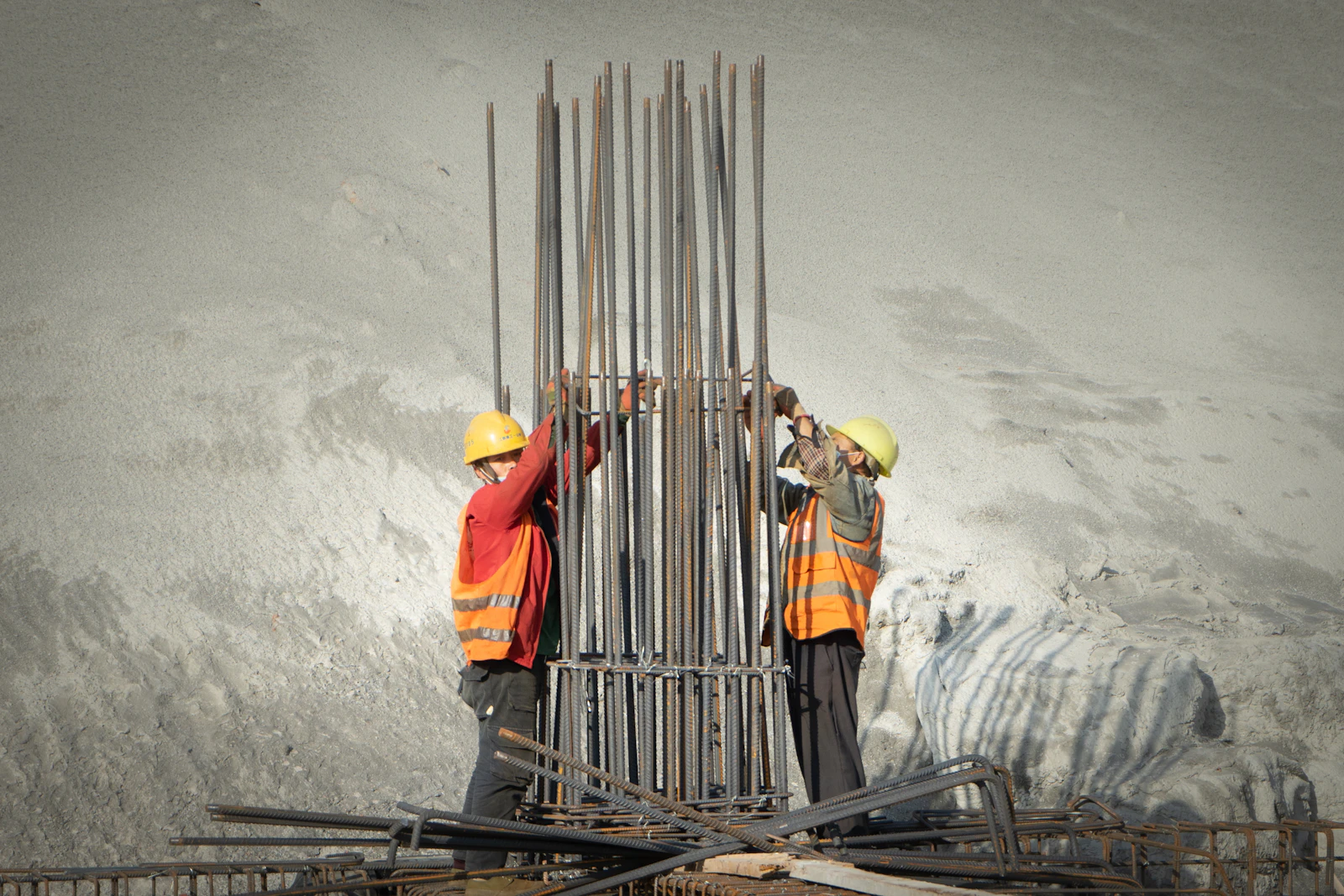
For Charlotte retaining wall construction in 2026, budgeting rock drill equipment hire typically lands in three common bands depending on the drilling method. For an air rock drill (handheld pneumatic) you’ll usually see $70–$160/day, $240–$520/week, and $650–$1,350/month for the tool-only. For a hydraulic rock drill attachment (skid steer or mini-excavator mounted), plan $275–$725/day, $1,050–$2,650/week, and $2,700–$6,500/4-week month for the attachment-only, with the carrier machine hired separately. For specialty anchor/rock drilling rigs used on tied-back or soil-nailed walls, budgeting often moves to $2,800–$6,900/day plus mobilization and operator. These are planning ranges assuming single-shift use, excluding bits/consumables, freight, fuel, damage waiver, and tax; Charlotte-area branches of national rental houses (and specialty drill tool providers) can quote within or outside these ranges depending on availability and wall schedule risk.
| Vendor |
Daily Rate |
Weekly Rate |
Review Score |
Website |
| United Rentals |
$125 |
$310 |
9 |
Visit |
| Sunbelt Rentals |
$130 |
$390 |
8 |
Visit |
| Herc Rentals |
$98 |
$345 |
9 |
Visit |
| Carolina Cat Rental Store |
$135 |
$405 |
10 |
Visit |
Rock Drill Rental Rates Charlotte 2026
Use the ranges below for equipment hire cost planning when the scope is “retaining wall construction” and the drilling is primarily for dowels, leveling pad pinning, guardrail/handrail posts, drainage penetrations, or small foundations that encounter rock. If your wall is a tieback/soil nail system, the “rig band” is the correct starting point even if crews refer to it generically as a “rock drill.”
Assumptions behind the 2026 Charlotte planning ranges:
- Single shift use (commonly 0–8 hours). Many rate cards price “double shift” at roughly 1.5× and “triple shift” at roughly 2.0× of single shift, which can materially change the effective daily cost if you’re drilling long days to beat a wall inspection milestone. (g
- 4-week month billing (not a calendar month). “Monthly” is commonly a 28-day cap with off-rent rules.
- Tool-only unless explicitly noted; compressor, hoses, lubricator/oiler, steels/bits, and delivery are separate line items.
Band A: Air Rock Drill (Handheld Pneumatic) – Tool-Only
- Light (≈15 lb class): plan $70–$130/day, $240–$430/week, $650–$1,050/4-week. Published rental menus in the market show examples as low as about $50/day, $200/week, $600/month for a 15 lb rock drill, but Charlotte 2026 budgets usually need headroom for freight, shift multipliers, and closeout charges.
- Medium/heavy (≈30–70 lb class): plan $90–$160/day, $300–$520/week, $800–$1,350/4-week. Public contract schedules show typical tool-only daily pricing around $76–$92/day with weekly and monthly caps, which is a useful benchmark even though retail and Charlotte branch pricing may vary.
When Band A fits retaining wall work: short runs of dowel holes, intermittent drilling between block placement and backfill lifts, or projects where you can keep an air package staged without major relocation.
Band B: Hydraulic Rock Drill Attachment (Skid Steer / Mini-Excavator Mounted) – Attachment-Only
- Attachment hire (no carrier): plan $275–$725/day, $1,050–$2,650/week, $2,700–$6,500/4-week.
- Carrier machine hire (separate line): mini excavator or skid steer adds roughly $260–$520/day depending on class, plus transport.
When Band B fits retaining wall work: where access allows a machine along the wall line, you need consistent hole spacing, and you’re trying to reduce hand-drilling fatigue and variability. This band is also common when crews start in clay and unexpectedly hit Charlotte-area rock (Piedmont transitions), making a machine-mounted solution more productive than handheld tools.
Band C: Anchor / Soil Nail / Micropile Drill Rig (Specialty “Rock Drill”)
- Rig hire (bare): plan $2,800–$6,900/day depending on rig size, mast, and drilling method.
- Operator: commonly required; budget $85–$135/hr straight time and $125–$180/hr overtime if your wall design drives late-day test pulls or drilling windows.
- Mobilization/demobilization: plan $450–$1,250 inside the Charlotte metro; higher for long-haul moves or limited-access sites.
When Band C fits retaining wall work: engineered tied-back walls, soil nail walls, or any scope needing long holes, casing, grout, and testing. If you’re hiring Band C, treat “equipment hire cost” as a system cost (rig + compressor + water + grout plant + spoils handling) rather than a single tool rental.
What Drives Rock Drill Equipment Hire Costs for Retaining Wall Construction in Charlotte?
Rock drill hire cost in Charlotte is shaped less by the sticker day rate and more by the interaction between wall sequencing, production constraints, and closeout rules. Key drivers rental coordinators should validate before they request quotes:
- Hole count, diameter, and depth: more holes typically pushes you toward weekly pricing; larger diameter and deeper holes increase bit wear and compressor demand (and can trigger “consumables at return” charges).
- Rock hardness variability: Charlotte sites can shift rapidly from red clay to rock, which makes “one-day tool hire” risky—build in schedule float or upgrade to a more productive package if drilling is on the critical path.
- Access and material staging: tight residential subdivisions (common in South Charlotte and suburbs) can force smaller compressors or smaller carriers, raising labor time even if equipment rent is lower.
- Noise and hours: if drilling is limited to a smaller daily window, you may need additional days on rent (and possibly weekend billing) to hit the same production.
- Utilities/locates: delays can convert a planned 2-day hire into a 4-day hire because off-rent timing and re-delivery fees often erase any “pause.”
Typical Add-Ons That Change Your Hire Quote (Compressors, Bits, Hoses, and Consumables)
Most “rock drill rental rates” you hear on the phone are for the drill body only. For retaining wall construction, the real equipment hire cost usually includes several add-ons:
- Air compressor (towable): budget $175–$325/day for a mid-size unit and $700–$1,200/week depending on cfm/psi needs and availability. If your wall alignment is in a no-tow zone or tight driveway, plan for delivery and jockeying costs.
- Air hose package: plan $18–$35/day for a basic hose set; long runs can add more. Loss/damage can be billed at $10–$18/ft depending on hose diameter and fittings.
- Inline oiler/lubricator: plan $8–$20/day. Some branches require it for rock drills to control tool wear.
- Rock drill oil / compressor oil: budget $18–$45 as a consumable allowance for short hires; more if running extended shifts.
- Steel/bit wear exposure: set an allowance of $25–$95 per damaged or missing steel/bit (project-dependent). If drilling in abrasive stone, you can also see “sharpening” or “re-tip” fees.
If you go with a hydraulic rock drill attachment, your add-ons shift to hydraulic couplers, mounting brackets, bit/steel, and occasionally a case drain line. Missing adapter plates can cause a full day of down time while you still pay rent, so confirm compatibility in the rental order.
Hidden-Fee Breakdown for Rock Drill Hire (Delivery, Fuel, Damage Waiver, Cleaning)
Charlotte rental invoices for rock drilling equipment commonly include “non-rate” charges that can swing total cost by 25%–60% on short-duration hires. Build these into your 2026 estimate so the job doesn’t lose margin at closeout:
- Delivery and pickup: a common structure is a flat “each way” fee plus mileage. Published price sheets show examples like $120 each way plus $3.25 per loaded mile for certain tool categories, which is directionally consistent with what many branches apply when the job is outside a standard radius.
- Minimum freight: plan for a $125–$195 minimum each way even when the site is close, especially if you require a scheduled window.
- After-hours / timed delivery: if your site requires delivery before a gate opens or after traffic restrictions, budget $95–$175 for a timed-delivery premium.
- Damage waiver: commonly 10%–18% of time charges (rent) for smaller tools and attachments; confirm whether it applies to freight and consumables.
- Deposit / credit hold: for walk-up or new accounts, plan a temporary authorization of $500–$2,500 depending on package value.
- Fuel: compressor refuel at return can be billed at a retail rate; budget $4.50–$6.50/gal and an added $25–$55 service/refuel fee if it comes back low.
- Cleaning: mud, clay slurry, and concrete splash are common on wall work. Plan $65–$250 for cleaning if you return equipment muddy or with hardened material.
- Late return: many branches apply partial-day charges after a grace period. Budget risk for 0.25 day if it’s more than about 2 hours late and up to a full extra day if it’s more than about 4 hours late (confirm the branch rule at PO time).
- Weekend/holiday billing: if you take possession Friday afternoon and return Monday morning, some packages effectively bill 2–3 days unless weekend off-rent is explicitly approved.
Charlotte-specific cost trap: in summer heat (often mid-90s °F), compressors can run harder and crews may idle equipment more to avoid overheating and manage dust. That can increase fuel burn and raise the probability of refuel charges at return if you don’t top off on-site.
Example: 5-Day Rock Drill Hire for Retaining Wall Dowels in South Charlotte
Scenario: A segmental retaining wall requires 72 dowel holes into rock for stability at transitions (assume 1.5 in diameter by 24 in deep). The site is a residential development with a narrow access drive; deliveries must be between 9:30 a.m. and 2:30 p.m. and noise must be minimized early mornings.
- Hire package selected: 35 lb air rock drill tool-only at $135/day for 5 days (time charges $675).
- Compressor: mid-size towable at $245/day for 5 days (time charges $1,225).
- Hoses + oiler: $28/day for 5 days (time charges $140).
- Delivery/pickup: $165 each way (freight $330) plus a short-radius mileage allowance of $25 (freight total $355).
- Damage waiver: assume 14% of time charges only (0.14 × $2,040 = $285.60).
- Fuel closeout risk: budget 18 gal at $5.75/gal = $103.50 if you return it low, plus a $35 refuel service fee (allowance $138.50).
- Bit wear allowance: set $180 as a closeout contingency (e.g., two wear items at $90).
Estimated 5-day equipment hire cost (planning level, excluding tax): $675 + $1,225 + $140 + $355 + $285.60 + $138.50 + $180 = $2,999.10. The biggest swing items are freight timing, compressor fuel/return condition, and bit wear. If the utility locate slips by two days and you keep the package on rent, that same setup can add $816 in time charges alone (2 × ($135 + $245 + $28)), before waiver and fuel.
Budget Worksheet
- Air rock drill (tool-only): allowance $70–$160/day × ____ days
- Air compressor: allowance $175–$325/day × ____ days
- Hose set + fittings: allowance $18–$35/day × ____ days
- Inline oiler/lubricator: allowance $8–$20/day × ____ days
- Rock drill oil / consumables: allowance $25–$75 per week of use
- Bit/steel wear and loss contingency: allowance $150–$450 per wall phase (adjust for rock hardness)
- Delivery and pickup: allowance $125–$195 minimum each way, plus mileage (if outside typical radius)
- Timed delivery window premium: allowance $95–$175 (if required by HOA/gate/traffic plan)
- Damage waiver: allowance 10%–18% of time charges
- Cleaning/return condition: allowance $65–$250
- Fuel/return refuel: allowance $4.50–$6.50/gal plus $25–$55 service fee (compressor)
- Standby/idle days (schedule risk): allowance 1 extra day of rent if drilling is critical-path
Rental Order Checklist
- PO includes: equipment description (air rock drill vs hydraulic attachment), class/size, and single-shift vs multi-shift rate basis
- Confirm what’s included: drill body, handles, oiler, whip hose, couplers, bits/steels (and what counts as “consumable”)
- Delivery requirements: site contact, liftgate vs forklift needed, delivery window, and call-ahead time
- Site constraints: access width, towing path for compressor, staging area, and any noise-hour restrictions
- Billing controls: damage waiver acceptance/rejection, who fuels, and agreed late-return rule
- Off-rent procedure: required notice time, cutoff hour (often mid-afternoon), and how to document off-rent request
- Return condition documentation: photos of drill, compressor hour meter (if applicable), hose condition, and bit inventory
- Closeout expectations: clean, drained of trash/mud, fuel topped off (if required), and all accessories returned
Scheduling and Off-Rent Rules That Impact Charlotte Hire Cost
On retaining wall packages, rock drilling is often “start-stop” work that gets squeezed between excavation, leveling pad placement, geogrid lifts, and inspections. That sequencing can quietly inflate equipment hire cost if your off-rent and delivery rules aren’t planned around Charlotte site realities.
- Delivery cutoffs: if the branch needs same-day orders before a cutoff and your superintendent confirms late, you may lose a day and still pay for schedule impacts (overtime labor, missed inspection windows). Build a 24-hour lead time into your internal process for drill packages.
- Off-rent timing: many rental systems require an explicit off-rent call/email before a daily cutoff (often mid-afternoon). If you miss it, you can pay an extra day even if the drill sat idle after lunch.
- Weekend billing: if the wall work pauses while crews wait on block delivery or inspector availability, avoid holding the drill over a weekend unless you have written confirmation of weekend off-rent treatment.
- Charlotte traffic and restricted access: for Uptown-adjacent work or high-traffic corridors, plan timed freight and add the premium to the estimate. If a driver can’t access the staging area, you may see a “dry run” or re-delivery charge.
Productivity vs. Hire Duration: When to Step Up from Handheld to Attachment or Rig
For equipment managers, the lowest day rate is not always the lowest total hire cost. The correct question is: what package completes the drilling within the wall’s critical path with the lowest combined cost of rent + freight + labor + closeout risk?
- Handheld air rock drill: lower rental rate, higher labor sensitivity. If you need 60–100 holes in variable rock and you can only drill 4–6 hours/day due to noise windows, your schedule may force extra rental days.
- Hydraulic attachment: higher rental rate, but typically steadier production and less fatigue. If it saves even 1–2 days on rent and labor, it often wins on total cost—especially when delivery/pickup would be charged again for a second mobilization.
- Drill rig: if wall design requires long anchor holes, casing, or grout, treat the rig as mandatory rather than optional. Trying to “make do” with smaller equipment can cause rework and longer rent duration that eclipses the rig day rate.
As a practical screening step: if drilling is more than about 25% of the wall schedule or is gating an inspection milestone, price the next productivity tier as an alternate and compare total installed cost, not just equipment rent.
Risk Controls and Closeout Documentation (Avoid Backcharges)
Rock drilling on retaining walls is hard on tools and accessories. A tight closeout process is one of the easiest ways to keep your equipment hire cost predictable:
- Inbound inspection: photograph the drill, serial tag, hoses, and bits/steels on delivery. Document any pre-existing bent steels or damaged couplers.
- Daily housekeeping: keep the drill and hose ends out of wet red clay. Preventing grit ingress reduces failure risk and helps avoid “cleaning” line items.
- Consumable tracking: assign a foreman to control bits/steels. A single missing item can be billed at replacement value rather than wear value; carry an allowance of $150–$450 for the phase and reconcile against actuals.
- Return condition: budget 30–60 minutes of labor to wipe down, remove caked clay, and coil hoses before pickup. That labor is often cheaper than a $65–$250 cleaning fee plus delay in off-rent acceptance.
- Fuel policy: if you agree to “return full,” make it someone’s responsibility and record it. Otherwise, plan the refuel allowance and avoid surprise closeout charges.
2026 Market Notes for Charlotte Rock Drill Equipment Hire
For 2026 planning in Charlotte, expect rock drill equipment hire pricing and availability to move with infrastructure work, housing starts, and storm-related repair activity. The practical takeaways for retaining wall construction budgets:
- Short hires are fee-heavy: 1–2 day rock drill rentals can have freight, waiver, and fuel/cleaning that rival the tool rent. If your wall scope has intermittent drilling, consider weekly rates with disciplined off-rent timing rather than repeated day rentals.
- Heat and dust control: summer conditions can increase compressor fuel burn and dust-control needs. If drilling near occupied buildings, plan for an add-on HEPA vacuum at roughly $65–$110/day and extra cleanup labor to prevent dust migration.
- Access drives cost: narrow subdivision roads and limited staging can push you toward smaller compressors or smaller carriers, which can add days. It’s often cheaper to pay a timed delivery premium than to accept a lower-productivity setup that extends rent duration.
If you want this estimate tightened for your specific retaining wall package, the fastest way is to confirm (1) drill type (air rock drill vs hydraulic attachment vs rig), (2) expected hole count/diameter/depth, and (3) whether the site will allow normal delivery hours and staging within a 25–35 mile radius of central Charlotte.