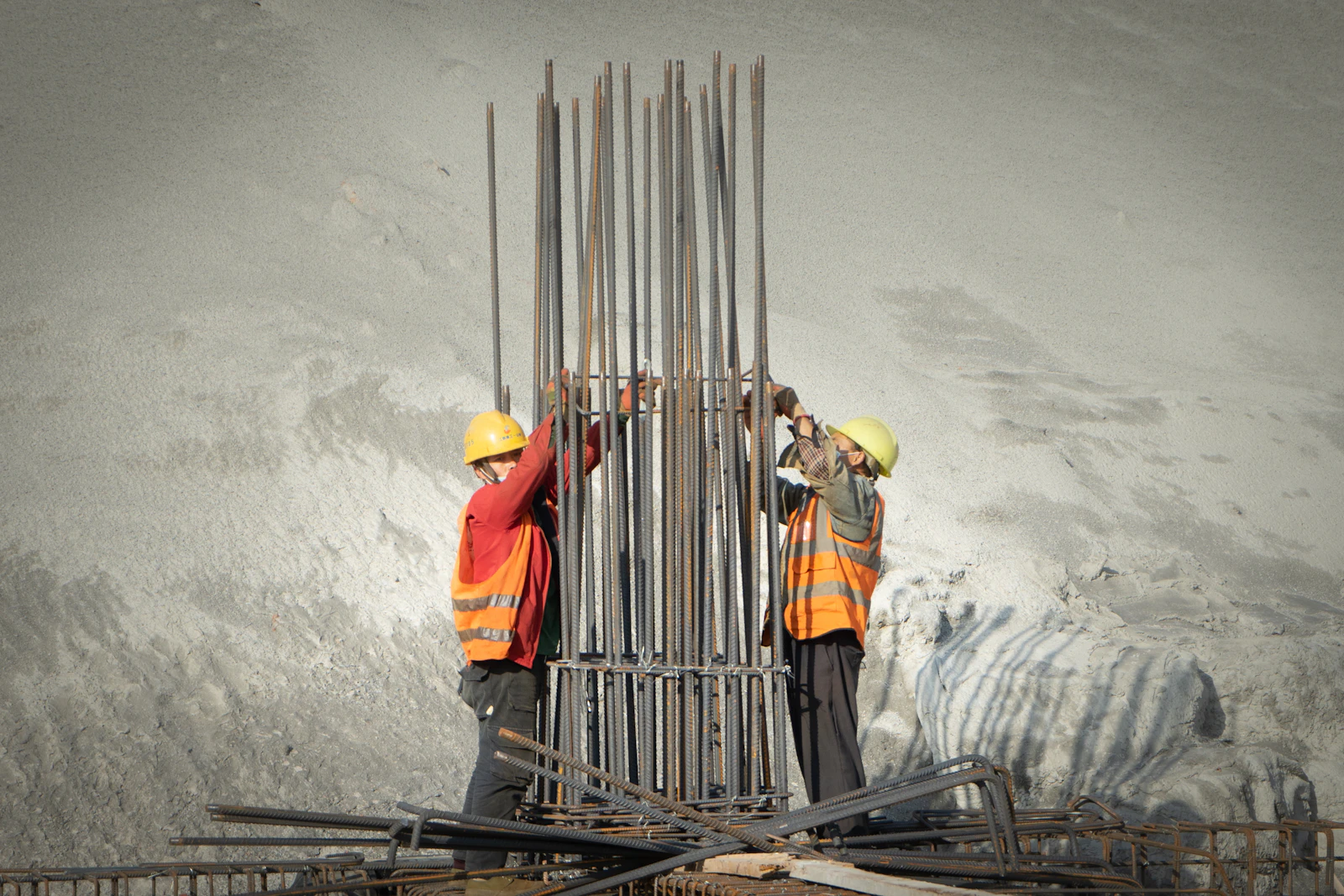
For retaining wall construction in Colorado Springs, 2026 budgeting for rock drill equipment hire usually lands in three practical tiers: (1) air/pneumatic rock drills (handheld) at about $70–$125/day, $260–$400/week, and $800–$1,100/4-week month (tool-only), plus a towable compressor; (2) heavy electric demolition hammers/jackhammers at roughly $100–$160/day and $300–$550/week when power is available and rock is intermittent; and (3) hydraulic rock drill/breaker attachments for skid steers/mini-excavators at about $185–$425/day, $650–$1,350/week, and $2,400–$3,400/month (attachment-only), with the carrier often costing more than the attachment on short terms. National and regional fleets (for example, United Rentals, Sunbelt Rentals, Herc Rentals) and local independents will all quote differently by availability, bit type, and delivery constraints—so the best outcome comes from scoping the drilling method first and then locking your hire package and off-rent rules in writing.
| Vendor |
Daily Rate |
Weekly Rate |
Review Score |
Website |
| Bill's Equipment & Supply, Inc. (Colorado Springs) |
$51 |
$204 |
8 |
Visit |
| Sunbelt Rentals (Colorado Springs) |
$55 |
$115 |
8 |
Visit |
| Herc Rentals (Colorado Springs) |
$293 |
$609 |
9 |
Visit |
| United Rentals (Colorado Springs metro) |
$65 |
$260 |
6 |
Visit |
Rock Drill Rental Rates Colorado Springs 2026
Assumptions used for these 2026 planning ranges: prices shown are typical pre-tax rental rates (not “to-the-penny” branch pricing), a 4-week month is treated as 28 days, and weekly/monthly conversions depend on your supplier’s rate structure, cutoffs, and how they treat weekends/holidays. Where an example rate is published, it’s cited; where a range is shown, it’s a planning range that brackets common quotes for the Colorado Springs market and similar Front Range jobsite conditions.
Tier 1: Handheld Air Rock Drill (Pneumatic) – Tool-Only Hire
If your retaining wall scope is spot drilling in bedrock (weep outlets through rock, dowels into rock, short anchor holes, or breaking out boulders that block excavation), a 50–60 lb class air rock drill can be a cost-effective hire—if you already have compressed air capacity on site. Published 2026 rate-card examples show a 50 lb air rock drill at a $70/day daily rate and $285/week, $825/month on a 2026 rate sheet.
2026 Colorado Springs planning range (tool-only):
- $70–$125 per day (air rock drill, 30–70 lb class)
- $260–$400 per week
- $800–$1,100 per 4-week month
Why the spread? Tool weight/class, included drill steel, point type, and whether the supplier treats it as “specialty” drilling equipment vs. general air tools. For additional benchmarking, a statewide contract price list (different geography, but a useful published comparator) shows $76/day and $265/week for a 30–39 lb air rock drill, and $92/day and $325/week for 50–69 lb class air rock drills.
Tier 2: Electric Demolition Hammer / Jackhammer Hire (When Power Is Available)
Many retaining wall packages in Colorado Springs start in “mixed material” (cobbles, caliche lenses, weathered rock) where an electric breaker or high-energy demolition hammer can handle the hard spots without mobilizing a compressor. A local Colorado Springs tool-rental listing advertises a 70 lb class jackhammer/breaker at $100/day and $300/week (noting inclusions like tax/delivery/pickup in that specific offer).
2026 Colorado Springs planning range (electric breaker):
- $100–$160 per day (60–90 lb electric breaker class)
- $300–$550 per week
- $900–$1,800 per 4-week month (less common than monthly attachment hire, but possible)
Cost note: electric breaker hire can look cheaper than pneumatic/hydraulic, but it often carries “shadow costs” (power distribution, GFCI compliance, extension management, and slower production in true rock). If drilling must be continuous or hole quality is critical (e.g., for rebar dowels/anchors), pneumatic or hydraulic drilling packages generally price out better on schedule risk.
Tier 3: Hydraulic Rock Drill / Breaker Attachment Hire (Skid Steer or Mini-Excavator)
For wall footings and mass excavation where oversize rock is common, the practical rental move is often a hydraulic breaker attachment (many site teams loosely call this “rock drill” equipment hire) on a compatible skid steer or excavator with auxiliary hydraulics. Published online rental examples show:
- Skid-steer hydraulic breaker (attachment-only) at $185/day and $650/week.
- Large breaker attachment (attachment-only) at $425/day, $1,350/week, and $3,400/month.
2026 Colorado Springs planning range (attachment-only):
- $185–$425 per day (size, tool diameter, and energy class drive this)
- $650–$1,350 per week
- $2,400–$3,400 per 4-week month
Carrier cost reminder (often the real budget driver): if you do not already have a compatible skid steer/mini-excavator with auxiliary hydraulics, you are effectively pricing a package (carrier + attachment + delivery + wear items). A published 2026 rate-card example for a skid steer loader shows $280/day, $965/week, $2,895/month for one skid steer class—your local fleet equivalents may vary, but this illustrates why idle carrier days are expensive.
What Drives Rock Drill Hire Costs for Retaining Wall Construction?
On retaining wall scopes, “rock drill rental” cost variance usually comes from production risk more than the sticker day rate. The biggest cost drivers rental coordinators should lock down during takeoff and pre-mob are:
- Rock hardness and discontinuities: Colorado Springs geology can shift quickly from decomposed granite to competent bedrock; that changes bit consumption, hole straightness, and whether you need true drilling vs. breaking.
- Required hole spec: a short 1-1/4 in. dowel hole is not the same as repeated deeper holes; “rock drill equipment hire” can mean anything from an air tool to a breaker attachment, and the lowest day rate is rarely the lowest total cost.
- Access and mobilization: if your wall is in a tight backyard or behind structures, you may be forced into handheld drilling even when a breaker would be faster—expect labor to dominate the total, but the rental still needs the right accessories.
- Power source constraints: compressor mobilization, fuel logistics, and noise windows can be the difference between a 1-week vs. 2-week hire.
- Dust and slurry control: if drilling near occupied buildings, indoor work areas, or sensitive facilities, add HEPA filtration, vacuum shrouds, and cleanup time (and budget the fees if returned dirty).
Building a Complete Rock Drill Equipment Hire Package (Tool, Compressor, Bits, And Hoses)
For pneumatic rock drilling, your “tool-only” number is incomplete without compressed air, hoses, and drilling consumables. A published 2026 rate sheet includes a 185 CFM towable air compressor at $135/day, $525/week, and $1,595/month. In the Colorado/Front Range region, you will also see higher advertised compressor day rates (for example $250/day on one local listing and $259/day / $690/week on another published listing), so plan your budget range accordingly if you need a specific Tier engine or meter rules.
Common accessory hire adders (2026 planning allowances):
- Air hose (3/4 in. x 50 ft): budget $10–$20/day each; one published 2026 sheet shows $15/day and $35/week.
- Drill bit / drill steel: budget $6–$30/day depending on shank/length; one 2026 sheet shows a 1-1/4 in. x 36 in. drill bit at $24/day and $68/week.
- Blow pipe / blow-out tool: budget $10–$20/day; one 2026 sheet shows $16/day and $38/week.
- Dust filtration (HEPA air scrubber) when required: budget $85–$125/day; one 2026 sheet lists a HEPA air unit at $85/day and $294/week.
- Generator (if no power for dust control / lighting): budget $50–$90/day; one 2026 sheet shows a 3,600/4,500W generator at $70/day and $275/week.
Hidden-Fee Breakdown
To keep retaining wall drilling scopes from blowing up the PO, budget these line-item “invoice movers” up front (your supplier’s terms govern, but these allowances are realistic for Colorado Springs equipment hire planning):
- Delivery and pickup: allow $95–$175 each way inside a core service radius; allow $3.50–$6.50 per loaded mile outside that radius, plus potential mountain/after-hours premiums.
- Minimum rental charges: many branches enforce 1-day minimum on compressors and attachments even when tools have 4-hour options.
- Damage waiver / rental protection: commonly 10%–18% of the base rental charges (especially on breakers/attachments).
- Environmental / energy / admin fees: allow 3%–5% of base rent as a placeholder if your vendor uses a standard pass-through fee structure.
- Fuel and refuel: if the compressor comes back short, allow $5–$9 per gallon equivalent refuel charge plus a $25–$60 service fee (or require your crew to top-off and document it).
- Bit wear / tool-point wear: allow $25–$85 per week in consumable wear on light drilling, and $150–$450 per week when rock is abrasive and production is high (this is highly site-dependent).
- Cleaning fees: allow $75 for light cleanup up to $250–$350 if equipment returns with caked mud, slurry, or concrete fines (common when drilling near wet cuts or in rain).
- Late return / extra day penalties: if you miss the return cutoff, expect an additional 1 full day (or more) billed; many branches have 2:00–4:00 p.m. off-rent cutoffs for same-day stops.
- Weekend and holiday billing: Friday afternoon deliveries commonly bill through Monday unless you schedule a Saturday return; for attachments/carriers, plan for 2-day weekend billing unless your contract states otherwise.
- “Dry run” / failed delivery: allow $95–$250 if the truck cannot access the drop zone (gate locked, soft ground, wrong address, no contact).
- Stuck-in-mud / recovery: allow $250–$750 if a carrier gets buried and needs pull-out (and note: recovery time can keep your meter running).
- Hydraulic coupler/bracket mismatch: allow $75–$150 for coupler changes or bracket swaps when the breaker does not match the carrier (plus lost time if discovered after delivery).
Colorado Springs-Specific Cost Considerations That Change the Real Hire Price
Colorado Springs is not a “flatland” rental market. A few local conditions routinely affect rock drill equipment hire costs and schedules:
- Elevation and compressor sizing: at roughly 6,000+ ft elevation, pneumatic tools can feel underpowered if the compressor is marginal. Budget up to a larger compressor class sooner (e.g., prioritize a true 185 CFM towable unit versus trying to “make do” with smaller air in competent rock) to avoid extending hire by extra days.
- Freeze–thaw and access limits: shoulder seasons can create soft subgrade and ruts on narrow access lanes; include a recovery allowance and clarify where the delivery truck can stage without rutting customer property.
- Dust and wind exposure: gusty conditions and dry fines make dust-control more than a compliance issue—it can trigger cleanup fees and neighbor complaints that shorten allowable work windows (which extends rental duration).
Example: Rock Drill Equipment Hire Costs for a Retaining Wall Construction Scope
Example: 120 LF segmental retaining wall with localized bedrock; scope requires 18 dowel holes using an air rock drill plus a 185 CFM compressor over a 5-day window. You choose weekly rentals to avoid day-rate volatility.
- Air rock drill (50 lb class): plan $285/week (published 2026 rate example).
- 185 CFM towable compressor: plan $525/week (published 2026 rate example).
- Air hoses (two runs): plan $35/week each = $70/week (published 2026 hose example).
- 1-1/4 in. x 36 in. bit (as required): plan $68/week (published 2026 example).
- Blow pipe: plan $38/week (published 2026 example).
- Delivery and pickup allowance: plan $150 each way = $300 (varies by radius and truck access).
- Damage waiver: plan 14% of base rent (example allowance) = roughly $140–$160 depending on what the vendor includes in the waiver base.
- Fuel/refuel allowance: plan $90 if returned short on fuel (avoid this by topping off and photographing the gauge).
Planning total (1 week): commonly lands around $1,290–$1,550 before tax, depending on delivery zones, waiver basis, and whether additional drill steel/points are required. If the drilling slips into a second week due to rock hardness or restricted work windows, the “extra week” is driven mostly by the compressor and any carrier rentals—not the tool itself—so protecting the schedule is the biggest cost-control lever.
Budget Worksheet
Use this bullet takeoff to build a clean PO for rock drill equipment hire in Colorado Springs (retain as allowances until quotes are received):
- Handheld air rock drill hire: $70–$125/day or $260–$400/week
- 185 CFM compressor hire (towable diesel): $135–$260/day or $525–$700/week
- Air hose package (2–3 hoses): $20–$60/day total or $70–$140/week total
- Bit / steel package (1–3 pieces): $25–$90/day or $70–$200/week
- Dust control (if required): HEPA air scrubber $85–$125/day
- Power (if required): generator $50–$90/day
- Delivery + pickup allowance: $190–$350 total (tight access can increase this)
- Damage waiver / rental protection: 10%–18% of base rent
- Cleaning allowance (if returned muddy/slurry): $75–$350
- Bit wear / point wear allowance: $25–$450/week (site-dependent)
- Late return contingency: 1 extra day on the highest-cost item (often compressor or carrier)
Rental Order Checklist
- PO includes: equipment description, class/weight, and “rock drill equipment hire for retaining wall construction” scope reference
- Confirm rate structure: day vs. week vs. 28-day month, and whether weekends/holidays bill automatically
- Confirm off-rent cutoff time (plan around a 2:00–4:00 p.m. branch cutoff unless your contract states otherwise)
- Confirm delivery requirements: truck access, gate codes, onsite contact, and preferred delivery window
- Confirm compressor meter/hour rules (if any) and refuel expectations at return
- Confirm included accessories: hoses, whip checks, lubricator (for air tools), bits/steel, and spare points
- Document condition at drop: photos of tool, serial plate, hoses, and fuel level; note existing dents/leaks
- Return condition: remove slurry/mud, coil hoses, secure bits/steel, and photograph the same angles at pickup
- Closeout: collect signed pickup ticket, verify off-rent date/time, and reconcile waiver/fees before invoice approval
Attachment Compatibility and “Wrong Tool” Re-Dispatch Costs
For retaining wall construction, the most expensive rock drill hire outcome is not “high daily rent”—it’s a re-dispatch caused by mismatch (tool too small, wrong shank/bit system, breaker bracket doesn’t fit the carrier, or compressor undersized for the drill). Build the scope so the vendor can quote accurately:
- Hydraulic attachment fit: specify carrier make/model, auxiliary flow (gpm), pressure (psi), and coupler type. If the breaker arrives and does not couple, you can lose a day and still pay delivery/dry-run fees.
- Pneumatic drill requirements: specify tool air consumption, target hole diameter/depth, and whether you need drill steel included. Budget at least 2 hoses and a blow-out tool to keep holes clean and drilling productive.
- Bit system: confirm whether the rental includes a standard point or whether specialty bits are billed as separate rent/consumables.
Meter Rules, Wear Items, and Consumables That Move the Invoice
Even on “simple” rock drill equipment hire, most invoice disputes come from accessories and condition. For Colorado Springs retaining wall work, include these control points:
- Tool-point wear and breakage: clarify what is considered normal wear versus chargeable damage. For breaker attachments, tool points are often treated as wear items if you run in abrasive rock all week.
- Hose damage and fittings: plan a $40–$120 contingency for damaged couplers/whip hoses if the work area is tight and hoses rub on rock.
- Cleaning and slurry: if you wet-drill or run in mud, establish a “return clean” standard. A $75 cleaning fee is common; a $250–$350 cleanup is what hits when slurry hardens in housings or on trailers.
- Fuel control: if using towable compressors, require end-of-shift fueling and a photo of the gauge; this avoids refuel markups (often $5–$9/gal equivalent plus service fees).
Off-Rent Strategy for Retaining Wall Drilling (How to Avoid Paying for Idle Days)
Rental coordinators can often save more with off-rent discipline than by negotiating $10 off the day rate:
- Schedule drilling in a contiguous block: avoid “one hour of drilling” spread over three separate days; that’s three chargeable days on most equipment hire contracts.
- Align delivery and start time: if your crew can’t start until noon, a morning delivery can still bill a full day. Prefer deliveries that match your first productive hour.
- Book returns before cutoff: missing a 2:00–4:00 p.m. off-rent cutoff can add a full day. Pre-stage return access and have a named onsite contact.
- Plan around weekends: if you take delivery Friday and return Monday, clarify whether it bills as 1 day, 2 days, or a weekend minimum. If Saturday return is possible, schedule it at order time.
When Monthly Rock Drill Equipment Hire Starts to Win
If your retaining wall program includes multiple walls, phased drilling (utilities conflicts), or weather windows that could stretch the schedule, monthly equipment hire can reduce rate pressure—but only if you keep the equipment productive. Use these practical triggers:
- Hydraulic breaker attachments: consider monthly when you expect 3+ weeks of regular breaking/drilling and you already have the carrier on site.
- Pneumatic drilling packages: consider monthly when you have repeated drilling across lots and can store and secure the compressor/drill safely (theft risk can erase monthly savings fast).
- Dust control equipment: monthly can be justified on occupied-site work where indoor drilling is frequent; otherwise, rent it only on the days it’s required.
Procurement Notes for Colorado Springs Retaining Wall Projects
Finally, write your PO and subcontract scopes so everyone prices the same constraints:
- Delivery radius and access: confirm whether the site is in a tight residential area, hillside access, or requires smaller trucks; budget a delivery premium if standard trucks can’t reach the drop.
- Noise and work windows: if your window is limited (schools, occupied facilities, HOA restrictions), expect schedule-driven rental extensions; plan a contingency of 1–3 extra days on the highest-cost item.
- Return-condition documentation: require “before/after” photos and signed pickup tickets to prevent post-return damage disputes.
If you want, share the planned hole diameter/depth (or whether this is primarily breaking oversize rock for footing excavation), and whether you already have a skid steer/mini-ex with aux hydraulics on site. That lets you tighten the Colorado Springs rock drill equipment hire budget into a single recommended package with fewer contingencies.