

For Denver retaining wall construction in 2026, rock drill equipment hire typically lands in three practical budgeting tiers depending on how much drilling you truly need: (1) a pneumatic air rock drill (handheld/jackleg style) commonly budgets around $85–$140/day, $250–$450/week, and $800–$1,400 per 4-week month when sourced from a standard contractor yard; (2) the required air package (often a towable 185 CFM compressor plus hoses and safety gear) is frequently $145–$220/day, $520–$800/week, and $1,400–$2,000 per 4-week month in the Denver metro; and (3) if the wall design pushes you into tiebacks/soil nails/micropile-style drilling, a self-contained track drill can move the equipment hire cost into five figures per week. Most Denver-area procurement teams quote through national houses (United Rentals, Sunbelt Rentals, Herc) and Front Range independents depending on availability, delivery constraints, and whether you need a turnkey air-and-tooling package.
| Vendor | Daily Rate | Weekly Rate | Review Score | Website |
|---|---|---|---|---|
| United Rentals | $110 | $440 | 9 | Visit |
| Sunbelt Rentals | $105 | $420 | 9 | Visit |
| Herc Rentals | $115 | $460 | 8 | Visit |
| Ahern Rentals | $100 | $400 | 8 | Visit |
| EquipmentShare Rentals | $120 | $480 | 8 | Visit |
Assumptions used for 2026 planning ranges: single-shift operation (commonly 8 hours/day), a standard 5-day work week, and a 28-day (4-week) billing month; taxes, delivery, fuel, and loss/damage waiver are excluded unless noted. Many rental contracts also enforce an off-rent cutoff window (often mid-morning), so the “last day” can bill even if the unit leaves site early.
Tier A: Pneumatic air rock drill (handheld / jackleg / sinker style)
Use this tier when your retaining wall scope needs short holes for pins, dowels, or spot anchor bolts (and you can physically access the face without a dedicated rig). In Colorado, published reference rates for an air rock drill show $107/day, $424/week, and $1,273 per 4-week (example reference schedule), and other published schedules for 30–39 lb class tools show $76/day, $265/week, and $563/month (contract schedule reference). For Denver estimating, a practical 2026 budget band for “rock drill only” (excluding compressor) is $85–$140/day, $250–$450/week, and $800–$1,400 per 4-week, with the spread driven by drill weight class, included steel/bit, and whether the tool is reserved for production drilling vs intermittent use.
Tier B: Air package required to make the rock drill productive
A pneumatic rock drill is rarely a standalone hire. Budget the air package explicitly (so you do not “win the drill rate” and lose the job on accessories and logistics):
Tier C: Track drill / self-contained drill for tiebacks and deep anchors
If retaining wall constraints require deeper, straighter, higher-production drilling (often in rock along the Front Range), the equipment hire cost can shift dramatically. A published January 2026 rate sheet reference for a self-contained track drill shows $12,650/week and $38,000/month for an Epiroc-class unit, with rental terms based on single shift hours (example: 10 hours/day, 50 hours/week, 200 hours/month on that sheet). Denver pricing will vary by fleet availability and mobilization needs, but this is a realistic order-of-magnitude planning anchor for specialty drilling iron.
For retaining wall construction in Denver, the decision point is not “rock drill or no rock drill”; it is the lowest-cost drilling system that still meets production and access constraints. The most common cost outcomes look like this:
In practice, rental coordinators often bid “Tier A + Tier B” for small-to-medium retaining wall drilling packages, and only escalate to “Tier C” when the wall length, hole depth, or rock hardness makes handheld production unrealistic.
1) Tool class and included consumables
A quoted “rock drill” may be tool-only with no steel/bit included. If drill steel and button bits are included, confirm whether they are rental items or replace-at-cost consumables. Some packaged rock drilling rentals publish bundled pricing such as $160/day, $380/week, or $250/day for larger packages (examples), which can look higher than a bare tool day-rate but may reduce surprises if steel/bit is part of the kit.
2) Compressor sizing at Denver elevation
Denver’s altitude can push marginal air setups into underperformance. If the crew is already running near capacity (multiple tools, long hose runs, or continuous drilling), stepping from a 185 CFM to a 375–440 CFM compressor can add several hundred dollars per week in base hire, but it can also prevent lost production and the cost of a mid-rental swap (which often triggers a second delivery/pickup).
3) Delivery radius, time-certain dispatch, and site access
Denver metro deliveries often price as a core-zone fee plus mileage outside a service radius. A practical budgeting reference for Denver compressor deliveries is $95–$185 each way inside the metro core, then $3.50–$6.00 per loaded mile outside a standard radius (with ~25 miles often treated as a planning threshold). If you require a tight downtown window, plan an additional $125–$250 “time-certain/after-hours” dispatch adder on top of the base delivery.
4) Single-shift vs overtime billing
Most rate structures assume one shift. If your retaining wall work is constrained to short access windows (traffic control, noise windows, HOA restrictions), it is easy to push into overtime or second-shift surcharges. A conservative estimating rule is to assume 1.5x effective cost for extended shift usage unless the supplier confirms “unlimited hours” in writing.
5) Return condition and documentation
Drilling in rock adjacent to excavation often returns equipment with mud, slurry, or concrete residue. Cleaning line items are common; Denver planning allowances for towable compressor cleaning can be $85–$250 depending on severity.
Use this list as an estimator’s “invoice delta” check. These are the add-ons that most frequently explain why actual equipment hire cost exceeds the day-rate:
Downtown and dense neighborhoods: In central Denver corridors, time-certain delivery and staging constraints often matter more than the tool day-rate. If you cannot stage the compressor and keep it fenced, you may be forced into daily pickup/return cycles (higher admin and delivery costs).
Front Range dust control expectations: When drilling in occupied areas (commercial sites, schools, or adjacent residences), dust-control equipment hire becomes a real line item. Denver HEPA vacuum rental planning ranges are commonly $50–$100/day, $300–$400/week, and $900–$1,200/month depending on capacity, which can be a meaningful add-on if the spec or GC requires active dust capture.
Foothills / I-70 corridor mobilizations: If the retaining wall is west of the metro (limited turnaround, longer drive time), treat delivery as mileage-plus-time rather than a flat fee, and assume weather impacts (snow events) can extend billable days if pickup is delayed.
Example: A 120 LF retaining wall on a tight Denver infill lot needs 30 dowel holes drilled into rock, each 1.5 inches diameter by 30 inches deep (75 linear feet total). The crew will drill over 3 working days, but access rules only allow work from 8:00 a.m. to 4:30 p.m., and the GC requires dust control.
Planning takeaway: even a “small” rock drill scope can land near $1,300–$2,200 all-in once compressor, delivery, waiver, hoses, and dust control are included. That is why Denver equipment managers typically manage the package, not just the drill day-rate.
Use these line items (no tables) to build a PO-ready allowance for rock drill equipment hire costs on Denver retaining wall work:
Before dispatching rock drill equipment to a Denver retaining wall site, rental coordinators typically confirm:
For Denver retaining wall work, the fastest way to reduce equipment hire variance is to (1) lock the drilling approach early (handheld air drill vs track drill), (2) order the air package as a single scoped bundle (compressor + hoses + safety), and (3) control the last-day billing risk by scheduling pickup before the off-rent cutoff. Finally, require return-condition photos (tool, steel, and compressor running gear) to reduce disputes over cleaning or missing accessories.
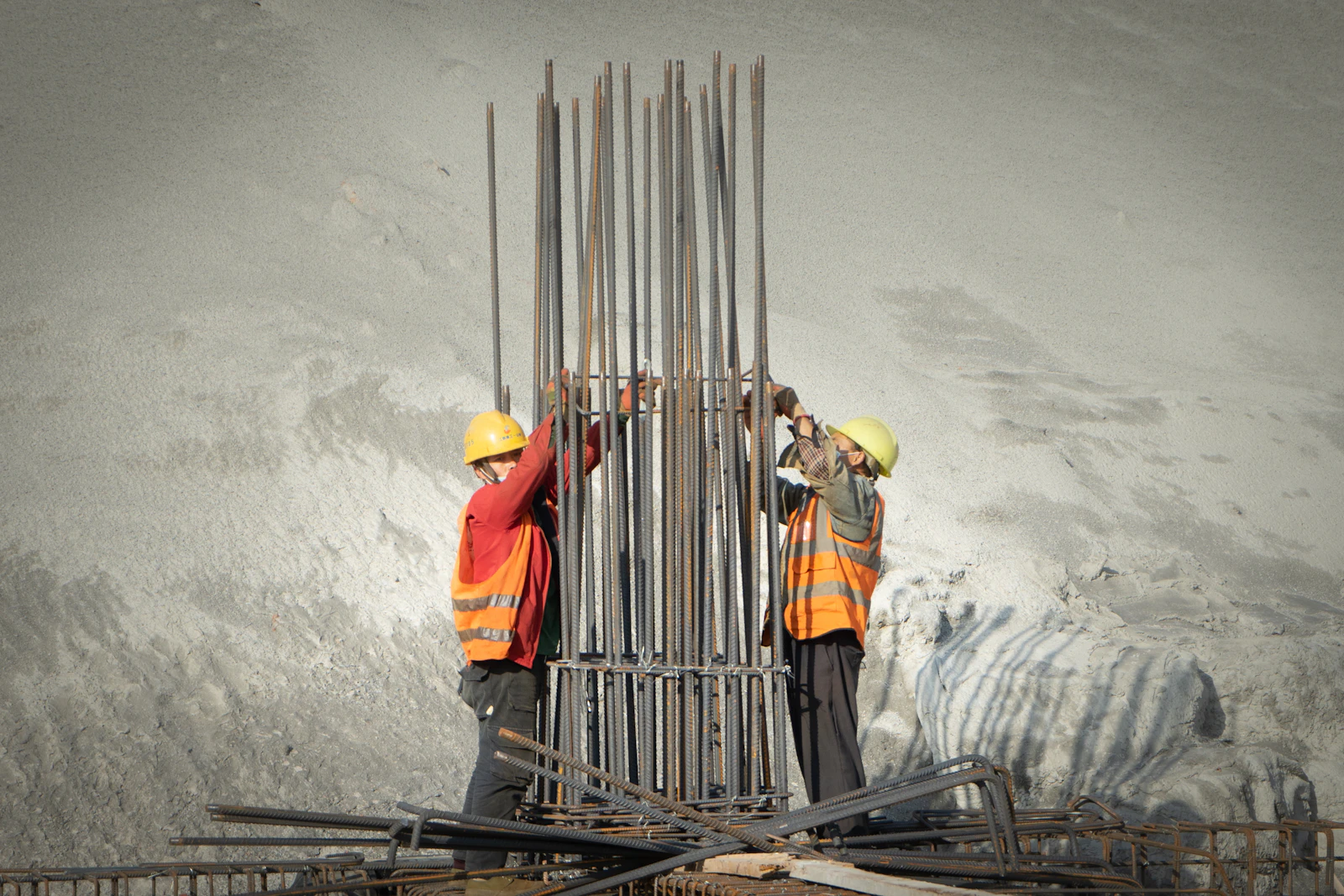
It is normal to hesitate when a specialty drill rig quote is measured in $12,650/week and $38,000/month (published January 2026 reference for a self-contained track drill). However, a track drill can become the lower total cost of equipment hire when handheld drilling introduces schedule uncertainty, quality risk (alignment, depth tolerance), or safety constraints. From an equipment manager perspective, the break-even triggers usually include:
For budgeting, if you are approaching multi-week drilling windows, request 4-week pricing from day one and confirm the shift-hour basis (some published rate sheets use 10 hours/day, 50 hours/week, and 200 hours/month as the included usage basis).
Rock drill rentals frequently carry the most cost risk in consumables and loss rather than base hire. Your PO should explicitly state what happens to:
Estimator tip: For retaining wall drilling in rock, carry a dedicated “tooling wear allowance” line item rather than hiding it in contingency. This makes post-job reconciliation cleaner and improves future equipment hire forecasting.
In Denver, drilling often happens near occupied spaces or adjacent properties. That makes dust and slurry management an equipment hire issue (not just a housekeeping issue):
Where feasible, include a return-condition process: blow down the compressor exterior, coil hoses, cap couplers, and take photos of the tool and accessories before off-rent.
Two operational rules drive a lot of Denver “extra day” invoices:
For retaining wall work, schedule pickup for the morning after final drilling, not “sometime Monday,” and build a small schedule buffer so you are not still drilling when the off-rent cutoff passes.
LDW commonly runs 10%–18% of rental charges. If you decline it, many suppliers require certificate wording and may raise deposit/credit requirements. A practical approach for equipment managers is to:
For retaining wall construction in Denver in 2026, rock drill equipment hire is best managed as a system cost. The rock drill tool itself can be in the low hundreds per week, but the compressor, delivery, LDW, hoses, cleaning, and dust/slurry management commonly push the all-in package into four figures quickly. For deep anchor drilling, track drill equipment hire can reach $12,650/week and $38,000/month on published January 2026 rate sheets, so the decision should be tied to production risk and mobilization constraints—not only the sticker rate.
