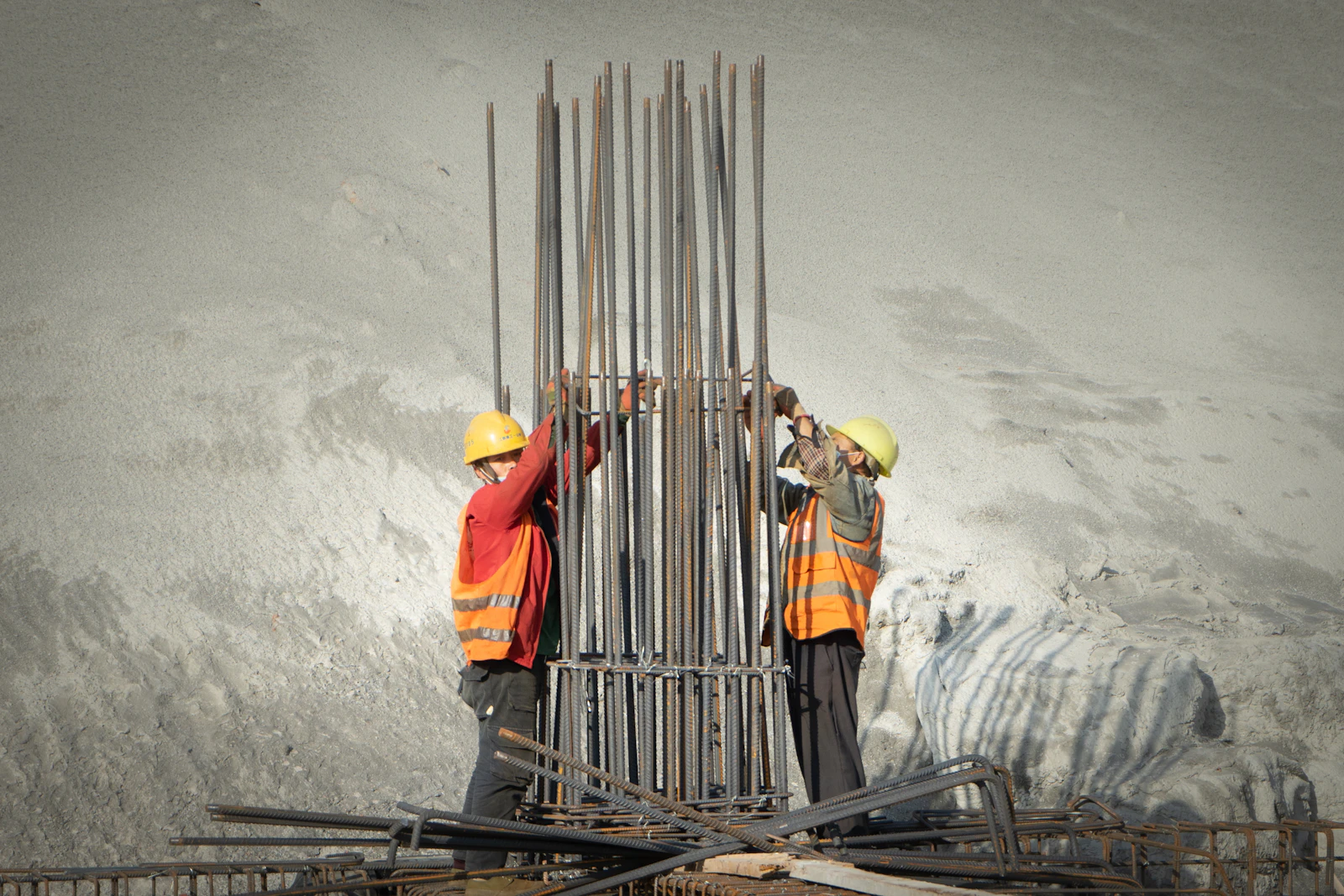
Rock Drill Rental Rates New York 2026
For retaining wall construction in New York City, 2026 budgeting for rock drill equipment hire typically falls into two common setups: (1) a pneumatic (air) rock drill paired with a towable diesel air compressor, or (2) a hydraulic hammer/breaker attachment used to pre-break rock where drilling productivity would be poor. As a planning range for NYC-area procurement (one shift, one tool), budget roughly $100–$180 per day, $350–$550 per week, and $750–$1,200 per 4-week period for a 50–60 lb class air rock drill, plus a separate 185 CFM-class towable compressor typically in the $150–$325 per day, $300–$750 per week, and $675–$1,800 per 4-week period range depending on emissions tier, delivery constraints, and whether you’re hiring on a contract schedule or open-market rates. New York buyers commonly source through national houses (e.g., United Rentals, Sunbelt Rentals, Herc Rentals) and NYC-metro independents; your final cost hinges less on “list rate” and more on delivery window, off-rent rules, and accessory consumption.
| Vendor |
Daily Rate |
Weekly Rate |
Review Score |
Website |
| United Rentals |
$125 |
$425 |
9 |
Visit |
| Sunbelt Rentals |
$120 |
$275 |
8 |
Visit |
| Herc Rentals |
$100 |
$350 |
8 |
Visit |
| G.T. Rentals |
$115 |
$395 |
9 |
Visit |
| Westchester Tool Rentals |
$64 |
$256 |
9 |
Visit |
Assumptions Used For 2026 Rock Drill Hire Budgeting
To keep estimating consistent across boroughs and job sites, the ranges above assume:
- Single-shift hire with standard “day/week/4-week” rental structures (confirm whether “day” is calendar day or 8-hour meter day on powered equipment).
- Tool-only hire (no operator). If you need operated drilling (micropiles, tiebacks, soldier pile systems), expect a different procurement model (often a specialty drilling subcontract or operated equipment).
- NYC access constraints (limited laydown, tighter delivery windows, street-use constraints) treated as separate line-item allowances rather than baked into base rate.
Reference Rate Data You Can Use To Anchor Your NYC Estimate
If you need a defensible baseline for internal approvals, New York State OGS contract price lists can be used as rate anchors (then apply an NYC logistics premium where appropriate). For example, an OGS price list shows a 50–59 lb air rock drill at $92 daily, $325 weekly, and $688 monthly, with a stated transportation flat rate of $250 each way per item within 30 miles (confirm applicability to your authorized-user status and delivery geography).
On the same statewide list, a 175–195 CFM towable diesel air compressor is shown at $135 daily, $260 weekly, and $676 monthly, again with the $250 each-way transport note within 30 miles.
A separate NY OGS contractor price list (Able Equipment Rental) shows additional reference points used often in estimating packages: a 185 CFM compressor at $150/day, $300/week, and $750/month; a 500 lb hydraulic hammer attachment at $200/day, $600/week, and $1,500/month; and a 750 lb hydraulic hammer at $250/day, $750/week, and $1,900/month.
What You’re Actually Hiring When You Say “Rock Drill” In Retaining Wall Construction
In NYC retaining wall scopes, “rock drill rental” can mean different things operationally, and that drives cost:
- Air rock drill (hand-held/jackleg): Used to drill holes in rock for dowels, small anchors, split lines, or controlled break. Requires a compressor, air hoses, drill steel, and bits. This is the most literal “rock drill equipment hire.”
- Hydraulic hammer/breaker attachment: Not a drill, but commonly hired alongside drilling to reduce refusal or to open a bench. In mixed rock/overburden, it can reduce total drilling time even if it adds an attachment line item.
- Specialty drilling rigs: If the retaining wall design calls for tiebacks/micropiles with casing, grout, and proof testing, you’re usually outside tool-rental pricing and into specialty subcontract pricing.
For estimating, clarify the hole diameter, hole count, rock type, and access method (sidewalk shed, backyard access, barge/craned delivery) before you lock in rock drill hire cost allowances.
Cost Drivers That Move Rock Drill Equipment Hire Pricing In New York City
NYC rock drill equipment hire costs are heavily influenced by site logistics and compliance. Key cost drivers to model explicitly (instead of burying them inside “rental rate”) include:
- Delivery window and cutoffs: Many rental yards run strict same-day cutoffs (often midday) for next-day delivery scheduling. Missing a cutoff can add a full day of standby cost on labor and can also trigger premium delivery or re-delivery charges.
- Borough-specific travel friction: Bridge/tunnel approach time, truck route constraints, and toll exposure can create a meaningful delta between a Bronx delivery and a Lower Manhattan delivery even at the same “miles.”
- Street/sidewalk staging limits: If you cannot store the compressor overnight (noise/secure storage constraints), you may end up paying for additional pick-up/return cycles or security provisions.
- Dust-control and silica controls: Dry drilling can be restricted by project requirements; wet drilling/water suppression and HEPA vac integration can add accessories, consumables, and cleaning costs.
Accessory And Consumable Adders (Where Retaining Wall Jobs Spend Money)
On retaining wall construction, the rock drill itself is rarely the only cost. Plan for these common adders (typical allowances shown; confirm your supplier’s schedule):
- Additional 3/4 in. air hose (50 ft): budget $8–$25 per day per section depending on contract schedule and supplier.
- Water separator / moisture control (if required for tool longevity): often hired as an attachment/accessory line item (allow $25–$100 per day depending on setup).
- Extra drill steel / bit wear: allow $25–$60 per day in wear/consumables for hard rock (higher if you’re burning bits due to poor flushing or wrong CFM/PSI).
- Spare point/chisel for breaker tools (if you also hire a breaker): allowance $11–$40 per day per tool steel depending on shank size and schedule.
- Couplings and whip checks: allow $15–$45 per set for lost/damaged small items (these are frequently back-charged at replacement cost).
Delivery, Pick-Up, And NYC Jobsite Access Charges (Model These Separately)
Delivery is where New York equipment hire budgets often blow up. Use separate line items so your PM can control cost with scheduling discipline:
- Baseline delivery/pick-up: as a reference, some NY contract schedules show a $250 each-way per item transport flat rate within a defined radius.
- Per-mile structures: some schedules also show mileage-based delivery components such as $2.50 per mile (loaded mile) plus a base charge (confirm if mileage is one-way or round-trip).
- Manhattan curb management: allow $75–$200 for parking/traffic agent coordination if the drop requires truck dwell time or double-parking exposure (project- and GC-policy dependent).
- After-hours / restricted-hour delivery: allow $200–$400 if the site only accepts early morning, night, or weekend delivery to avoid congestion and maintain sidewalk clearance.
- Waiting time: allow $125 per hour if the truck is frequently delayed by gate access, elevator/hoist coordination, or street closure timing.
Damage Waiver, Deposits, And Insurance (Often A Percentage Add-On)
For NYC retaining wall construction, many contractors carry strong GL and equipment floaters, but rental houses may still apply (or offer) a damage waiver. Typical estimating allowances:
- Damage waiver: allow 12%–18% of base rental charges when elected or required by policy (confirm if waiver applies to theft, vandalism, or only accidental damage).
- Environmental/administrative fees: allow 2%–5% of rental charges where applicable (varies by supplier and contract).
- Security deposit / credit hold: allow $300–$2,000 depending on tool class and account standing (especially for short-term hires and first-time accounts).
Example: Two-Week Brooklyn Retaining Wall Rock Drilling Package (With Real Constraints)
Scenario: You’re drilling dowel holes for a segmental retaining wall base and localized rock benching in Brooklyn. Access is through a narrow driveway; deliveries must arrive before 7:00 AM to avoid blocking neighbor egress. Work is 10 weekdays with no weekend work, but the compressor must be removed nightly (no secure laydown).
- Rock drill equipment hire: budget $450–$550 per week for the rock drill (NYC planning range) for 2 weeks.
- 185 CFM compressor hire: budget $650–$750 per week for 2 weeks (higher end if emissions tier or quiet requirements tighten availability).
- Delivery/pick-up: budget $500–$900 total if you can consolidate drop and final pick; add $250–$600 if nightly removal forces extra trips (common in NYC when theft risk is high).
- Accessory allowance: $160–$350 for extra hose sections, couplings, and bit wear over two weeks (higher if rock is abrasive or flushing is poor).
- Damage waiver: add 12%–18% of base rental if your policy elects it.
Estimator note: The cost swing here is driven less by the drill and more by nightly removal logistics. If you can secure the compressor inside a fenced laydown or under camera coverage, you can often cut total cost materially by reducing trips.
Budget Worksheet (Rock Drill Equipment Hire – NYC Retaining Wall Construction)
- Air rock drill hire (50–60 lb class): allowance based on planned duration and rate structure.
- Towable diesel compressor hire (175–195 CFM / “185 CFM class”): allowance based on duration and emissions tier.
- Delivery and pick-up: allowance $500–$1,200 (increase if multi-trip due to no laydown).
- Mileage/tolls: allowance $75–$250 (borough routing dependent).
- After-hours / restricted delivery window premium: allowance $200–$400.
- Waiting time / access delays: allowance 2 hours at $125/hour (i.e., $250).
- Hose and small accessories: allowance $100–$250.
- Bit/drill steel wear: allowance $25–$60 per day of active drilling (set to expected drilling days).
- Damage waiver (if used): allowance 12%–18% of base rental.
- Environmental/administrative fees: allowance 2%–5% of base rental.
- Cleaning/return condition: allowance $95–$250 if returned muddy or with concrete dust contamination.
Rental Order Checklist (What Your Coordinator Should Confirm Before Issuing The PO)
- Confirm rock drill type (air rock drill vs. alternative method) and required CFM/PSI at the tool.
- Confirm compressor class (175–195 CFM) and whether the yard supplies fuel at dispatch (full tank vs. partial).
- Confirm included accessories vs. billable add-ons (hose length, whip checks, water separator, bits, drill steel).
- Confirm delivery window, site contact, and NYC curb access plan (who meets the driver; where the unit is staged).
- Confirm off-rent procedure (who can call off-rent; required notice; whether weekends are billable if unit sits idle).
- Confirm return condition expectations and documentation (photos at receipt and at return; note existing dents/hose wear on the ticket).
- Confirm damage waiver election and insurance certificate requirements (additional insured, waiver of subrogation as required by GC policy).
Hidden-Fee Breakdown For Rock Drill Equipment Hire In New York City
When comparing suppliers for rock drill equipment hire cost in New York, align on these common “extras” up front so you don’t under-carry the estimate:
- Minimum hire: many tool hires are 1-day minimum, even if you only drill for a few hours (especially with delivery).
- Weekend and holiday billing: some suppliers bill Saturday/Sunday as full days if the unit remains on rent; others offer a reduced “weekend rate” only if you pick up Friday and return Monday by a defined cutoff.
- Late return penalty: allow up to 1.5× the daily rate if returned after the agreed cutoff or if the driver cannot access the unit at pick-up.
- Fuel and refuel: if the compressor is not returned at the dispatched fuel level, allow diesel at $6.50–$8.50 per gallon plus a $50–$95 service/refuel fee (varies by supplier policy).
- Cleaning: allow $95–$250 if the drill/compressor returns caked with mud or concrete dust, or if filters require replacement due to dust exposure.
- Hose damage: allow $3–$8 per foot as a replacement-cost placeholder for damaged air hose in tight urban sites (pinch points at gates and curb edges are common).
Operational Rules That Change Real Rental Cost (NYC-Specific)
These are the on-site constraints that most often convert a “good rate” into a high total cost on retaining wall construction in NYC:
- Off-rent cutoffs: many rental houses require off-rent calls before a morning cutoff (often around 10:00 AM) to stop billing for that day. If your superintendent misses the cutoff, you frequently burn a full extra day.
- Delivery attempts: failed delivery (no site contact, blocked curb, missing permits) can trigger a re-delivery allowance of $175–$350 plus additional days on rent if the unit is held.
- Noise management: NYC neighborhoods can be sensitive to compressor/drilling noise; if you must limit drilling to a shorter window, your calendar days increase even if total drilling hours don’t. That increases weekly/4-week exposure.
- Dust-control requirements: indoor/basement drilling for retaining wall underpinning often requires wet methods and/or HEPA controls; plan a $150–$350 allowance for dust-control accessories, water management, and additional cleanup labor coordination.
- Heat and idle policy: in summer work, compressors can spend more time idling for cooling and to maintain air supply. If your contract is meter-based, confirm whether idle counts toward the 8-hour day (many do).
When A Hydraulic Hammer Attachment Is Cheaper Than More Rock Drill Time
Even though your scope is “rock drill rental,” retaining wall construction often runs into mixed conditions (boulders, ledge). If drill penetration is slow, hiring a hydraulic hammer attachment for a few days can reduce total time on rent for the drill package.
- As a reference point for attachment budgeting, one NY OGS list shows a 500 lb hydraulic hammer at $200/day, $600/week, and $1,500/month, and a 750 lb hydraulic hammer at $250/day, $750/week, and $1,900/month.
- If you add a breaker, also add tool steel and wear: plan $75–$200 in tool-steel wear/consumable exposure on short bursts, and more if the operator is inexperienced or the rock is highly abrasive.
Procurement Tips For Rock Drill Equipment Hire (So The Rate You Quote Is The Rate You Pay)
- Ask what’s included: Some suppliers include one hose section with a compressor; others bill hose separately. Getting this wrong can add $80–$250 over a short job simply in hose and fittings.
- Schedule smartly: If you can start Monday and end Friday, you may keep the hire inside a weekly structure. If you start Thursday and end the following Tuesday, you can accidentally incur two weekly charges depending on the supplier’s billing model.
- Photograph condition at handoff: Photos can prevent disputed damage charges (commonly $150–$900 for bent guards, cracked housings, or missing safety components).
- Confirm storage expectations: If theft risk forces daily returns, model it early: an extra 2 trips at $250 each way can add $1,000 to the job cost fast.
2026 Planning Takeaways For New York Retaining Wall Construction
For NYC retaining wall construction, the most accurate rock drill equipment hire estimate is built from (1) a defensible base rate (day/week/4-week), (2) delivery and access allowances that reflect borough constraints, and (3) accessories and consumables that match your drilling method. Use contract price lists as anchors, then apply NYC logistics realities (tight delivery windows, limited laydown, and strict off-rent rules) as explicit line items your field team can actively control.