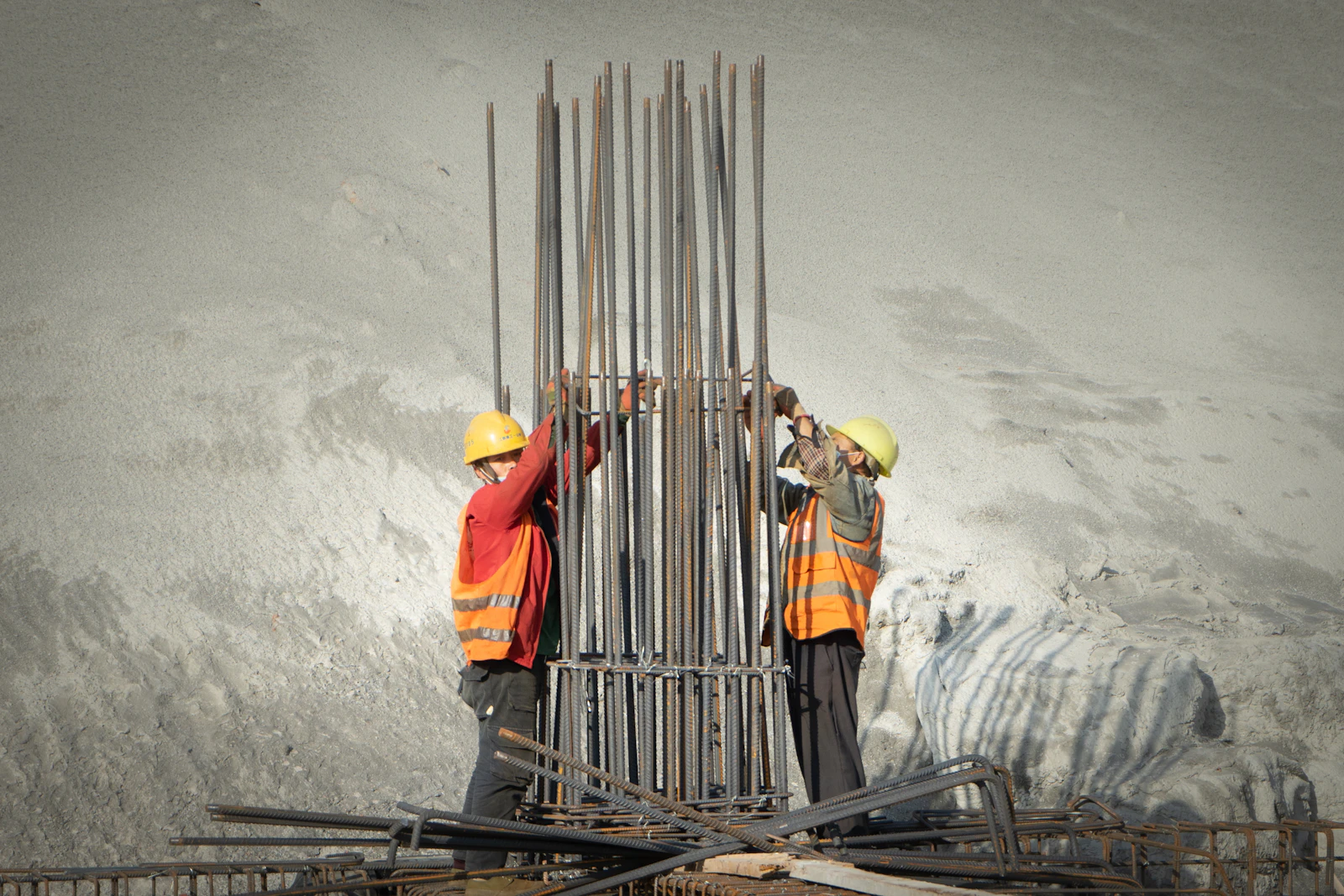
For San Diego rock drill equipment hire on retaining wall construction in 2026, budget-level pricing typically lands in the $150–$300/day, $600–$1,205/week, and $2,005–$4,510/4-week range for a jobsite rock drill, with the spread driven by drill class (10–19 lb through 60–69 lb), availability, and whether the package includes drill steel/bit support. In practice, most retaining wall drilling scopes also require support equipment hire (especially a towable compressor), so your all-in delivered cost is commonly governed by compressor class, hoses, dust-control requirements, delivery logistics, and off-rent rules more than the sticker drill rate. In San Diego County, coordinators commonly source rock drill hire through national rental branches (United Rentals, Sunbelt, Herc) and regional heavy-equipment houses that support pneumatic tools and accessories.
| Vendor |
Daily Rate |
Weekly Rate |
Review Score |
Website |
| United Rentals |
$254 |
$602 |
8 |
Visit |
| Sunbelt Rentals |
$250 |
$600 |
7 |
Visit |
| Herc Rentals |
$298 |
$641 |
8 |
Visit |
| EquipmentShare |
$245 |
$590 |
8 |
Visit |
| H&E Equipment Services |
$260 |
$610 |
10 |
Visit |
Rock Drill Rental Rates San Diego 2026
Assumptions for 2026 planning ranges: USD, standard single-shift rental (8-hour equivalent), business-hours pickup/return, and a 4-week billing month (common in equipment hire). Quotes vary by branch, season, and whether you are bundling compressor + tooling. Use the ranges below to build a retaining wall drilling budget and then firm up with a written quote and a clear “what’s included” scope.
1) Pneumatic air rock drill (handheld), 10–19 lb class (light anchor/dowel drilling): If your retaining wall scope is limited to smaller anchor holes and short drilling runs, this is often the lowest all-in path—provided you already have compressed air on site. United Rentals, for example, carries air rock drills in the 10–19 lb class and larger. For budgeting in San Diego, many teams still use the overall metro range ($150–$300/day) as a conservative placeholder once you include accessories and local logistics.
2) Pneumatic air rock drill (handheld), 30–39 lb class (production drilling for anchor holes in harder material): This class is frequently selected when the retaining wall design drives more drilling footage or when you need better penetration in hard-faced rock. United Rentals lists a 30–39 lb air rock drill category and describes it for hard drilling applications. As an external benchmark for day/week/month relationships, a published government rental schedule (Herc) shows $76/day, $265/week, and $563/month for a 30–39 lb air rock drill (note: schedule pricing is not San Diego-specific, but it’s useful for ratio-checking your quote).
3) Pneumatic air rock drill (handheld), 50–69 lb class (heavier drilling/longer shifts): Expect higher day rates and higher air consumption (which can push you toward a larger compressor hire). A published example from an equipment rental store shows a 60 lb pneumatic rock drill at $90/day and $270/week (again, use as a benchmark, not as San Diego pricing). The same Herc schedule lists $92/day, $325/week, $688/month for 50–59 lb and also $92/day, $325/week, $688/month for 60–69 lb air rock drill classes. In San Diego, many contractors still carry the broader metro planning band ($150–$300/day) for the drill itself when they expect delivery, compliance add-ons, and limited availability to drive the final number.
4) “Rock drill package” pricing (drill + drill steel + bit): Where available, package-style rentals can control surprises because the quote is less likely to omit drill steel or a compatible bit. One published package example for a pneumatic rock drill includes a $160/day and $380/week rate, plus a $250/weekend option (package includes drill steel and a button bit). This is a useful reference when comparing a “cheap drill day rate” against a more complete package quote.
What Drives Rock Drill Equipment Hire Cost on Retaining Wall Jobs?
Retaining wall construction is one of the scopes where rock drill hire cost can vary dramatically even when the drill model is the same, because utilization and job constraints drive billable days.
- Hole diameter and depth drive the drill class: Moving from light anchor holes to repeated deeper drilling often pushes you from a 10–19 lb air rock drill into the 30–39 lb or 60–69 lb class, which typically increases air demand and can force an upgrade from a mid-size compressor to a 185 CFM towable diesel compressor hire.
- Compressor sizing and rules: For 2026 in San Diego, towable 185 CFM diesel compressor equipment hire is commonly budgeted at $150–$275/day, $460–$900/week, and $925–$2,450 per 4-week cycle depending on Tier 4 configuration and metering rules. If the compressor is metered and you exceed included run time, you can see effective weekly cost jump.
- Access conditions (very common in San Diego): Hillside retaining wall work (La Jolla, Mission Hills, normal-height slopes in inland canyons) often requires smaller delivery vehicles, hand unload, longer hose runs, or staged drops. Those factors increase delivery/pickup charges and can create redelivery fees if the drop cannot be completed.
- Dust control and silica compliance: If you’re drilling near occupied spaces or sensitive finishes, a dry drilling plan without HEPA capture is rarely acceptable. The cost impact usually shows up as additional equipment hire (e.g., HEPA vac, water suppression kit, hoses) and additional cleaning/return-condition scrutiny.
- Schedule and standby risk: Rock drill rentals can become “calendar rentals” if the wall crew is waiting on inspections, rebar, shotcrete windows, or epoxy cure times. A 1-day tool can easily become a 5-day bill if the drill stays on site “just in case.”
Typical Add-Ons You Should Budget With a Rock Drill Hire
Most “rock drill rental cost” misses happen because the drill itself is only part of the hire. For retaining wall construction drilling, expect to add the following line items (either as separate rental lines or embedded in a package):
- Air hose (3/4 in.) and fittings: A published rate card example shows a 3/4 in. x 50 ft air compressor hose at $11.40/day, $24.70/week, $67.45/month (rate-card reference). Longer runs can require 2–4 hose sections plus whip hoses and safety cables.
- Drill steel and bits: If your quote doesn’t clearly include drill steel and a compatible button bit, add them explicitly. A published rock drill package add-on example lists a 1.5 in. button bit at $115, 2 ft drill steel at $109.95, and 4 ft drill steel at $125.95 (replacement/purchase pricing that’s useful for loss/damage exposure planning).
- Oiler / in-line lubricator: Budget $8–$15/day (or vendor-supplied consumable oil) and confirm whether the drill must be returned with a lubricator installed.
- Compressor towing needs (if picking up): If you are self-hauling a towable compressor, confirm pintle/ball size, safety chains, and that your tow vehicle meets requirements. If not, delivery becomes a major variable.
- Dust-control equipment hire: For interior-adjacent drilling, budget $55–$125/day for a HEPA dust extractor (class depends on required CFM and filter rating) plus $15–$35/day for hoses/adapters if not included.
- Water suppression kit (where wet drilling is required): Budget $25–$60/day for a water feed kit plus $85–$175/day if you need a portable water tank/trailer or pump solution for remote hillside access.
Hidden-Fee Breakdown
For rock drill equipment hire costs in San Diego, the most common “surprise” charges are predictable and can be budgeted upfront if you put the right questions on the quote request.
- Delivery and pickup: Expect either a flat each-way fee or a base fee plus mileage. One published schedule example shows $250 each way per item within 30 miles for certain categories (benchmark). Another published rate card example shows $120 each way + $3.25 per loaded mile for delivery (rate-card reference). For San Diego traffic corridors, also ask about “wait time” charges if your crew can’t unload immediately.
- Minimum charges: Many yards enforce a 1-day minimum even if you off-rent in a few hours, and some delivery quotes effectively assume a 4–8 hour minimum window.
- Damage waiver (DW) / rental protection: Commonly quoted as 10%–15% of rental charges. Confirm whether it covers theft, misuse, or only accidental damage.
- Environmental / admin fees: Budget 5%–10% of time charges (varies by vendor policy) and confirm how it applies to consumables and delivery.
- Fuel and fluids: If you rent a towable diesel compressor, expect refuel charges when returned below the agreed level. Budget $4–$7/gal as a placeholder for refuel service rates plus potential service call minimums.
- Cleaning fees: Drills and hoses returned with concrete slurry, heavy dust, or mud can trigger cleaning. Budget $75–$250 depending on severity and whether filters need replacement.
- Late return and “extra day” rules: If the branch cut-off is 3:00–4:30 pm for same-day return processing, missing it can trigger another daily charge.
- Bit/drill steel wear and loss: If drill steel comes back bent or bits are missing, you may be charged replacement (use the $109.95–$125.95 drill steel and $115 bit references above for exposure planning).
San Diego Field Considerations That Change Delivered Cost
- Delivery windows and congestion: San Diego deliveries often require narrower windows to avoid I-5/I-805/I-15 congestion. Tight windows can increase delivery pricing or force next-day drops, effectively adding 1 day of standby.
- Hillside staging and hand-carry reality: On retaining wall sites with limited curb access, you may pay for a second trip (redelivery) if the driver cannot safely offload. Budget an extra $150–$350 contingency for “failed delivery” risk on steep/narrow streets.
- Coastal corrosion and return scrutiny: Near-coastal work can increase inspection rigor; build time for blow-off, wipe-down, and photo documentation at off-rent to avoid “condition disputes.”
Example: 3-Day Rock Drill Equipment Hire for a Hillside Retaining Wall in San Diego
Scenario: Drill 24 holes for dowels/tie-ins (1.5 in. bit class) across a constrained hillside lot. Work is scheduled Tue–Thu, but the GC requires equipment to remain on site overnight. Drill is pneumatic; you must hire a towable compressor, hoses, and dust-control support.
Budget build (illustrative planning numbers):
- Rock drill hire: $220/day x 3 days = $660 (within the $150–$300/day planning band).
- 185 CFM towable compressor hire: $210/day x 3 = $630 (within the $150–$275/day planning band).
- 3/4 in. x 50 ft air hose: $12/day x 3 = $36 (rate-card benchmark shows $11.40/day).
- In-line oiler / lubricator: $12/day x 3 = $36
- Drill steel allowance (loss/damage exposure): $110 (benchmark reference for 2 ft steel is $109.95).
- Button bit allowance (loss/damage exposure): $115 (published add-on reference).
- HEPA dust extractor hire: $95/day x 3 = $285
- Water suppression kit: $45/day x 3 = $135
- Delivery/pickup (hillside constraints): $275 each way = $550 (benchmarks exist at $250 each way within 30 miles or $120 each way + mileage, but hillside access frequently increases effective delivery cost).
- Damage waiver: 12% of time charges (budget placeholder)
- Environmental/admin: 8% of time charges (budget placeholder)
- Local tax allowance: 8%–9% line item (verify jurisdiction and taxable items)
Operational constraints that matter: confirm the branch’s off-rent cut-off (often mid-afternoon), whether weekends are billed as Fri–Mon bundles, and the return-condition requirement (blow out drill, cap hose ends, document bit count at return) before you issue the PO.
How To Reduce All-In Rock Drill Hire Costs Without Cutting Production
For retaining wall construction, the cheapest day rate rarely wins. The cost-saving moves that consistently work for rock drill equipment hire are utilization-focused and paperwork-focused:
- Convert day-rent to week-rent early: If your schedule is even slightly at risk (inspection windows, rebar delays, concrete delivery), negotiate to weekly on day 1. Weekly rates often price at roughly 3–5x the day rate; if you keep the drill for 4+ calendar days, weekly frequently reduces effective cost per productive hour.
- Bundle drill + compressor + hoses: Bundling can reduce delivery charges (one truck, one drop) and reduce “missing accessory” downtime. If your quote has separate delivery on each item, challenge it and request a consolidated delivery line.
- Control weekend billing: If you will not drill Saturday/Sunday, aim to off-rent Friday before cut-off and re-rent Monday morning. If the vendor offers a weekend bundle (example reference shows $250/weekend for a pneumatic rock drill package), compare it against two extra daily charges.
- Prevent cleaning charges: Assign 20 minutes end-of-shift for blow-off and cap/coil hoses. A $75–$250 cleaning fee can erase any negotiated discount.
Budget Worksheet
Use this field-style worksheet structure to carry San Diego rock drill hire costs into a retaining wall estimate or a rental requisition package (no tables; line items are intended for copy/paste into your estimating system):
- Rock drill equipment hire (daily): $150–$300/day allowance
- Rock drill equipment hire (weekly): $600–$1,205/week allowance
- Rock drill equipment hire (4-week): $2,005–$4,510/4-week allowance
- 185 CFM towable compressor hire: $150–$275/day allowance
- Compressor fuel/refuel allowance: $75–$180/week (site-dependent) plus refuel service $4–$7/gal
- Delivery/pickup allowance (San Diego metro): $250–$600 total for small tool packages; add $3.25/loaded mile where mileage applies (rate-card reference)
- Hoses/fittings: $12–$30/day (rate-card benchmark shows $11.40/day for 3/4 in. x 50 ft)
- Drill steel/bit wear-and-loss allowance: $150–$350 (benchmark add-ons include $109.95 drill steel and $115 button bit)
- Dust control (HEPA extractor) allowance: $55–$125/day
- Water suppression kit allowance: $25–$60/day
- Damage waiver allowance: 10%–15% of time charges
- Environmental/admin allowance: 5%–10% of time charges
- Standby/contingency (schedule risk): add 1 extra day at drill + compressor day rate for inspection/weather slip
Rental Order Checklist
Before issuing a PO for rock drill equipment hire in San Diego, these checklist items prevent the most common cost overruns:
- PO includes: drill class/weight (e.g., 30–39 lb vs 60–69 lb), chuck size, and required accessories (drill steel length, button bit diameter, oiler, whip hose, safety cables).
- PO includes: compressor CFM/PSI requirement, hose lengths, and whether compressor is metered (included engine hours per day/week and overage policy).
- Confirm delivery: site contact name/phone, delivery window, unload method, and whether a liftgate/forklift is required.
- Confirm delivery pricing: flat each-way fee vs base + mileage (example benchmarks: $250 each way within 30 miles or $120 each way + $3.25/loaded mile).
- Confirm off-rent: cut-off time (often 3:00–4:30 pm), weekend billing rules (Fri–Mon bundles), and holiday billing treatment.
- Insurance: provide COI if required; confirm whether damage waiver is accepted or waived when COI is provided.
- Return requirements: fuel level, hose caps, bit/drill steel count, cleaning expectations, and required return photos.
- Document condition at delivery and return: timestamped photos of drill serial, hose condition, compressor hour meter, and accessory count to avoid disputes.
Off-Rent Rules, Weekend Billing, And Return-Condition Documentation
These operational rules change real rental cost on retaining wall scopes:
- Off-rent is not the same as “stopped using it”: if your crew finishes drilling at noon but you don’t call off-rent until the next morning, you likely buy another day.
- Weekend/holiday billing: many branches treat a Friday delivery with Monday pickup as multiple billable days unless a weekend rate applies (published package example shows a $250/weekend option for a rock drill package).
- Return-condition documentation: count drill steel pieces, confirm the bit returned, and record compressor hour meter. Missing accessories are one of the fastest ways to turn a “cheap drill hire” into a costly closeout.
- Dust-control expectations: if you ran the drill dry without dust capture, expect more time cleaning and higher risk of a cleaning fee at return ($75–$250 typical placeholder).
When A Dedicated Drill Solution Becomes More Cost-Effective Than Extending Handheld Rock Drill Hire
From a rental coordinator perspective, the tipping point is usually calendar exposure. If you forecast more than 2–3 weeks of intermittent drilling (stop/start due to wall sequencing), a monthly/4-week arrangement can reduce the effective rate. Conversely, if your scope jumps to sustained production drilling (many deep holes over multiple shifts), a handheld air rock drill + compressor package can become inefficient versus a more specialized drilling approach. Use the $2,005–$4,510/4-week rock drill planning band to sanity-check long-duration tool hire and force a utilization conversation internally.
Equipment Hire Market Notes For San Diego Retaining Wall Construction
San Diego-specific constraints that coordinators should bake into hire pricing are (1) delivery window friction from freeway congestion, (2) hillside and coastal access limitations that increase the probability of redelivery, and (3) stricter dust-control expectations on tighter urban sites. Build a modest logistics contingency and put delivery/off-rent rules in writing; those two steps typically protect more budget than pushing for a small discount on the drill day rate.