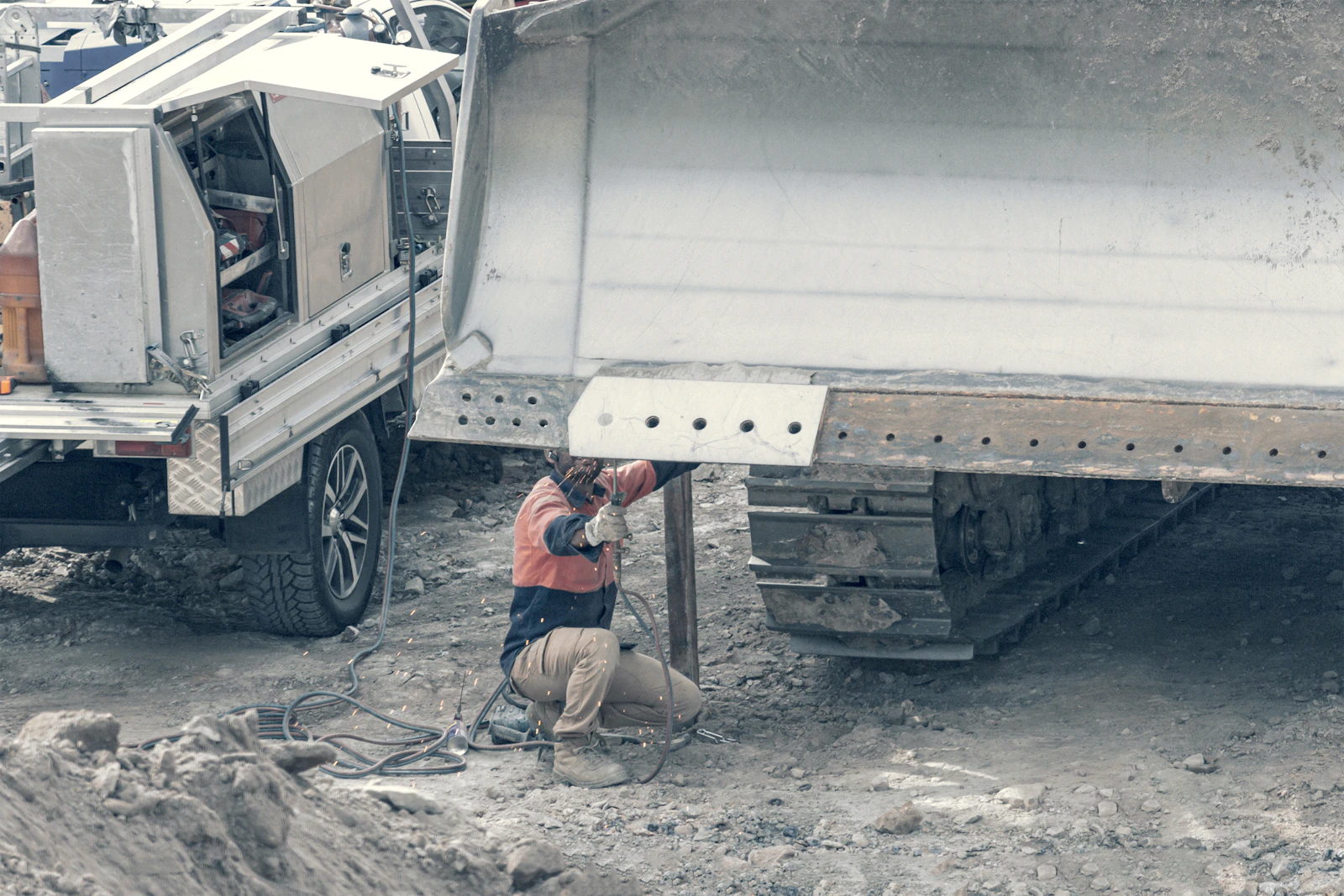
For heavy equipment hauling in Colorado Springs, a rollback truck (flatbed tow truck) is usually hired with an operator and priced either hourly (portal-to-portal) or as a minimum-call plus mileage. For 2026 planning, most equipment managers budget $225–$375/hr with a 2–4 hour minimum for a medium-duty rollback move, which typically pencils out to $1,800–$3,200 per 8-hour day, $8,500–$15,000 per workweek, and $28,000–$55,000 per 4-week month if you keep a truck dedicated (discounts vary by utilization and standby). If you can source truck-only rollback equipment hire (less common and insurance-heavy), specialty fleets advertise day and month anchors like $495/day and about $6,000/month before fuel, mileage, and coverage requirements.
| Vendor |
Daily Rate |
Weekly Rate |
Review Score |
Website |
| Anthony's Towing (Colorado Springs) |
$1650 |
$8 250 |
9 |
Visit |
| AB America Towing (Colorado Springs) |
$1550 |
$7 750 |
10 |
Visit |
| Walt's Towing (Colorado Springs) |
$1600 |
$8 000 |
9 |
Visit |
| Founding Fathers Auto Service & Towing (Colorado Springs) |
$1500 |
$7 500 |
9 |
Visit |
Rollback Truck Rental Rates Colorado Springs 2026
Important scope note: “Rollback truck rental” can mean (1) a towing/recovery carrier dispatched with driver, or (2) a commercial truck rental where you operate the rollback under your own DOT/insurance. For heavy equipment hauling, Colorado Springs buyers most often mean the operated option because of loading risk, tie-down responsibility, and insurance compliance.
Operated rollback (common for jobsite-to-yard moves): For 2026 budgeting in the Front Range, plan on $225–$375/hr for a medium-duty rollback with driver, with higher effective rates when you have short-haul fixed time (dispatch, load, secure, paperwork) and lower effective rates when you keep the unit busy on multiple drops in a day. Colorado’s Public Utilities Commission publishes Colorado maximum rates for certain towing contexts; for example, the state’s “current towing rates” sheet shows hourly towing/recovery rates by towed-vehicle GVWR and also lists a mileage rate of $3.80/mile for those regulated scenarios. Use those published numbers as a benchmark (not a guaranteed quote) when sanity-checking local rollback hire invoices.
Operated rollback (real-world reference points): Some operators publicly post rollback hourly pricing. As examples (not promises for your job), one posted schedule shows a Rollback Truck at $200/hr, and another posts tow truck or rollback at $350/hr. These are helpful anchors when you’re building a 2026 budget range and anticipating night/weekend surcharges.
Truck-only rollback equipment hire (less common): If you need to hire a rollback as a vehicle (no driver), one specialty tow-truck rental fleet publishes a $495 daily rate for a carrier class unit (availability, insurance, and pickup/return rules apply). Another equipment marketplace listing shows a rollback tow truck advertised from $6,000/month (month calculation assumptions vary). These figures are most useful for planners comparing “rent-and-operate” versus “hire-with-operator.”
How Rollback Truck Hire Is Quoted For Heavy Equipment Hauling
Most Colorado Springs rollback hire quotes for heavy equipment hauling will be structured in one of these ways:
- Hourly with minimum call: Common for short moves (in-town yards, dealership-to-site, base-to-site). Expect billing in 15-minute increments after an initial block for certain regulated towing contexts, and many private operators mirror that practice operationally (even when not required). (u
- Minimum + mileage (or zone): You may see a “base” that covers dispatch/loading plus a per-mile line item, especially when the driver has to deadhead back across town.
- Day rate (dedicated truck): Best for multiple internal moves (yard consolidation, fleet swaps, teardown mobilization). Day rates reduce “minimum call stacking,” but you must control standby and waiting time.
- Per-mile hauling (brokered equipment transport): Some buyers compare rollback hire against hotshot/flatbed hauling quotes. Published planning ranges often cite $1.50–$3.50 per mile for hotshot trucking depending on equipment and job conditions, while other equipment hauling guidance cites hotshot $1.50–$2.50/mi, flatbed $2.10–$3.50/mi, and lowboy/RGN $3.50–$8.00/mi (route, permits, and loading time still matter).
Colorado Springs estimator takeaway: a rollback often wins on short, high-touch moves (tight yards, winch-on loads, non-running units) even if its “per mile” looks expensive, because the truck doubles as the loading system and the transport platform.
What Changes Your Total Rollback Equipment Hire Cost In Colorado Springs
The delta between a “simple” rollback hire and an invoice that blows your budget usually comes from these cost drivers (and they are manageable if you plan them):
- Load method: Winch-on, dead machine, missing bucket pins, seized brakes, or no tow points typically turns a transport into a recovery-style call. If the job escalates, you may see a higher hourly class or additional labor hours billed.
- Machine class vs rollback capacity: Rollbacks are ideal for skid steers, mini excavators, compact rollers, and smaller telehandlers, but they’re not the right tool for every “heavy equipment hauling” request. Overloading risk drives the carrier to quote a larger class truck (higher hourly), or push you to a lowboy/step-deck option.
- Securement requirements: Chains/binders, edge protection, and additional tie-down points add time. If your site requires documented securement photos at pickup and delivery, add admin minutes that become billable on portal-to-portal structures.
- Site access & wait time: Military base access (Fort Carson / Peterson area), controlled industrial sites, and urban downtown access can add gate delays. If your provider bills wait time at, say, $125–$200/hr, a 60–90 minute queue is not “noise.”
- Terrain & elevation: Colorado Springs elevation and grades (e.g., west toward Manitou/Woodland Park) can reduce practical performance and increase cycle time. Even without a special “mountain premium,” longer cycle time increases total billable hours.
Hidden-Fee Breakdown For Rollback Truck Rentals
These are the line items that most often surprise project teams during rollback truck equipment hire for heavy equipment hauling (and where you can set allowances up front):
- Dispatch/service call: Commonly $35–$120 depending on operator and time of day (even when the hourly looks reasonable).
- After-hours / release fees: Regulated towing schedules in Colorado include an example after-hours release fee of $101.40; private consensual moves often have comparable “after-hours” premiums when you request night pickup/return documentation.
- Weekend/holiday multiplier: Many providers apply an uplift (often 1.25x to 1.5x) rather than a separate fee—confirm the rule before you schedule Saturday loading.
- Fuel surcharge: Some regulated schedules show a separate fuel surcharge that updates monthly; many private operators mirror this approach, especially when diesel swings.
- Storage (if the machine ends up at their yard): The Colorado schedule shows example storage rates like $46.08 per 24 hours for under-10k GVWR and $56.84 per 24 hours for 10k+; even if you’re not in that regulatory scenario, storage economics are real—avoid unplanned yard holds by coordinating receiving hours.
- Cleaning/mud-out: If the rollback bed is contaminated with mud/concrete washout, plan on a cleaning charge (often $75–$200) or higher if pressure washing is required before the next dispatch.
- Cancellation/short notice: If you cancel inside a dispatch window, it’s common to see a minimum charge equal to 1–2 hours. Tie cancellations to your internal “machine released” call, not to a hopeful superintendent text.
Insurance, Damage Waivers, And Liability On Hired Rollbacks
For operated rollback hire, the carrier’s cargo and liability insurance is part of why the hourly rate is not “just a truck.” For truck-only rollback equipment hire, your internal risk and compliance load increases materially: you’ll typically need to evidence auto liability, physical damage, and sometimes hired/non-owned coverage to satisfy the rental agreement. If you’re used to construction rental damage waivers, note that some major rental programs price protection as a percentage of rental charges (one published example shows a 15% fee structure for a rental protection plan, with specific caps/terms). That framework is a useful mental model when setting “coverage adders” for vehicle-type rentals as well.
Scheduling Rules That Trigger Extra Billable Time
Rollback equipment hire cost control in Colorado Springs is mostly scheduling discipline. These operational rules change what you actually pay:
- Delivery window cutoff: If you miss a same-day cutoff (often 2:00–3:00 PM for “finish and return”), you may get billed into the next minimum block or pay a late-day premium.
- Off-rent rules (portal-to-portal): Many carriers bill from dispatch/arrival at your site until the truck clears your job and returns to ready status. Your internal “off-rent” time should be when the unit is strapped and paperwork complete, not when the machine is “almost on.”
- Weekend/holiday billing: If your project needs Saturday moves to avoid traffic, pre-approve weekend multipliers and confirm whether Sunday is billable at a higher class.
- Return condition documentation: Require photos at pickup, at tie-down completion, and at delivery (three-photo minimum). It adds minutes, but it reduces claims and prevents expensive disputes.
Example: One-Day Rollback Hire For A Mini-Excavator Move
Scenario: Move one mini excavator (approx. 10,500 lb) plus bucket set from a Colorado Springs infill site to a yard near Monument, then reposition a skid steer back to a second site the same day. You request a rollback with winch because the excavator has a weak travel motor and may need assist loading.
- Planned rate: $300/hr with a 4-hour minimum (planning assumption).
- Billable time expectation: 7.5 hours portal-to-portal due to (a) downtown staging restrictions, (b) base traffic on I-25, and (c) 45 minutes of waiting for the receiving yard forklift.
- Allowances you should carry: $150 for after-hours paperwork if the last drop slips past 5:00 PM; $100 for additional chains/binders if the attachment set changes; $125 for cleanup if the machine comes off a muddy site.
Budget result (order-of-magnitude): 7.5 hrs × $300/hr = $2,250, plus potential adders above. The key operational constraint is not “miles,” it’s site cycle time and how quickly your team can be ready to load/unload when the rollback arrives.
Colorado Springs-Specific Cost Considerations For Rollback Truck Hire
Colorado Springs rollback truck equipment hire for heavy equipment hauling is more sensitive to weather and route constraints than many low-elevation metro areas. If your haul touches mountain corridors in winter, chain and traction compliance can change the dispatch plan and the invoice (chains/ATDs, slower cycle time, and missed delivery windows). Colorado publishes commercial vehicle chain guidance and “must carry” requirements for certain corridors; while not every local rollback move hits I-70, equipment managers should still plan a winter premium for mountain work and confirm whether the carrier requires you to reschedule when traction restrictions are active.
Also, many Colorado Springs moves are effectively “regional” even when they feel local: Pueblo, Fountain, Monument, and Falcon runs can push you into longer deadhead and make per-mile or day-rate structures more cost-effective than stacked minimum calls.
Self-Haul Alternative: Tilt Trailer Hire Versus Rollback Hire
On some projects, the lowest total cost for “rollback-style” functionality is hiring a full-tilt deck trailer and using your own 1-ton truck, rather than hiring a rollback. A Colorado Springs-area trailer yard publishes example rates like $140/day, $630/week, and $1,450/month for a 22 ft full-tilt flatbed trailer, plus delivery/pickup priced at $3 per mile. They also publish common adders such as a $25/day synthetic 12k winch, a $10/day 16k ball hitch, and a $20/day brake controller.
Estimator note: tilt trailer hire can be a strong cost play for repeated intra-city moves, but it shifts securement labor, risk, and DOT compliance onto your team. For true heavy equipment hauling, an operated rollback is often justified by faster load cycles and reduced internal exposure.
Rate Benchmarks You Can Use To Audit A Rollback Hire Invoice
Even when your hire is fully consensual (not regulated towing), it helps to have objective “guardrails” for reasonableness checks:
- Colorado published hourly references: Colorado’s published towing rate sheet (effective 04-30-2024) provides hourly and mileage references for certain tow contexts and is useful as a benchmarking document when reviewing invoice structure.
- Published hourly examples from operators: Public postings such as $200/hr for a rollback on one schedule and $350/hr on another show that market spread is real—your job conditions determine where you land.
- Truck-only anchors: Specialty tow-truck rental fleets advertising $495/day and marketplace listings around $6,000/month can help you evaluate whether a dedicated rental plus internal driver is cost-justified.
Budget Worksheet For Rollback Truck Equipment Hire
Use these line items (no tables) to build a 2026 rollback truck hire budget for heavy equipment hauling in Colorado Springs:
- Base hire (hourly or day rate): Allow 8 hours for a “full day” even if the move looks short on paper (dispatch + load + secure + travel + unload + paperwork).
- Minimum call exposure: Allow 4 hours if you expect short-notice cancels or if your sites are frequently not ready.
- Mileage / deadhead allowance: Carry an allowance equivalent to 30–60 miles of deadhead for Front Range repositioning (varies by yard location).
- After-hours premium allowance: $150–$300 per event for late pickup, late delivery, or late paperwork (especially on gated sites).
- Weekend/holiday premium allowance: Add 25%–50% uplift if you schedule Saturday/Sunday to avoid traffic or meet outage windows.
- Waiting time allowance: 1.0 hour per stop at $125–$200/hr equivalent if the receiving crew is not guaranteed.
- Securement consumables: $60–$150 allowance for extra chains/binders/edge protection when attachments change.
- Cleaning allowance: $125 for mud-out / bed cleanup risk from unimproved sites.
- Storage contingency: 1–2 days storage allowance if the receiving yard rejects after-hours deliveries (published schedules show storage priced per 24 hours in regulated contexts).
- Insurance / damage waiver: If a waiver is offered as a percentage adder, carry 10%–15% of base hire as a planning allowance (confirm terms).
Rental Order Checklist For Heavy Equipment Hauling Moves
Use this checklist to reduce change orders and avoid preventable rollback hire costs:
- PO details: PO number, job number, cost code, and NTE (not-to-exceed) amount; specify whether billing is portal-to-portal or on-site only.
- Equipment details: Make/model, operating weight, track/tire condition, attachments included, and whether the unit is running or winch-required.
- Pickup/delivery constraints: Dock/drive approach, gate width, grade, overhead clearances, and whether a spotter is required.
- Delivery window and cutoff: State receiving hours and hard cutoff times; identify who can sign at delivery and what happens if nobody is available.
- Off-rent rule: Define the moment you consider the truck “released” (e.g., after unload + photos + signature) to control billable time disputes.
- Weekend/holiday billing rule: Confirm multiplier and minimums before scheduling.
- Fuel/refuel expectations: Confirm whether fuel surcharge is in the mileage rate or separate; confirm idle time policy on long gates.
- Condition documentation: Require photo set (pickup, secured, delivered) plus note any pre-existing damage.
- Return/closeout: Require signed ticket, time stamps, and a single invoice per day with line-item clarity (hours, mileage, premiums, waiting time).
When A Rollback Is The Wrong Tool (And What It Costs Instead)
For heavy equipment hauling above rollback-friendly weights/dimensions, the carrier will push you to a different tool (step deck, lowboy/RGN, or dedicated heavy haul). Published equipment hauling guidance commonly places planning ranges for lowboy/RGN in the $3.50–$8.00 per mile band (legal loads, permits and escorts extra), which can be cost-effective if you’re hauling truly heavy iron or oversized machines that should not be winched onto a rollback.
If you’re comparing against general trucking market signals, some 2026 flatbed spot-rate commentary has cited recent-quarter averages around $3.48 per loaded mile in certain datasets; treat that as context only, because equipment hauling quotes include loading time, securement complexity, and route constraints that a “spot rate” average may not capture.
Cost-Control Tactics Rental Coordinators Actually Use
- Bundle moves into a dedicated day: One day-rate is usually cheaper than two separate minimum calls when you have multiple pieces to reposition.
- Pre-stage the machine: Have the unit fueled, attachments staged, and access cleared before the rollback arrives—every 15 minutes of delay can become billable time depending on the contract structure. (u
- Use written NTE and escalation rules: Require approval before adding extra labor, changing truck class, or converting a transport call into a recovery call.
- Confirm winter routing early: If mountain travel is possible, confirm chain/traction readiness and build a winter contingency to avoid same-day dispatch failures.