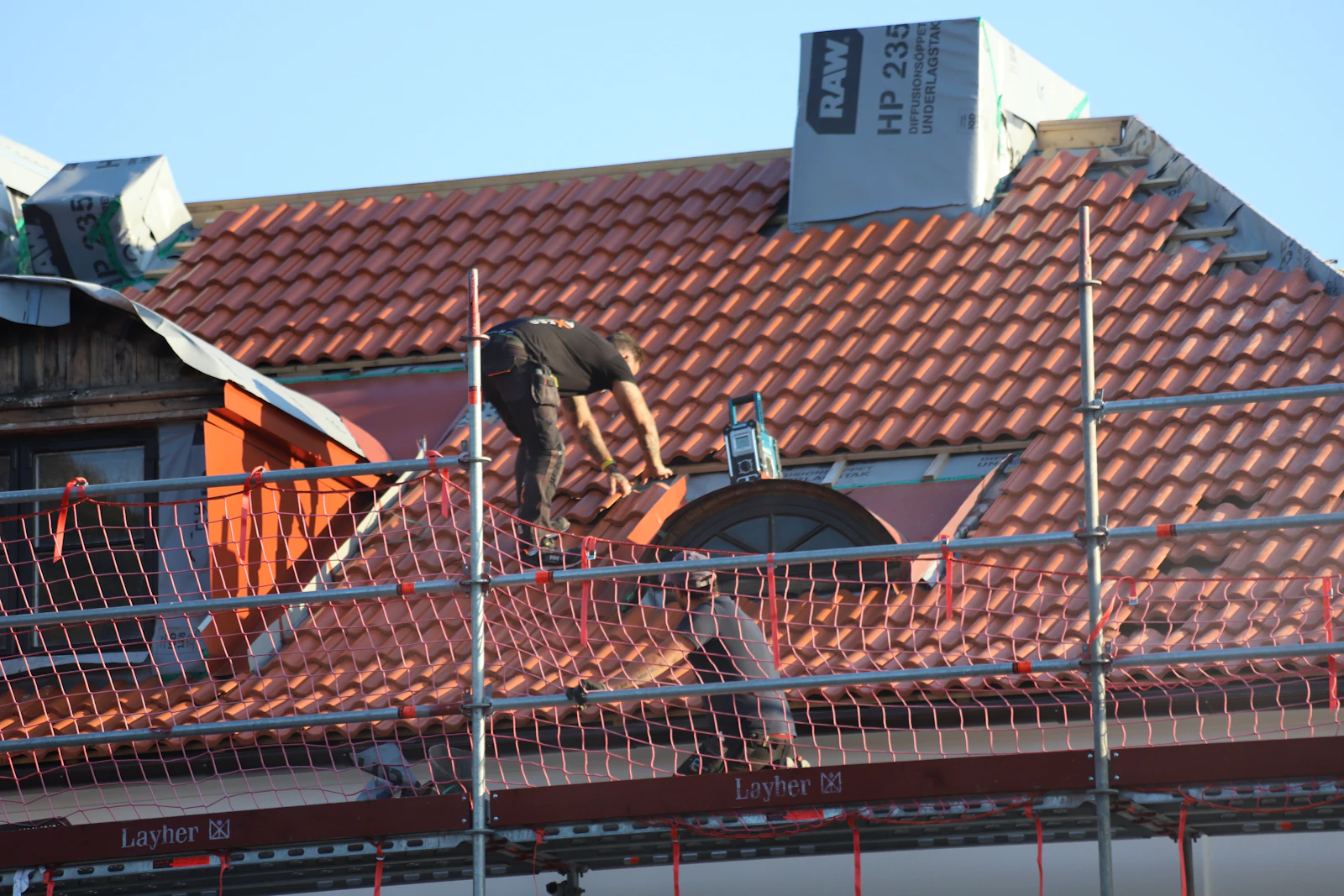
Roof Hoist Rental Rates Atlanta 2026
For Atlanta tile roofing crews planning 2026 work, roof hoist equipment hire typically pencils out in three bands: (1) compact 200–250 lb ladder hoists (often used for shingles but sometimes adapted for lighter tile staging) at roughly $95–$160/day, $285–$550/week, and $850–$1,500 per 4 weeks; (2) platform/ladder hoists in the 300–400 lb class (more realistic for tile bundles, underlayment rolls, and frequent tool moves) at roughly $140–$240/day, $420–$850/week, and $1,250–$2,200 per 4 weeks; and (3) specialty/high-reach or heavier-capacity roof-loader systems that can push above $250/day when availability is tight. These are planning ranges (not a quote) and assume standard billing cycles, plus typical add-ons like delivery, damage waiver, and accessories. National rental houses with Atlanta branches and regional tool yards both service this category; availability often matters more than “sticker rate” during peak reroof months. Published example rate sheets in other U.S. markets commonly show ladder/platform hoists around the ~$90–$100/day level and ~$285–$340/week level, with 28-day (4-week) pricing in the ~$850–$1,020 range, which is useful as a baseline when you negotiate Atlanta account pricing for 2026.
| Vendor |
Daily Rate |
Weekly Rate |
Review Score |
Website |
| Sunbelt Rentals |
$165 |
$625 |
8 |
Visit |
| Northside Tool Rental |
$145 |
$525 |
9 |
Visit |
| Herc Rentals |
$175 |
$650 |
9 |
Visit |
| United Rentals |
$185 |
$675 |
8 |
Visit |
| Stone Mountain Access Systems (SMAS) |
$195 |
$700 |
9 |
Visit |
Key assumption (important): many tool yards use a 28-day month (not calendar month) and a 7-day week for rate math; weekend handling varies by branch and contract. Confirm whether your Atlanta branch bills Saturday/Sunday as full days, “weekend rate,” or folds weekends into weekly pricing before you commit your tile roofing schedule.
What Changes Roof Hoist Hire Cost on Atlanta Tile Roofing Jobs?
Tile roofing shifts roof hoist selection toward platform-style carriers, stabilization hardware, and higher duty cycles. Even if your base equipment hire rate looks competitive, the real cost on Atlanta jobs usually moves with: (a) reach (base track vs added ladder sections), (b) load class (250 lb vs 400 lb), (c) delivery constraints (narrow drives, curb restrictions, and time-window requirements inside the Perimeter), and (d) how clean/complete the unit returns (mud/clay, missing fasteners, bent track). A few cost drivers to treat as “high probability” line items when estimating roof hoist equipment hire costs in Atlanta:
- Minimum time charges: common examples include a 4-hour minimum in the ~$65–$95 band (useful for a same-day swap-out, but risky if you miss the return cutoff).
- Height adders: some rate cards list extra ladder/track sections as an add-on (example listings show extra 8 ft sections priced separately).
- Fuel/engine deposit: some branches require a fuel deposit or fuel charge mechanism on gas hoists.
- Damage waiver / RPP: typically added as a percentage of time-and-material rental (see “Hidden-Fee Breakdown”).
- Delivery windows: Atlanta traffic makes timed deliveries (e.g., “must arrive 7:00–8:00 AM”) materially more expensive than flexible delivery.
Published listings for ladder/platform hoists show examples such as extra 8 ft sections being priced as separate add-ons, and some shingle-hoist listings explicitly calling out a fuel deposit requirement—both are common drivers of roof hoist hire cost creep if they are not carried in your estimate from day one.
Typical Roof Hoist Configurations and 2026 Planning Allowances
Use the following as allowances for Atlanta 2026 budgeting (not vendor-specific pricing). These are the adders that usually decide whether your “roof hoist rental rate” stays on budget for tile roofing or not:
- Platform carrier vs shingle tray: add $20–$55/day (or $75–$165/week) for a platform/tile-capable carriage when it’s not included in the base unit.
- Extra ladder/track sections (reach): add $8–$18/day per section (often billed per 8 ft section) if your eave height, staging location, or slope distance demands it. (Some published catalogs show per-section pricing in the low single digits in other markets; Atlanta allowances trend higher once transport and handling are considered.)
- Stabilizer/stand-off kit: add $10–$25/day. On steep tile roofs, stabilizers prevent “track walk” and reduce damage risk (and damage claims).
- Remote pendant / control cord: add $8–$15/day. If the control is damaged, replacement is often hundreds—treat it as a controlled item at return.
- Wheel kit / moving dolly: add $10–$22/day if you need frequent repositioning across a long Atlanta driveway without tearing turf/irrigation.
- Generator (if power is constrained): add $60–$110/day for a jobsite generator if you choose an electric hoist and power access is unreliable.
Tile roofing note: if the scope includes multiple pallets staged at curb, you can burn more money on hoist repositioning and standby than on the base equipment hire rate. If your crew must “wait on the hoist,” consider whether a second smaller hoist (or a material staging plan with shorter travel) is cheaper than extended rental duration.
Delivery, Pick-Up, and Atlanta Access Constraints That Affect Hire Cost
Most “roof hoist rental near Atlanta” searches focus on the day/week rate, but delivery mechanics often decide the final equipment hire cost. Atlanta-specific realities to plan for:
- Delivery/pick-up fees (metro allowance): plan $125–$250 each way for basic jobsite delivery/pick-up within a typical local radius, plus $4–$7/mile beyond the included zone.
- Liftgate / equipment-handling surcharge: plan $50–$95 if the branch needs a liftgate truck or extra handling due to driveway slope, soft yard, or restricted access.
- Time-window delivery premium: plan $75–$175 for a “hard appointment” window (common on intown neighborhoods with parking enforcement or HOA rules).
- After-hours or Saturday logistics: plan $150–$325 if you need delivery outside standard counter hours. Some Atlanta-area tool yards keep short counter windows (e.g., weekday early close and limited Saturday hours), which increases the probability of an extra day billed if your crew can’t off-rent and return in time.
Local Atlanta rental yards explicitly advertise metro delivery/pick-up availability and publish counter hours that can be as tight as weekday mid-afternoon close with a short Saturday window. When your tile roofing schedule is weather-sensitive, those hours matter: missing a same-day return cutoff is one of the fastest ways to turn a 4-hour minimum into a full-day charge.
Hidden-Fee Breakdown (What to Carry as Allowances)
For trade estimators and rental coordinators, the safest approach is to carry explicit allowances for “silent” add-ons. The list below reflects common U.S. tool-rental contract structures; confirm with your Atlanta branch and your master service agreement.
- Damage waiver / Rental protection plan: plan 10%–15% of rental charges (often applied before tax). If your contract uses a waiver, ensure it is itemized and understand exclusions (the waiver is not the same as liability insurance).
- Deposit / authorization hold: plan $250–$1,000 depending on account status and equipment class (often lower on established contractor accounts).
- Fuel charge or fuel deposit (gas units): plan a $25–$75 fuel deposit or refuel fee mechanism; some listings explicitly call for a fuel deposit on gas shingle/roof hoists.
- Cleaning fee: plan $75–$250 if the hoist returns with red clay, thinset/mortar residue, or adhesive overspray. (Atlanta’s clay + rain = frequent “mud return” scenarios.)
- Missing/damaged components: plan $40–$120 for small missing hardware kits; $150–$400 for a damaged ladder/track section; $200–$450 for a damaged cable or winch component (varies by model and vendor).
- Late return penalties: many contracts bill late returns in ¼-day or ½-day increments, and some treat weekend possession as 2 days if not on a weekly rate—get this in writing because it directly impacts tile roofing schedule float.
Damage-waiver examples published by rental organizations commonly show a percentage charge (often 10% on some rate sheets, and 15% on others), reinforcing why it must be carried as an explicit estimator line item rather than treated as “misc.”
Example: Atlanta Tile Roofing Roof Hoist Hire Estimate With Real Constraints
Scenario: 2-story tile reroof in Buckhead with limited curb parking, a strict HOA delivery window, and a steep driveway. Crew wants a 400 lb-class platform ladder hoist and enough reach to stage at the rear where pallets can’t be dropped.
- Base hoist hire: plan $195/day or choose a weekly rate at $725/week (assume a 2-week duration = $1,450).
- Extra reach sections: assume 2 sections at $14/day each for 10 working days = $280.
- Platform carrier add-on: $35/day for 10 days = $350.
- Delivery + pick-up: $225 each way = $450 (includes liftgate allowance due to slope).
- HOA time-window premium: $125 (hard 7:00–7:30 AM arrival).
- Damage waiver: 12% applied to rental charges (base + accessories, not delivery) ≈ $250 allowance.
- Cleaning allowance: $125 (red clay and rain risk).
Budgetary total (equipment hire + typical adders): approximately $3,030 before tax. The controlling variable in Atlanta is usually not the daily rate—it’s the combination of reach/accessory adders and logistics constraints (driveways, parking enforcement, HOA windows) that extend rental duration or raise delivery cost.
Cost-Control Notes for Rental Coordinators (Tile Roofing)
- Confirm off-rent rules: require the foreman to text/submit off-rent by a specific cutoff (commonly 12:00–2:00 PM) to avoid an extra day billed.
- Document condition at delivery and return: photos of track sections, cable, engine hours (if present), and the control pendant reduce disputes and speed deposit release.
- Stage for fewer moves: every reposition on a long Atlanta driveway can burn 20–45 minutes of crew time; sometimes paying $100–$200 for a second delivery drop (or an extra section) is cheaper than repeated moves and longer rental duration.
- Weather float: Atlanta summer storms can stop tile placement but you still possess the hoist; using a weekly rate (instead of daily) often reduces the financial pain when you lose 1–2 days to weather.
When a Roof Hoist Is Not the Cheapest Hire Option (But Still the Right One)
On some Atlanta tile roofing scopes, a roof hoist is not the lowest-cost material handling method if you look only at equipment hire. However, it is often the lowest installed cost option once you account for crew productivity, roof damage risk, and schedule certainty. For coordination, compare roof hoist hire costs against these alternatives (carry as allowances during precon):
- Forklift/telehandler spot rental: can look inexpensive on a day rate but may require an operator policy, more staging space, and ground conditions that many intown Atlanta homes don’t have. Also, if the machine can’t get close to the drop zone, you still end up hand-carrying tile.
- Truck-mounted boom/craning: effective for pallet drops, but mobilization, traffic control, and minimum hours can exceed a week of roof hoist hire on smaller residential tile scopes.
- Manual carry: usually “cheapest on paper” until you factor fatigue, safety exposure, and the real production hit of moving heavy tile up ladders all day.
For tile roofing, the “break-even” often comes down to how many times you expect to move material to the roof per day. If the hoist avoids even 1 additional laborer for 2–3 days, it frequently pays for itself even after delivery, damage waiver, and accessory adders are included.
Operational Rules That Change Atlanta Roof Hoist Hire Cost
These are the contract/operations items that most often create surprise charges for roof hoist equipment hire in Atlanta. Make them part of your internal rental brief (foreman + coordinator):
- Weekend/holiday billing: confirm whether possession over the weekend triggers a “weekend rate,” counts as 2 days, or is absorbed into a weekly rate. If you expect weather delays, push for weekly pricing.
- Delivery cutoffs: if your Atlanta branch counter closes mid-afternoon, a “same-day pickup” may effectively require off-rent by late morning. Missing the cutoff commonly equals +1 day billing.
- Return condition: require crew to brush down tracks and remove tape/adhesive. For tile jobs, mandate “no mortar/thinset on equipment” if any masonry work is nearby.
- Refuel/recharge expectations: if gas, return with a full tank (or accept refuel fees). If electric, return with charged batteries (if applicable) and the correct charger—missing chargers are a frequent back-charge item.
- Indoor dust-control (if staging through a garage): if the hoist/track is assembled near finished interiors, add dust-control consumables (poly, tape, negative air) so the rental return is not contaminated with overspray or drywall dust that triggers cleaning fees.
Budget Worksheet (Atlanta Roof Hoist Equipment Hire Allowances)
Use this as a no-table worksheet to build an estimator-friendly equipment hire budget for Atlanta tile roofing. Adjust quantities to your duration and access conditions.
- Roof hoist base unit (platform-capable): allowance $140–$240/day or $420–$850/week
- Reach adders (extra track/ladder sections): allowance $8–$18/day per section
- Platform carrier / tile-capable carriage: allowance $20–$55/day
- Stabilizer / stand-off kit: allowance $10–$25/day
- Remote pendant / control: allowance $8–$15/day
- Delivery: allowance $125–$250 (each way) + mileage beyond included radius
- Time-window premium (ITP / HOA): allowance $75–$175
- Liftgate / handling surcharge: allowance $50–$95
- Damage waiver: allowance 10%–15% of rental charges
- Fuel deposit / refuel: allowance $25–$75 (gas units)
- Cleaning allowance: allowance $75–$250
- Loss/damage contingency (small parts / hardware): allowance $50–$150
Rental Order Checklist (PO, Delivery, and Return Requirements)
- PO and billing: PO number, job name/address, cost code, authorized renter list, and certificate requirements (if any).
- Equipment spec confirmation: capacity class (250 lb vs 400 lb), base height, number of extra sections, platform carrier included, stabilizer kit included, and power type (gas vs electric).
- Delivery plan: confirm delivery contact, on-site unload zone, truck access notes (steep drive, gate width), and whether a liftgate is required.
- Delivery window: confirm acceptable arrival range (e.g., 60–90 minutes) and penalties for missed appointments; avoid “exact time” windows unless required.
- Pre-use inspection: document photos of track/ladder sections, cable/rope, motor/engine condition, control pendant, and serial numbers.
- Operating constraints: confirm fall-protection plan for anyone assembling/positioning the hoist; document any roof-anchor points required by your safety plan.
- Off-rent procedure: confirm the branch cutoff time for next-day off-rent (carry it in the foreman’s daily closeout).
- Return condition documentation: clean equipment, bundled components, count of sections/accessories, and return photos to close out disputes.
Atlanta-Specific Cost Watchouts for Tile Roofing
To localize your equipment hire estimate (and avoid schedule-driven overages), keep these Atlanta realities in mind:
- Traffic-driven standby risk: if your job requires a precise delivery window, build a standby allowance because metro congestion can force reschedules that effectively add ½–1 day of possession.
- Red clay cleanup: after rain, equipment staged on bare ground frequently returns muddy; treat cleaning as a real line item, not a “maybe.”
- Heat/humidity duty cycle: in peak summer, crews often run hoists longer and take more short moves to keep tile staged—higher run time increases wear risk (and the importance of documenting condition at delivery/return).
Practical closeout tip: schedule pick-up for the morning after the last planned hoist day. If weather delays tile installation, you can still work from staged roof piles without paying an extra “just in case” day of hoist hire—provided your staging plan is sound and your safety plan allows it.