Build your next estimate with CountBricks
Create an itemized estimate for your project, with materials, labor, and quantities you can review and edit.
Create my estimateStart a 7-day free trial. Sign up, then enter your project details.
Roof Hoist Rental Rates Baltimore 2026
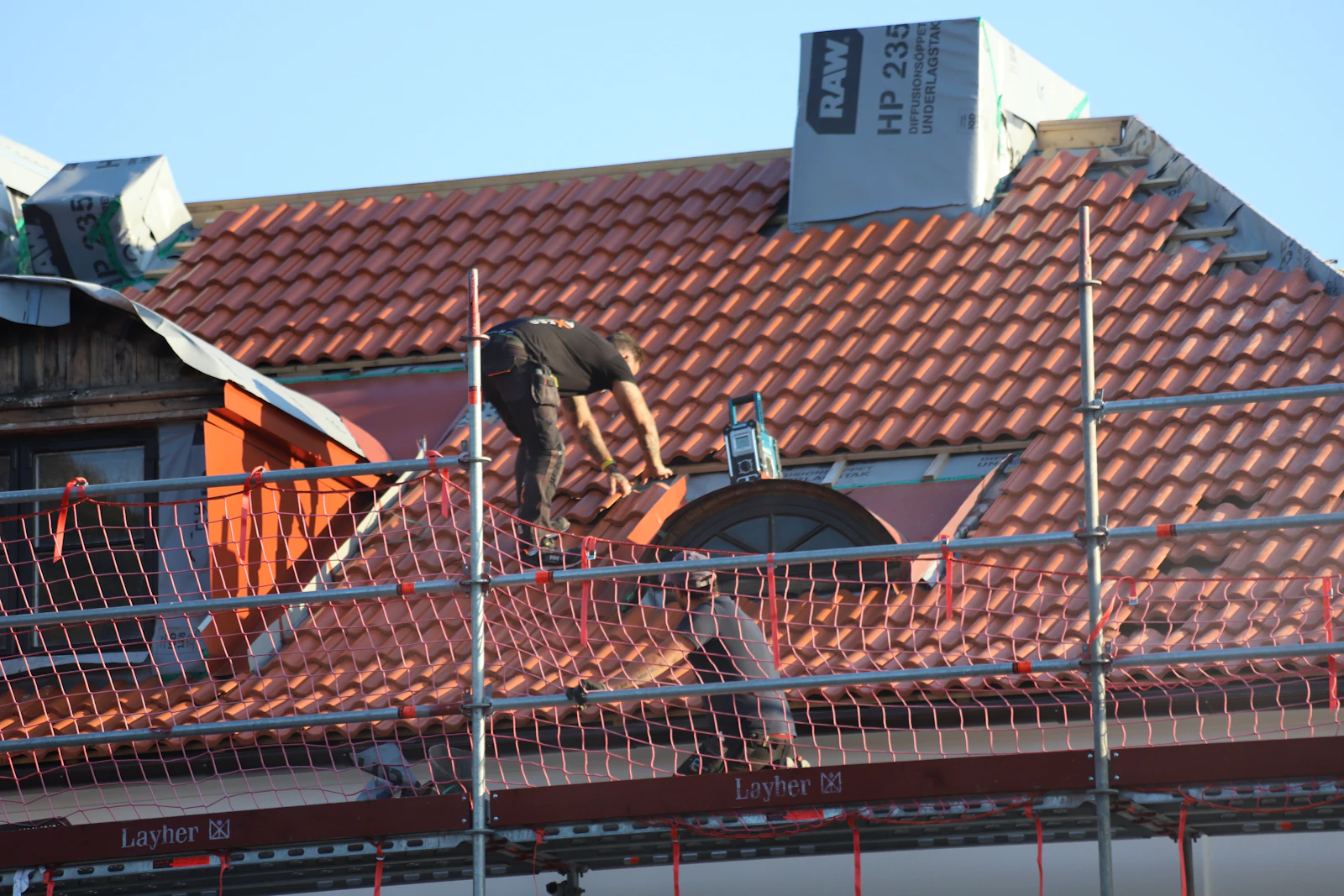
For Baltimore-area tile roofing crews planning 2026 work, roof hoist equipment hire typically pencils out in two bands: (1) lighter “shingle-lift / ladder hoist” units (often 26–28 ft with ~200–250 lb capacity) commonly budget at about $90–$170/day, $300–$550/week, and $900–$1,650/4-week when you include typical metro-market pricing and the fact that posted rates rarely include delivery, damage waiver, or taxes; published U.S. rate sheets show daily pricing as low as $66.50 with 4-hour minimums, plus weekly and monthly tiers. (2) Tile-capable packages in Baltimore (more track length, higher capacity, and accessories like a dump tray) more often land around $150–$325/day, $600–$950/week, and $1,900–$2,900/month as a planning range, depending on reach, motor type, and whether the quote includes setup support. Assumptions used here: contractor account rates (not homeowner promos), 7-day possession billing unless otherwise negotiated, and a roof-hoist scope focused on lifting tile bundles/boxes, ridge units, underlayment rolls, and tear-off debris containers—not full-pallet rooftop placement.
| Vendor |
Daily Rate |
Weekly Rate |
Review Score |
Website |
| Sunbelt Rentals (Baltimore/Rosedale branch) |
$175 |
$650 |
9 |
Visit |
| Reach Services (DC/Maryland/Virginia suspended access & hoisting) |
$275 |
$950 |
10 |
Visit |
| Approved Equipment Rentals (Baltimore–Washington Metro) |
$260 |
$900 |
8 |
Visit |
| BrandSafway Services (Baltimore–Washington, D.C. – Sparrows Point) |
$300 |
$1 050 |
8 |
Visit |
| United Rentals (Baltimore – Equipment & Tool Rentals) |
$210 |
$720 |
9 |
Visit |
What Drives Roof Hoist Equipment Hire Costs for Tile Roofing in Baltimore?
Roof hoist hire cost for tile roofing is mostly a function of capacity, reach, and logistics. Tile is heavier and less forgiving than shingles (breakage risk and slow handling), which increases the odds you’ll be quoted a higher-capacity ladder hoist and a longer track package than you’d use on an asphalt re-roof. The practical cost drivers you should price for in Baltimore include: (a) track height and roofline geometry (rowhouse parapets and mansards can force longer sections), (b) motor type (electric is common; gas can be useful where power is constrained), (c) accessory package (dump tray, debris bucket, carriage type), and (d) delivery and curb management (tight blocks and limited staging change the real all-in hire cost even when the base day rate looks competitive).
Most commercial rental branches that Baltimore subcontractors already use (for example, large national networks and established regional independents) will quote roof hoist equipment hire as either a standalone item or a “roofing package.” Your estimator should treat the base rate as only ~60–80% of the expected spend and carry explicit allowances for delivery windows, damage waiver, and return-condition work.
Base Rate Benchmarks You Can Use (And What They Usually Exclude)
Published U.S. rental rate sheets for shingle lifts/ladder hoists commonly show 4-hour minimums (often roughly $45–$95) and daily rates in the $66–$140 band, with weekly pricing commonly $195–$420 and “4-week/month” pricing commonly $595–$1,050. These benchmarks are useful for sanity-checking quotes in Baltimore, but they also highlight what is normally excluded: several published pages explicitly state that prices do not include damage waiver, tax, or delivery. For tile roofing, those exclusions matter more because you are more likely to need delivery (long track sections), need an upgraded carriage/dump tray, and need an extra day of possession for careful handling and staging.
Delivery, Street Access, And Baltimore-Specific Logistics That Change Hire Cost
In Baltimore, the difference between “pickup at branch” and “delivered to curb” is often the difference between a manageable roof hoist rental cost and a surprise overrun. Plan for these local realities:
- Rowhouse blocks and alley staging: Many neighborhoods have narrow lanes, limited curb space, and short staging depth. When the truck cannot park adjacent to the set point, you may incur a “shuttle” or “hand-carry” handling adder (budget $75–$150), or you may lose half a shift moving track sections safely.
- Downtown/Inner Harbor loading constraints: If your tile roofing job is near controlled curb zones, plan for time-windowed delivery and potentially paid parking/loading coordination. A common operational impact is that delivery appointments become “must-hit” windows (for example, 7:00–10:00 or 10:00–1:00), and missed windows can push you into a paid re-delivery or next-day extension.
- Tolls and congestion on approaches: When delivery routes involve tunnels/harbor crossings and peak-hour congestion, some carriers pass through tolls and/or apply fuel/route surcharges. Carry a small allowance (for example $10–$25) so your PO does not get held up over pass-through line items.
For 2026 planning in the Baltimore metro, a practical delivery budget for roof hoist equipment hire is $140–$240 each way for standard curbside drop within a typical local radius, plus $4.50–$7.00 per mile beyond the included zone. Add a $45 liftgate/handling fee if the truck spec changes mid-order, and add $150 if your site constraints force after-hours or same-day re-dispatch. (These are planning allowances; your vendor’s actual tariff will govern.)
Hidden-Fee Breakdown For Roof Hoist Hire
Roof hoist equipment hire is a classic category where “hidden” costs are usually not hidden—just located in the rental terms. Build them into your estimate up front:
- Damage waiver (DW): Commonly priced as a percentage of rent (budget 10%–15% of the base rental charges). Note that DW typically does not cover negligence, theft, or certain consumables.
- Deposit/authorization: Depending on account status and item class, plan for $250–$1,000 as a deposit or card authorization hold, especially for specialty tile roofing hoist packages.
- Cleaning fee: If the hoist returns with mortar dust, tile fragments, bitumen, or roof cement buildup, budget $85–$275 for cleaning (often triggered when return condition prevents same-day turn).
- Missing parts: Track pins, end stops, remotes, ridge hooks/stand-offs, and hardware kits are frequent “gotchas.” Budget a $25–$75 missing-hardware allowance if your crew is not documenting returns with photos.
- Late return / after-hours return: Many rental counters treat returns after cut-off as another day. Budget at least a 0.5-day penalty risk if your crew is finishing at dusk and the branch closes early.
- Off-rent rule: If you do not call off-rent by the vendor’s daily cut-off (commonly around 2:00–3:00 PM), you may be billed through the next business day even if the hoist is no longer used.
Attachments And Accessories That Change the Hire Price (Tile Roofing Focus)
Tile roofing tends to require a more complete accessory list than shingle work. When you compare roof hoist rental quotes in Baltimore, confirm whether these are included or added as line items:
- Additional track/ladder sections: Budget $20–$45/day per extra section when you need to reach over parapets or set back from the façade for sidewalk control.
- Dump tray or tile carriage: Budget $25–$60/day (or $90–$180/week) depending on carriage type and capacity.
- Ridge hook / stand-off brackets: Budget $10–$25/day. These are small-dollar items that become high-dollar delays when missing.
- Debris bucket/tote compatible with the hoist: Budget $15–$40/day for a hoist-safe container solution if you are using the hoist for tear-off debris.
- Power plan: If electric power at the service panel is not available, budget a small generator rental at $85–$150/day plus a $25 refuel/top-off charge if returned under-fueled.
- Delivery protection: When the delivery is curbside only, budget $120–$250 in labor (your own) to safely move and stage the sections without bending rails or losing pins.
Operational Constraints That Commonly Add Days (And Dollars)
On tile roofing work, the hire cost creep usually comes from possession time. A few constraints that routinely turn a “3-day” roof hoist rental into a paid week in Baltimore:
- Weekend/holiday billing: Many contracts bill by possession, not by productive hours. If you take delivery Friday afternoon and return Monday morning, your “weekend rate” may be favorable—or it may still count as multiple days depending on the branch’s policy. Confirm before you schedule.
- Weather and wind holds: Harbor-adjacent gusts can pause hoisting on steeper pitches; plan a buffer day if your schedule is tight and your hoist is the critical path.
- Powerline clearance: Ladder hoist manuals commonly require staying at least 10 ft from overhead electrical lines; if your initial set point violates clearance, you may lose time repositioning or need extra track length.
- Indoor dust control (where applicable): If you are hoisting into an enclosed courtyard or protected interior lightwell, dust containment can slow feed rates and extend the rental.
- Return condition documentation: If you do not photo-document rails, motor housing, cable condition, and all accessories at pickup/return, disputes can delay closeout and complicate future account pricing.
Example: 3-Day Baltimore Rowhouse Tile Roofing Scope With Roof Hoist
Scenario: A tile tear-off and replacement on a three-story rowhouse near a constrained one-way street. Crew needs a tile-capable roof hoist package and wants to avoid carrying tile up interior stairs. Planned possession is 3 working days, but the street constraints force a Friday delivery and a Tuesday pickup (effectively 5 calendar days).
- Roof hoist base hire (planning): $750 for a 1-week rate (often cheaper than 3 daily charges once you add weekend possession risk).
- Dump tray/tile carriage adder: $140/week.
- Extra track sections: 2 sections at $35/day planned for 5 days = $350 (this is where careful site layout can materially reduce cost).
- Delivery and pickup: $190 each way = $380, with a 10:00 AM–1:00 PM delivery window requirement.
- Damage waiver allowance: 12% of rental charges (carry $150 as a rounded allowance).
- Cleaning/mud/dust allowance: $125 (tile debris and mortar dust are common).
Planning total (equipment hire only): roughly $1,895 before tax, assuming no missed delivery window and no late return. The operational constraint driving cost in this example is not the day rate; it’s the calendar possession created by Baltimore access windows and the need for extra track.
Budget Worksheet (Roof Hoist Hire Allowances)
Use this as a quick estimator-ready set of line items (no tables) for roof hoist equipment hire costs in Baltimore on tile roofing scopes:
- Roof hoist base rental: $150–$325/day or $600–$950/week (select tier based on expected possession).
- Tile carriage/dump tray: $25–$60/day.
- Extra track/ladder sections: $20–$45/day per section (allow 1–3 sections on rowhouses).
- Delivery (drop) + pickup: $280–$480 total (typical two-way), plus mileage beyond included radius at $4.50–$7.00/mi.
- Liftgate/handling: $45 (if required by truck spec).
- After-hours or re-dispatch contingency: $150.
- Damage waiver: 10%–15% of rental charges.
- Deposit/authorization: $250–$1,000 (cashflow/credit planning).
- Cleaning/return condition allowance: $85–$275.
- Generator (if needed): $85–$150/day plus $25 fuel/top-off.
- Onsite setup/briefing (if vendor-required): $120–$175/hr, 2-hour minimum.
- Late return risk: carry 0.5–1.0 day of rent as contingency when the schedule is weather-sensitive.
Rental Order Checklist (Roof Hoist Equipment Hire)
- Confirm hoist type and capacity for tile roofing (target capacity and carriage type documented on PO).
- Confirm included track length and count of sections; list each accessory on the PO (dump tray, end stops, pins, remote, ridge hook/stand-offs, wheel kit).
- Confirm power requirements (electric vs gas). If electric, verify dedicated 120V / 15A circuit availability or add generator line item.
- Set delivery appointment window and site contact; note Baltimore curb constraints and whether curbside is acceptable.
- Clarify delivery radius included, mileage rate beyond radius, and any toll/fuel surcharge treatment.
- Document billing rules: 4-hour minimum vs full day, weekend counting, holiday counting, and off-rent call cut-off time.
- Receive/return process: photo/video at delivery and at pickup (rails straightness, motor housing, cable, and accessory count).
- Return condition requirements: broom-clean expectations; remove tar/roof cement; bag tile chips; confirm whether cleaning fees apply.
- Closeout: request final invoice within 48–72 hours of pickup so disputes are addressed while job records are fresh.
How To Choose the Right Hire Term (Daily vs Weekly vs Monthly) Without Overpaying
For roof hoist equipment hire costs in Baltimore, your best control lever is usually term selection. If you expect more than ~2–3 days of possession (common on tile roofing because handling is slower and weather buffers are prudent), the weekly rate often becomes the lower-risk choice even if your productive hoisting time is shorter. The key is to plan around possession drivers: delivery day timing, weekend/holiday billing, and the return cut-off. If the branch cut-off is early and your crew is still loading out at the end of shift, you can unintentionally buy another day.
A practical tactic for rental coordinators is to pre-negotiate: (1) a “jobsite ready” delivery time (not “sometime today”), and (2) an off-rent agreement that stops billing when the equipment is called off-rent and staged for pickup, not when it is physically scanned back into the yard (policies vary, so get it in writing).
Damage, Loss, and Return-Condition Controls That Protect Your Hire Budget
Tile roofing makes roof hoists vulnerable to damage from dropped tile, abrasive dust, and rushed end-of-day handling. A few controls materially reduce the probability of back-charges that inflate the true hire cost:
- End-of-shift cover: Budget 10 minutes per day to cover the motor and control box (cheap tarps beat expensive electrical issues).
- Dedicated “pin and hardware” bag: Losing one small part can trigger minimum replacement charges; carry a $50 consumables/misc allowance but focus on preventing the issue.
- Photos at three moments: delivery, first setup, return staging. Include serial, rails, and all accessories in frame.
- Cleaning plan: If your crew needs 30–45 minutes to clean rails and carriage at load-out, it can be cheaper than an $85–$275 cleaning line on the invoice.
When a Telehandler or Boom Lift May Beat a Roof Hoist on Total Cost
This article is focused on roof hoist hire pricing, but on some Baltimore tile jobs the roof hoist is not the cheapest access strategy once you model labor and calendar days. If you can stage materials safely and have adequate yard/drive access, a telehandler can reduce material-handling labor (and in some cases reduce total possession days). Market data sources that compile rental transactions report average telehandler rental costs around $665/day, $1,644/week, and $3,592/month. A telehandler is obviously more expensive than a ladder hoist on base rent, but it can eliminate: multiple hoist resets, extended track, and slow feed rates on heavy tile—especially if you are feeding multiple roof planes.
Similarly, if street access allows a towable boom or compact lift strategy, you may avoid roofline interference and reduce setup time. The tradeoff is that lift rentals tend to bring their own delivery tariffs and stricter possession billing (again: terms vary by vendor and must be confirmed at booking).
Baltimore Tile Roofing Planning Notes for 2026 (Practical Estimating Assumptions)
- Carry a delivery-window contingency: If you are working on a block with limited curb access, assume at least a $150 risk allowance for rescheduling or re-dispatch.
- Assume longer possession for tile: Compared with shingle work, tile handling can add 1–2 extra days of equipment possession on the same roof size because of breakage control, staging, and selective salvage.
- Plan for power constraints: If electrical power is uncertain, treat the generator as mandatory rather than optional: $85–$150/day plus $25 fuel/top-off avoids stoppages that can cost more than the generator rental.
- Document off-rent timing: If you cannot meet an off-rent call cut-off (often 2:00–3:00 PM), plan your schedule so the hoist is staged earlier; otherwise you risk another day of rent.
- Prefer weekly pricing when a weekend is involved: If delivery and pickup straddle a weekend, the weekly term often protects you from ambiguous weekend billing.
Procurement Tips That Keep Roof Hoist Equipment Hire Costs Predictable
For rental coordinators managing multiple Baltimore roofing crews, predictability is often worth more than a slightly lower day rate. Consider these procurement practices:
- Standardize a “tile hoist kit”: Define a default kit (base hoist + dump tray + 2 extra sections + ridge hook + hardware kit). Standard kits reduce missed accessory charges and last-minute branch runs.
- Request quote language that lists exclusions: Ask vendors to explicitly state whether the quoted price includes DW, delivery, pickup, and cleaning. Published rate sheets frequently note that these items are excluded; getting it in writing reduces invoice disputes.
- Align delivery to cut-offs: If the branch closes early, avoid late-day pickup that can convert a partial day into an extra billed day.
- Track usage by address and crew: When damage occurs, tying it to a crew/location improves accountability and can reduce DW reliance over time.
Bottom Line: What to Budget for Roof Hoist Hire on Baltimore Tile Roofing
As a 2026 planning range for Baltimore tile roofing, most contractors will be safe budgeting $150–$325/day, $600–$950/week, and $1,900–$2,900/month for a tile-capable roof hoist package, plus explicit adders for delivery/pickup, waiver, and accessories. If your scope can run on a lighter shingle-lift/ladder hoist class unit, published U.S. rates show materially lower base rent (with 4-hour minimum structures and monthly tiers), but you still need to budget the same operational “real cost” drivers: delivery windows, off-rent rules, weekend billing, power plan, and return-condition documentation.