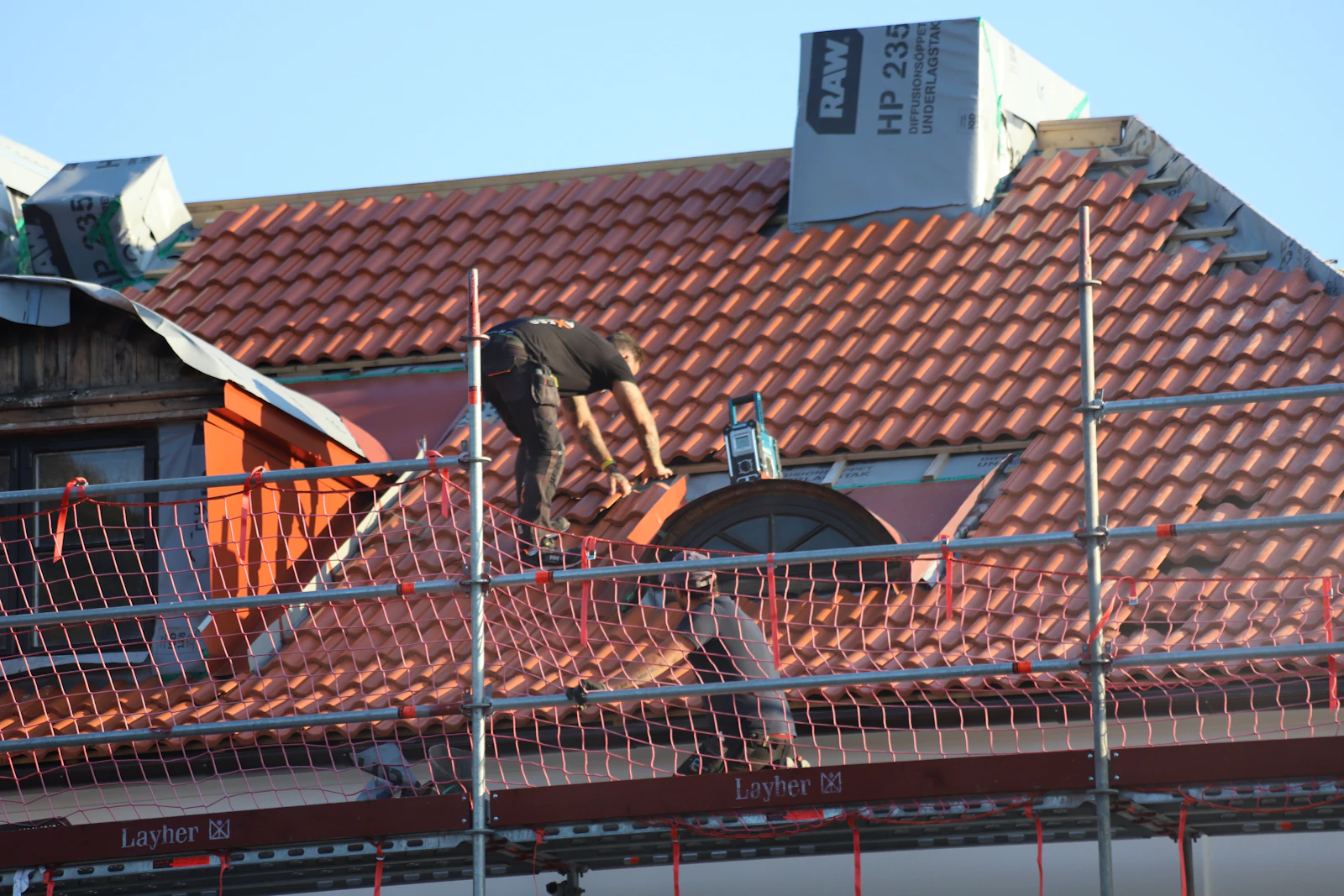
Roof Hoist Rental Rates Chicago 2026
For Chicago roof hoist equipment hire supporting tile roofing in 2026, most rental coordinators should budget (pre-tax) roughly $120–$220/day, $420–$725/week, and $910–$2,150 per 28-day rental month, depending on whether you’re hiring a lighter shingle/ladder hoist, a heavier-duty platform hoist package, or a 500 lb-class material hoist setup. These are planning ranges that assume contractor-ready condition, standard platform, and normal availability; they exclude delivery/pickup, loss/damage waiver, consumables, permit/traffic control, and “non-productive time” caused by weather holds (lakefront wind), downtown access windows, or missed off-rent cutoffs. In Chicago, national rental branches (e.g., United Rentals, Sunbelt Rentals, Herc) and specialty ladder/scaffold yards both supply roof hoist rental packages, but the all-in cost is typically driven more by logistics and jobsite constraints than by the base day rate.
| Vendor |
Daily Rate |
Weekly Rate |
Review Score |
Website |
| United Rentals |
$220 |
$660 |
9 |
Visit |
| Sunbelt Rentals |
$210 |
$630 |
9 |
Visit |
| Herc Rentals |
$200 |
$600 |
8 |
Visit |
| The Home Depot Tool Rental |
$165 |
$495 |
8 |
Visit |
| BigRentz |
$235 |
$705 |
8 |
Visit |
What Counts as a “Roof Hoist” for Tile Roofing?
On a tile roofing scope, “roof hoist” can mean different equipment classes, and that definition drives the hire rate:
- Ladder hoist / shingle hoist (electric): Common in residential re-roof, often optimized for bundles and lighter loads. Some listings are explicitly labeled “for shingles only,” which can be a red flag for tile (weight, size, and point-loading).
- Platform ladder hoist (gas or electric): Heavier-duty roofing platform hoist packages are typically the practical minimum for tile because they handle bulkier loads and repeated cycles with less crew fatigue.
- Material hoist (500 lb class “ground hoist”): A separate category sometimes rented as a 500# material hoist; it can be economical on rate, but the total cost can climb once you account for rigging, landing/guarding, power/fuel, and access control.
From a planning standpoint for tile roofing roof hoist rental in Chicago, get the rental yard to confirm rated capacity (lbs), track length (ft), platform dimensions, power source (110V vs gas), and whether the package is approved for the materials you’re lifting (tile, underlayment rolls, ridge tile, mortar bags, etc.). Manufacturers commonly offer platform hoists in multiple capacities (e.g., 200/250/400 lb classes), and the rental package may be configured with different track and brace options.
Rate Ranges by Hoist Type and Capacity (How to Budget in 2026)
Use the bands below as 2026 planning ranges for Chicago-area equipment hire budgets. Where possible, the ranges are anchored to published rate examples and then widened to reflect Chicago delivery constraints and seasonal availability.
1) 28 ft electric ladder hoist / light-duty platform hoist (often “shingles only”)
Budget: $140–$190/day, $450–$625/week, $900–$1,250/month (28-day).
Published example: a Chicagoland-area listing for an electric ladder hoist (RGC Classic 400 E 28') shows $145/day, $480/week, $910/month (verify suitability for tile before dispatch).
2) 28–32 ft gas platform hoist package (more typical minimum for tile handling)
Budget: $160–$240/day, $500–$750/week, $1,100–$1,950/month.
Published example (non-Chicago catalog pricing used as a baseline reference): a rental catalog lists a 28’ gas ladder/platform hoist at $100/day, $300/week, $900/4-week. Chicago delivered rates and “tile-appropriate” packages are commonly higher after logistics and configuration are added.
3) 32–44 ft packages (extra track sections + bracing + heavier platforms)
Budget: $190–$285/day, $650–$925/week, $1,650–$2,450/month.
Common adders that push you into this band include: additional track sections, stabilizer braces, pivoting track, and upgraded platforms for bulky materials.
4) 500 lb-class material hoist (“ground hoist”) for material handling
Budget: $60–$125/day, $150–$325/week, $430–$1,050/4-week for the hoist unit itself; add significant allowances for guarding/landing, rigging, and site control.
Published national schedule example: $58/day, $153/week, $434/4-week for a gas 500# material hoist category listing.
What Actually Moves Roof Hoist Equipment Hire Costs in Chicago
For Chicago tile roofing projects, the base hire rate is only the starting point. These are the cost drivers that most consistently change the PO total:
- Load and cycle requirements (tile is heavy): If you need more than about 250–300 lb per cycle or you’re cycling continuously, budgeting for a heavier platform hoist package (or adding a second hoist) can be cheaper than burning crew hours on under-capacity equipment.
- Track length and pitch: Longer reach typically means additional sections and more bracing. Planning adders (varies by yard): $15–$35/day per extra track section and $8–$20/day per stabilizer/brace.
- Power availability: If the jobsite can’t guarantee a dedicated 110V / 20A circuit near the hoist, you may need a generator. Typical allowance: $85–$140/day or $250–$450/week for a small contractor generator package (plus fuel).
- Mobilization (delivery/pickup): Hoists are long and awkward; Chicago alley access, street parking limits, and liftgate needs often dictate a dedicated truck and crew.
- Seasonality and weather exposure: Winter ice/snow management and spring wind holds can extend duration (and therefore month charges) more than the rate itself.
Hidden-Fee Breakdown
When you’re building a tile roofing estimate, include these roof hoist rental “soft costs” up front so you don’t lose margin on change orders and chargebacks:
- Delivery and pickup (route fees): Chicagoland equipment delivery often prices by distance bands. A local delivery example for construction equipment shows $150 per route within 10 miles, $250 for 10–25 miles, and $300 for 25–50 miles (and “case-by-case” beyond). For roof hoists, you should budget both delivery and pickup, and add a congestion allowance for the Loop/lakefront.
- After-hours / weekend logistics: Common allowance $125–$250 for after-hours receiving/dispatch, plus potential weekend surcharges (often 10%–25%) if your agreement bills Sat/Sun as full rental days.
- Loss/damage waiver or rental protection: Many rental agreements apply a waiver as a percent of gross rent. Published examples commonly show 10% damage waiver models and 15% rental protection plan models (terms/deductibles vary). Budget 10%–15% of base rent unless you’re supplying a COI that satisfies the yard’s requirements.
- Shift / usage multipliers (if your agreement treats it as “metered” or shift-rated): Some rental schedules define single shift as 0–8 hours and apply 1.5× for double shift (9–16) and 2× for triple shift (17–24). Even if a roof hoist isn’t hour-metered, crews working extended shifts can trigger policy-driven upcharges—confirm at order time.
- Time-basis definitions: A number of Chicago rental operators define billing as 8 hours/day, 40 hours/week (defined as seven days), and 160 hours per 28-day month. That definition matters if your job is idle due to weather holds but the rental clock keeps running.
- Cleaning fees: Tile cutting dust and roof debris can migrate into motors/controls. Budget $75–$250 if equipment returns with mortar dust, adhesive, mastic, or heavy grit contamination.
- Missing parts and wear items: Allow $25–$60 for “small missing hardware” exposure (pins, clamps) and $150–$400 for major missing components (platform, control pendant) depending on the contract.
- Fuel / consumables: If you hire gas-powered drives, allow $6–$9/gal for jobsite fuel cost planning and assume a refuel charge if returned short (varies by yard).
- Late return / off-rent penalties: Common exposure is “another day” if you miss the return cutoff. As an example of a written cutoff, some rental terms charge a full day if not returned before 10:00 am—your actual yard cutoff may differ, but you should plan around a morning off-rent target.
Chicago-Specific Cost Considerations for Tile Roofing Hoist Rental
Chicago is not just “another market.” These local factors frequently change roof hoist hire totals:
- Alley-only access and tight staging: In neighborhoods with narrow alleys and limited curb space, you may need smaller trucks, liftgate delivery, or split deliveries. Budget $75–$200 as a dispatch complexity allowance, plus potential driver waiting time (often billed around $90–$140/hour if the jobsite can’t receive promptly).
- Downtown / lakefront delivery windows: Building receiving rules can force early deliveries (e.g., before 7:00 am) or strict time slots. If you miss the slot, a redelivery can easily add $125–$250 plus a lost day of rent.
- Wind holds near the lake: Tile panels and platforms present sail area. If your safety plan pauses hoisting on high-wind days, your rental duration can stretch—so budget at the week/month level, not just day rates.
Example: Two-Week Chicago Tile Roofing Mobilization (3-Story Walk-Up)
Scenario: 3-story walk-up in Chicago, steep-slope clay tile relay. Crew needs a platform hoist package with extra reach and bracing; staging is via alley; the site can only receive deliveries between 7:00–9:00 am.
- Hoist hire (2 weeks): $600/week × 2 = $1,200 (planning mid-band for a tile-appropriate platform hoist package).
- Extra track + stabilizer allowance: $25/day × 10 working days = $250.
- Delivery + pickup: $250 + $250 = $500 (distance-band route planning allowance; adjust for mileage and truck type).
- Damage waiver: 10% × $1,200 = $120 (if no COI is provided).
- After-hours receiving contingency: $150 (if the building forces pre-7:00 am access).
- Cleaning allowance: $125 (tile dust/debris exposure).
Planning total (before tax/permits): $2,345 for the hoist portion of the job. The key takeaway is that base rent ($1,200) is just ~51% of the planned total once Chicago logistics and risk allowances are included.
Budget Worksheet
Use this as a field-ready set of line items for a Chicago roof hoist equipment hire cost takeoff on tile roofing scopes (no tables—copy/paste into your estimating notes):
- Roof hoist / platform hoist base hire (day/week/month selection): $120–$285/day, $420–$925/week, $910–$2,450/month
- Delivery (route) allowance: $150–$300
- Pickup (route) allowance: $150–$300
- Downtown/alley access complexity allowance: $75–$200
- Driver waiting time allowance (if receiving windows are tight): $90–$140/hr (allow 1–2 hours)
- Damage waiver / RPP allowance: 10%–15% of gross rent
- Extra track sections allowance: $15–$35/day
- Stabilizer/brace kit allowance: $8–$20/day
- Generator (if no reliable 110V circuit): $85–$140/day or $250–$450/week
- Fuel allowance (gas drive or generator): $6–$9/gal
- Cleaning allowance (dust/mortar/grit): $75–$250
- Late return / missed off-rent cutoff allowance: 1 extra day
Rental Order Checklist
- PO includes: equipment class (ladder hoist vs platform hoist vs 500# material hoist), rated capacity, track length, power source, platform type, and included accessories.
- Confirm billing basis: day/week/28-day month, weekend billing policy, and any shift multipliers (if applicable).
- Confirm loss/damage waiver or rental protection plan: accept/decline, percent rate (10%–15% typical), deductible exposure, and COI requirements.
- Delivery requirements: receiving window, truck access (alley vs front), liftgate needs, and contact names with phone numbers.
- Off-rent rules: cutoff time for same-day off-rent, and how to document off-rent notice (email/portal/call log).
- Return condition documentation: photos of serial number, platform, track sections, pendant/controls, and all pins/clamps at pickup and again at return.
- Refuel/recharge expectation: return fuel level and any battery/cord requirements if electric.
- Dust-control expectations: if cutting tile on-site, plan containment/HEPA practices to prevent excessive contamination of equipment and avoid cleaning charges.
How to Reduce Total Roof Hoist Hire Cost Without Adding Schedule Risk
For Chicago tile roofing, the biggest savings usually come from controlling rental days, delivery events, and “chargeable friction” (waiting time, re-deliveries, and late returns)—not from squeezing $10/day off the base rate.
- Choose the correct billing unit (day vs week vs 28-day month): If your tile tear-off/relay is weather-sensitive, pricing the hoist on a weekly or monthly basis can be safer than day-by-day extensions. Many rental operators define the rental “month” as 28 days (not calendar month), which matters when you’re planning phase coverage.
- Minimize delivery events: If your site can only receive in tight windows, one missed slot can cause a redelivery plus an extra rental day. Budget a $125–$250 redelivery exposure and focus on preventing it with confirmed contacts and staging plans.
- Plan off-rent like a production activity: Treat off-rent as a scheduled task. If your yard’s cutoff is early (some written terms use 10:00 am as a threshold), schedule demobilization and photos the day before pickup.
- Control contamination: Cutting tile and mixing mortar creates fine dust that can trigger cleaning fees. A $75–$250 cleaning allowance is cheap compared to a dispute plus downtime.
Procurement Notes: Electric vs Gas Roof Hoist Hire for Chicago Crews
From an equipment-hire cost perspective, electric and gas packages often converge once you include real operations:
- Electric hoist packages: Lower fuel handling burden, but you must confirm a reliable 110V circuit near the hoist and protect cords from foot traffic and sharp tile edges. If the site can’t supply power, a generator add-on (often $85–$140/day) can erase any “cheaper electric base rate” advantage.
- Gas hoist packages: More independent, often more tolerant of rougher sites, but plan fuel logistics and refuel penalties. Use $6–$9/gal as a 2026 planning allowance for field fuel and assume refuel/service charges if returned below the dispatch level.
Insurance, Waivers, And Why They Matter on Tile Roofing
Tile roofing increases the financial consequence of a mishap: tile is expensive, and roof-edge handling is unforgiving. You should decide early whether you’re:
- Providing a COI that meets the rental yard’s “contractors rented equipment” requirements (often preferred for larger contractors), or
- Accepting a damage waiver / rental protection plan and carrying that cost in the estimate.
Published examples show a 10% damage waiver model (charged on gross rent) and a 15% rental protection plan model (charged on the rental fee). Terms differ by provider (deductibles, exclusions, theft coverage), so coordinate with risk management before issuing the PO.
Operational Constraints That Commonly Change the Final Invoice
These are the “real world” constraints that most often turn a clean roof hoist hire quote into a messy final invoice—especially on Chicago tile jobs:
- Weekend/holiday billing: If the hoist sits idle Saturday/Sunday due to HOA restrictions or safety plan wind holds, you may still be paying rental days unless your agreement pauses billing.
- Delivery cutoffs: Missed receiving windows can trigger waiting time (commonly $90–$140/hr) or redelivery ($125–$250).
- Off-rent notice requirements: Some suppliers require documented off-rent notice (portal/email) rather than a voicemail. Not documenting it can cost another day.
- Return-condition documentation: Missing pins, clamps, or a control pendant can produce significant replacement charges. Plan a close-out checklist and photo set on pickup and return.
- Indoor dust-control (when applicable): If you’re moving tile to an interior staging level (rare, but it happens in occupied buildings), protect finished areas and keep equipment clean to avoid cleaning/repair allocations.
Ownership vs Equipment Hire: A Simple Break-Even for Chicago Tile Roofing Crews
If you’re running repeated tile roofing projects in Chicago (multi-month pipeline), it can be worth comparing ownership versus ongoing equipment hire. A practical break-even method used by many estimators is:
- Estimate your annual “roof hoist days” (e.g., 60–120 days/year of actual rental time).
- Apply an all-in rental day cost (base rent + average delivery + waiver + cleaning). In Chicago, an all-in “effective” roof hoist cost often lands around $180–$320/day once logistics are averaged across jobs.
- Compare that to ownership carrying costs (purchase, maintenance, storage, repairs, transport). If you still need delivery trucks and labor to mobilize owned equipment, those costs don’t disappear—so include them.
Even when ownership wins on paper, many contractors still hire due to fleet flexibility, reduced maintenance, and the ability to size the hoist package to each job (28 ft vs 44 ft, electric vs gas, different platforms) without tying up capital.
Closeout Documentation That Prevents Chargebacks
- Pre-dispatch photos on delivery: serial plate, platform condition, track sections count, braces, pendant/controls, and any pre-existing damage.
- Daily log: any jams/overloads, any weather holds, and who operated the hoist.
- Return photos before pickup: clean condition, all accessories staged, fuel level documented (if gas), and cords/pins accounted for.
- Off-rent confirmation: email/portal confirmation number and timestamp (especially important if cutoffs are early).
Frequently Asked Pricing Questions for Chicago Roof Hoist Rental
Is there usually a minimum rental charge?
Often yes—many yards effectively operate with a 1-day minimum even if you only need the unit for a few hours. If your crew only needs a hoist for a partial day, evaluate whether the operational risk is worth it versus a full-day hire.
Does a roof hoist rental month mean calendar month?
Commonly no. Many rental operators define a month as a 28-day rental month (and define hours like 160 hours per month), which can impact how you budget multi-phase tile roofing work.
What’s the single biggest avoidable cost?
In Chicago, it’s typically failed logistics: missed delivery windows, waiting time, redeliveries, and missed off-rent cutoffs. Those can each be a $125–$250 event (plus an extra rental day), which adds up faster than any rate negotiation.