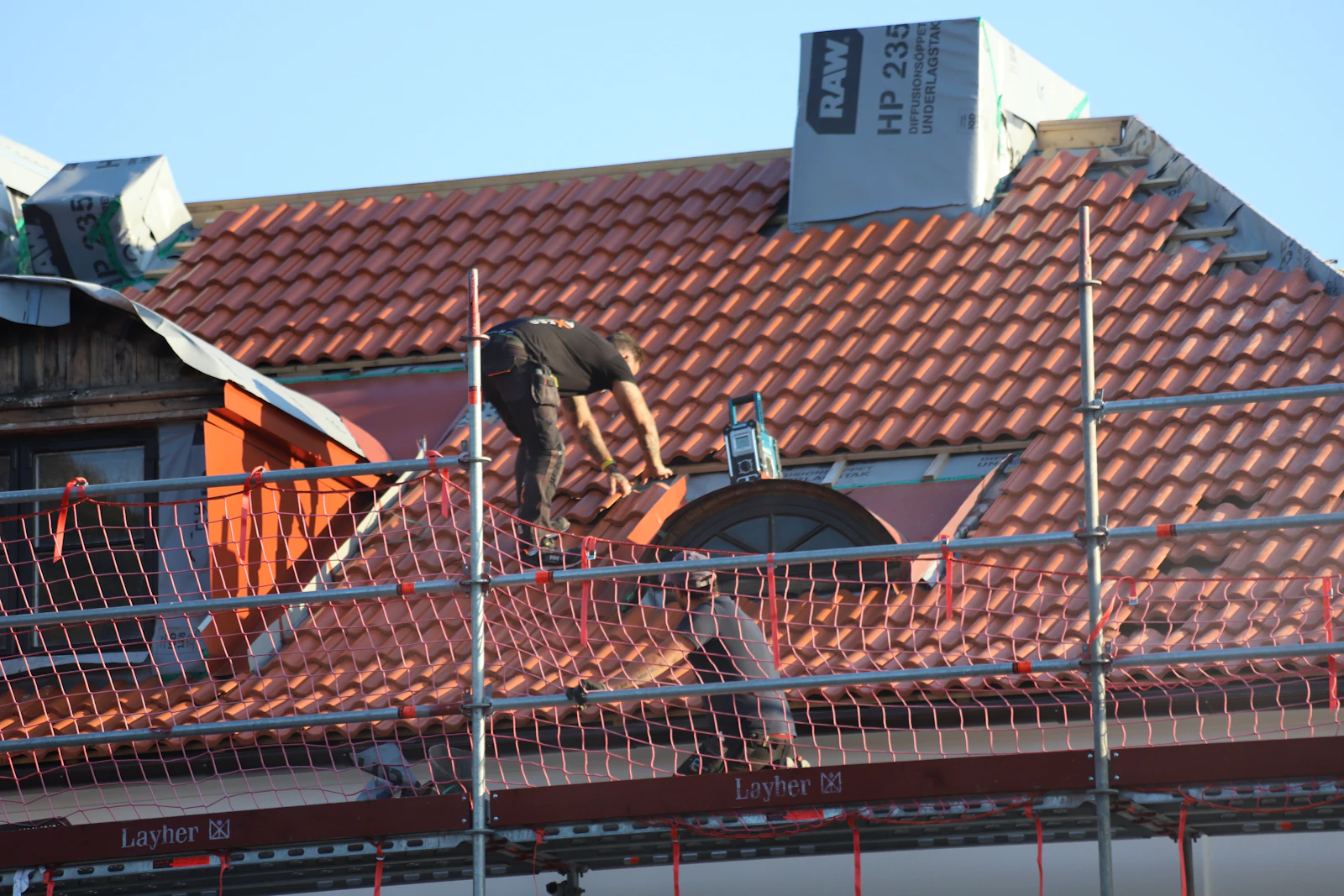
For Dallas (DFW) tile roofing crews planning 2026 work, roof hoist equipment hire typically budgets in two tiers depending on capacity and track length. For a standard 28 ft, ~250 lb ladder-platform “shingle hoist” package, plan roughly $140–$260/day, $520–$980/week, and $1,450–$2,650 per 4-week period (28-day billing). For higher-capacity or longer-reach packages better suited to heavier tile staging (e.g., 400 lb carriage, 32–44 ft track, additional bracing/stand-offs, or electric motor packages), plan $190–$340/day, $760–$1,350/week, and $2,050–$3,650 per 4-week period. These are budgetary planning ranges (not a quote) built from published roof-hoist rental examples in Texas and other U.S. markets and then adjusted for Dallas delivery logistics, accessory needs, and typical damage-waiver and transport adders.
| Vendor |
Daily Rate |
Weekly Rate |
Review Score |
Website |
| Sunbelt Rentals |
$95 |
$275 |
9 |
Visit |
| United Rentals |
$650 |
$1 658 |
7 |
Visit |
| EZ Equipment Rental (DFW) |
$75 |
$300 |
10 |
Visit |
| ABC Equipment Rental (Dallas) |
$325 |
$1 125 |
8 |
Visit |
| The Next Rental and Equipment (Dallas) |
$650 |
$1 658 |
10 |
Visit |
Roof Hoist Hire Costs Dallas 2026
In roofing rental catalogs, “roof hoist,” “ladder hoist,” “shingle hoist,” and “roofing conveyor” are often used interchangeably. For tile roofing, verify the exact configuration you’re pricing (motor type, track length, carriage style, and required braces), because two quotes that both say “roof hoist” can be hundreds of dollars apart once the track extensions and required stabilization accessories are included.
Use the following assumptions when you apply the ranges above:
- Day = 24 hours on rent (many branches bill a “day” even if you use it for 6–10 hours).
- Week = 7 consecutive days (weekend days often count unless your account has a negotiated “weekday” program).
- 4-week = 28 days (common “monthly” rental convention for tools/equipment).
- Rates generally exclude delivery/pickup, damage waiver, taxes, and fuel/cleaning/repair back-charges.
Published examples for a 28 ft TP250-class unit have been advertised around $100/day, $500/week, and $1,200/month in Texas markets; other rental centers show per-day pricing around $117/day on a TP250 shingle hoist. Dallas planning ranges typically land higher once you add metro delivery, accessory adders (tile carriers, extra sections, braces), and tighter delivery windows.
What Changes Roof Hoist Hire Pricing for Tile Roofing in Dallas?
Tile roofing drives a different cost profile than asphalt because the material is heavier per square, more breakable, and usually needs more controlled staging at the roof edge. In Dallas specifically, job access (alley vs front drive), subdivision/HOA restrictions, and summer heat also affect how you’ll configure (and therefore rent) the hoist package.
- Capacity and carriage type: A 250 lb carriage may work for shingles, but tile work often pushes you toward heavier-duty configurations and gentler loading practices (smaller, more frequent loads), which can increase rental duration even if the day rate is similar.
- Track length and roof geometry: Moving from a 28 ft package to 36–44 ft commonly requires additional sections and—critically—additional stabilization. Budget adders of $25–$45/day per extension section (or equivalent weekly/4-week adders), plus any required braces/anchors.
- Required stabilization accessories: Many track-extension setups require a telescoping support brace or similar stabilization to meet manufacturer setup guidance. If it is required for the configuration, treat it as non-optional cost. A brace might add $18–$35/day depending on the branch and package.
- Power source: Electric motor packages can reduce fueling/refuel back-charges and are easier for some urban sites, but they often require heavier-gauge cords and strict power planning. It’s common to add a 10/3 100 ft cord rental at about $15/day (or similar), or a generator if power is not reliable at the placement point.
- Site access and delivery constraints (Dallas): Dense neighborhoods (e.g., tight streets, limited shoulder parking) can push you into time-window deliveries and smaller trucks. That may raise delivery cost and/or force you to keep the hoist longer to avoid re-mobilization.
- Weather windows: Dallas summer roof temperatures can compress productive hoisting hours, which can extend the number of rental days even when the scope is unchanged (a real cost driver if you’re billed for calendar days).
Typical Hire Package Inclusions (And What’s Not Included)
For professional equipment hire, a roof hoist rental commonly includes the motor/drive unit, base section, track/ladder sections, and a carriage/platform. Everything else should be assumed not included unless the quote lists it.
- Commonly included: base + track, carriage/platform, basic controls, and standard wheels/transport handling features (varies by model and rental house).
- Commonly not included (budget as adders): stand-offs/stabilizers, roof hooks/anchors, telescoping support braces for extensions, secondary handle kits, special carriers (tile/plywood/solar panel carriers), and heavy-gauge extension cords.
- Also not included: tie-down straps, traffic control, spotters, fall protection systems, and any engineered tie-in or rooftop edge protection required by your internal safety plan.
Hidden-Fee Breakdown
Roof hoist equipment hire looks inexpensive until you stack the real-world line items: transport, damage waiver, and back-charges. For tile roofing, the risk of damage and cleanup charges is higher, so build allowances up front.
- Delivery and pickup: In Dallas, expect either a flat local fee (often $175–$325 each way) or a base fee plus mileage. For mileage programs, a typical planning allowance is $4.00–$6.50 per mile beyond a base radius. (Confirm if tolls are passed through.)
- Minimum rental / short-day billing: Many branches effectively enforce a minimum such as a 4-hour minimum even if you only need a brief lift window. Published “4-hour” pricing examples exist for TP250-class shingle hoists (useful when your scope is truly short), but most tile roofing work ends up billed as full days due to setup and demob time.
- Damage waiver (DW): Often priced as a percentage of the rental line (commonly 10%–18%) and may exclude theft, overload damage, or misuse. Treat DW as separate from your insurance/COI requirements.
- Deposit / credit hold: Depending on account terms, expect a deposit or credit authorization commonly in the $300–$1,000 range for non-house-account rentals or first-time customers.
- Fuel and refuel back-charges (gas units): If returned short of “full,” budget a refuel service fee of $25–$60 plus fuel, and add downtime risk if the unit arrives low.
- Cleaning fees: Budget $95–$250 if the unit returns with mortar dust, mud, wet underlayment residue, or adhesive contamination on the belt/rollers. For tile tear-offs, dust control and cleanup discipline reduce this risk.
- Holdover / late extensions: Some rental policies assess a specific holdover charge if you keep the unit past the agreed return without extending in advance (a published example shows an added $35/day holdover-type fee). Build internal discipline around extension approvals.
- Weekend and holiday billing: If you take delivery Friday and off-rent Monday, many programs still bill 3 calendar days unless you have negotiated “weekend-free” terms.
Example: Tile Roofing Roof Hoist Equipment Hire Takeoff for a Dallas Job
Example: Two-story clay tile tear-off and re-install in East Dallas (tight driveway, no alley access). Roof edge height roughly 22–26 ft, requiring a 28 ft base package plus careful placement for loading. Crew plans 4 production days but wants a buffer day for weather and inspection timing.
- Base roof hoist rental: 5 days at $235/day = $1,175 (planning figure within the Dallas 2026 range).
- Stabilization/stand-off allowance: $28/day x 5 = $140 (common add-on for safer standoff and alignment on steeper pitches).
- Power distribution: 10/3 100 ft cord at $15/day x 5 = $75 (or swap this line for a small generator at $90–$140/day if power is not available near the set point).
- Delivery + pickup: $245 each way = $490 (time-window delivery requested to avoid school pickup congestion).
- Damage waiver: 14% of rental line items (apply to base + accessories per the rental contract) ≈ $195 on the numbers above.
- Cleaning contingency: $150 allowance (tile dust and underlayment debris control).
Planning total for equipment hire and common adders in this scenario: approximately $2,225 before tax/permit/traffic-control and before any additional track sections. The practical takeaway for tile roofing is that the “$200-ish per day hoist” often lands closer to $400–$600/day fully burdened once delivery, DW, and accessory requirements are included—especially on constrained Dallas sites.
How to Avoid Overbuying the Roof Hoist Package
Roof hoist equipment hire costs are easiest to control when you eliminate “surprise accessories” and avoid unnecessary rental days. For tile roofing, the most common cost overrun is renting a bigger package than needed because the roofline height was estimated from the ground, not measured.
- Measure roof edge height (ground-to-eave) and confirm placement angle. Don’t guess.
- Confirm the load plan: smaller loads more frequently reduces breakage but increases hoist runtime; plan crew hours accordingly.
- Verify power early: if you need a generator, add it to the PO on day one to avoid a same-day dispatch fee.
- Plan off-rent paperwork so you don’t pay a weekend you didn’t need.
Budget Worksheet
Use this as an estimator/rental coordinator worksheet for roof hoist equipment hire costs in Dallas (tile roofing). Adjust quantities to your schedule and roof height.
- Roof hoist rental (28–44 ft, capacity confirmed): ____ days at $____/day
- Track extension sections: ____ sections at $____/day (or $____/week)
- Support brace / stabilization kit (if required): ____ days at $____/day
- Stand-offs / roof hooks / tie-in accessories: allowance $____
- Power distribution (10/3 cord 50–100 ft): ____ days at $____/day
- Generator (only if needed): ____ days at $____/day
- Delivery: $____ (note delivery window/cutoff)
- Pickup: $____ (note off-rent request deadline)
- Damage waiver: ____% of rental lines
- Fuel/refuel contingency (gas units): $____
- Cleaning contingency: $____
- Damage contingency (belt/rollers/platform): $____
Dallas Operational Rules That Change the Real Hire Cost
Roof hoist equipment hire costs for tile roofing are driven as much by rental administration as by the day rate. In Dallas, the biggest avoidable costs usually come from missed off-rent cutoffs, weekend billing, and return-condition disputes.
- Delivery windows and cutoffs: If your site requires a specific window (e.g., 7:00–9:00 AM to avoid school traffic), budget for a premium dispatch or at minimum a higher delivery fee. After-hours or “call-ahead” deliveries can add $75–$150 depending on the program.
- Off-rent rules: Many rental operations require off-rent notice by a branch cutoff time (often around 9:00–11:00 AM) to stop billing that day. If you call at 2:00 PM, you may pay an extra day even if pickup happens next morning.
- Weekend/holiday billing: If you can’t load-out until Monday due to HOA restrictions or city noise rules, assume those days bill unless you have written “weekend-free” terms.
- Return condition documentation: Take time-stamped photos at pickup and at load-out. If the belt/rollers are contaminated with mastic or damaged by tile shards, back-charges can exceed a week’s rental quickly (and disputes are harder without documentation).
- Fuel/recharge expectations: Gas units typically require “return full.” Electric units should be returned with cords/controls intact and clean; missing control parts can trigger replacement charges that exceed $100–$300.
Tile Roofing Considerations Specific to Dallas Jobsites
Local conditions change how you should configure—and therefore price—the hoist. The following are common DFW cost drivers for tile roofing roof hoist rentals:
- Heat and productivity: In Dallas summers, plan fewer productive hoisting hours per day and potentially more days on rent. If your crew’s heat plan shifts loading to early morning, ensure delivery happens the day prior (or budget for early delivery fees).
- Driveway protection and HOA constraints: Subdivisions often restrict street staging. If you must stage entirely in the driveway, you may need additional matting or different placement that requires an extra track section—budget $25–$45/day for that section rather than improvising on site.
- Dust control: Tile tear-off creates heavy dust. If the hoist is placed near soffit vents/attic intakes, plan for containment and additional cleanup to avoid a $95–$250 cleaning back-charge.
Rental Order Checklist
Use this checklist to reduce change orders and avoidable fees on roof hoist equipment hire (Dallas tile roofing).
- PO number and cost code issued before reservation
- Confirm exact equipment description: roof hoist/ladder hoist model, capacity (e.g., 250 lb vs 400 lb), and track length (28 ft vs extended)
- Accessories listed on the PO (don’t assume “included”): stand-offs, braces, roof hooks/anchors, secondary handles, special carriers
- Power plan confirmed: electric outlet availability OR generator added to order; cords specified (e.g., 10/3, 50–100 ft)
- Delivery address verified with site contact name + phone
- Delivery constraints noted: gate codes, alley access, HOA delivery windows, school zones, toll route approvals
- Drop location and unloading method agreed (who offloads; what equipment is needed)
- Damage waiver decision documented (accept/decline) and COI requirements satisfied
- Start-of-rent condition photos taken at delivery (belt/rollers/platform, controls, serial number)
- Off-rent procedure defined: who calls off-rent, cutoff time target (plan for before 10:00 AM), and return staging location
- Return condition photos taken at pickup/load-out; note fuel level (gas) or component completeness (electric)
When a Roof Hoist Is Not the Lowest-Cost Hire Option
This is still a roof hoist hire cost discussion, but estimators often need a quick “sanity check” alternative when tile weight, reach, or access makes the hoist inefficient. If you’re paying for calendar days and fighting access constraints, a higher hourly-rate option can be cheaper in total.
- Boom truck / crane assist (common via roofing supply logistics): Budget $175–$275/hr with a typical 2–4 hour minimum, plus possible mobilization of $150–$350. This can place multiple pallets quickly and may reduce total labor hours and the number of rental days for the hoist.
- Telehandler or forklift for staging to a lower roof: Often $450–$750/day plus delivery, but can reduce manual handling and breakage if you have adequate access and ground bearing.
- Manual carry and ladder loading: Lowest equipment cost, highest labor and injury exposure; for tile, it can also drive breakage waste and schedule delay.
Ownership vs Equipment Hire (Break-Even for Tile Roofing Crews)
If you run consistent tile roofing volume in Dallas, it’s reasonable to check ownership economics. Published purchase pricing for TP250-class units has been listed in the $3,140–$3,802 MSRP range (varies by motor option and configuration).
Rule-of-thumb break-even (very rough, before maintenance/repairs): if your fully burdened roof hoist equipment hire cost averages $450/day (rate + delivery + DW + accessories averaged), you can hit the MSRP-equivalent in about 7–9 rental days. However, ownership only wins if you can:
- store it securely (theft risk can be material),
- maintain belts/rollers/controls,
- transport it to jobs (truck/trailer), and
- keep utilization high enough to justify downtime.
Practical Ways to Reduce 2026 Roof Hoist Hire Costs in Dallas
- Bundle delivery and pickup: Schedule other small-rental returns/pickups together to avoid paying multiple $175–$325 dispatch fees in the same week.
- Reserve early for storm season: Dallas hail/wind events can tighten rental availability; last-minute substitutions often mean higher-cost packages or extra delivery lead time.
- Use written accessory lists: For tile roofing, missing a brace/stand-off can cause a same-day “rescue run,” which typically costs more than adding the accessory upfront.
- Control cleaning risk: Put a simple tarp/containment plan under the loading zone. Spending $20–$40 on disposables can avoid a $150+ cleaning back-charge.
- Call off-rent early: Make it a process KPI—off-rent requested before 10:00 AM on demob day—to reduce avoidable extra-day billing.
If you share your roof edge height, roof pitch, desired load type (tile vs underlayment vs debris), and whether you have alley access, you can tighten the planning range and reduce accessory surprises without turning the estimate into a vendor-specific quote.