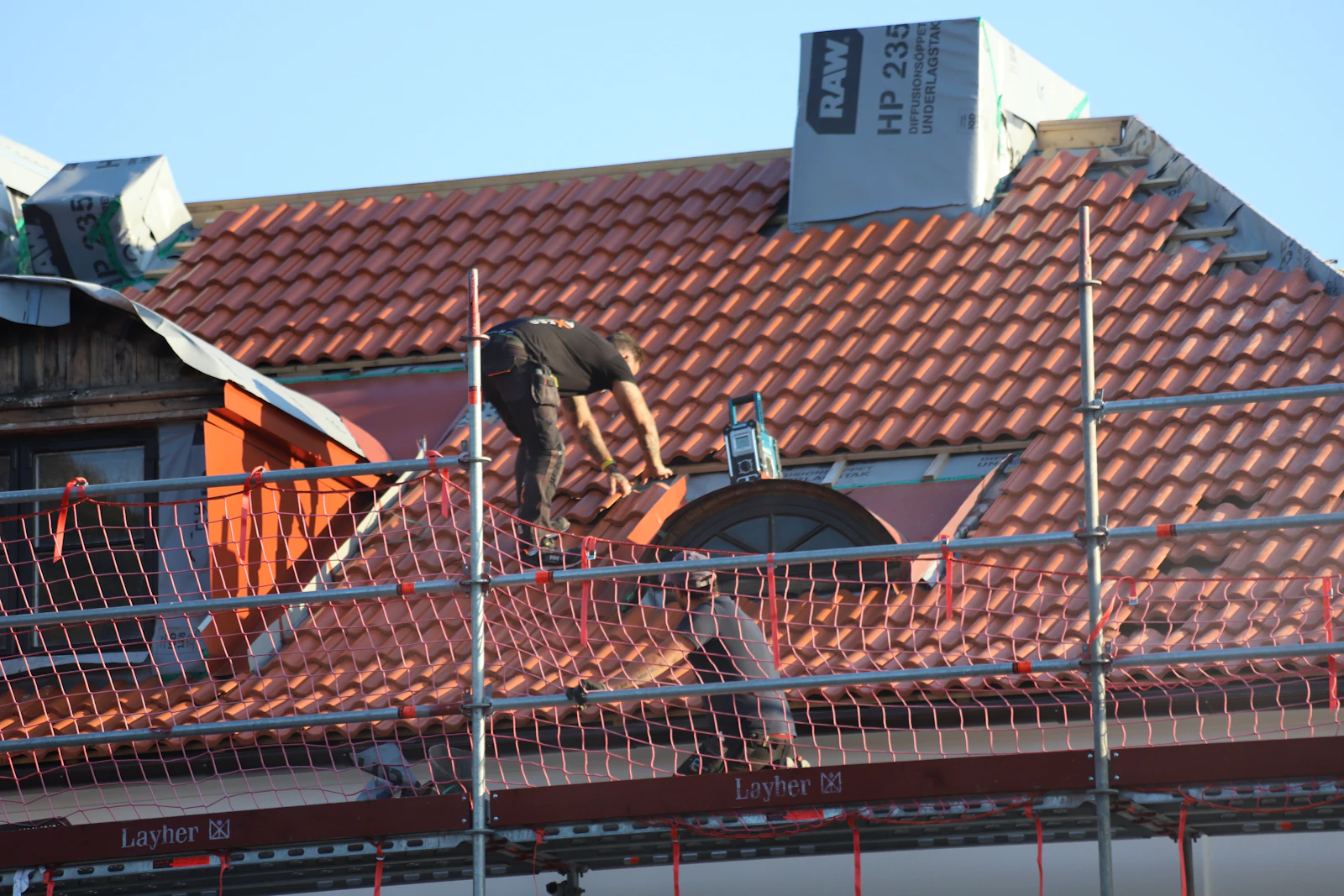
Roof Hoist Rental Rates Mesa 2026
For Mesa (Phoenix-metro) tile roofing crews budgeting 2026 work, roof hoist equipment hire typically lands in these planning ranges (1-shift use, rental house “day” = up to 24 hours unless stated otherwise): a basic 24–28 ft gas or electric ladder/roof hoist (often called a shingle lift, ladder hoist, or roof conveyor) is commonly budgeted at $110–$175 per day, $330–$525 per week, and $900–$1,450 per 4 weeks. For taller set-ups (32–44 ft systems with extra ladder sections, heavier carriage/platform options, or higher-capacity gas drives suitable for heavier loads), plan $160–$260 per day, $480–$780 per week, and $1,350–$2,400 per 4 weeks before delivery, waiver, and accessory adders. Published rate sheets from multiple U.S. rental counters show 28 ft ladder/platform hoists commonly advertised around the $100/day class (often $100/day, $300/week, $900/4-week), which is useful as a baseline when negotiating Mesa-area rental pricing and bundling delivery. Leading Phoenix-metro equipment rental networks and regional ladder/scaffold specialists typically stock (or can source) these ladder hoists, but actual availability in peak re-roof season can drive premiums for guaranteed delivery windows.
| Vendor |
Daily Rate |
Weekly Rate |
Review Score |
Website |
| Sunbelt Rentals (Mesa, AZ) |
$110 |
$300 |
7 |
Visit |
| United Rentals (Phoenix/Mesa metro) |
$160 |
$450 |
9 |
Visit |
| Herc Rentals (Phoenix/Mesa metro) |
$120 |
$330 |
10 |
Visit |
| Ahern Rentals (now part of United Rentals) – Phoenix/Mesa metro |
$115 |
$315 |
8 |
Visit |
What Drives Roof Hoist Hire Pricing for Tile Roofing in Mesa?
“Roof hoist” can mean different packages in rental catalogs, and the package definition is one of the biggest cost variables. For professional tile roofing, confirm whether the quoted hire rate includes only the power unit (motor/drive) or a complete working system (drive + ladder/rail sections + carriage/platform + upper support/stand-off hardware + controls). In practice, Mesa estimators see the following cost drivers move total hire spend more than the base day rate:
- Height and reach (ladder/rail sections): A 28 ft base system is materially cheaper than a 40–44 ft configuration because each added section increases freight handling time, truck space, and damage exposure.
- Capacity class: Published examples include systems around 250 lb capacity (common “TP250” class). Higher-capacity and heavier-duty frames can carry a higher day rate, especially when the rental includes a wider platform or material tray intended for heavier roofing loads.
- Power type: Electric ladder hoists can be cheaper to hire, but they may require dedicated circuits on occupied tile re-roofs. Gas units often command a premium but reduce site power dependency.
- Accessory completeness: Tile work often needs a platform/tray that supports awkward loads (bundled underlayment, battens, boxes of fasteners, ridge/hip components). If the quote is “hoist only,” you’ll add accessories as line items.
- Delivery method: Pickup by your crew (trailer/ladder rack) can reduce fees, but some rental houses will only deliver longer/taller packages to control transport damage risk.
Mesa-specific note for tile roofing: summer heat (105–115°F days are normal in-season) can tighten delivery windows (early AM drop-offs) and can increase downtime risk if crews are forced into shorter production windows. If you need a “guaranteed before 7:00 AM” delivery, plan to pay for it or accept a larger float in schedule and off-rent dates.
2026 Planning Ranges You Can Use on Estimates (Without Claiming Exact Vendor Pricing)
Use these as planning ranges for roof hoist equipment hire cost in Mesa when you don’t yet have a firm quote. They assume a professional ladder hoist/roof conveyor suitable for roofing materials movement, not a light-duty retail winch.
- 24–28 ft ladder/roof hoist (gas or electric drive, standard carriage): $110–$175/day; $330–$525/week; $900–$1,450/4 weeks. (Published counter examples around $98.90–$107.80/day are common in some markets, with 4-week figures sometimes under $900; Mesa planning ranges are commonly higher once delivery, seasonality, and accessory completeness are included.)
- 32–44 ft configured system (extra ladder/rail sections, heavy-duty platform option): $160–$260/day; $480–$780/week; $1,350–$2,400/4 weeks.
- Optional ladder/rail section adders (height extension): budget $25–$55 per section per day (or $75–$165 per week) depending on length and freight burden.
- Platform/tray upgrade (wider deck, higher sidewalls, or tile-friendly tray): $15–$40/day; $45–$120/week.
- Roof stand-off / ridge hook / stabilizer hardware: $10–$25/day; $30–$75/week (and confirm compatibility with tile edges to prevent breakage).
- Spare control pendant / remote (if offered): $8–$20/day; $25–$60/week (often worth it when crews are splitting between tear-off and load-in).
Rate-structure reminder: Many rental businesses price “week” as a discounted bundle of day rates, and “4 weeks” (28 days) as a deeper discount. Published catalogs sometimes show a simple $100/$300/$900 structure for 28 ft ladder/platform hoists. In Mesa, you’ll still need to reconcile that structure with delivery, weekend billing, and off-rent cutoffs.
Hidden-Fee Breakdown
Roof hoist hire costs that surprise otherwise solid estimates are usually not the base rate—they’re the small operational charges that hit when a system comes back dirty, incomplete, or late, or when the jobsite constraints require special handling. Bake these into your Mesa tile roofing estimate as allowances (or confirm them as “included” in writing):
- Delivery and pickup (each way): $85–$160 each way within a typical metro radius; $3.00–$5.50 per loaded mile beyond the included zone. (Phoenix-metro delivery radii commonly hover around ~30 miles for some equipment categories; use that as a reasonableness check.)
- Minimum rental charge: 1-day minimum is common even if the unit only works a partial shift (budget $110–$175 minimum).
- Weekend / holiday billing: some independents run “weekend = 1 day charge” promos; others bill Saturday/Sunday as full days if the unit is off-rent late or returned after hours.
- Holdover / late extension fee: if not extended before cutoff time, some counters apply a fixed daily holdover add (example: $35/day holdover has been published for a 28 ft ladder hoist in at least one rental listing).
- Late return conversion to daily rate: many contracts state that if the unit is kept past the due-in time, the daily rate may apply for the entire overrun period.
- Damage waiver / rental protection: commonly 10%–15% of rental charges (confirm whether it applies to delivery and accessories too).
- Environmental / admin fee: commonly 2% of rental (some public bid tabs and rental schedules show 1.99%–2% environmental fee patterns).
- Fuel surcharge / top-off: if the hoist is gas-powered and returns not full, budget $6–$10 per gallon depending on contract terms.
- Cleaning fee: $45–$150 if returned with concrete/mud, excessive tile dust, or adhesive residue on the platform.
- Missing parts (pins, bolts, brackets): $15–$65 per missing pin/keeper/bracket is typical; missing carriage components can be much higher.
- Cable/belt abuse or “abnormal wear” charge: budget a $75–$250 exposure if crews run the carriage into stops repeatedly or if debris jams the drive.
- After-hours site wait time (delivery driver detention): $65–$125/hour after an included wait (commonly first 15–30 minutes included).
- Re-delivery because of access denial (HOA gate, blocked driveway): $85–$175 per attempt.
Tile Roofing Requirements That Change the Roof Hoist Hire Cost
Tile roofing is unforgiving on logistics. The roof hoist becomes a production tool only if it is staged correctly and matched to access and material flow. These are the tile-roof drivers that most often increase equipment hire cost in Mesa:
- Driveway and staging constraints: East Mesa subdivisions often have tight driveways and vehicle parking limits. If the delivery truck cannot back to a safe unload point, you may need a smaller delivery vehicle (higher delivery fee) or a crew-assisted unload window (detention risk).
- Fragility and breakage control: Tile edges chip easily. Budget for additional stabilizer hardware ($10–$25/day) and a larger platform/tray ($15–$40/day) so crews can set tile loads without rolling.
- Dust control on occupied sites: Tile tear-off and cutting can create fine dust. If the hoist is used to move debris bags or demo material, expect cleaning charges unless you tarp and protect the carriage/platform.
- Monsoon season planning: Sudden storms can force a mid-job pause. If you cannot off-rent the hoist before a weekend, you may carry 2–3 extra billed days—so align delivery and due-in times to your weather float.
Example: Two-Story Tile Re-Roof in East Mesa With Restricted Access
Scenario: 2-story S-tile re-roof, 2,600 sq ft, eave height ~22 ft, driveway fits one vehicle, HOA requires no street staging, and the crew can only receive deliveries between 6:30 AM and 2:30 PM.
Equipment hire plan (budgetary): choose a 40–44 ft configured roof hoist system to reduce manual carries on steeper sections.
- Base roof hoist hire: $220/day × 2 days = $440
- Extra ladder/rail sections: $45/day × 2 sections × 2 days = $180
- Tile-friendly platform/tray add: $30/day × 2 days = $60
- Delivery + pickup: $140 each way = $280
- Damage waiver (12% of rental items): 0.12 × ($440+$180+$60) = $81.60
- Environmental/admin fee (2%): 0.02 × ($440+$180+$60) = $13.60
- Cleaning allowance: $75 (tile dust + adhesive residue exposure)
Budgetary total to carry: about $1,130 before tax. If the HOA blocks access and a re-delivery is required, add another $125–$175 exposure. If off-rent is missed and the unit carries through a weekend at a strict-billing counter, add $220–$520 depending on weekend rules and due-in time.
Budget Worksheet
Use this as a non-table worksheet for a rental coordinator building a PO for roof hoist equipment hire in Mesa (tile roofing scope):
- Roof hoist base hire (day/week/4-week): allowance $110–$260 per day depending on height/capacity
- Height extensions (ladder/rail sections): $25–$55 per section per day; assume 1–3 sections
- Platform/tray upgrade: $15–$40 per day
- Stabilizer / stand-off / ridge hook hardware: $10–$25 per day
- Delivery (each way): $85–$160 (or mileage beyond included radius)
- Driver wait time / jobsite detention: $65–$125 per hour after included wait
- Damage waiver / rental protection: 10%–15% of rental subtotal
- Environmental/admin fee: 2% of rental subtotal
- Fuel top-off exposure (gas units): $6–$10 per gallon
- Cleaning allowance: $45–$150
- Missing pins/brackets allowance: $65
- Schedule float for weather/HOA delay (potential extra billed day): $110–$260
Rental Order Checklist
Before dispatching or signing for the roof hoist, align on these items to protect your equipment hire cost and avoid back-charges:
- PO includes: base roof hoist, ladder/rail sections count, carriage/platform type, stabilizers/stand-offs, and any spare controls
- Delivery address notes: gate codes, HOA restrictions, driveway slope, and where the delivery truck can legally park
- Delivery window and cutoff: confirm the latest time you can accept delivery (e.g., 2:30 PM in the scenario) and what happens if the driver arrives after that
- Off-rent rules: what time you must call/text to stop next-day billing; whether weekends bill as full days
- Due-in time and after-hours policy: confirm whether after-hours returns still count as “on rent” until next business open
- Photo documentation: take start-condition photos of drive unit, ladder sections, platform, cables/belts, and all pins/keepers
- Return condition requirements: remove roofing mastic, excessive dust, and tape residue; verify all pins and brackets are returned
- Fuel policy (gas units): return full; confirm per-gallon top-off pricing
- Damage waiver election: accept/decline and confirm what is excluded (often tires, theft, misuse, or unreported damage)
Delivery, Off-Rent, and Billing Rules to Confirm Before You Dispatch
In Mesa, roof hoist equipment hire cost is frequently driven by days billed rather than the nominal day rate. The same unit can cost 2× depending on whether the rental counter treats a weekend as “1-day charge” or bills Saturday and Sunday as full days when the unit is still on rent. Some independents advertise aggressive weekend structures (for example, “weekend = 1 day charge” and “weekly = pay for 3 days” structures on many equipment categories), but you must confirm whether that applies to ladder/roof hoists and whether it is voided by late return.
Operationally, your coordinator should pin down five rules in writing (email or PO notes) because they change invoice outcome:
- Delivery cutoff time: If you need “same-day” replacement due to a down unit, rush delivery may add $75–$150. If your site has HOA access limits, schedule earlier and budget possible driver wait ($65–$125/hr after included wait).
- Off-rent notice cutoff: Many counters require notice before a set time (commonly early–mid afternoon). Miss it and you may carry an extra day even if the hoist is idle.
- Due-in time: If the contract lists a “Due In” time, returning after that can convert your rate to additional daily charges. Some rental contract language explicitly states that keeping the equipment past due-in triggers daily-rate billing for the extended period.
- Holdover charges: If you fail to extend before the cutoff, some rental listings publish fixed adders (example: $35 per day holdover has been published for a 28 ft ladder hoist in at least one market).
- Weekend/holiday billing: If your job is likely to slip into a weekend due to weather, it may be cheaper to start the hire on Monday morning rather than Friday afternoon, even if production “wants” Friday.
Risk and Damage Cost Controls for Roof Hoist Equipment Hire
Tile roofing exposes hoists to dust, adhesive, and impact damage (especially to platforms and stop mechanisms). A simple cost-control routine usually pays back more than negotiating $10/day off the base rate:
- Damage waiver vs. insurance: Budget 10%–15% for waiver if your internal policy prefers predictable exposure. Confirm exclusions. If you decline the waiver, ensure your internal insurance certificate is on file (if required) and confirm responsibility for theft and transport damage.
- Environmental/admin fee: Many rental structures apply a separate fee, commonly around 2%.
- Cleaning avoidance: Assign one person to wipe down the platform and keep adhesive off contact surfaces. This is often the difference between $0 and a $45–$150 cleaning line.
- Prevent “missing parts” back-charges: Put all pins/keepers in a labeled bag at tear-down. Budget exposure: $15–$65 per missing small part, and more if it’s a proprietary bracket.
- Fuel top-off clarity: Gas units should be returned full. If not, plan $6–$10/gal top-off pricing depending on contract schedule.
When a Roof Hoist Stops Being the Lowest-Cost Option (Still a Hire-Cost Decision)
On some Mesa tile projects, the roof hoist is the correct tool—but it is not always the cheapest hired solution after you include delivery logistics and billed days. Consider re-checking your equipment hire plan if any of the following are true:
- You cannot stage the hoist at the correct angle/line-of-fire: If the driveway slope or landscaping forces a suboptimal set-up, the crew may still hand-carry tile and you’ll pay hoist hire cost without the production benefit.
- Material volume is low but access complexity is high: A 1-day minimum plus delivery both ways ($170–$320 total delivery/pickup is common) can dominate the invoice for a small repair scope.
- Multiple short mobilizations: If your tile project is broken into two mobilizations (e.g., dry-in week 1, tile install week 3), you may pay two separate minimums and two delivery cycles. In those cases, negotiate a monthly (28-day) hire with off-rent flexibility, or consolidate scope into a single continuous hire window.
As a reasonableness check for ownership-vs-hire decisions: a professional ladder/roof hoist package can cost roughly $3,500–$9,000+ to purchase depending on brand, height, and accessories. If your Mesa crew runs the unit frequently and you control transport and maintenance, ownership can beat repeated weekly hires; if you only need it for a handful of tile jobs per year, rental keeps maintenance and storage off your books.
Closeout Documentation That Prevents Disputes
Because many rental terms place responsibility on the renter for damage, dirt, loss, and late returns, tight documentation helps prevent invoice surprises. Some published rental terms also emphasize due-in time, late return treatment, and cleaning/damage obligations—so operate as if every return will be inspected against a checklist.
- On delivery: photo the serial tag, drive unit condition, ladder section count, carriage/platform, controls, and the presence of all pins/brackets
- During use: record any malfunction immediately and notify the rental counter the same day; do not attempt “field repairs” that could be treated as misuse
- On pickup/return: photo the cleaned platform, packed ladder sections, and the “all parts included” staging; get a time-stamped return receipt
- Off-rent confirmation: request written confirmation of off-rent date/time (text or email) to prevent an extra billed day
2026 Mesa Budgeting Tips for Tile Roofing Campaigns
If you are managing multiple tile roofing jobs across Mesa, Gilbert, Tempe, and Apache Junction, you can often reduce roof hoist equipment hire cost per job by treating the hoist as a campaign asset and reducing mobilizations:
- Bundle deliveries: negotiate one delivery and one pickup for a multi-job week, with job-to-job transfers handled by your crew (if permitted). Even saving one delivery cycle can be $170–$320.
- Plan for heat: if production shifts earlier, set due-in times that match the rental counter’s open hours so you don’t pay a full extra day because the crew cannot return equipment during a late-afternoon heat shutdown.
- Schedule around weekend billing: if your vendor does not offer weekend specials for hoists, avoid Friday deliveries unless you are confident the job will complete and off-rent before the weekend.
- Carry a consumables kit: rags, mild cleaner, bags for pins/keepers, and tarps often prevent the $45–$150 cleaning line and missing-parts charges.
Net: for Mesa tile roofing, the best equipment hire outcomes come from treating the roof hoist like a production-critical asset—quoted correctly (complete system), delivered into a workable staging plan, and off-rented precisely to avoid extra billed days.