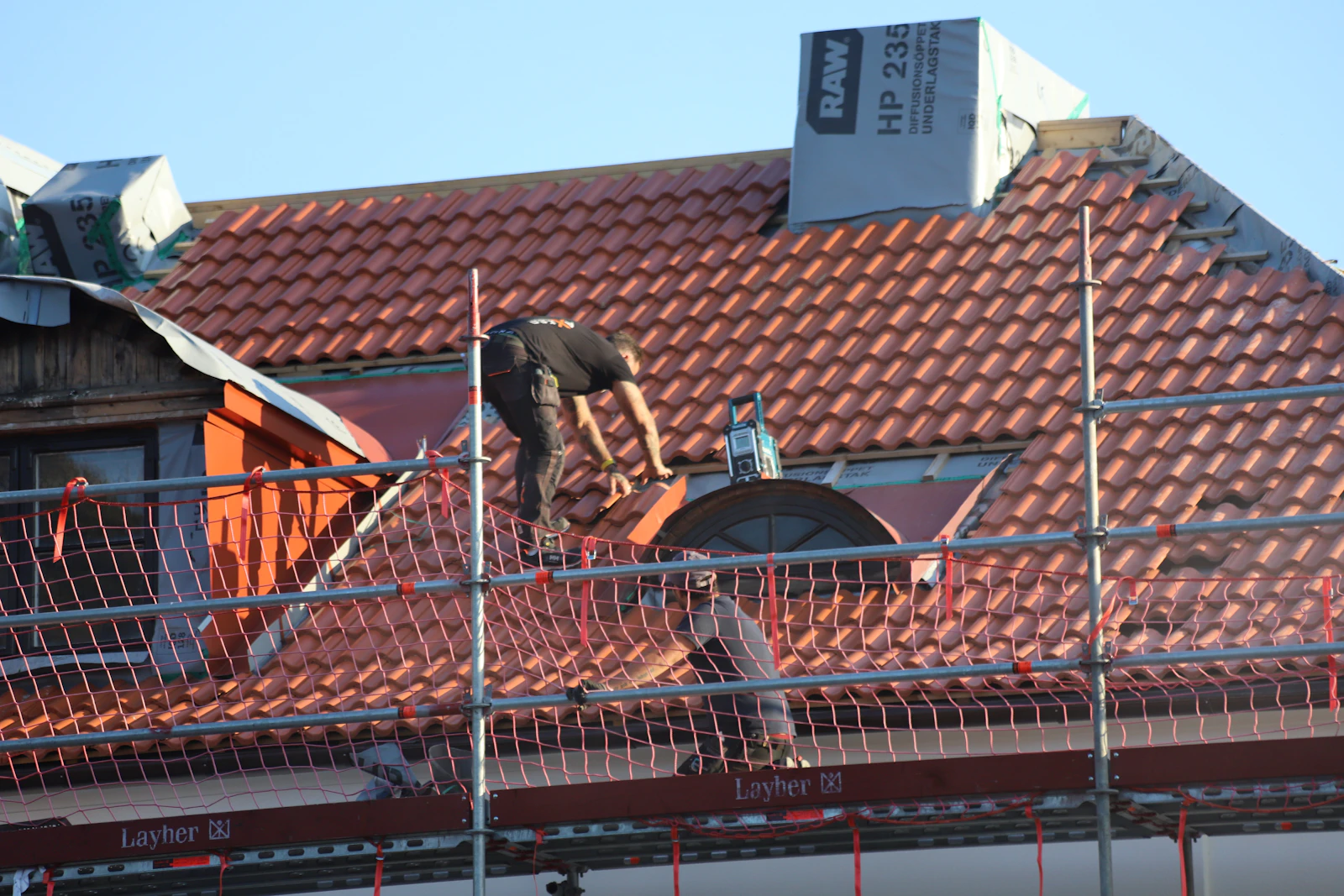
Roof Hoist Rental Rates New York 2026
For tile roofing work in New York City, 2026 roof hoist equipment hire typically budgets as follows (excluding tax, delivery, setup labor, and consumables): $140–$260/day, $420–$780/week, and $1,250–$2,350/month (4 weeks) for a 24–28 ft ladder/roof hoist configuration with a 250–400 lb class carriage. Larger reach (30–36 ft), higher-capacity carriages, platform kits, and rooftop tie-in hardware push totals upward, and NYC logistics (parking, curbs, site access, delivery windows) often dominate the “all-in” cost. In practice, procurement teams source these units through a mix of national rental fleets and NYC-area specialty tool and hoisting houses depending on delivery constraints and same-day swap capability.
| Vendor |
Daily Rate |
Weekly Rate |
Review Score |
Website |
| Sunbelt Rentals |
$290 |
$870 |
8 |
Visit |
| United Rentals |
$315 |
$945 |
9 |
Visit |
| G.T. Rentals |
$250 |
$750 |
9 |
Visit |
| My Tool Rental |
$240 |
$720 |
8 |
Visit |
| Total Tool Rental |
$260 |
$780 |
5 |
Visit |
Reality check on market anchors: published rate cards outside NYC commonly show 28 ft “shingle/ladder hoist” pricing near $100/day, $300/week, $900/month (useful as a baseline before NYC delivery, labor, and access premiums). Other regional listings show week and 4-week pricing in the $424/week and $715/month class for a 27 ft ladder hoist, and “starting at” pricing around $107.80/day, $436.70/week, and $822.80/4 weeks for a 28 ft ladder hoist listing (useful for triangulation, not as NYC street pricing).
What Drives Roof Hoist Hire Pricing on New York Tile Roofing Projects?
Tile roofing materially changes roof hoist equipment hire cost because the load-out is heavier, breakage risk is higher, and rooftop staging needs more control than shingle work. Most NYC tile roofing jobs also run under tighter delivery windows and stricter building/streets constraints than suburban reroofs, so “rental rate” is only one line in the real spend.
1) Reach, pitch, and landing height
Roof hoist reach is normally sold as ladder length (for example, 24 ft vs 28 ft vs 32 ft). For NYC brownstones, mixed-height parapets, and rear-yard extensions, it’s common to upsize one ladder section to keep the carriage landing above a parapet line and reduce hand-carry time. Budget impacts typically show up as (a) higher weekly rate class and (b) higher delivery/handling because the ladder package becomes longer and harder to stage at curb.
2) Capacity class and carriage/platform configuration
Tile bundles and accessory materials (ridge, underlayment, battens, metal) can exceed what a small “ladder hoist” carriage comfortably handles per trip. If the crew will lift tile to a controlled rooftop staging point, the hire cost often includes a platform kit (wider deck), side-rails, and a positive load-stop. Adders vary by fleet, but for 2026 planning in New York, a workable allowance is:
- Platform kit / wider deck: +$20–$45/day or +$60–$135/week
- Side rails / tile cradle / load-stop accessories: +$10–$30/day
- Extra ladder section (reach upgrade): +$25–$60/day or +$75–$180/week
3) Power type and electrical constraints
Electric hoists reduce fuel handling and are often favored where building policies restrict small engines, but they can introduce electrical coordination costs in NYC (dedicated circuit, GFCI, protected cord routing, and “no-trip hazard” requirements). For budgeting:
- Temporary power distribution / GFCI box rental: $15–$40/day
- Heavy-duty extension (12/3) and cord management: $8–$20/day (or purchase/consumable)
- Generator instead of building power (when required): $90–$180/day plus fuel
4) NYC logistics: delivery, parking, and building rules
New York City is where roof hoist equipment hire costs commonly swing by hundreds of dollars on “soft costs”:
- Delivery & pickup: Many contractors carry an allowance of $175–$350 each way within NYC depending on borough, truck size, and access. For context, public rate schedules in New York State contracting show transportation charges expressed as $250 each way per item within 30 miles in at least one statewide heavy equipment rental price list (helpful for anchoring expectations even though NYC commercial rental may differ).
- Truck wait time due to curb conditions / freight elevator windows: $95–$165/hour after an included 15–30 minutes
- After-hours / weekend delivery premium: +$150–$400 per move (common when curb access is only feasible early AM)
- Tolls / congestion routing: add a project-specific allowance (often $25–$90 per trip depending on origin and route)
Typical Roof Hoist Equipment Packages (And What They Add to Hire Cost)
For tile roofing, rental coordinators usually spec a “complete working package” rather than a base hoist only. Missing accessories are a top cause of downtime, and downtime is expensive in NYC. Common line items and practical 2026 allowances:
- Ridge hook / roof peak hook kit: $10–$25/day (or included by some houses)
- Standoff / wall rollers (protect masonry/parapet edges): $8–$18/day
- Tie-down/anchor hardware set (non-consumable): $10–$30/day
- Remote pendant / extra pendant (avoid “lost remote” downtime): $6–$15/day; lost/damaged fee commonly budgeted at $125–$250
- Wheel kit / dolly kit for repositioning: $10–$25/day
- Debris chute integration planning: not always a rental line, but often forces a second “move” (reposition) during tear-off
Hidden-Fee Breakdown
When you are forecasting roof hoist equipment hire costs in New York, the hidden-fee profile matters as much as the rate. Build your estimate to survive real jobsite behavior (weather, access delays, partial-day use, and off-rent timing).
- Minimum rental: 1-day minimum is common; some houses treat “same day” as a full day once delivered.
- Weekend billing rules: A common published rule outside NYC is Fri 4pm (or Sat AM) to Mon 9am billed at 1.5× day rate (or similar). If your NYC supplier uses comparable logic, missing an off-rent cutoff can cost an extra 0.5–2.0 billable days.
- Off-rent cutoffs: frequently 9:00–10:00 AM. Miss it and you may buy another day.
- Delivery window failures (no access / no super / no parking): $95–$165/hour wait time, plus a potential “dry run” re-delivery charge of $175–$350.
- Damage waiver (DW): typically 10%–18% of the rental rate (not including delivery) depending on account terms and item class.
- Deposit / credit card hold (walk-up accounts): commonly $500–$2,500 depending on package value and account history.
- Cleaning fee (tile dust, mortar, bitumen, concrete splatter): $75–$250 if returned with hardened material; “pressure wash required” can be more.
- Fuel / refuel surcharge (gas units): $45 minimum or $6–$9/gal equivalent; some suppliers charge a service fee if tank is below a threshold.
- Late return: commonly billed as another day once past the due-in time, or a partial-day penalty such as 20% of day rate per hour in the first few hours.
- Damage items that get billed fast: cable wear/abuse, bent ladder sections, crushed rollers. Carry an allowance of $250–$900 for “repair not covered by DW” exposure on rough jobs.
New York-Specific Constraints That Change Roof Hoist Hire Cost
Local conditions in New York City (especially Manhattan) can convert a “simple hoist rental” into a logistics job. Plan for:
- Delivery radius norms: Many NYC tool and hoisting houses price delivery by borough and radius, not simple mileage. A published example from another public pricing schedule shows a structure like “each way + per loaded mile” (e.g., $160.69 each way + $4.19/loaded mile), which mirrors how many fleets think about truck cost even if your specific quote differs.
- Manhattan curb access and building time windows: If your delivery must hit a 7:00–9:00 AM window or align to a freight-elevator slot, expect higher probability of wait time.
- Rooftop dust control expectations: Tile cutting and underlayment work can trigger stricter housekeeping requirements in occupied buildings; returning equipment with dust-caked motors/rollers increases cleaning exposure.
- Heat and rooftop conditions: Summer rooftop heat can shorten duty cycles on smaller motors; crews may run more trips (and more hours) to keep up, increasing wear-and-tear risk.
Example: Manhattan Tile Roofing Roof Hoist Hire Budget With Real Constraints
Scope: Replace a 1,200 sq ft tile roof on a 5-story walk-up (rear-yard access), limited curb parking, freight elevator unavailable, material must be lifted from sidewalk staging to roof edge. Plan: 28–32 ft roof hoist package + platform kit for controlled tile staging.
- Base roof hoist equipment hire (NYC planning): $650/week × 2 weeks = $1,300
- Platform kit adder: $110/week × 2 = $220
- Extra ladder section (reach upgrade): $150/week × 2 = $300
- Delivery & pickup: $275 each way = $550
- After-hours delivery premium (to avoid daytime curb conflict): $250
- Truck wait time (30 min included; 1.5 hours billed): 1.5 hr × $125/hr = $187.50
- Damage waiver at 14% of rental rate (excluding delivery): 0.14 × ($1,300 + $220 + $300) = $254.80
- Cleaning allowance: $150
Estimated “all-in” roof hoist hire budget: about $3,212 before tax and any re-delivery or late off-rent penalties. The key operational constraint in NYC is that a single missed off-rent cutoff (or an access failure at pickup) can add another $275–$600 in moves and/or a billable day.
Availability note: NYC-area specialty houses advertise hoisting equipment availability (chain hoists, cable hoists, ladder/portable hoists), which is often relevant when you need fast swap-outs mid-job.
How To Choose Day, Week, Or Month Roof Hoist Equipment Hire Terms In New York
For tile roofing schedules in New York, the “right” hire term is usually driven by weather risk and the off-rent rules, not the theoretical production rate. If your crew is only lifting tile for two mornings, a day rate looks attractive—until the unit lands Friday afternoon and your supplier’s weekend billing converts it into 1.5–3.0 billable days. Conversely, weekly terms can be the safest procurement choice when you expect intermittent lifts (tile staging, then flashing, then ridge) because you avoid micro-managing due-in times.
- Day hire: best when you can guarantee access for both drop and pickup, and you control due-in time. Budget a contingency of +1 day in NYC for weather or curb issues.
- Week hire: often the best balance for tile roofing because material lifts are “bursty” and you’re less exposed to daily off-rent cutoffs.
- Month (4-week) hire: makes sense on occupied-building work where lifts must be coordinated around tenant hours, or when you expect multiple repositions across the roof. Many published markets show significant discounts at 4 weeks versus stacking weeks (baseline examples include 4-week pricing near $800–$900 for certain ladder/roof hoists outside NYC).
Operational Controls That Keep Roof Hoist Hire Costs Predictable In NYC
Roof hoist rental cost overruns in New York are usually preventable. The recurring pattern is “equipment is cheap; access is expensive.” Controls that rental coordinators and site supers actually use:
- Confirm delivery window in writing: include a 30–60 minute arrival buffer and a named on-site receiver with phone.
- Reserve curb space / coordinate building access: if you can’t secure curb access, pre-approve a “wait time not-to-exceed” number (for example, $250) before the driver arrives.
- Define off-rent and pickup procedure: specify whether pickup must be called in by 9:00 AM, 10:00 AM, or prior-day, and whether “call-off” requires email + portal confirmation.
- Document return condition: require photos of motor, pendant/remote, ladder rails, rollers, and cable at both delivery and pickup; store in the job folder to defend against damage claims.
- Assign one operator: fewer “helpful hands” means fewer bent rails, overloaded platforms, and lost pendants (which commonly bill $125–$250).
- Plan refuel/recharge: mandate “return full” or “return charged.” Carry a refuel allowance like $45 minimum if you can’t guarantee it on a tight pickup window.
- Wind and tie-down rules: tile roofs are often exposed; plan tie-down hardware and a stop-work threshold (many crews pause hoist use above 25–30 mph gusts even if not contractually mandated).
Budget Worksheet
Use this bullet worksheet to build a roof hoist equipment hire budget for NYC tile roofing. Adjust quantities and term lengths to your schedule.
- Roof hoist base rental: 2 weeks @ $420–$780/week = allowance $840–$1,560
- Reach upgrade ladder section: 2 weeks @ $75–$180/week = allowance $150–$360
- Platform kit / tile cradle accessories: 2 weeks @ $60–$135/week = allowance $120–$270
- Delivery & pickup (NYC/based on borough + constraints): 2 moves @ $175–$350 each way = allowance $350–$700
- After-hours delivery or restricted window premium: allowance $150–$400
- Truck wait time contingency: 2 hours @ $95–$165/hr = allowance $190–$330
- Setup/strike labor (if not self-performed): 4 hours @ $95–$140/hr = allowance $380–$560
- Damage waiver: 10%–18% of rental = allowance $120–$400 (scale to your rental subtotal)
- Cleaning/return condition: allowance $75–$250
- Loss/damage contingency (not covered or deductible-like exposure): allowance $250–$900
Rental Order Checklist
- PO details: list each component (ladder length, motor type, carriage/platform kit, hook/standoff kits) so substitutions don’t reduce capacity for tile roofing.
- Delivery requirements: exact address, borough, curb instructions, certificate of insurance needs (if any), and building contact.
- Delivery window: hard window + acceptable buffer; note if driver must call 30 minutes prior.
- Site access: confirm stair carry path, rear-yard access, gate width, and rooftop hatch constraints.
- Power plan: electric circuit availability (GFCI), cord routing, or generator plan.
- Safety documentation: operator instructions, load limit confirmation, tie-down method, and stop-use criteria.
- Off-rent and pickup: confirm cutoff time, how to request pickup (portal/email/phone), and whether weekend pickups are available.
- Return condition: “broom clean,” remove mortar/adhesive, return pendant/remote, and provide photo set at pickup.
When A Roof Hoist Is Not The Lowest-Cost Hire Choice In New York
For some tile roofing scopes, the roof hoist is not the cost winner once you account for NYC labor and access. If you are lifting pallets of tile or multiple rooftops in a day, a coordinated pick with a small crane, lull/telehandler (where access permits), or a scheduled boom lift (where street and outrigger setup is feasible) may reduce total labor-hours and reduce the number of “touches.” However, in dense NYC conditions—rear yards, narrow sidewalks, limited laydown—roof hoist equipment hire often remains the most controllable option because it can operate with minimal street footprint, provided you manage delivery timing and off-rent tightly.
If you want, share the building height (stories), parapet height, and whether the hoist must be set in front or rear; I can tighten the 2026 roof hoist equipment hire budget range for your specific New York tile roofing access constraints.