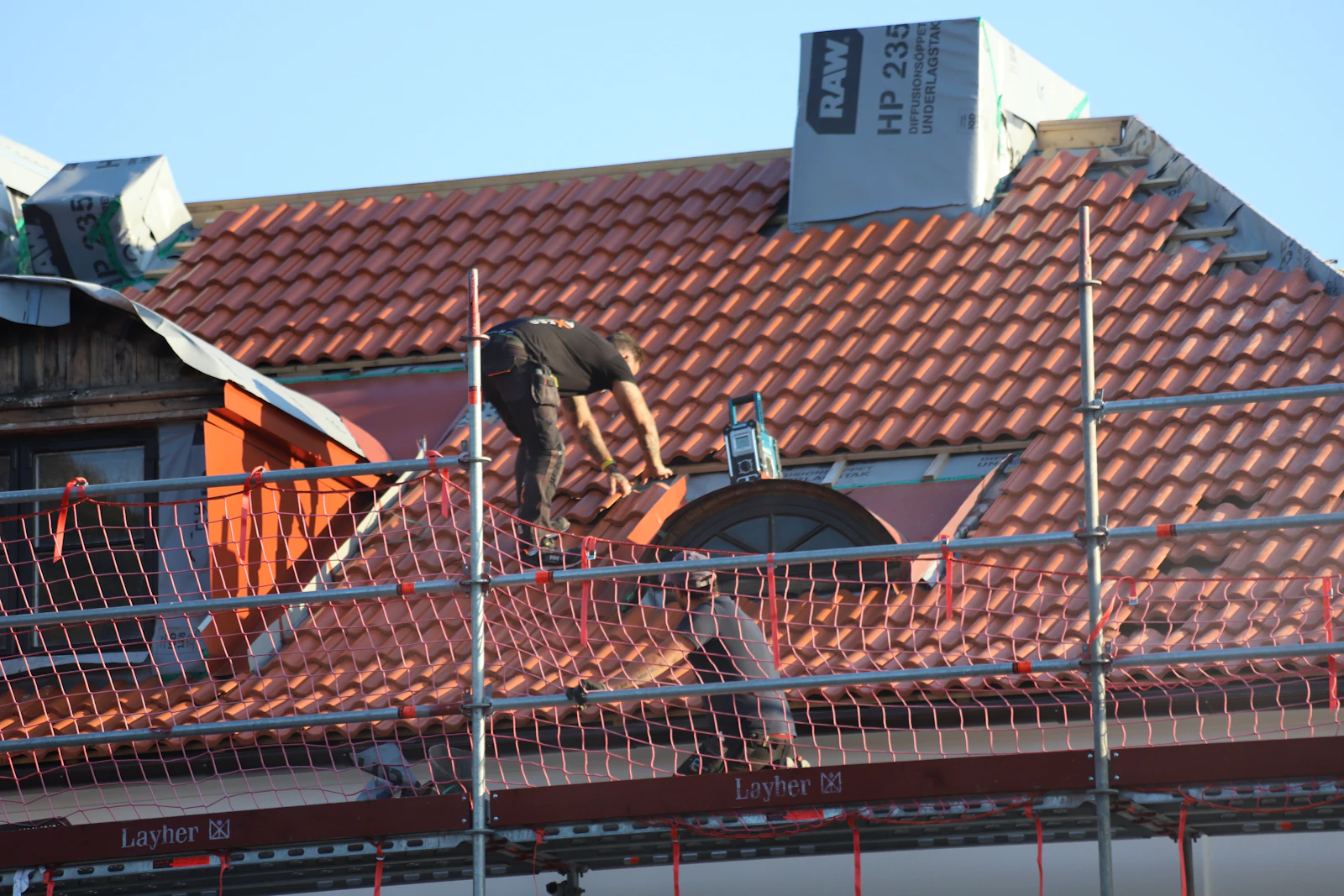
Roof Hoist Rental Rates Raleigh 2026
For Raleigh (Triangle) tile roofing crews planning 2026 work, roof hoist equipment hire (typically a 24–28 ft ladder hoist / “laddervator” or a 28 ft gas platform hoist) generally budgets in the $95–$165/day range, $325–$525/week, and $900–$1,450 per 4-week period depending on lift height, power type (110V electric vs. gas), capacity (commonly 200–250 lb), and whether the rental includes a platform carriage vs. a basic shingle tray. In Raleigh, most rental coordinators price this as a “materials handling” line item and then add delivery, damage waiver, and setup labor—often sourced through national providers (e.g., Sunbelt, United, Herc) or strong local independents that keep roofing hoists in rotation for peak season.
| Vendor |
Daily Rate |
Weekly Rate |
Review Score |
Website |
| Sunbelt Rentals |
$375 |
$1 500 |
9 |
Visit |
| Best Rentals (NC) |
$87 |
$255 |
9 |
Visit |
| North American Böcker (NABocker) Rentals |
$600 |
$1 800 |
10 |
Visit |
| LGH (Lifting Gear Hire) – Roofing Hoists |
$500 |
$1 900 |
10 |
Visit |
2026 planning assumptions (use for estimating, not as a quote): 28 ft class hoist, 200–250 lb rated load, standard carriage (shingle tray or platform), normal weekday billing, excludes tax, excludes damage waiver/LDW, excludes delivery/pickup, excludes fuel/refuel, and excludes technician setup.
- Electric shingle/ladder hoist (common “laddervator” style, ~27–28 ft): plan $85–$135/day and $275–$425/week when available as a light-duty roofing hoist line item.
- Gas ladder/platform hoist (28 ft class, heavier-duty carriage): plan $105–$165/day, $300–$500/week, and $900–$1,300 per 4 weeks. Published rate sheets in the broader market commonly show day rates around $100–$130 and week rates around $300–$404 for 28 ft class ladder hoists/platform hoists.
- Minimum billing: plan that many branches effectively bill 1-day minimum, and some specialty hoists may bill week minimum during peak roofing season (spring storms and summer re-roof demand).
What Drives Roof Hoist Equipment Hire Cost on Raleigh Tile Roofing Jobs?
Tile roofing changes the cost conversation because the roof hoist is rarely lifting “palletized tile”—it’s lifting smaller, controlled loads (stacked bundles, cartons, underlayment rolls, ridge, mortar buckets where permitted by the hoist rating). That means rental cost is driven less by “how many squares” and more by how many hoist cycles per day, how tightly you can stage at the base, and whether the site allows efficient placement and safe tie-off.
- Lift height and ladder sections: 24 ft class vs. 28 ft class is often a noticeable step. Add-on ladder sections (when rented separately) commonly budget as $15–$35/day per section or $45–$90/week depending on house policy.
- Carriage type: a shingle tray is usually cheaper than a platform carriage designed for mixed materials. Plan an attachment adder of $10–$25/day for specialty trays, oversized platforms, or wheelbarrow-style cradles when they’re not included.
- Power type: electric hoists can be cheaper but may require reliable 120V power. If the home isn’t energized yet, plan a generator add (often $50–$90/day for 2–3 kW class) plus fuel logistics.
- Capacity and duty cycle: staying within rated load (commonly 200–250 lb) avoids damage, downtime, and backcharges. Tile is dense—overloading is the fastest path to “unplanned costs.”
Hidden-Fee Breakdown (The Numbers That Move Your PO Total)
For Raleigh roof hoist equipment hire, the quoted “day/week/4-week” number is only the starting point. The following fees are where rental coordinators win or lose budget control on tile roofing scopes:
- Delivery/pickup: plan $95–$165 each way inside a typical local radius (often ~10–20 miles). If the site is outside the branch’s standard zone, budget mileage at $3.50–$6.00 per mile (or a zone jump). For downtown Raleigh or tight HOA streets, add a $25–$75 access surcharge if a smaller truck or special timing is required.
- Minimum delivery charge: many branches won’t roll a truck for less than $95–$125 even if the job is “nearby.”
- Fuel/refuel (gas hoists): plan to return full. If not, common budgeting is $6.00–$8.50 per gallon plus a $20–$35 service fee.
- Damage waiver / LDW: budget 10%–15% of the base rental as a common planning range. Confirm what it excludes (theft, overload damage, and “improper tie-off” are typical exclusions).
- Environmental/energy recovery fees: budget $2–$10 per rental period (varies) as an admin line that shows up on many invoices.
- Setup labor (if you don’t self-install): for a two-tech delivery/setup, budget 2 hours minimum at $85–$125/hr per tech. A realistic allowance is $340–$500 to place, stake/tie, test-run, and brief the crew.
- Standby/wait time: if the truck can’t access or the GC isn’t ready, budget $2–$4 per minute after an initial grace window (often 15–30 minutes).
- Cleaning/red-clay recovery: Raleigh subdivision lots and red clay can turn base ladder sections into a cleanup project. Budget $75–$250 for cleaning if returned muddy, mortared, or with mastic/roof cement contamination.
- Late return / extra day: if you miss the return cutoff, many contracts convert to another full day. Budget exposure of 1 additional day at 100% of the daily rate (or more if weekend rules apply).
Raleigh-Specific Logistics That Change the Hire Cost
- Delivery windows vs. I-440/I-540 congestion: if your site only allows delivery between 7:00–9:00 AM, build in the risk of re-delivery or wait time. A common cost outcome is paying $100–$200 in combined wait/redelivery impacts on a “tight window” job.
- Downtown and near-campus access: smaller lots, street parking restrictions, and permitting/spotter needs can require after-hours drop. Budget $150–$250 for an after-hours or special-handling delivery event.
- Heat and storm planning: summer heat and afternoon storms don’t change the published rate, but they change the schedule risk. If lightning shuts down roof work, you still pay the hoist. Consider weekly pricing earlier if your schedule has weather float.
How To Choose the Right Roof Hoist for Tile Roofing (Without Over-Renting)
Tile roofing rarely benefits from the absolute cheapest “shingle hoist” if it cannot safely handle the material type, pitch, and staging method. To keep equipment hire costs stable, lock the specification early and avoid mid-job swaps (swap costs are usually a second round of delivery/pickup plus another minimum rental).
- Confirm lift path and pitch: steep pitches and longer reaches can force a higher class hoist or additional sections. If you upsize midstream, plan a change cost of $200–$450 (swap logistics + lost day).
- Confirm power: if you need electric, confirm 20A circuit availability near the base, or add a generator allowance.
- Confirm carriage/attachments: tile cartons, ridge boxes, and underlayment rolls often require a stable platform. Budget the attachment adder rather than hoping it’s included.
Example: 2-Story Tile Re-Roof in North Raleigh (Operational Numbers)
Scenario: 38 squares equivalent area, concrete tile replacement, 2-story with a long driveway and limited side-yard access. Crew wants a 28 ft class roof hoist for staging underlayment, battens, and controlled tile loads (not pallets).
- Base hire: gas platform/ladder hoist, budget $145/day for 5 days = $725 (or convert to weekly at ~$425–$500 if the branch pricing favors weekly).
- Delivery/pickup: $140 each way = $280 (driveway drop, no crane).
- Damage waiver: 12% of base rental (~$87 on $725).
- Setup labor (optional): 2 techs × 2 hours × $105/hr = $420 if you don’t self-install.
- Attachment adder: platform extension at $18/day × 5 = $90.
- Cleaning allowance: $150 (red clay + mortar dust risk).
Budget takeaway: even with a “$145/day hoist,” the managed PO often lands closer to $1,700–$2,100 all-in once logistics, waiver, and setup are included. The fastest way to reduce that total is not negotiating $10/day—it’s preventing a second delivery event and avoiding extra days due to return cutoff or weather.
Budget Worksheet (Roof Hoist Equipment Hire Allowances)
- Roof hoist hire (28 ft class): ____ days at $____/day (or ____ weeks at $____/week)
- Alternate rate check: convert to weekly if day-count exceeds 3–4 days
- Delivery to site: $____ (include zone/mileage)
- Pickup/off-rent: $____ (confirm if separate)
- Damage waiver / LDW: ____% of base rental
- Fuel/refuel allowance (gas): $____ (assume $6.50–$8.50/gal + $25 service if returned low)
- Setup labor (if needed): ____ techs × ____ hrs × $____/hr
- Wait time allowance (tight delivery window): ____ mins × $____/min
- Attachment adders (tray/platform/extra sections): $____/day or $____/week
- Cleaning/red clay recovery: $____
- Weekend/holiday billing risk: $____ (only if schedule crosses non-working days)
Rental Order Checklist (What Your Coordinator Should Confirm Before Issuing the PO)
- Exact equipment spec: lift height (24/28 ft), power (electric/gas), carriage type, rated capacity, and required ladder sections
- Delivery address and access notes: driveway grade, gate width, overhead utilities/trees, and where the hoist can be staged safely
- Delivery window and cutoff: confirm latest drop time and whether missed windows trigger redelivery fees
- Billing rules: daily vs weekly conversion point, 4-week definition, and whether weekends/holidays count as billable days
- Off-rent procedure: who calls off-rent, required notice time, and whether billing stops same-day or next-day
- Damage waiver: rate (%) and exclusions (overload, theft, improper tie-off, transport damage)
- Return condition requirements: fuel level, cleaning expectations, photo documentation on pickup, and “missing parts” checklist (pins, tray, remote, hardware)
- Site safety coordination: who is responsible for anchoring/tie-off and daily inspection signoff
Estimator note: If the scope is true tile staging (large volume tile movement) and the project schedule is weather-sensitive, consider whether a roof hoist remains the controlling means-and-method. If a telehandler, forklift, or small crane day is already in the plan for tile placement, the hoist may be best reserved for underlayment/batten/trim continuity rather than full tile conveyance.
When Weekly Or 4-Week Hire Beats Daily Pricing (And When It Doesn’t)
Roof hoist equipment hire in Raleigh is usually discounted aggressively once you move past a couple of days—yet coordinators still get surprised by “extra days” created by cutoff times and off-rent rules. Two practical rules help stabilize 2026 cost planning:
- Rule 1 (rate conversion): if you’ll have the hoist on site 4+ working days, request both day and week pricing and pre-select the cheaper structure on the PO (so the invoice doesn’t default to a higher effective rate).
- Rule 2 (off-rent timing): plan that calling off-rent late in the day may not stop billing until the next business day. If your roof is “done Friday at 3 PM,” you can easily pay an extra day if the branch’s cutoff is earlier.
Cost Control Tactics Specific To Tile Roofing
- Stage for fewer cycles: a roof hoist is cheap compared with crew time. If reducing cycles requires an added ground laborer for a day, compare it against the risk of keeping the hoist an extra 1–2 days at $120–$165/day.
- Protect the hoist from mortar/dust: tile work often introduces cutting and dust. If the hoist returns with bonded dust/cement, you’ll see cleaning. Budget $75–$250 and avoid it with simple protection and end-of-day wipe-down.
- Document condition on delivery and pickup: require timestamped photos of engine hours (if present), ladder sections, tray/platform, pins, and control. This is the cheapest insurance against missing-parts backcharges that can land at $25–$60 per missing pin/clip and $150–$400 for a damaged tray.
Delivery, Pickup, And Site Access: The Raleigh “Real Cost” Multiplier
Raleigh isn’t a high-rise market, but it is a high-variability access market—new subdivisions with tight driveways, established neighborhoods with mature trees and overhead service drops, and downtown remodel zones where curb space is scarce. That’s why the same roof hoist hire rate can produce two very different totals.
- Standard residential delivery: budget $95–$165 each way when access is straightforward.
- Re-delivery event: if the truck arrives and can’t unload safely (blocked drive, no GC contact, unsafe grade), plan a second dispatch. Allow $125–$250 for the do-over.
- Special handling (downtown or constrained sites): allow $150–$250 for an after-hours drop or restricted-window service when required by local constraints.
Insurance, Damage Waiver, And Deposits (How Rental Houses Actually Bill It)
For 2026 budgeting, assume you will see one of these structures on the contract:
- Damage waiver (LDW): commonly 10%–15% of rental (budgetable) but not a substitute for insurance. Read exclusions carefully for overload and misuse.
- Deposit / authorization: for non-account renters, plan $250–$1,000 depending on hoist type and branch policy. Credit accounts often bypass this, but not always for specialty gear.
- Theft exposure: if the hoist sits curbside overnight, theft risk increases. Budget security measures (fencing/locking) because most waivers do not cover theft.
Second Example: Short-Duration Church Repair Near Downtown Raleigh
Scenario: 2-day tile repair on a church facility with a steep pitch and limited laydown area; the site only allows deliveries after 6:00 PM to avoid school traffic. Crew wants a 28 ft electric shingle hoist for light material movement.
- Hire: $120/day × 2 days = $240.
- After-hours delivery: $200 (special window).
- Pickup: $140 (standard window).
- Damage waiver: 12% of $240 = $29.
- Wait-time allowance: 30 minutes × $3/min = $90 (if access gate isn’t opened on time).
Budget takeaway: a “$240 rental” can land around $700–$800 once constrained logistics are priced honestly. If the repair might slip a day due to weather, switching to a week rate can sometimes be cheaper than stacking daily rates plus a forced weekend bill cycle.
Procurement Notes For 2026 Roof Hoist Equipment Hire (Tile Roofing)
- Book early in peak season: ladder hoists get tight during storm-response weeks. The “cost” of not booking is often a last-minute substitute (extra labor or a different lift) that can add $300–$1,000+ in indirect cost.
- Specify return cutoff in writing: put the off-rent call time and pickup expectations in the PO notes so the branch and dispatcher have the same instruction set.
- Confirm included accessories: make sure the quote explicitly states whether it includes tray/platform, remote/control pendant, tie-down kit, and all ladder sections. Missing accessory charges are avoidable with a pre-pick checklist.
Ownership Vs. Hire (A Cost Check For Roofing Contractors)
If you’re running consistent tile roofing volume in Wake County, it’s worth comparing recurring hire spend against ownership. As a rough benchmark, if you average 20–30 rental days per quarter at an effective $130–$160/day (plus delivery events), you may be in the range where owning a hoist and only renting “extra” units during spikes improves cost certainty. However, hire still wins when you need flexibility (electric vs. gas), when storage/security is limited, or when you want maintenance and compliance handled by the rental provider.
Bottom line for Raleigh estimators: treat roof hoist equipment hire as a bundle—rate + delivery + waiver + setup + return condition—and you’ll produce POs that match invoice reality for tile roofing schedules.