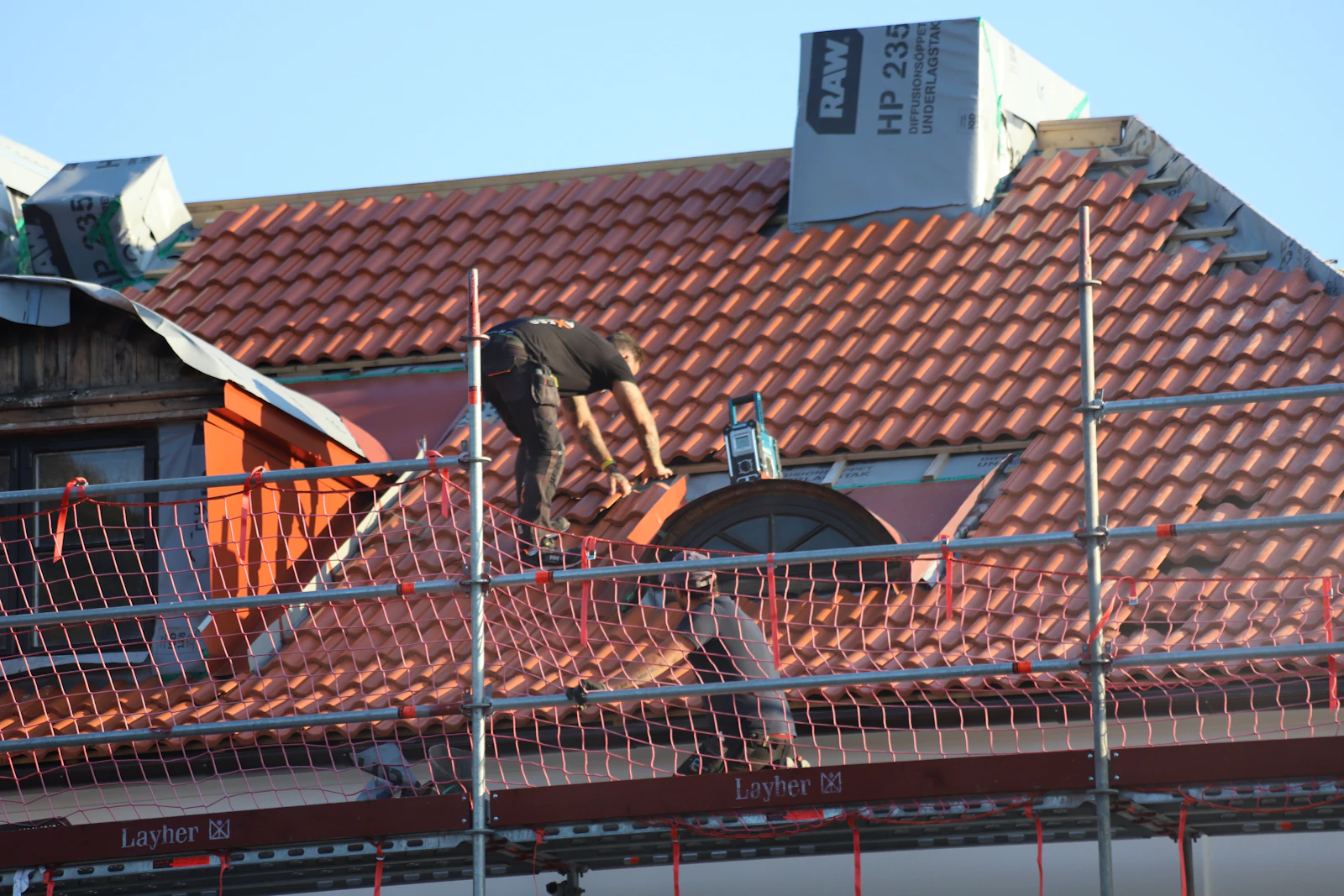
For tile roofing crews in San Antonio, budgeting roof hoist equipment hire in 2026 typically lands in the mid-hundreds per week once you include the real cost drivers: lift height, load capacity, delivery logistics, and “soft” charges like damage waiver, cleaning, and late-return rules. As a planning range (not a guaranteed quote), carry $110–$200/day, $330–$650/week, and $1,100–$2,100 per 28-day month for common ladder/platform roof hoists used to stage tile, underlayment, and plywood to a two-story roofline. Larger 44 ft class platform shingle/tile hoists often budget higher due to longer track and heavier-duty frames. In San Antonio you’ll usually source this category through national rental chains (for example, Sunbelt Rentals or United Rentals) or established local tool rental yards; availability and freight scheduling often matter as much as the base rate.
| Vendor |
Daily Rate |
Weekly Rate |
Review Score |
Website |
| Sunbelt Rentals (San Antonio metro) |
$175 |
$700 |
9 |
Visit |
| United Rentals (San Antonio) |
$185 |
$740 |
9 |
Visit |
| Herc Rentals (San Antonio) |
$170 |
$680 |
8 |
Visit |
| Tejas Equipment Rental (San Antonio) |
$160 |
$640 |
9 |
Visit |
| A To Z Rentals (San Antonio / Converse) |
$150 |
$600 |
9 |
Visit |
Roof Hoist Hire Costs San Antonio 2026
Important estimating note: “Roof hoist” is used loosely in the field. For tile roofing scopes, most rental coordinators are actually hiring one of these: (1) a ladder/platform shingle hoist (gas or electric), (2) a roofing conveyor (more common in some markets for steep access), or (3) a material lift + roof staging plan (less ideal for repetitive tile loading). The ranges below assume a ladder/platform style unit because it is the most common and easiest to deploy on residential tile roofing in San Antonio.
2026 planning rate ranges (San Antonio market allowances):
- 28 ft gas ladder/platform roof hoist (typical TP250 class): budget $110–$170/day, $330–$510/week, $1,000–$1,600 per 28-day month, depending on demand, condition, and included track sections. Published rate-card examples in the U.S. show $100/day, $300/week, $900/4-week for a 28 ft gas ladder/platform hoist as a reference point (your San Antonio branch quote may differ).
- 44 ft platform shingle/tile hoist (higher reach, heavier-duty frame): budget $150–$240/day, $450–$720/week, $1,500–$2,400 per 28-day month. A common spec point is 44 ft max lift height and around 400 lb load capacity on platform hoists in this class.
- Low published market anchors (use only as a sense-check): some U.S. yards advertise “shingle lift” day rates as low as $90/day and $270/week (often lighter-duty or local-only availability).
- Higher published market anchors (use only as a sense-check): other published rental lists show ladder shingle hoists at about $150/day, $600/7-days, and $1,800/28-days, and they explicitly note those amounts exclude damage waiver, fuel, and optional accessories.
Assumptions behind the ranges: Most equipment hire programs bill a 24-hour day, a 7-day week, and a 28-day month (sometimes called a 4-week month). Many rate cards follow a rough multiplier where weekly is about 3× the day rate and 28-day is about 9× the day rate (the published $100/$300/$900 ladder/platform hoist example matches that pattern).
Tile Roofing Reality Check: Capacity And Handling
Tile roofing is unforgiving on handling. Compared to shingle work, you’re often lifting smaller batches more frequently to reduce breakage and manage roof loading. That affects hire cost because you may select a platform hoist with better deck stability and side containment, and you may need additional accessories (padded deck, rails, landing protection) that add daily charges.
Also confirm whether your crew is lifting loose tile, boxed tile, or staging pallet breakdowns at grade. A platform hoist rated around 400 lb can be operationally different from a 250 lb unit; the unit spec matters to rental availability and pricing.
What Drives Roof Hoist Rental Cost for Tile Roofing in San Antonio?
For estimating roof hoist hire cost in San Antonio tile roofing scopes, the biggest drivers are rarely just “days on rent.” Use these factors to set your budget bands (and to justify internal approvals when the quote comes back higher than the shingle-lift number someone found online):
- Lift height and track package: a 28 ft package vs. a 44 ft package is not only more track; it often changes the frame, winch/engine, and transport footprint. Expect add-on track sections (when available as a rental line) to run about $15–$35/day per section or $45–$105/week as a planning allowance.
- Load capacity and platform style: higher-capacity platforms generally price higher and may have higher replacement-value exposure (which can affect deposit/authorization and damage waiver).
- Power type: gas-powered units can carry refueling and spill/cleanup exposure; electric can trigger recharge fees if returned depleted (see Hidden-Fee Breakdown).
- Duration and off-rent rules: on multi-phase tile jobs (tear-off, deck, underlayment, battens, tile load, punch), you can burn days paying for a hoist while it sits idle unless you plan off-rent windows and re-delivery timing.
- Seasonality and storm response: San Antonio’s hail and wind events can spike demand, tightening availability and pushing you into longer minimums or higher delivery premiums.
- Access constraints typical to San Antonio neighborhoods: narrow driveways, gated communities, and “no jobsite storage” HOA rules can force same-day delivery/pick-up windows (higher dispatch cost) or require you to rent a small staging trailer for secure overnight storage (additional hire line).
Delivery, Setup, And Access Costs Around San Antonio
Delivery is where roof hoist equipment hire budgets often blow up—especially on tile roofing where you’re already mobilizing additional protection, dump trailers, and material staging.
- Local delivery/pick-up (typical planning allowance): carry $95–$175 each way within an assumed service radius (often 15–25 miles from the yard), then add $3.50–$6.50 per mile beyond that radius.
- Liftgate / special handling: if your hoist package requires a liftgate or a dedicated equipment trailer, budget an extra $40–$85 per trip.
- After-hours or tight window delivery: if the site only accepts delivery between, say, 7:00–9:00 AM or requires a call-ahead and gate escort, carry $150–$300 as an access premium (varies by yard and schedule).
- Downtown or restricted access: for projects near constrained streets (limited curb space), plan for a smaller truck, more labor time, or a second mobilization if the driver cannot safely unload. A conservative allowance is $75–$200 for a “failed delivery / re-dispatch” risk line item.
San Antonio-specific operational consideration: extreme heat days can change how you schedule loading cycles. Shorter, earlier loading windows can make “day counts” feel longer because your usable production hours may compress, increasing the temptation to keep the hoist on rent longer “just in case.” Build your estimate to support a planned off-rent date rather than letting weather drift the equipment hire.
Hidden-Fee Breakdown
Use this as a practical allowance checklist when you build a roof hoist rental cost estimate for tile roofing in San Antonio. Not every yard charges every item, but these are common enough that you should budget them unless your master agreement excludes them.
- Damage waiver (rental protection plan): commonly 10%–15% of base rental (and it typically does not cover theft or gross misuse).
- Security deposit / authorization: often $300–$1,500 depending on account status and equipment replacement value.
- Late return billing: many contracts convert you to the daily rate for each holdover day once you miss the due-in time, even if you were on a weekly rate.
- “Holdover” admin fees: at least one published yard example flags an additional $35/day fee for equipment holdovers not extended in advance (separate from the ongoing rental rate).
- Fuel / refuel charge (gas units): budget $25–$60 service fee plus fuel at $8–$12 per gallon if returned not full.
- Recharge fee (electric units): budget $35–$75 if returned with batteries discharged or if chargers are missing/damaged.
- Cleaning fee (tile dust, mud, mortar, underlayment adhesive): budget $75–$250; roof cement or adhesive contamination can push higher if the yard must scrape/solvent-clean.
- Missing/damaged accessories: budget $25–$90 per missing strap/cleat/pin; higher for proprietary controls or platforms.
- Finance / carrying charges on overdue invoices: one published rental contract example shows 1.5% per month (18% annual rate) on overdue accounts—worth mirroring in your internal “don’t let AP slip” controls.
Accessories And Adders To Budget For Tile Roofing
Tile jobs are where accessories turn into real money. If you don’t carry them, they show up as unplanned equipment hire charges or field-expedite purchases.
- Additional track sections: $15–$35/day (or $45–$105/week) each as a planning allowance when you need reach past a steep driveway grade or tall parapet.
- Spare rope / rope replacement exposure: carry $45–$120 contingency (rope wear is common when crews run at angles or over abrasive edges).
- Roof ladder / stabilization accessories: budget $12–$25/day for stabilizers, hooks, or stand-offs if rented as separate lines.
- Ground protection mats (to protect pavers, irrigation, and caliche soil): budget $18–$35/day per mat set, especially where you stage pallet breakdowns and repeated wheelbarrow traffic.
- Fall-protection anchor kit rental (if sourced through the same yard): budget $20–$45/day per kit or $60–$135/week, depending on what is included.
- Tile padding / deck protection: if the yard offers padding as an accessory, carry $10–$20/day; otherwise budget a small materials line for foam and edge guards.
Example: 10-Day Tile Roofing Roof Hoist Hire Budget
Example: two-story tile re-roof in San Antonio with a 32 ft eave height and limited driveway width (single vehicle access). Crew wants a platform hoist to reduce manual carrying and minimize tile breakage. The site has an HOA rule requiring equipment to be removed nightly (no curb storage).
Planned hire approach: rent a 44 ft class ladder/platform hoist for two work weeks, schedule delivery Monday AM and pick-up Friday PM of week two, and avoid weekend billing by using an off-rent cut-off on Friday.
- Hoist rental (10 working days billed as 2 weeks): budget $900–$1,440 (using $450–$720/week planning range).
- Delivery + pick-up: budget $190–$350 total (two-way at $95–$175 each way).
- Damage waiver: budget 10%–15% of base rental (approximately $90–$216 on the rental line above).
- HOA-driven re-mobilization risk: carry $150 contingency in case the yard cannot pick up within the promised window and you need an after-hours move.
- Cleaning allowance: carry $125 to cover tile dust and adhesive residue wipe-down time or yard cleaning fee exposure.
Total example budget: $1,455–$2,282 all-in for the hoist portion of the job, excluding your internal labor to assemble, move, and operate the hoist (and excluding any scaffold, telehandler, or boom support you may also hire).
Budget Worksheet
Use this bullet-only worksheet to build a roof hoist equipment hire budget for a San Antonio tile roofing estimate (adjust quantities for duration and access):
- Roof hoist (28 ft class) or platform hoist (44 ft class): allowance $110–$240/day depending on spec
- Weekly conversion (if on site more than 3 days): allowance $330–$720/week
- 28-day month conversion (for long-duration remediation / phased tile projects): allowance $1,100–$2,400
- Delivery (each way): allowance $95–$175
- Mileage overage (beyond yard radius): allowance $3.50–$6.50/mile
- Liftgate / special handling: allowance $40–$85 per trip
- Damage waiver: allowance 10%–15% of base rental
- Deposit / authorization: allowance $300–$1,500 (cash-flow impact, not a cost if refunded)
- Fuel/refuel (gas): allowance $25–$60 service + $8–$12/gal if returned short
- Recharge fee (electric): allowance $35–$75
- Cleaning fee contingency: allowance $75–$250
- Track adders / height extensions: allowance $15–$35/day per section
- Ground protection mats: allowance $18–$35/day
- Weekend/holiday billing risk: allowance 1 additional day if delivery/pick-up crosses a non-billing-friendly window
- Holdover/late-return risk: allowance $35/day admin exposure plus daily-rate conversion risk if not extended
Rental Order Checklist
Use this checklist to reduce change orders, re-dispatch fees, and billing disputes on roof hoist equipment hire for tile roofing:
- PO includes: equipment description (28 ft vs 44 ft), power type (gas/electric), platform type, and required load rating
- Confirm billing basis: 24-hour day, 7-day week, 28-day month; confirm “due-in” time and off-rent cut-off time
- Confirm what is included: track sections count, platform deck, tie-downs, spare pins, and any required controls
- Delivery requirements: gate codes, contact name/number, delivery window, truck size limitations, and unload point
- Site conditions: driveway slope, soft ground, pavers, and need for ground mats
- Safety/admin: COI requirements, who is authorized to sign tickets, and whether damage waiver is accepted or waived under master agreement
- Return requirements: fuel level / battery charge expectation, cleaning expectations, and photo documentation (before load-out and at return)
- Weekend plan: avoid unintended weekend billing by scheduling pick-up before Friday cut-off where possible
- Escalation path: who to call for breakdowns, and whether a swap-out triggers a new delivery charge
How To Control Roof Hoist Equipment Hire Costs on Multi-Phase Tile Jobs
Tile roofing often runs in phases that create “dead rent” days on a hoist: tear-off and deck repair, underlayment inspection, battens, then tile load-out. A roof hoist is still one of the best productivity tools on the job, but the way you schedule it determines whether it is a cost saver or a margin leak.
- Use a planned on-rent window: if the hoist is only needed for load-out, plan to start the hire on the first tile staging day and off-rent immediately after the last heavy lift day. Carry a hard target like 3–5 days instead of “two weeks” unless the schedule truly supports it.
- Convert to weekly at the right moment: many rate structures effectively make day rates expensive after day 3. If you’re forecasting 4+ days, request the weekly rate up front and compare (don’t assume the counter automatically optimizes it).
- Protect Friday cut-offs: missed Friday returns can create an unplanned extra day (or a weekend billing event) if the yard only processes returns during business hours. Build a field rule: “off-rent call by 2:00 PM Thursday for Friday pick-up” to reduce holdover and late-return exposure.
- Minimize re-dispatch fees: when HOA rules require equipment removal nightly, it can be cheaper to hire a small equipment trailer for secure storage rather than paying repeated mobilizations. If a trailer runs $60–$95/day but saves two extra dispatches at $95–$175 each, the equipment hire math often favors the trailer.
Return Condition And Damage Documentation That Protects Your Margin
Roof hoist returns are frequently disputed because small missing items (pins, straps, guards) and cleaning condition are easy to overlook. Tight return documentation protects you from post-return chargebacks and time-consuming back-and-forth with branches.
- Photo set at delivery and at pickup: take 12–20 photos (serial tag, engine area, platform, track ends, controls, accessory bundle). This takes about 10 minutes and routinely avoids “missing parts” claims.
- Cleaning before load-out: budget 15–20 minutes of labor to blow off tile dust and wipe adhesive. If you skip this, typical cleaning fees you should carry are $75–$250 depending on contamination severity.
- Consumables exposure: set a small contingency (for example $100–$250) for rope wear, frayed straps, or bent cleats. These are easy to damage on steep San Antonio driveways where the ladder angle and staging area aren’t ideal.
- Fuel/recharge compliance: treat refuel/recharge as a closeout checklist item. Avoiding a $25–$60 refuel service fee (plus fuel at $8–$12/gal) is one of the simplest ways to keep the final invoice inside budget.
When A Roof Hoist Is Not The Lowest-Cost Option
This article is intentionally focused on roof hoist equipment hire costs, but estimators still need a “sanity check” against alternate lifting approaches because the cheapest base day rate isn’t always the cheapest total installed cost on a tile roof.
- Telehandler (forklift) for pallet breakdown and rooftop staging: can reduce repetitive hoist cycles but typically requires more space, better ground conditions, and a stronger roof loading plan. In San Antonio budgeting, telehandler hire often starts in the $350–$650/day class plus delivery; it may be justified when access is open and material volume is high.
- Boom truck / conveyor delivery from supplier: sometimes the supplier delivery fee looks high but replaces multiple days of hoist rent and crew handling time. If a supplier can place tile on the roof in 1–2 hours, compare that total against a $450–$720/week platform hoist plus dispatch.
- Crane pick (short duration): can be economical for a single heavy lift day, but staging and rigging control become critical on tile (breakage risk). If you bid a crane day, still keep a small roof hoist line item for punch and replenishment lifts.
Estimator takeaway: keep the roof hoist equipment hire in the estimate when the job requires repeated replenishment lifts, tight access, or controlled handling to minimize tile breakage. Switch to alternatives only when the site and schedule clearly support it.
Estimating Notes For San Antonio Roof Hoist Equipment Hire
- Specify the unit clearly on the PO: “ladder/platform roof hoist” vs “shingle lift” vs “roofing conveyor” prevents a wrong-class delivery that still bills dispatch.
- Include an access note: “delivery requires liftgate” or “no curb storage; HOA requires same-day removal” so the branch doesn’t price a standard drop that fails on arrival.
- Carry a re-delivery allowance: for tight neighborhoods, include $75–$200 for a re-dispatch risk line (or explicitly exclude it and treat as a change order).
- Plan for weather idle days: include 1 idle day of rent as contingency during hail/wind season if your contract does not allow cost recovery for weather delays.
- Close out early to avoid late rules: missed due-in times can trigger daily-rate billing and holdover admin exposure; one published yard example calls out a $35/day holdover fee if not extended in advance.
If you want, share the roof height (eave and ridge), driveway access constraints, and whether you need 28 ft or 44 ft reach; I can tighten the San Antonio 2026 roof hoist hire budget to a narrower range with a “minimum viable rental package” list tailored for tile roofing logistics.