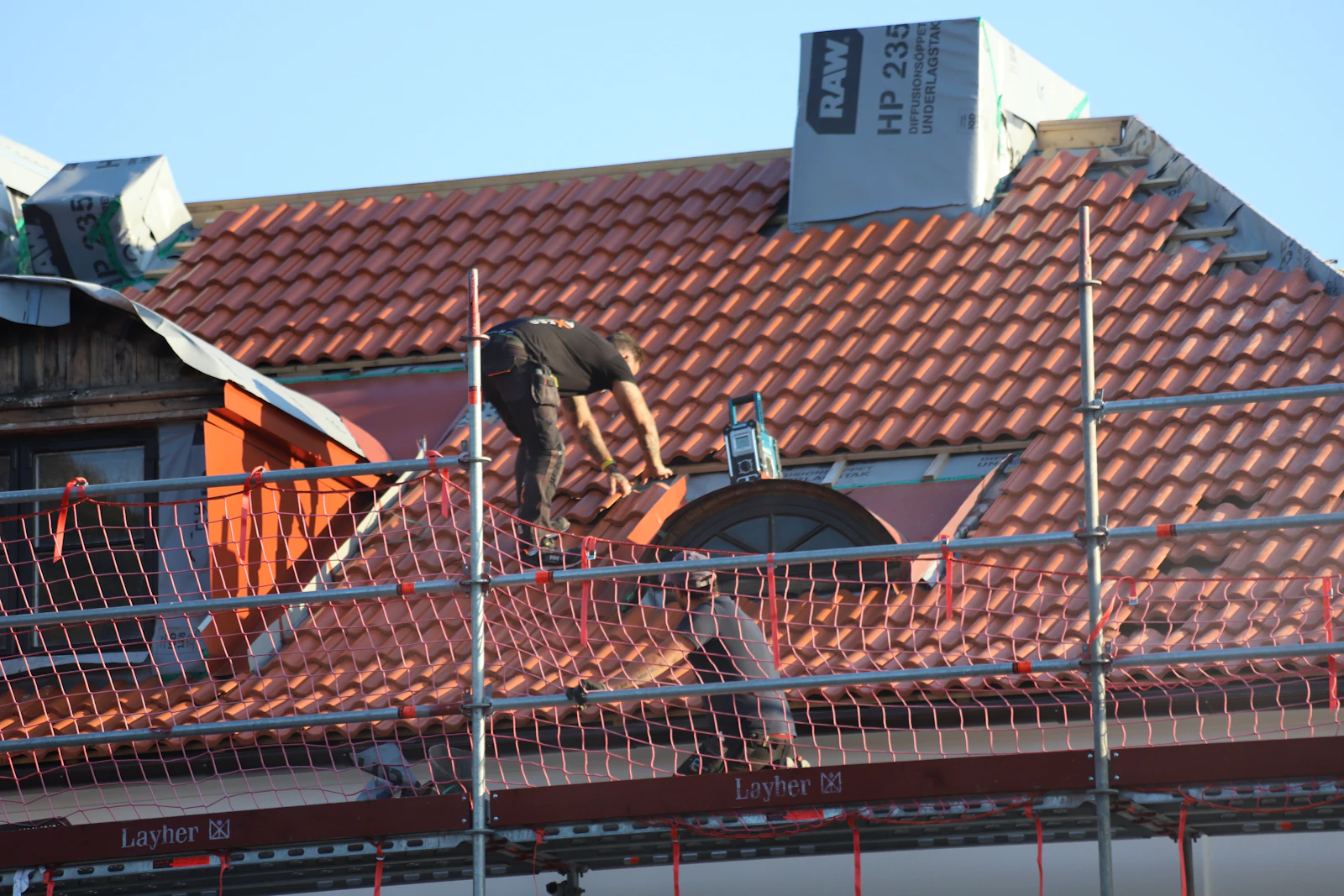
For San Diego tile roofing work in 2026, roof hoist equipment hire commonly budgets at $150–$300/day, $600–$1,205/week, and $2,005–$4,010 per 28-day month before tax, delivery/pick-up, damage waiver, and any tile-handling accessories. Your all-in cost is usually driven less by the base rate and more by (1) delivery access (alleys, hillsides, HOA hour limits), (2) required ladder/track length and tie-off hardware, and (3) off-rent timing rules that can unintentionally add extra billed days. In practice, most roofing contractors source a shingle/tile hoist package through a national rental house (account billing and dispatch) or a local lifting/roofing-focused rental provider when a dedicated roof-hoist kit is required for fragile tile staging.
| Vendor |
Daily Rate |
Weekly Rate |
Review Score |
Website |
| Sunbelt Rentals |
$175 |
$700 |
9 |
Visit |
| United Rentals |
$160 |
$600 |
4 |
Visit |
| Custom Truck One Source |
$450 |
$1 600 |
9 |
Visit |
| LGH (Lifting Gear Hire) |
$650 |
$2 400 |
8 |
Visit |
Roof Hoist Rental Rates San Diego 2026
The San Diego market typically prices roof hoists as a packaged kit (power unit + carriage/platform + ladder/track sections + roof hook/tie-down components + controls). For 2026 estimating, the broad planning range above ($150–$300/day, $600–$1,205/week, $2,005–$4,010/28-day month) is a reasonable starting point for tile roofing logistics, assuming normal access and no special rigging.
Reality check on “day/week/month” multipliers: some rental catalogs in other U.S. markets show ladder/platform hoists (gas) around $100/day, $300/week, and $900 per 4-week (a 28-day billing cycle), which aligns with many rental-house billing structures even when local pricing is higher due to fleet scarcity or delivery complexity.
Published rate examples (outside San Diego) are useful as anchors when negotiating or sanity-checking quotes. For instance, a ladder hoist rate card example lists $93.50/day, $231/week, and $577.50/month for a TP400 ladder hoist. Use these as “order-of-magnitude” references—not as promised San Diego pricing—because Southern California delivery, insurance, and availability can materially shift totals.
High-capacity swing hoist systems are typically quoted rather than click-to-rent: if your tile job requires a larger-capacity roofing hoist (for example, a hydraulic swing hoist system marketed at 2,000 lb capacity and up to 350 ft lift height), expect a different commercial model (quoted weekly/monthly, freight, rigging, and mandatory accessories).
What Drives Roof Hoist Hire Cost on San Diego Tile Roofing Jobs?
Tile roofing is a specific cost environment for roof hoist hire because the material is heavy, brittle, and unforgiving to rough handling. A roof hoist that’s “fine for shingle bundles” can become expensive on tile if it forces slow cycles, extra handling, or repeated repositioning.
Key cost drivers that change your real rental total in San Diego:
- Lift path and required ladder/track length: adders are common when you move from a short kit to a longer run (extra ladder/track sections, braces, roof hooks). If you underestimate length, you can lose half a day to swapping sections—effectively paying for a day you didn’t get production.
- Capacity and carriage type: tile-friendly carriers (tile buckets, dumping trays, material platforms) often rent as accessories rather than included hardware. For estimating, carry an allowance of $25–$60/day per specialty carrier depending on configuration and availability (planning allowance; confirm with vendor quote).
- Power type and jobsite power readiness: electric hoists may require a clean 120V / 20A circuit within cord distance. If you end up adding a small generator because the homeowner’s panel is inaccessible or you’re restricted from running cords across sidewalks, carry a planning allowance of $75–$125/day for temporary power equipment hire (plus fuel).
- Set location and number of moves: every time you break down and re-set the hoist on a tile job, you add labor, risk tile damage, and potentially incur “standby” days if you need to hold the hoist through a weekend for weather staging.
- Access limits typical to San Diego: coastal neighborhoods (Point Loma, Ocean Beach, La Jolla) frequently have tight driveways and street parking constraints; downtown/older neighborhoods have narrow alleys and strict delivery windows; hillside areas can require longer carry distances and more conservative tie-off planning. These conditions tend to increase delivery time, spotter requirements, and failed delivery risk (which is still billable).
San Diego Delivery, Access, And Setup Charges (Often Bigger Than The Day Rate)
For roof hoist rental pricing in San Diego, delivery and setup is where estimates commonly drift. Unlike small tools, a roof hoist kit is bulky, may arrive as multiple components, and can require a liftgate, forks, or two-person handling at drop-off.
For 2026 budgeting, carry line-item allowances such as:
- Delivery + pick-up (local zone): $95–$175 each way within a typical local dispatch radius (planning range; confirm with the branch).
- Mileage beyond local zone: $4–$7 per mile (one-way) after the included radius, especially when dispatched from North County or an industrial yard rather than a neighborhood store (planning allowance).
- Liftgate / special handling surcharge: $35–$85 when a liftgate truck is required (planning allowance).
- Jobsite wait time: $85–$140/hour after a short free window (planning allowance). If the HOA gate code is wrong or street parking isn’t cleared, the driver’s time still meters.
- Delivery time windows: many branches treat “AM” or “PM” windows as standard, while exact-time delivery can carry an adder; carry $75–$150 if the project requires a strict delivery appointment (planning allowance).
- On-site assembly or setup labor: if you’re asking the rental provider to assist with assembly/tie-off (varies by company), carry $95–$165/hour with a 2-hour minimum as a realistic allowance for a “send-a-tech” dispatch (planning allowance).
San Diego-specific coordination note: if the drop zone is on a slope, in a cul-de-sac with limited turnaround, or inside a gated community with restricted hours (common in coastal and hillside areas), plan for a higher likelihood of billed wait time and the need for a spotter. Those are operational constraints that directly increase equipment hire cost even when the base rental rate looks reasonable.
Hidden-Fee Breakdown
Roof hoist equipment hire costs rarely equal “rate × days” once the contract terms are applied. Build your tile roofing estimate with explicit allowances for these common cost items (and confirm on the rental quote):
- Minimum rental charge: many suppliers enforce a 1-day minimum, even if you pick up late; some offer a 4-hour minimum on smaller items (planning assumption—confirm for roof hoist kits).
- Damage waiver / loss damage: commonly charged as a percentage of rental, often 10%–18% of the time charge (planning range; confirm). This is separate from liability insurance / COI.
- Deposit / credit card pre-auth: for non-account renters or one-off jobs, carry $300–$1,000 as a reasonable deposit/pre-auth range for a roof hoist kit (planning allowance; varies widely).
- Cleaning fee: expect $75–$250 if the hoist comes back with mortar/concrete splash, heavy dust accumulation, or adhesive contamination (planning allowance). Tile tear-offs can be dusty; coastal sand is abrasive.
- Fuel / recharge surcharges: for gas power units, carry $25–$60 if returned low; for battery systems, plan on a “not fully charged” fee if specified (planning allowance).
- Late return / after-hours drop: if “due back” is missed, many contracts roll to another billed day. Carry a contingency of 1 extra day whenever you are returning on a Friday or after a storm delay.
- Missing parts: small parts add up fast (pins, straps, hooks, remotes). Carry a contingency of $50–$200 for “consumable loss” risk on busy crews (planning allowance), and require a parts count at delivery and return photos.
Weekend and holiday billing: if you take delivery Friday afternoon and cannot off-rent until Monday morning, you may be billed additional days even if the hoist sat idle. Treat weekend holds as a schedule risk item, not a free buffer.
Tile Roofing Handling Requirements That Change The Hoist Package
On tile roofing, the roof hoist is not just a “get materials up” tool—it’s a breakage-control tool. Your equipment hire cost can increase when you choose accessories to reduce tile damage and manual handling time.
- Tile-friendly carriers: plan $25–$60/day each for a tile bucket, dumping tray, or platform variant suited to your tile profile and loading method (planning allowance).
- Roof protection and staging: if the carrier unload point risks cracking installed tile, plan for roof protection (mats/foam/ply) and include labor to manage the landing zone. For estimating, carry a small material allowance of $75–$150 for protection consumables on a typical residential tile roof staging area (planning allowance).
- Extra tie-down and stabilization: coastal breezes and hillside gusts can force more conservative stabilization. Carry $25–$75 for straps/anchors if not included in the kit (planning allowance).
- Dust-control operational constraints: on occupied homes, crews often must manage dust (especially in attic access areas). If the rental company requires equipment returned “clean and dry,” tile dust can become a cleaning-fee driver unless you protect and wipe down before demob.
Budget Worksheet (Roof Hoist Equipment Hire Cost Allowances)
Use this as a field-ready budgeting artifact for a San Diego tile roofing roof hoist rental package (no substitute for a formal quote, but it keeps estimates from missing common charges):
- Roof hoist base rental: ___ days at $150–$300/day (or weekly/monthly conversion when economical).
- Delivery charge: $95–$175 (allow each way) + mileage allowance $4–$7/mile beyond local radius.
- Liftgate/special handling: $35–$85 (if applicable).
- Damage waiver: 10%–18% of time charge (or per contract).
- Accessory adders (tile bucket/platform): $25–$60/day each.
- Temporary power (if needed): generator allowance $75–$125/day + fuel $15–$30/day.
- Cleaning/return condition contingency: $75–$250.
- Schedule risk (weather/weekend hold): carry 1 extra billed day contingency on coastal projects or when returns are Monday-only.
- Permits/traffic control (if staging impacts sidewalk/street): allowance $250–$750 depending on location and whether cones/flagging are required (planning allowance; verify jurisdictional requirements).
Rental Order Checklist (PO, Delivery, Off-Rent, And Return Requirements)
Use this checklist to reduce avoidable overbilling and downtime on San Diego tile roofing projects that require roof hoist equipment hire:
- PO and rental dates: confirm “charge starts” time, “due back” time, and whether billing is based on a 24-hour day, an 8-hour shift, or a calendar day (varies by vendor/contract).
- Delivery address details: include cross-street, grade/slope notes, alley restrictions, gate codes, and an on-site receiver phone number.
- Delivery window constraints: document HOA rules (e.g., no deliveries before 8:00 AM or after 5:00 PM) and any school-zone or downtown loading restrictions that can trigger billed wait time.
- Drop zone plan: confirm where components will be staged so the driver can unload without re-handling (reduces damage and time).
- Complete kit verification: photograph components at delivery (power unit, carriage/platform, ladder/track sections count, roof hook, pins, remote/pendant, braces, tie-down straps).
- Accessory confirmation: verify tile bucket/platform type, spare pins, and any wheel kit/dolly requirements for moving the hoist on site.
- Power plan: confirm circuit availability (and whether cords can cross public paths). If using a generator, document fueling expectations and where it can run without noise complaints.
- Off-rent procedure: confirm the cutoff time for same-day off-rent (commonly morning). Put the off-rent email/phone in the foreman’s daily plan so it’s not missed.
- Return condition documentation: photograph the cleaned unit at pickup/return, including serial number and close-ups of ladder/track sections to avoid post-return damage disputes.
Example: San Diego Tile Roofing Roof Hoist Hire Estimate With Real Constraints
Scenario: 2-story occupied home in Clairemont (San Diego), concrete tile lift-and-reset area plus replacement tiles staged to the eave line. Access is a single-car driveway with a moderate slope; HOA limits deliveries to 9:00 AM–3:00 PM; crew can only work Saturday for tear-off staging and Monday–Tuesday for setting due to neighbor noise constraints. The plan is a 3-day roof hoist hire, but there is a weekend hold risk if pickup can’t occur until Monday.
2026 planning numbers (illustrative, not a quote):
- Base roof hoist rental: $225/day × 3 days = $675 (within the city planning range).
- Delivery + pick-up: $150 each way = $300 (allowance).
- Liftgate/special handling: $50 (allowance) due to multi-piece kit and sloped driveway staging.
- Tile bucket/platform accessory: $45/day × 3 = $135 (allowance).
- Damage waiver: assume 14% of time charge: $675 × 0.14 = $94.50 (allowance; confirm vendor rate).
- Fuel surcharge contingency: $40 (allowance) if returned not topped off / per contract terms.
- Cleaning contingency: $125 (allowance) due to tile dust and coastal grit.
- Wait time contingency: 1 hour × $110/hour = $110 (allowance) if HOA gate/parking delays the driver.
Estimated roof hoist hire total (planning): $675 + $300 + $50 + $135 + $94.50 + $40 + $125 + $110 = $1,529.50 before tax. Add a schedule contingency of 1 extra day (e.g., +$225) if pickup cannot occur before a weekend cutoff. This is exactly why San Diego tile roofing hoist budgets should be built from “all-in logistics” rather than just the day rate.
When A Roof Hoist Is Not The Lowest-Cost Material Handling Option
Even when a roof hoist rental rate looks competitive, it may be the wrong cost choice if access conditions force too many moves or too much hand handling. For tile roofing in San Diego, consider alternates when:
- Street frontage is wide and staging is heavy: a telehandler/forklift or a boom lift may reduce labor hours enough to justify higher equipment hire, especially if you’re lifting palletized tile repeatedly.
- Multiple roof elevations and long setbacks: roof hoist repositioning time can silently burn labor and extend rental duration.
- Downtown or constrained access: if delivery is complex and street occupancy requires permits/flaggers, your “equipment cost” is increasingly a logistics/traffic-control cost.
Use roof hoist equipment hire when it reduces manual carry, reduces breakage, and avoids higher-touch permits—then manage the rental contract to avoid extra billed days.
Negotiation And Cost-Control Moves For Rental Coordinators
- Book the return first: schedule pick-up at the time of order so you don’t get stuck holding the hoist through a weekend and paying extra days.
- Clarify off-rent cutoff: if the cutoff is morning, plan demob/cleaning the prior afternoon to avoid auto-billing another day.
- Request a component list on the contract: require the vendor to list ladder/track section count and accessories so missing parts don’t become back-charged surprises.
- Plan for coastal corrosion/dust: on coastal jobs (salt air + sand), wipe down and protect equipment daily to reduce cleaning fees and disputes.
- Minimize moves: one optimized set location often beats two “easy” set locations once you account for reassembly time and tile protection rework.