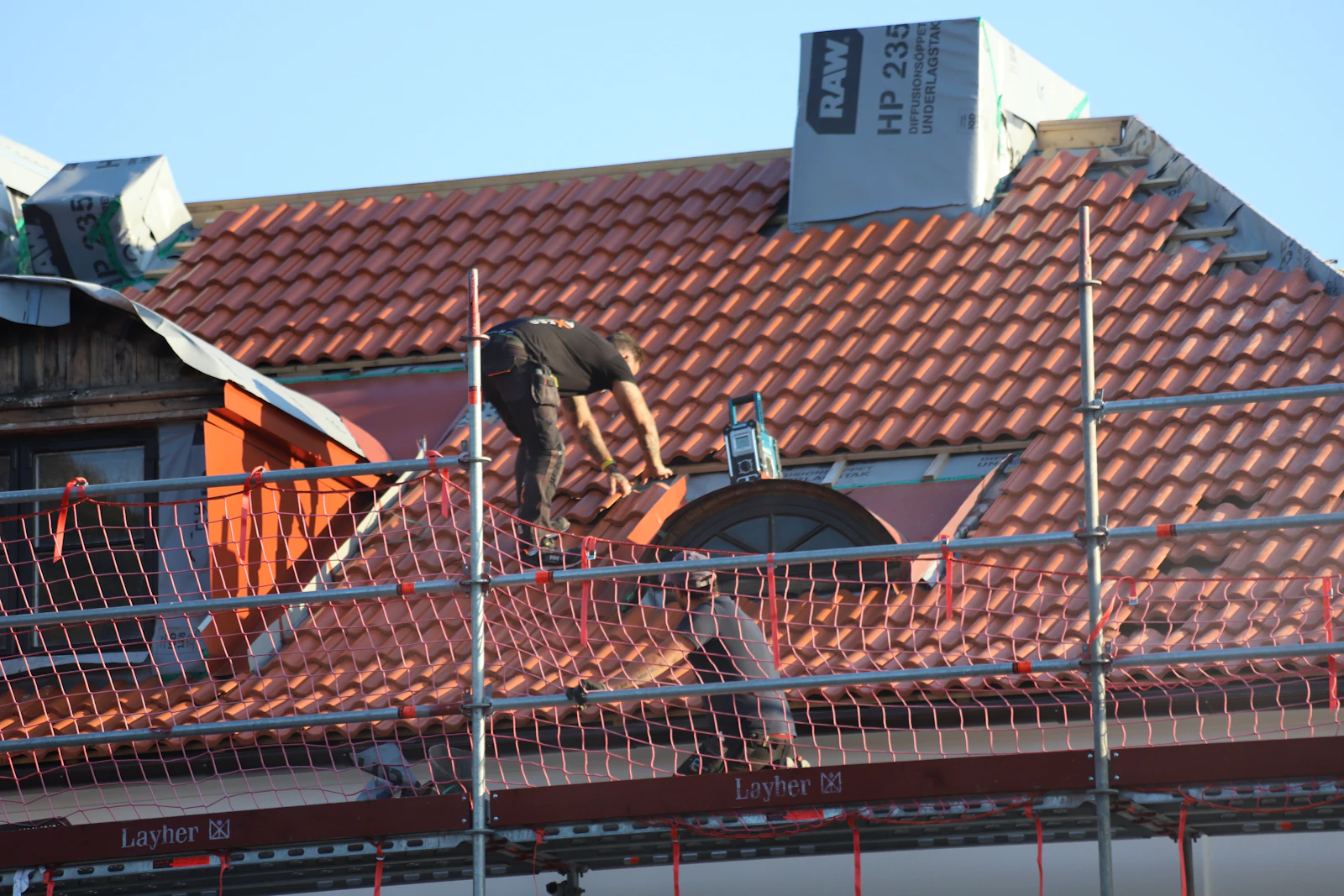
Roof Hoist Rental Rates in San Jose (Daily/Weekly) — 2026 Costs
Construction Costs San Jose
Price source: Costs shown are derived from our proprietary U.S. construction cost database (updated continuously from contractor/bid/pricing inputs and normalization rules).
Eva Steinmetzer-Shaw
Head of Marketing
Roof Hoist Rental Rates San Jose 2026
For San Jose tile-roofing crews budgeting equipment hire in 2026, a roof hoist (most commonly rented as a ladder hoist / shingle lift or a compact roofing conveyor) typically pencils out at $90–$175 per day, $300–$650 per week, and $850–$1,850 per 28-day “monthly” period, assuming standard single-shift usage and return in rentable condition. Lighter 26–28 ft / 200–250 lb ladder hoists tend to land near the lower-middle of that band, while longer/heavier-duty units, specialty tile carriers, or conveyor-style packages push toward the top end. In South Bay, most rental coordinators will source these from national houses (when available) and strong local independents; the practical win is confirming what’s actually in fleet locally (ladder sections, carriage type, and power option) before you lock a rate.
| Vendor |
Daily Rate |
Weekly Rate |
Review Score |
Website |
| Sunbelt Rentals (San Jose, CA) |
$150 |
$600 |
9 |
Visit |
| Bay Equipment Co, Inc. (Fremont / South Bay) |
$150 |
$600 |
10 |
Visit |
| LGH (Lifting Gear Hire) — Roofing Hoists (nationwide shipping) |
$300 |
$1 200 |
8 |
Visit |
What “Roof Hoist” Means on a Rental Contract (And Why Tile Roofing Changes the Cost)
In rental catalogs, “roof hoist” can map to three different equipment-hire line items, and tile roofing makes the distinction cost-relevant:
- Ladder hoist / shingle lift: a ladder-track system with a powered carriage. Great for bundles, underlayment rolls, and staged stacks of tile (not full pallets). Most economical to hire, and often the fastest to mobilize.
- Roofing conveyor (belt conveyor / shingle conveyor): higher throughput and easier continuous feeding, but typically higher hire rates and higher delivery complexity (more pieces, longer bed, more accessories).
- Material-lift substitutes: where access allows, some contractors shift to a small telehandler/forklift or a compact lift strategy. This is usually not “roof hoist” equipment hire, but it competes directly on cost when tile volume is high.
Tile roofing drives higher handling risk and more trips: a ladder hoist may lift 200–250 lb per trip, which can mean 8–14 trips for a typical staging goal (e.g., 1,600–3,000 lb staged in distributed stacks), and that increases labor time, wear, and the chance of bent track sections or broken tile on the landing. Those operational realities are why rental houses often emphasize return condition and may charge repair/cleaning if the hoist comes back with mortar, mastic, or roof dust in the carriage and rollers.
Rate Structure Assumptions You Should Put on the PO
Before you compare vendors, align on the billing structure that will actually be applied. Many branches in the Bay Area follow the common single-shift pattern: daily is a 24-hour period with an 8-hour usage cap, weekly is 7 days with a 40-hour cap, and “monthly” is often a 28-day / 160-hour rate.
- 4-hour minimums: Some accounts can quote a 4-hour rate; if your crew is self-hauling and you truly only need a same-day setting, ask—otherwise, assume 1-day minimum on a roof hoist package.
- Time-out billing: If you’re delivered, your clock often starts at delivery time and doesn’t stop until you call off-rent and the equipment is picked up. That means “waiting for teardown” on a Friday can quietly burn a full extra day (or weekend).
- 28-day month vs calendar month: Put “28-day” in writing if your internal cost system expects 4-week blocks.
San Jose Cost Drivers That Change Roof Hoist Equipment Hire Totals
San Jose roof-hoist hire pricing doesn’t swing as much by ZIP code as it does by mobilization constraints and jobsite access. In practice, the following items drive real delivered cost in the South Bay:
- Delivery radius and traffic windows: A “close” job in Willow Glen or downtown can still incur higher delivery labor due to narrow staging, limited curb space, and dispatch cutoffs. Budget $95–$185 each way for local delivery/pickup inside roughly a 10–15 mile radius, and $4–$7 per loaded mile beyond that. If you need a two-person delivery (awkward driveway or hillside carry), add $75–$150 per trip.
- Weekend/holiday billing risk: If a branch is closed Sunday and you miss Saturday cutoff, you may effectively pay 2 extra days even if the hoist is sitting idle. Many coordinators carry a 10%–20% weekend contingency on short-term roof hoist equipment hire.
- Power requirements: Electric hoists are usually simplest for residential work, but if you need a dedicated 120V circuit you may end up hiring a small generator. A small generator add-on commonly budgets at $65–$120/day (plus fuel), which can exceed the delta between two hoist choices.
- Track length and ladder section adders: A base unit may be priced for a standard reach. Extra 8 ft sections commonly budget $15–$35/day or $45–$90/week each, and missing the correct length can force a re-delivery (another $95–$185 each way).
- Tile-friendly landing and carrying: If you need a wider platform, tile cradle, or special carriage, budget $20–$60/day incremental hire depending on what the branch can supply.
Hidden-Fee Breakdown (What Usually Shows Up After the Base Rate)
Roof hoist equipment hire is often quoted cleanly, but the invoiced total typically includes several job-driven line items. For San Jose planning, carry these allowances unless your MSA or account terms explicitly remove them:
- Damage waiver / equipment protection: commonly 10%–15% of rental. As a real reference point, one regional policy lists an optional Equipment Protection Plan at 12% of the rental amount with $5,000 accidental damage coverage (exclusions apply).
- Deposit / authorization hold: budget $200–$1,000 depending on account status and package value; higher if you’re not on established credit.
- Cleaning fees: budget $45 (light wash) up to $125 (heavy roofing debris / adhesive / concrete dust). Tile cutting dust can bind up rollers; rental houses will charge if it returns “not rentable.”
- Fuel / recharge / power charges: if gas-powered, budget $25–$60 for refuel service if returned low; if battery-powered, budget $20–$45 if returned with a dead pack and no charger or damaged cord.
- Missing/damaged accessories: common chargebacks include: controller/pendant $150–$350, hook/landing bracket $75–$175, and a damaged ladder section $300–$650 (repair/replace depending on brand and bend).
- Late return / holdover: if not extended in advance, some branches apply a daily holdover penalty (carry $25–$75/day for small equipment) or convert to a higher time band. (This is especially common when the hoist is booked out for the next crew.)
Choosing Daily vs Weekly vs 28-Day Hire for Tile Roofing
For tile roofing, short hires can be deceptively expensive because set-up/tear-down and staging usually spans more than one shift. Use these decision rules:
- Pick daily only if you can self-haul, set, and off-rent inside a single dispatch window, and the roof is truly ready to receive (tear-off complete, underlayment staged, drop zone protected).
- Pick weekly when you expect weather or inspection pauses. Even in San Jose’s relatively mild pattern, tile staging often pauses for repair carpentry or flashing detail, and the hoist sits idle but still billed time-out.
- Pick 28-day when you have multi-building scope (HOA clusters, repeated mobilizations) or you’ll keep the hoist in a controlled yard between phases. The 28-day hire frequently yields the lowest per-day cost if you can keep utilization high without paying extra delivery moves.
Example: San Jose Tile Roofing Roof Hoist Hire (Operationally Realistic)
Example: Two-story tile re-roof near Cambrian Park with a 24–26 ft eave height, tight driveway, and no street staging allowed. You plan a 10-working-day roof window (2 calendar weeks) and you want to stage tile in smaller stacks to reduce breakage and point loading.
- Hire plan: 28 ft ladder hoist package at $425/week (planning rate) for 2 weeks = $850 base hire.
- Extra ladder section: 1 section at $65/week for 2 weeks = $130.
- Delivery/pickup: two-person delivery due to access: $165 each way + helper adder $100 each way = $530 total logistics.
- Damage waiver: 12% of base rental lines (hire + section) ≈ $118.
- Cleaning allowance: carry $75 (tile dust and underlayment adhesive residue risk).
Planning total: roughly $1,703 before tax and before any accessory replacements/repairs. The key operational constraint is dispatch timing: if teardown slips and you miss the Saturday pickup cutoff, you can easily add 2 billable days (and, in practice, another $180–$350 depending on your day rate). This is why many South Bay coordinators schedule pickup for early morning and require field photos proving the hoist is staged for a no-wait load.
Budget Worksheet (San Jose Roof Hoist Equipment Hire Allowances)
- Roof hoist (ladder hoist / shingle lift) hire: $90–$175/day or $300–$650/week (select term based on schedule).
- Optional conveyor-style upgrade contingency: +$40–$110/day when tile throughput is driving labor overrun.
- Extra ladder/track sections (each): $15–$35/day or $45–$90/week.
- Tile cradle / wider carriage allowance: $20–$60/day (if available).
- Delivery + pickup allowance: $190–$370 round-trip (simple) or $450–$700 round-trip (tight access / two-person handling).
- Damage waiver / protection plan: 10%–15% of rental lines (use 12% if matching common regional policy).
- Cleaning allowance: $45–$125.
- Refuel/recharge allowance: $25–$60.
- Loss/damage contingency (small accessories): $150 (pendant/hardware risk) and (major) $300–$650 per ladder section if bent.
- After-hours / redelivery contingency: $150 (if dispatch windows are missed).
Rental Order Checklist (What to Confirm So the Invoice Matches the Quote)
- PO includes: equipment description (“roof hoist / ladder hoist”), track length, carriage type, and power type (electric/gas) plus any extra sections.
- Confirm rate structure: daily vs weekly vs 28-day, and any 8-hour / 40-hour / 160-hour caps that apply to your account.
- Delivery instructions: jobsite contact, gate code, curb restrictions, delivery cutoff time, and whether driver needs a second person for placement.
- Off-rent rules: required call-off time (e.g., by 2:00–3:00 pm) to stop billing next day; confirm whether billing stops at call-off or at pickup.
- Return condition documentation: take photos of track, carriage, power cord/pendant, and all hardware at both delivery and pickup; capture serial numbers.
- Fuel/recharge requirements: return full/charged; confirm whether you must supply extension cords and whether the unit includes a charger.
- Safety/accessories: confirm tie-off points, landing brackets, and whether roof edge protection requirements impact hoist placement (avoid last-minute re-set charges).
San Jose note: because many branches deliver six days a week and bill “time out,” aligning delivery/pickup with Bay Area traffic and neighborhood constraints is often worth more than negotiating a small base-rate discount.
How to Tighten 2026 Roof Hoist Equipment Hire Pricing in San Jose Without Sacrificing Production
Once you have a defensible daily/weekly/28-day budget band, the next step is reducing variance (the part that blows up job cost reports). In San Jose, the highest-impact controls are about reducing non-working billable time and preventing chargebacks—not about pushing for the lowest advertised day rate.
Delivery Window Planning (South Bay Reality)
- Dispatch cutoffs: plan on “same-day” changes being difficult after 12:00–2:00 pm due to routing and 101/280/880 congestion. If the hoist is not ready at pickup time, you often pay at least 1 extra day plus potentially a re-dispatch fee (carry $150).
- Staging footprint: roof hoists are awkward on tight residential lots. If you cannot stage the track sections flat and protected, you can incur damage (bent rungs/rails) that turns into a $300–$650 repair line item.
- Self-haul vs delivered: when you can self-haul, you can often avoid the $190–$370 round-trip delivery baseline and eliminate waiting time. The tradeoff is ensuring you have the correct trailer/vehicle and tie-downs to prevent transport damage (which becomes a chargeback).
Managing Off-Rent, Standby Days, And Weekend Billing
Roof hoist equipment hire costs are especially sensitive to “standby” days because the unit may be on site but not actively lifting. Practical controls:
- Call off-rent as soon as the last lift is complete: if you plan to tear down the next morning, you are often paying an extra day anyway. Align teardown to happen before the last lift whenever feasible.
- Friday strategy: either (a) keep the hoist productive through Saturday pickup, or (b) schedule pickup Thursday/Friday morning. Otherwise, you risk a 2-day idle weekend billed time-out.
- Weather float: even in San Jose, carry 1–2 days of schedule float if you’re on a daily term; a single slip can force conversion to weekly pricing.
Chargeback Prevention: Return Condition And Consumables
- Cleaning controls: keep a tarp or containment at the landing; assign a 10-minute end-of-day wipe-down for rollers and carriage. This is often the cheapest way to avoid a $45–$125 cleaning fee.
- Accessory reconciliation: put small parts (pendant, brackets, pins) in a labeled tote. Missing pendant/controller commonly triggers $150–$350 replacement.
- Power cord discipline: if the hoist is electric, budget for a proper jobsite cord set and GFCI protection. Burned ends or cut cords frequently convert into a chargeback in the $35–$120 range, depending on gauge/length.
When A Conveyor-Style Roof Hoist Is Worth The Higher Hire Rate
If tile volume is high and you’re losing hours to repeated small lifts, a conveyor-style package can be cost-effective even with higher equipment hire. As a published benchmark, older national price lists have shown distinct line items for “shingle conveyor” and “ladder platform shingle hoist,” with different day/week/month pricing. While you should not use those numbers as exact 2026 local pricing, they support the consistent market reality: conveyors typically cost more to hire but can reduce labor hours and cycle time.
For San Jose estimating, the common break-even test is labor: if a conveyor reduces roof loading by even 2 labor-hours per day over a 7–10 day run, it can offset an equipment premium of $40–$110/day quickly (especially under prevailing wage or tight production targets).
San Jose-Specific Considerations For Tile Roofing Hoist Hires
- Heat and duty cycle: in late-summer heat spikes, protect motors/controllers and avoid long continuous runs; unplanned downtime can force an extra $300–$650 week if you miss your off-rent window.
- Noise and neighborhood constraints: some residential areas and HOAs enforce early start restrictions. If your hoist setup can’t start until later, consider weekly terms to avoid daily billing stress.
- Street access and parking enforcement: downtown and high-enforcement neighborhoods can cause delivery failures. If a truck rolls and can’t unload, some rental houses charge a trip fee (carry $150).
Bottom Line For 2026 Planning
In San Jose, roof hoist equipment hire for tile roofing is best budgeted as a delivered system cost, not just a base day rate. Use the $90–$175/day, $300–$650/week, and $850–$1,850/28-day planning bands, then protect your estimate with explicit allowances for delivery, protection plan percentage, cleaning, and accessory loss. Finally, manage off-rent like a production activity—because with time-out billing, one missed cutoff can cost as much as an entire week of “negotiated savings.”