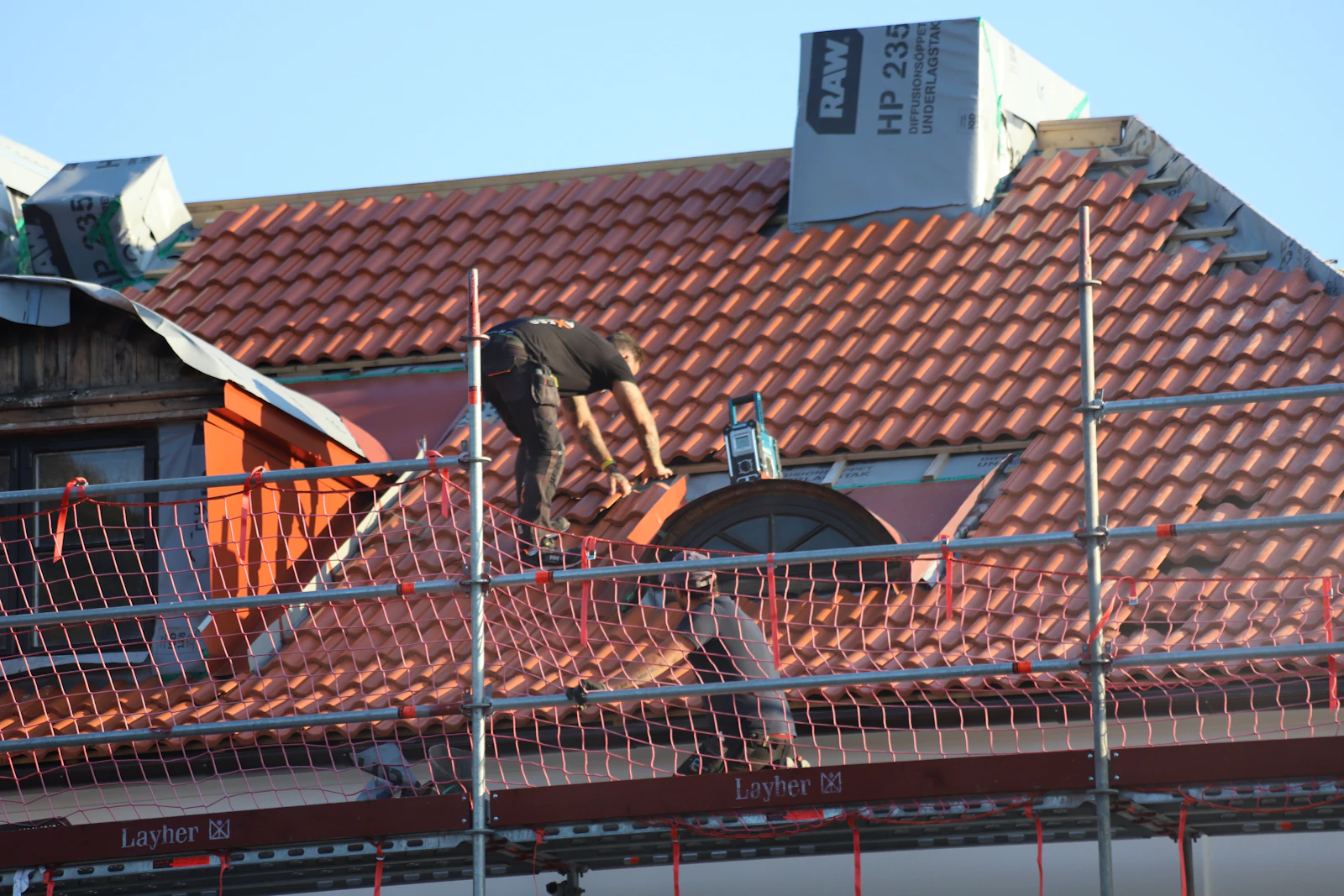
Roof Hoist Rental Rates Seattle 2026
For Seattle tile roofing crews planning 2026 work, roof hoist equipment hire commonly budgets as a dedicated “material-to-roof” line item rather than a small tool. Expect most ladder hoist / roofing conveyor rentals to land in the low-hundreds per day once you include the configuration needed for tile (height, capacity, and a tile-friendly tray). As a planning range (not a quote), Seattle roof hoist hire typically runs $170–$320/day, $550–$950/week, and $1,650–$2,900 per 4 weeks depending on lift height, 200 lb vs 400 lb class, and accessories. These ranges assume standard 24-hour day billing, a 5-day “week” rate where offered, and exclude tax, delivery, damage waiver, and consumables.
| Vendor |
Daily Rate |
Weekly Rate |
Review Score |
Website |
| Star Rentals |
$195 |
$585 |
8 |
Visit |
| Sunbelt Rentals |
$220 |
$660 |
8 |
Visit |
| United Rentals |
$225 |
$675 |
8 |
Visit |
| Herc Rentals |
$210 |
$630 |
7 |
Visit |
| BigRentz |
$240 |
$720 |
7 |
Visit |
- Light-duty ladder hoist (approx. 24–28 ft reach, ~200 lb class): $170–$240/day; $550–$750/week; $1,650–$2,200 per 4 weeks.
- Heavy-duty platform hoist (approx. 32–44 ft reach, ~400 lb class): $220–$320/day; $700–$950/week; $2,100–$2,900 per 4 weeks.
- Market check anchor (Seattle): published Seattle market data for a “material conveyor” category is about $196.67/day, which is directionally consistent with a roof hoist / ladder conveyor rental budget (before delivery/fees and before tile-specific add-ons).
What Affects Roof Hoist Equipment Hire Pricing for Tile Roofing in Seattle?
Tile roofing changes roof hoist pricing because it changes both the spec (capacity and handling) and the site logistics (staging, protection, weather windows). A roof hoist that is “fine for shingles” can be cost-inefficient on tile if it forces small lift cycles, frequent resets, or damage risk. The price you pay is usually a combination of (1) hoist class, (2) ladder/track length, (3) carriage/tray type, (4) delivery constraints in Seattle neighborhoods, and (5) how strictly the rental house enforces off-rent and return-condition rules.
Choosing the Roof Hoist Configuration That Prices Correctly for Tile
When you request “roof hoist equipment hire” for tile roofing in Seattle, be explicit about the configuration. Many rental coordinators get hit with change orders because the base hoist arrives without enough ladder sections, without the right tray, or without stabilizing components that the foreman ends up sourcing same-day.
Typical roof hoist package components (and common 2026 cost adders you should pre-authorize) include:
- Base power unit + carriage: included in the base rate; confirm 200 lb vs 400 lb class.
- Additional ladder/track sections: plan $15–$35/day per section (or $40–$90/week per section) when you need to reach a 2–3 story eave line.
- Tile tray / tile platform attachment: plan $20–$45/day (or $60–$140/week). For brittle profiles, specify a tray with side containment so you are not “chasing tile” down the ladder.
- Large platform deck (for underlayment rolls, sheathing, or bundled accessories): plan $25–$60/day.
- Wheel kit / transport dolly kit: plan $10–$25/day if you need to move the unit from curb staging to the setup point without burning crew time.
- Ladder levelers / uneven grade kit: plan $8–$18/day for Seattle’s sloped driveways, retaining walls, and stepped lots.
- Tag line / control accessories: small dollars but frequent backcharges if missing (e.g., $15 per missing pin, $25–$60 for missing brackets/fasteners depending on the rental house’s fee schedule).
Capacity and height matter for tile. For reference, a common heavy-duty ladder platform hoist spec published by national renters is 44 ft max lift height and 400 lb capacity, which is a practical baseline for multi-story residential rooflines when you are lifting tile in repeated batches rather than attempting pallet picks.
Seattle Delivery, Pick-Up, and Access Charges That Move the Real Hire Cost
In Seattle, roof hoist equipment hire pricing is often less sensitive to the “day rate” than it is to mobilization friction. A ladder hoist is long, awkward to stage, and typically arrives as multiple pieces. If the address is in a tight access zone (Queen Anne hills, Capitol Hill driveways, Magnolia lanes) the delivery fee can be the swing factor.
- Standard delivery + pick-up (in-city): budget $125–$225 each way for a roof hoist package when a flatbed/box truck is required (some houses charge more for long loads or multi-piece drops).
- Mileage beyond the included radius: common planning allowance is $4–$7 per mile beyond the stated zone (confirm whether it’s one-way or round-trip mileage).
- Downtown / constrained curb space: budget an additional $75–$200 for access coordination (parking escorts, “call-ahead” dispatching, or a second trip if curb is blocked).
- After-hours / time-window delivery: budget $150–$300 if you need delivery before a morning cutoff (often requested to beat Seattle traffic and secure staging).
- Ferry / water crossing surcharge (if applicable to your logistics): budget $90–$160 when dispatching off the core service area where the truck time is the constraint.
Seattle-specific consideration #1 (traffic + cutoffs): if your site has a “must-arrive” window and the carrier misses it, some rental houses will treat the attempt as billable and re-deliver the next day—so you can pay a day of rent while still not having the hoist on site. Put delivery window, laydown location, and an on-site contact in the PO notes, not just in emails.
Seattle-specific consideration #2 (rain protection expectations): on wet weeks, renters may require equipment to be returned reasonably clean and not stored in standing water. If the hoist comes back mud-caked or with tile slurry/cementitious dust stuck in the carriage rollers, you can trigger cleaning/service fees (see the hidden-fee section below).
Power, Fuel, and “Small Stuff” Costs on Tile Roofing Hoist Hire
Roof hoists show up as gas-powered, electric, or battery systems depending on fleet. Each has an operating cost profile that matters for estimating:
- Gas-powered hoist fuel/service surcharge: plan $15–$35/day if the rental contract includes a fuel charge line or requires “return full” and your crew prefers vendor refuel.
- Electric hoist power access kit: if you must run long-distance temporary power, budget $6–$15/day for heavy-gauge extension/cord rental and $10–$25/day for a portable GFCI distribution box where required by site conditions.
- Generator allowance (if no reliable 120V is available): budget $75–$140/day for a small generator package (plus fuel), which can eliminate productivity losses from power access constraints.
- Weather protection consumables: not a rental fee, but a real cost—plan $25–$60/week for tarps/straps to keep the power unit protected and to control wet staging impacts.
Tile jobs also create dust-control needs around staging and cutting. While the roof hoist itself isn’t a saw, many Seattle sites (especially occupied residential) expect a basic containment standard: if you’re cutting tile on-site, it’s common to add a HEPA vac/dust extractor line item and floor protection. The equipment hire impact is indirect: more accessories, more delivery coordination, and more cleaning exposure.
Damage Waiver, Deposits, and Backcharge Exposure
Most rental houses will offer a damage waiver / rental protection plan (often optional but strongly pushed). Budget 10%–15% of the rental charge as a typical waiver range for smaller equipment, unless your master agreement sets different terms. Separately, expect a $250–$750 deposit or card authorization for first-time accounts or cash customers, especially on specialty roofing equipment.
For tile roofing, the biggest backcharge drivers are avoidable: missing components (pins, brackets), bent ladder sections from improper tie-off, cable damage from kinks, and water intrusion on electric controls. Build “return condition” discipline into your closeout process (photos and sign-off) so you’re not arguing about damage weeks later.
Hidden-Fee Breakdown
Roof hoist equipment hire costs in Seattle can jump quickly from “reasonable day rate” to “surprising invoice” due to policy-driven adders. The goal is not to avoid fees by being aggressive with the rental house; it’s to plan them as allowances or prevent them operationally.
- Minimum rental charges: even if you only need the hoist for setup and one load-in cycle, many houses effectively bill a 1-day minimum, and some enforce a “weekend counts” rule if delivered Friday and returned Monday.
- Cleaning fees (general): plan $75–$250 if returned with heavy roofing debris, adhesive residue, or stuck roller assemblies.
- Heavy cleaning / service shop time: plan $150–$350 if the hoist returns with cementitious slurry, excessive mud, or damaged guarding that requires labor beyond rinse/brush.
- Late return penalties: common planning is $25–$60 per hour past the agreed return time, or another full day if you miss the cutoff.
- Missed pick-up / dry-run charges: plan $95–$175 if the truck arrives and the hoist is not accessible, not broken down, or not staged where the driver can load.
- Loss/damage parts (common examples): control pendant replacement $250–$500; cable damage $350–$900 depending on model; missing ladder brackets/pins $15–$40 each.
Example: Seattle Tile Roofing Crew Budgeting a One-Week Roof Hoist Hire
Scenario: 2-story residence in Queen Anne with a steep driveway and limited curb staging. Crew is installing tile and wants to avoid manual carries for both safety and productivity. Eave line requires an approximate 32–40 ft setup. Work plan is 5 working days, but return is Monday morning due to weekend site security.
- Hoist base (400 lb class) weekly hire: $850 (planning figure within the $700–$950/week range).
- Two extra ladder/track sections: $70/week each = $140.
- Tile tray attachment: $110/week.
- Wheel/transport kit: $50/week.
- Delivery + pick-up (time-window required): $200 each way + $200 time-window surcharge = $600.
- Damage waiver (12% of rental lines): roughly $138 (applied to $1,150 equipment hire subtotal in this example).
- Fuel/service allowance: $25/day x 5 days = $125 (if applicable to your provider/model).
Planning total (before tax): approximately $2,563 for the week in this constrained-access scenario. The key operational constraint driving cost is not the hoist day rate; it’s Seattle access (time-window delivery and staging constraints) plus the tile-ready configuration. If you can accept a flexible delivery window and you already have the right ladder sections, this same scope can drop by $300–$700 without changing the core hoist rate.
Note on market bounding: published ladder hoist day rates in other U.S. markets commonly show pricing from roughly $93.50/day up to $175/day, with weekly figures in the $231/week to $420/week band. Seattle planning ranges trend higher once you account for delivery friction and accessory needs on tile roofing, which is why a Seattle budget often starts closer to the $170–$320/day band for a production-ready package rather than a “bare hoist” pickup price.
Where Roof Hoist Equipment Hire Typically Sits Versus Other Lift Options
For tile roofing, roof hoist equipment hire often wins when you need repeatable, controlled lifts of smaller batches to the roofline, and you cannot justify a crane/telehandler (or cannot access the site). However, if you’re attempting to move near-pallet quantities, the hoist is the wrong tool and will inflate labor cost even if the equipment hire looks cheap. For estimating, treat the hoist as a labor-saving device with strict constraints: it reduces carries, but it does not replace mechanical handling for bulk material placement.
How Roof Hoist Hire Billing Rules Change the Final Cost
Rental coordinators should validate billing mechanics up front because roof hoist equipment hire is often booked around a tile roofing production schedule (tear-off, dry-in, then install). If billing rules don’t match the schedule, you can pay for “dead time.”
- Day rate definition: confirm whether a “day” is calendar-day, 24-hour, or “same-day return.” If the unit is delivered at 3:00 PM, some providers still count that as Day 1.
- Weekly rate definition: confirm whether “weekly” is 7 consecutive days or 5 working days. If your job spans a weekend, ask about a weekend special or whether Friday-to-Monday is billed as 1 day, 2 days, or 3 days.
- Off-rent notification cutoff: many houses require off-rent notice before roughly 2:00 PM–4:00 PM to stop billing the next day. Miss the cutoff and you commonly buy another day automatically.
- Pick-up readiness requirement: the unit must be broken down, accessible, and staged. If the driver arrives and can’t load, you risk a missed pick-up fee ($95–$175) plus continued day billing.
Budget Worksheet
Use this field-ready worksheet as a no-surprises allowance list for roof hoist equipment hire costs in Seattle tile roofing scopes (add/adjust based on your company’s MSA and dispatch practices).
- Base roof hoist hire (weekly): allow $700–$950/week for a 400 lb class unit, or $550–$750/week for 200 lb class where feasible.
- Extra ladder/track sections: allow 2–4 sections at $40–$90/week each (height-driven).
- Tile tray / platform attachment: allow $60–$140/week.
- Transport/wheel kit + uneven grade kit: allow $50–$120/week combined.
- Delivery + pick-up: allow $250–$450 total for straightforward access; allow $450–$800 total for constrained neighborhoods, time windows, or complex staging.
- Downtown / constrained curb staging allowance: add $75–$200 where parking control or call-ahead dispatch is likely.
- Damage waiver: allow 10%–15% of rental charges unless waived by contract.
- Fuel/service: allow $15–$35/day when applicable to the model/provider.
- Power distribution (electric hoist jobs): allow $10–$40/day for cords/GFCI distribution if not already in your site kit.
- Cleaning/return-condition contingency: carry $150 baseline; increase to $250–$350 on muddy access or slurry risk.
- Damage/missing parts contingency (managed internally): carry $200–$500 if you don’t have a tight closeout process (pendant, pins, brackets, cables are the common offenders).
Rental Order Checklist
Use this checklist to reduce change orders and backcharges on Seattle roof hoist equipment hire for tile roofing.
- PO details: include jobsite address, on-site contact name/number, requested delivery date/time window, and the “off-rent notice” requirement.
- Equipment spec confirmation: confirm capacity target (200 lb vs 400 lb), target reach (eave height), and that the quote includes sufficient ladder/track sections.
- Attachment confirmation: tile tray/platform selected; confirm any “standard tray” is appropriate for tile (containment, stability).
- Delivery plan: confirm laydown/staging location, whether liftgate is required, and whether the site needs curb plates, cones, or protected staging on finished surfaces.
- Access constraints: note narrow alleys, steep driveways, gated entries, and whether the driver needs a call-ahead 30–60 minutes prior.
- Condition documentation at drop: take photos of ladder sections, controls/pendant, cables/rope, and serial tag; log missing pins/brackets immediately.
- Operational expectations: confirm refuel/recharge expectations; confirm whether rain exposure requires covering controls (common-sense but still a backcharge risk).
- Return requirements: clean debris from carriage/rollers; break down and stage components; photo the staged return condition; schedule pick-up before the daily cutoff.
Cost-Control Moves That Matter on Seattle Tile Roofing Hoist Hire
- Reduce time-window deliveries: If you can accept “any time between 7 AM–3 PM,” you often avoid the $150–$300 time-window surcharge and reduce re-delivery risk.
- Minimize resets: One extra ladder section at $40–$90/week is usually cheaper than 2 hours of crew reset time (and reduces tile drop/break risk).
- Pre-stage a protected landing zone: plywood and a simple containment setup can prevent the $150–$350 heavy cleaning/service fee if the hoist comes back packed with mud and slurry.
- Use a documented off-rent process: call off-rent before the cutoff (2:00 PM–4:00 PM typical), and email confirmation to avoid paying an extra day due to “no record of off-rent.”
- Keep accessory accountability tight: missing pins at $15–$40 each and a lost pendant at $250–$500 will erase the savings from shopping day rates.
When Roof Hoist Equipment Hire Is Not the Lowest-Cost Option
There are Seattle tile roofing scopes where roof hoist equipment hire is still correct operationally, but not the lowest total cost:
- High-volume bulk placement: if you need to place large quantities quickly and have access, a larger material handling solution can reduce labor hours dramatically (even if its day rate is higher).
- Severe access constraints: if delivery is complex (multiple trips, re-delivery risk, downtown staging), you can end up paying $600–$1,000 in logistics before the hoist produces value.
- Short-duration, high-setup burden: if the crew only needs 2–3 lift cycles, the 1-day minimum plus delivery can make the hoist a poor value unless it eliminates a safety exposure that your company policy will not accept.
Planning reminder for 2026 estimates: if you are comparing equipment hire options, compare all-in costs using the same structure: base rental + accessories + delivery/pick-up + waiver + likely cleaning/late fees. Roof hoist hire often looks inexpensive until the Seattle-specific mobilization and tile-ready attachments are added—so quote the full package in one line to keep your project managers from “value engineering” out the very items that make the hoist workable.