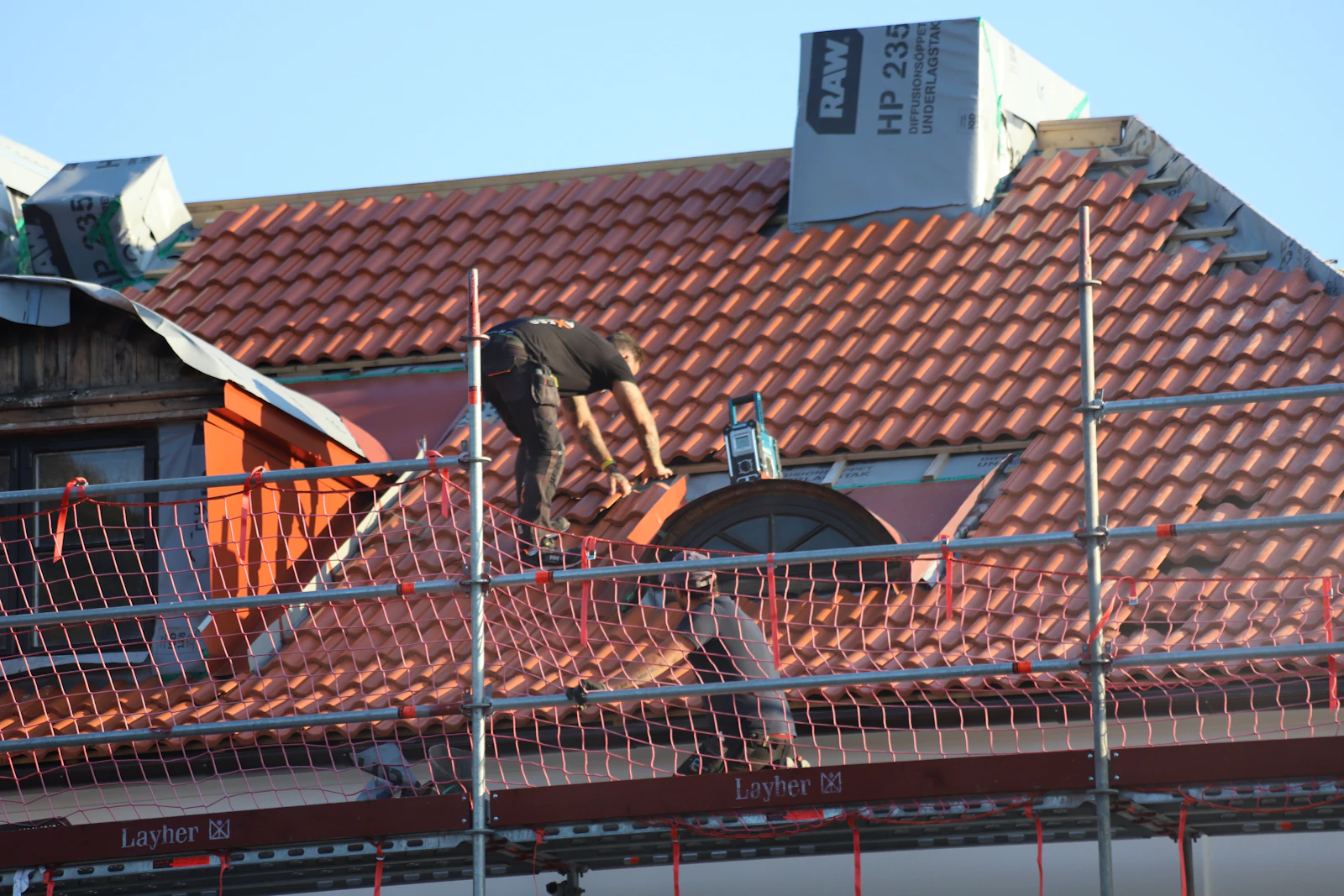
Roof Hoist Hire Costs Washington 2026
For Washington, DC metro tile roofing projects in 2026, plan roof hoist equipment hire in three common bands (before tax): (1) a gas ladder/platform hoist (typically 28–32 ft track, ~200 lb lifting capacity) at $140–$240/day, $420–$720/week, and $1,050–$1,850 per 4-week “month”; (2) an electric roof hoist/winch package (roof beam/swing arm dependent, often 300–500 lb rated systems) at $175–$325/day, $525–$975/week, and $1,400–$2,700 per 4 weeks; and (3) a shingle/tile “laddervator” style elevator at $160–$300/day, $480–$900/week, and $1,200–$2,300 per 4 weeks. Washington-area rental coordinators will usually quote from national rental houses (e.g., United Rentals, Sunbelt, Herc) plus regional tool-and-access specialists, with the final hire cost driven less by the sticker day rate and more by delivery access, parking/permits, and return-condition exposure in dense DC neighborhoods.
| Vendor |
Daily Rate |
Weekly Rate |
Review Score |
Website |
| United Rentals |
$180 |
$650 |
8 |
Visit |
| Sunbelt Rentals |
$170 |
$620 |
8 |
Visit |
| Herc Rentals |
$165 |
$600 |
7 |
Visit |
| The Home Depot Tool Rental |
$150 |
$525 |
8 |
Visit |
What Roof Hoist Configuration Do You Actually Need for Tile Roofing?
“Roof hoist” is quoted differently across rental catalogs. For tile roofing, clarify the configuration at RFQ time, because a low day rate on a light-duty unit can become a high total cost once it stalls production, requires re-delivery, or forces additional manual handling.
- Gas ladder/platform hoist (laddervator): Common for shingles, felt, rolls, and limited tile boxes. Typical rated lift around 200 lb per trip. Published examples in other U.S. markets show daily rates around $100–$165/day for 27–28 ft class ladder/platform hoists.
- Electric roof hoist/winch (beam/swing arm): More common when you can set a proper roof anchor/beam and need better control for heavier loads or awkward geometry (dormers, tight setbacks). The “equipment hire cost” here is usually a package: winch + roof beam + hook/trolley + power + rigging accessories.
- Shingle/tile elevator conveyor: Useful when continuous feed of tile to staging points matters more than single lifts. Hire cost is often comparable to laddervators, but delivery and setup constraints can be higher.
Tile roofing note: Tile weight pushes you to plan lift cycles and staging. Even if your roof hoist can lift 200 lb, your productivity depends on how tile is boxed/palletized and how quickly a ground crew can feed the platform while maintaining exclusion zones. If you’re hoisting tear-off debris (tile + underlayment), you may also need debris handling accessories and a stricter cleanup plan (which ties directly to cleaning fees and damage exposure).
How Washington, DC Logistics Change Roof Hoist Equipment Hire Cost
Washington, DC is an access-and-time market. Two to three local considerations routinely increase roof hoist rental pricing (or at least the total hire invoice) compared with suburban work:
- Curb space and permits: In areas like Capitol Hill, Dupont Circle, Adams Morgan, and dense NW corridors, the real cost driver is not the day rate—it’s the ability to legally stage the hoist, secure a curb lane, and keep the sidewalk passable. Budget a $50–$150 internal admin allowance for permit processing time (even if the permit fee itself is billed elsewhere), plus potential $75–$200 for cones/barricades if the rental house supplies site protection.
- Delivery windows and congestion: Many DC deliveries effectively require “must deliver by” cutoffs (often before mid-day) and can trigger $75–$150 time-window or “appointment delivery” surcharges if the branch has to dedicate a truck to your slot. If a missed delivery window forces a second trip, you can see a second full delivery charge.
- Rowhouse geometry and alley access: A ladder/platform hoist that is cheap on paper can become expensive if your setup needs extra track sections to clear rear additions, parapets, or a high eave line. Additional track/ladder sections frequently price as adders (see below) and can also increase delivery size class.
If your “Washington” scope is actually Washington state rather than Washington, DC, the hire bands above can still be used for 2026 budgeting, but delivery radius norms, terrain, and seasonal demand patterns will differ materially—confirm local delivery minimums and winter availability.
Hire Rate Structure: Day Vs. Week Vs. 4-Week and Minimum Charges
Roof hoist equipment hire almost always favors weekly/4-week terms once you cross a few working days. In practice, Washington-area branches often treat a “month” as 4 weeks (28 days), not a calendar month, which matters for long tile reroofs or weather-delay prone schedules. Ask these billing questions up front:
- Weekend billing: Some branches offer a “Fri–Mon” charge that is 1 day or 1.5 days; others will bill each day if the unit is out. For tile roofing, that can swing cost if you stage on Friday and don’t start loading until Monday.
- Minimum rental: Small hoists sometimes carry a 1-day minimum, but delivery jobs in the District frequently behave like a 2-day minimum because the logistics cost outweighs the tool day rate.
- Off-rent clock: Many rental operations require off-rent notice before a morning cutoff (commonly 9:00–10:00 AM) to stop billing that day; otherwise billing continues until the next business day pickup is processed.
Common Add-Ons and Attachments That Move the Price
Tile roofing scopes rarely rent “just the roof hoist.” The following adders are common in Washington, DC metro quotes; include them as allowances even if the branch ultimately bundles some items:
- Extra ladder/track sections: $10–$25/day per section (or $30–$75/week) depending on length class; this is a frequent DC rowhouse driver when clearing parapets or rear additions.
- Platform tray / plywood carrier / tile box tray: $15–$45/day depending on style and capacity.
- Debris hopper or “tear-off” tray: $25–$70/day when available; often worth it to reduce roof-edge spillage and cleanup exposure.
- Wheel kit / transport dolly: $8–$20/day (small number, but prevents damage claims during repositioning on finished hardscape).
- Generator (if power is constrained): $60–$110/day for a small quiet unit, plus fuel (see fuel policy below).
Hidden-Fee Breakdown
For professional rental coordinators, the “hidden fees” are not truly hidden—they’re operational. If you don’t carry them in your estimate, they show up as variance. Use these Washington, DC planning allowances for roof hoist equipment hire:
- Delivery and pickup (curbside): $125–$275 each way within a typical close-in radius; mileage models often run $6–$9/mile after a base charge. If the branch must send a larger truck, expect the upper end.
- After-hours / Saturday delivery: Common surcharge range $150–$350 depending on staffing and truck routing.
- Inside placement / carry-in (when permitted): $85–$200. In DC, this is sometimes requested to keep sidewalks clear, but confirm building rules and floor protection requirements.
- Damage waiver (rental protection plan): Often 10%–15% of rental charges (not including taxes/fees). This can add up quickly on multi-week tile jobs.
- Refundable deposit / card authorization: Commonly $250–$750 depending on credit terms, customer history, and equipment class.
- Cleaning charge (mud, mortar dust, adhesive, tar): $75–$250 if returned dirty. Tile tear-off creates heavy grit; protect winch housings and ladders during use.
- Fuel/energy policy: Gas units typically go out full and must return full. If not, budget $6–$9/gal plus a $25–$50 service fee. For electric units, some branches apply a $35–$75 “recharge” fee if returned below an agreed state-of-charge.
- Late return / extra day billing: A common rule is a short grace period (often 1–2 hours), after which you incur another full day. For DC jobs, traffic alone can cause late returns—schedule your demob day with margin.
- Missing/damaged components: Cable damage and bent ladder rails are frequent. Carry an allowance of $8–$12/ft for replacement cable exposure (if damaged) and treat tie-down and edge protection as non-negotiable.
Return-condition documentation best practice: Require date-stamped photos at dispatch and at return for (a) the ladder/track rails, (b) winch/cable condition, (c) power cords/controls, and (d) trays/hoppers. This is one of the cheapest ways to prevent disputed damage back-charges on roof hoist equipment hire.
Example: Capitol Hill Rowhouse Tile Roofing With Tight Alley Access
Scenario: 3-story rowhouse near Capitol Hill with a small rear alley, tile tear-off and reinstall, limited staging. You choose a gas ladder/platform hoist to move underlayment rolls, select tile boxes, and tear-off debris trays. You carry a 2-week hire because weather is uncertain.
- Hoist hire (2 weeks): plan $900–$1,400 (using the weekly band of $420–$720/week).
- Extra track sections (2 sections for parapet clearance): $120–$300 for the two-week term.
- Debris tray/hopper add-on: $175–$350 for two weeks.
- Delivery + pickup with appointment window: $350–$650 total (two-way), assuming one delivery, one pickup, and a tighter window.
- Damage waiver: add 10%–15% of rental line items (often $120–$315 in this scenario).
- Cleaning allowance: $125 (tile grit and tear-off residue).
Operational constraint: If the alley is blocked and the driver can’t place the unit, you can lose the delivery charge plus burn a production day. In DC, that is often more expensive than upgrading to an appointment window and planning a dedicated spotter for truck arrival.
Budget Worksheet
Use this bullet worksheet to carry roof hoist equipment hire costs for Washington, DC tile roofing estimates (adjust quantities to duration):
- Roof hoist (gas ladder/platform or electric roof winch package): $140–$325/day or $420–$975/week (select term).
- Additional track/ladder sections allowance: 2–4 sections at $30–$75/week each.
- Platform tray / tile carrier: $15–$45/day.
- Debris tray/hopper: $25–$70/day.
- Delivery + pickup allowance: $250–$550 base + $6–$9/mile beyond radius (if applicable).
- Appointment delivery / time window: $75–$150.
- After-hours / Saturday logistics contingency: $150–$350 (only if schedule requires).
- Damage waiver/rental protection: 10%–15% of rental charges.
- Cleaning allowance: $75–$250.
- Fuel/recharge allowance: $50–$150 (depends on runtime and policy).
- Damage exposure contingency (minor components): $100–$300 (cable/controls/rails).
Rental Order Checklist
- Confirm roof hoist type (ladder/platform vs electric roof winch), track length needed, and rated capacity for tile roofing handling.
- Provide delivery address with neighborhood access notes (alley width, gate codes, truck turn-around constraints) and a required delivery time window.
- Issue PO with rental start date/time, off-rent cutoff requirements, and who is authorized to call off-rent.
- Request COI naming requirements (many DC sites require higher limits and specific additional insured wording).
- Confirm what constitutes “on rent” (dispatch time vs delivery time) and weekend billing rules (Fri–Mon policy).
- Document condition at delivery with photos; verify all components are present (tray, hopper, cable, controls, fasteners).
- Specify return condition expectations (clean, fueled/charged, bundled components) and require return photos + signed pickup ticket.
- Plan demob date with traffic margin to avoid late-return day charges (schedule pickup earlier in the day where possible).
Ways to Reduce Roof Hoist Hire Cost Without Slowing Production
In Washington, DC tile roofing, the fastest way to reduce roof hoist equipment hire cost is to reduce “dead days” (equipment on-site but not producing). Practical tactics:
- Stage the roof hoist for a Monday start without paying weekend days: If your branch bills Fri–Mon as 1 day, use it; if it bills as 3 days, schedule delivery Monday morning and pre-stage materials Friday.
- Right-size track length on day one: Adding track later can trigger a second delivery. Carrying 2 spare sections up front is often cheaper than a re-trip.
- Bundle accessories at the start of hire: A $25/day debris tray can eliminate a $250 cleaning fee and reduce damage claims from roof-edge impacts.
- Use a defined hoist loading zone: A simple control plan reduces rail strikes and cable issues (the kinds of small damages that cause $150–$500 back-charges).
Insurance, Damage Waiver, and Liability Notes for Hoisting Equipment
Roof hoists sit in an awkward zone between “tool rental” and “lifting/rigging” from a risk standpoint. For DC metro equipment hire, confirm whether the branch offers a damage waiver (often 10%–15% of rental charges) and what it excludes (misuse, theft, overloading, improper tie-off). If you decline the waiver, ensure your internal insurance and contract language explicitly covers rented equipment in transit and on the jobsite, and verify whether the general contractor requires higher limits for hoisting operations on occupied streets.
Also clarify who supplies and is responsible for anchoring hardware, roof beam supports, and any fall protection tie-in points. If the hoist is mounted or anchored incorrectly, you can incur both damage costs and schedule loss (which usually dwarfs the day rate).
Off-Rent, Swap-Out, and Downtime: Contract Terms to Watch
DC projects frequently encounter weather delays, inspection holds, or access restrictions. Those conditions are normal—but you need the rental terms aligned so you’re not paying for idle time unnecessarily.
- Off-rent notice: Confirm the cutoff (commonly 9:00–10:00 AM) and whether voicemail/email counts or you need a live dispatch confirmation.
- Pickup lead time: In peak season, next-day pickup is not guaranteed. If pickup runs 2–3 business days out, you may pay extra days even after off-rent is called. Build a small float into your plan or negotiate “off-rent stops billing when called” if possible.
- Swap-out policy: If the hoist arrives with a cable issue or control fault, confirm whether you’ll be credited for the down day and whether the replacement triggers a new delivery charge.
When a Telehandler or Small Crane Beats a Roof Hoist on Total Cost
This article is focused on roof hoist equipment hire costs, but estimators should sanity-check alternatives when tile volumes or reach requirements increase:
- High-volume tile staging: If you’re lifting palletized tile repeatedly, a roof hoist may become a bottleneck. A telehandler or small crane day can be expensive, but it can reduce multi-week hoist rental into a shorter duration.
- Limited placement options: If DC curb restrictions prevent safe ladder placement, you can spend money on repeated mobilizations. In those cases, paying more for a different lift method may reduce total invoiced logistics.
Even when you choose an alternate lift for bulk tile, a smaller roof hoist is often still cost-effective for continuous feed of underlayment rolls, flashings, ridge vent, and tear-off loads—so hybrid plans can be the lowest total cost.
2026 Planning Notes for Washington, DC Metro
For 2026 budgets, assume DC metro roof hoist equipment hire remains sensitive to (a) spring and early summer demand peaks, and (b) delivery capacity constraints in dense neighborhoods. In practice, your cost risk is less about the quoted weekly rate and more about chargeable events: a second delivery trip ($125–$275 each way), a missed appointment window ($75–$150), a cleaning charge ($75–$250), or a late return that becomes a full extra day. If you treat those as controllable operational line items—rather than surprises—you’ll keep roof hoist hire costs predictable and defensible on tile roofing bids.
Reference pricing context (not DC-specific): Published rates in other U.S. rental catalogs show examples such as a 27' ladder hoist around $165/day and $424/week, and a 28' ladder/platform hoist around $100/day and $300/week; shingle ladder hoists have been published around $95/day and $380/week in some markets. Use these as a reasonableness check when evaluating Washington-area quotes, not as guaranteed local pricing.